In the world we live in today, having a powerful online presence is super important for businesses. This article will guide you through the steps you need to follow to make sure your website grows and succeeds. These steps will be explained with a focus on real-world challenges like limited resources and the ever-changing digital landscape. By the end of this guide, you’ll have a clear idea of how to excel in online marketing with a newfound understanding of website growth strategies.
Step 1: Setting Clear Objectives
Building a strong online presence starts with having clear goals. These goals should match your company’s bigger plans and be tailored to the people you want to reach. Your main goals should include making your company more visible online, getting more potential customers, improving how people use your website, creating great content, and using data to make smart decisions.
Tackling Pain Points: Resource Constraints
One common challenge is not having enough resources. This will be a common problem you might run into if you are working with a small team or don’t have much money to spend on marketing. To deal with this, you need to pick the most important goals and use your resources wisely to achieve them.
Step 2: Website Optimization for Enhanced Visibility
To be more visible online, you have to make your website better. This means making it show up higher on search engines, getting more people to visit it from search results, and being active on social media.
Tackling Pain Points: Technical Expertise
As someone in marketing, you may not know everything on the technical side. That’s why you should work with a website expert who can make your site fast, efficient, good for search engines, and easy to use.
Step 3: Lead Generation Strategies
To get more customers, you need to find new ways to get their contact information, like their email. This means you have to use forms and other tricks to get their info.\
Tackling Pain Points: Adapting to Algorithm Changes
The way search engines and social media work can change a lot. You have to keep up with the changes and adjust your tricks to stay successful in getting leads.
Step 4: Enhancing Website Engagement
To keep people on your site, you need to make it interesting. This means they should want to stay and come back for more.
Tackling Pain Points: Content Production
Creating good content can be hard and takes a lot of time. To deal with this, make a plan for the kind of content you need, like blogs, videos, and pictures. Then, use this plan to make sure you’re making the right stuff.
Step 5: Data-Driven Decision Making
To make sure your plans work, you need to use data. This means you look at the numbers to see what’s going well and what’s not.
Tackling Pain Points: Content Production
Using data can also help you deal with making content. Look at what people like and what they don’t like, and make changes to your content based on that.
Step 6: Hiring a Strategic Website Manager
To help with all of this, it’s a good idea to get someone good at working on websites. They can help you a lot.
Where to Find a Website Manager
Talk to People You Know: Ask your friends and people you know if they can recommend someone.
Use Job Websites: Look for people on websites where you can find job openings. You want to find someone who’s done this kind of work before.
Get Help from Job Agencies: You can also get help from companies that help you find the right person for the job. They know a lot about this kind of work and can make the hiring process easier.
Picking the Right Person
When you’re looking for a website expert, you need to be sure they’re the right person for the job. This means checking their skills, experience, and how well they work with a small team and limited resources.
Requesting References and a Portfolio
Get in touch with people who’ve worked with them before and look at the work they’ve done. This will show you if they’re good at helping websites grow.
Keyword Research: Identifying the keywords and phrases that your target audience is searching for. You need to know what words people use to look for your products or services. These are the keywords you should use in your content.
Making a Schedule: Decide when you’ll put out your content. A regular schedule helps people know when to expect new stuff.
Different Content Types: Don’t just stick to one type of content. Use blogs, videos, pictures, and more. People like different things.
Speaking to Different People: Not everyone is the same. Make sure your content talks to the different groups of people you want to reach.
Quality Assurance: Check your content to make sure it’s interesting, clear, and useful.
Performance Metrics: Defining key performance indicators to measure the success of your content. This might include metrics like page views, time on page, conversion rates, and more.
Step 7: Use SEO to Get Seen
SEO stands for Search Engine Optimization, and it’s about making your website show up better in search engines. This is a big part of building a strong online presence.
What Is SEO?
SEO involves:
Keyword Research: Keyword research helps you identify the words and phrases that your audience uses to search for your products or services. It’s the foundation of your content strategy.
On-Page Optimization: This includes optimizing your content for your target keywords. This involves ensuring that your keyword appears in the content naturally, in headers, and meta tags. It also involves making sure your website’s technical elements are optimized for search engines.
Off-Page Optimization: This involves building high-quality backlinks to your website from reputable sources. Backlinks are like endorsements from other websites, indicating to search engines that your content is valuable and credible.
Content Quality: High-quality, informative, and engaging content is a cornerstone of SEO. It keeps visitors on your site longer and encourages other websites to link to your content.
Mobile Friendliness: As more people use smartphones and tablets to browse the web, a mobile-friendly website is crucial for SEO. Google and other search engines prioritize mobile-friendly websites in their rankings.
Site Speed: A fast-loading website is not only crucial for SEO but also for user experience. Slow websites tend to have higher bounce rates and lower search engine rankings.
User Experience: A well-designed, user-friendly website keeps visitors engaged and encourages them to explore more pages. Search engines consider user experience when ranking websites.
SEO involves a lot of skilled technical work. That’s why a website expert is important. They can help make sure your site is SEO-friendly.
Step 8: Use Content Marketing
Content marketing is all about sharing your content with people. It helps you reach a wider audience, keep your current audience engaged, and encourage people to take action like signing up for a newsletter.
Ways to Share Your Content
You can share your content through:
Social Media: Share your content on platforms like Facebook, Instagram, and Twitter. Each platform has its own rules, so make sure your content fits the platform.
Email Marketing: Build an email list and send your content directly to people’s inboxes. This is a great way to build relationships and encourage people to do things like buying your products.
Influencer Marketing: Partner with influencers in your field to get access to their audiences and gain credibility.
Guest Blogging: Write articles for other well-known websites in your field. This helps you reach a bigger audience and get links to your site.
Content Syndication: Share your content on platforms like Medium, LinkedIn, or websites that are popular in your industry. This helps you reach new audiences.
Tackling Website Growth Strategies Pain Points: Adapting to Algorithm Changes
Content marketing is always changing. The way search engines and social media work can change a lot. You need to stay up to date with these changes and adjust your strategies to stay successful.
Step 9: Measure and Analyze Data
To make sure your plans work, you need to use data. Data means numbers that tell you what’s going well and what’s not.
Tackling Pain Points: Adapting to Algorithm Changes
Adapting to changes in the digital world means looking at data. It helps you understand what’s going well and what’s not, and it guides you in making the right choices.
Website Growth Strategies Key Data to Look At
When analyzing data, keep an eye on:
How Many People Visit Your Website: Website traffic tells you how many people are coming to your site and where they come from.
Bounce Rate: A high bounce rate means people leave your site quickly. This might mean they can’t find what they want.
Conversion Rate: Look at how often people do what you want them to do on your site, like signing up for a newsletter or buying something.
Time on Page: This shows how long people stay on your site. Longer times mean your content is keeping people’s attention.
Click-Through Rate (CTR): In email marketing and paid advertising, this shows how often people click on your content.
Social Media Engagement: Keep an eye on likes, shares, comments, and other engagement on your social media posts.
Backlinks: Count how many other websites link to your content. This shows your content is good.
Conversion Funnel Analysis: Understand where people drop out of your conversion funnel. Make changes to stop people from leaving before they take action.
Dealing with limited resources can also affect your data analysis. You might not have a lot of money for fancy tools. But, there are free and affordable tools that can help you understand your data better.
Step 10: Adapting and Evolving
The digital world is always changing, and you have to change with it. What works today might not work tomorrow. Adapting and evolving your online presence is vital to remain competitive and effective in your marketing efforts.
Adapting to changes in the digital landscape requires a holistic approach. It involves staying informed about industry trends, monitoring algorithm changes, and learning from data analysis. Collaborating with a skilled website manager can provide you with the technical expertise needed to stay ahead of digital marketing challenges.
Conclusion: Successful Website Growth Strategies
Building a successful online presence is an ongoing process. The journey of cultivating your online presence can involve overcoming limited resources, adapting to changes in digital trends, creating high-quality content, and using data to make informed decisions for my company’s online success.
Hiring a skilled website manager is a significant boost to achieving your goals and handling the common challenges that arise in the digital marketing landscape. By following these steps and finding the right team member, you can strategically grow your website and establish a thriving online presence in today’s competitive digital world.
As you embark on your journey to build a successful online presence, remember that it requires patience and adaptability. The digital world is constantly changing but with the right strategies and the right team in place, your business can thrive online.
You’re here because you want to launch a new website successfully, without a hitch. Good news, you’ve come to the right place! We have the perfect website launch plan for you.
Launching a website is a big deal. I’m sure you know that already.
You also understand that it’s your company’s most visible asset and is where most customers will connect with you.
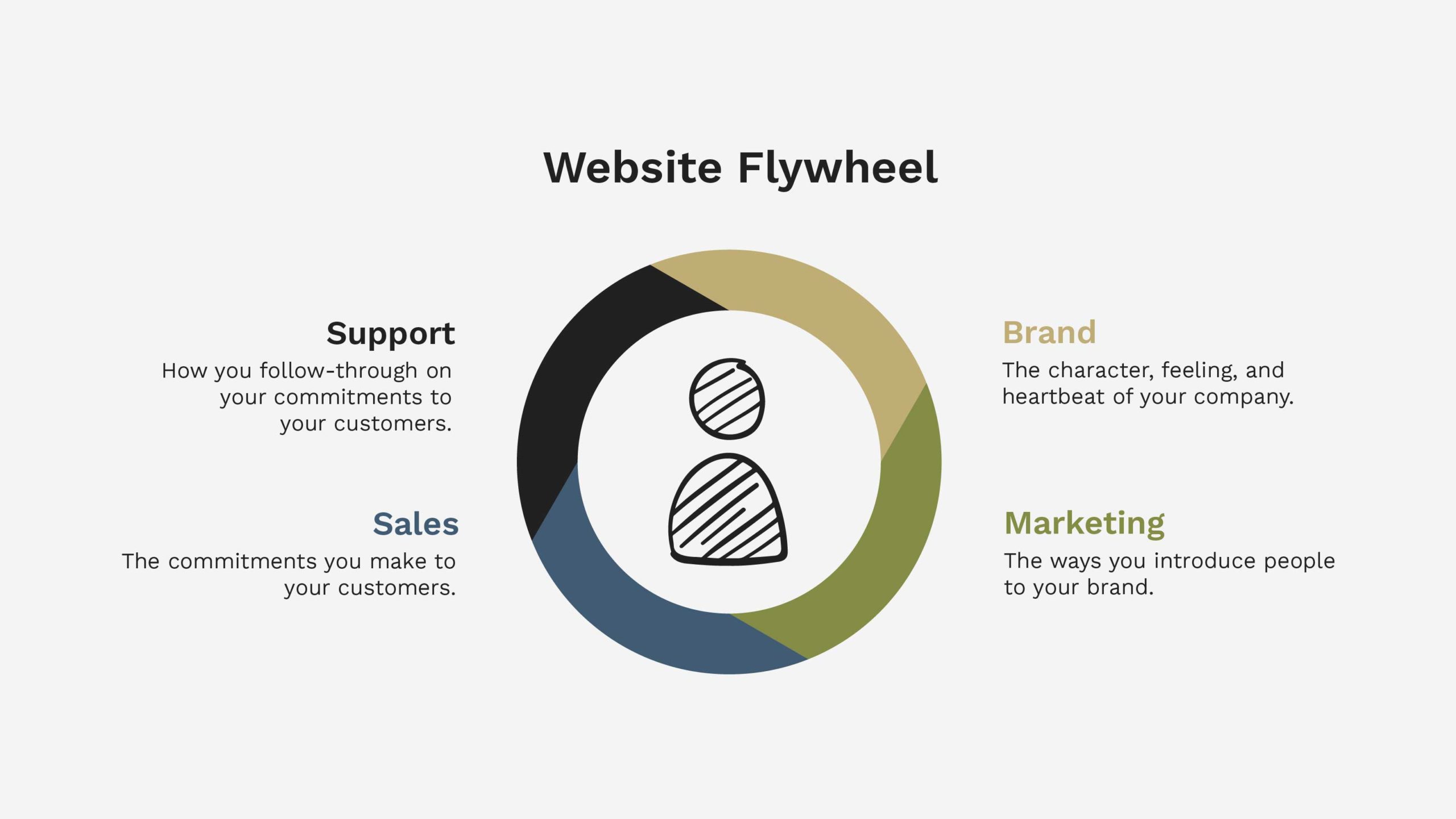
Your website is more than a brochure, a billboard, or a logo. It’s what we call the “flywheel” that digitally connects the company and moves it forward.
Unfortunately, the problem you’re likely facing is that websites are complex. And yours is no exception.
If you’re building a new website, you must ensure you’ve covered your bases. If you’re redesigning a website, you probably have a few additional things you’re already concerned about, like traffic, SEO rankings, brand reputation, conversion rates, and more.
You know that during your website project, many things could go wrong. It’s true, and research backs it up. 80% of website launches fail, and these failed launches cost an average of $55,000 plus an additional $115,000 over the next 12 months to fix.
If you follow this website launch plan, that won’t happen to you.
Get a FREE Customized Digital Growth Plan
Take our 10-minute Digital Maturity Assessment and receive a FREE, personalized digital growth score that uncovers gaps and drives your business forward.
Most website launch plan how-to’s, guides, and checklists are written for designers or developers.
They’re not actionable enough, and they get too deep into the weeds regarding technical items that you, as the marketing manager or business leader, aren’t thinking about… nor want to think about.
This guide was written with leaders in mind so that you could plan and manage a successful website launch, ensuring that you don’t miss any vital pieces along the way.
Keep reading to learn how to launch smoothly and accomplish your team’s goals.
It’s worth noting that this guide is non-technical, and everything is explained in plain English. So don’t worry if you are unfamiliar with domains, hosting, CMS, etc. I’ve included clear, strategic guidance for every step along the way.
7 website launch best practices for marketing and business leaders
Launching a website is a pivotal moment for your business. As a marketing or business leader, you understand its unique challenges.
To help you navigate this crucial process, let’s delve into seven best practices tailored to your needs.
By implementing these best practices, you’re well on your way to a successful website launch. Every step you take, from meticulous planning to post-launch management, plays a pivotal role in shaping your online presence and achieving your business objectives.
1. Slow down and take time to make a plan
Before you rush into the website launch, it’s essential to pause and create a comprehensive plan.
As a leader, you understand the significance of setting clear objectives and strategies. A well-structured plan, like the one you’re about to create, sets the stage for a successful launch.
2. Focus on how it works, not just how it looks
If you haven’t already, you must recognize that aesthetics alone won’t guarantee the success of your website.
Ensure that the website’s functionality is seamless. Prioritize the user experience (UX) by considering how visitors will interact with your site. User-centric design goes beyond vision into function, leading to higher satisfaction and conversion rates.
3. Build a team of technical experts
You can’t build your website alone.
Building a website requires technical expertise, which is why, as a leader, assembling the right team is crucial. Consider hiring skilled developers, designers, and digital marketing specialists to ensure your website is robust, secure, and high-performing.
4. Invite your target audience to test your website
Engaging your target audience in testing is a strategic move to get honest user feedback.
Before the official launch, involve a select group from your audience to uncover hidden or overlooked issues, ensuring that your website meets their expectations.
5. Keep an easy-to-access backup of your current site
When your new website goes live, you’ll realize that your customers aren’t the only ones who have to learn a new layout.
That’s why you’ll love having a readily accessible backup of your current website to reference.
This precautionary step ensures you can find the information or regularly reference—and quickly revert to the previous version if unforeseen issues arise during the launch.
6. Line up post-launch support
In the same way, a marriage is much more than a wedding; it’s essential to plan beyond launch.
Retain your team long enough, or bring in some extra support for the week or two after launch to monitor website performance and address unforeseen problems (God forbid there are any!).
Have a dedicated support plan in place to handle these post-launch responsibilities effectively. Your proactive approach ensures a smoother transition and ongoing success.
7. Outsource website management
Recognizing your time is valuable, consider outsourcing website management after the launch.
Delegate security updates, content updates, and performance optimization tasks to experts who can handle these technical aspects efficiently.
This decision will save you 2-3 hours per week and allow you to focus on your core business objectives while experts manage the intricacies of website maintenance.
Get a FREE Customized Digital Growth Plan
Take our 10-minute Digital Maturity Assessment and receive a FREE, personalized digital growth score that uncovers gaps and drives your business forward.
As a marketing or business leader, you’re acutely aware that the success of a website launch hinges on addressing specific challenges. Let’s dive into the five stages of a successful website launch plan to assist you in this endeavor.
Each stage builds on the previous stage to accomplish your plan.
1. Define – Plan a website strategy
The first step to creating a successful website launch plan is defining a website strategy that aligns with your unique business goals and objectives.
Consider your target audience, market trends, and the competitive landscape. Doing so will create a roadmap tailored to your needs, setting the stage for a successful launch.
At the core, your website strategy should include the following information:
Basic company information
Who is on your team
The vision for your website
A competitive analysis
Brand documentation
Your buyer’s journey
A sitemap of your pages
Content plans for each page
Technology requirements
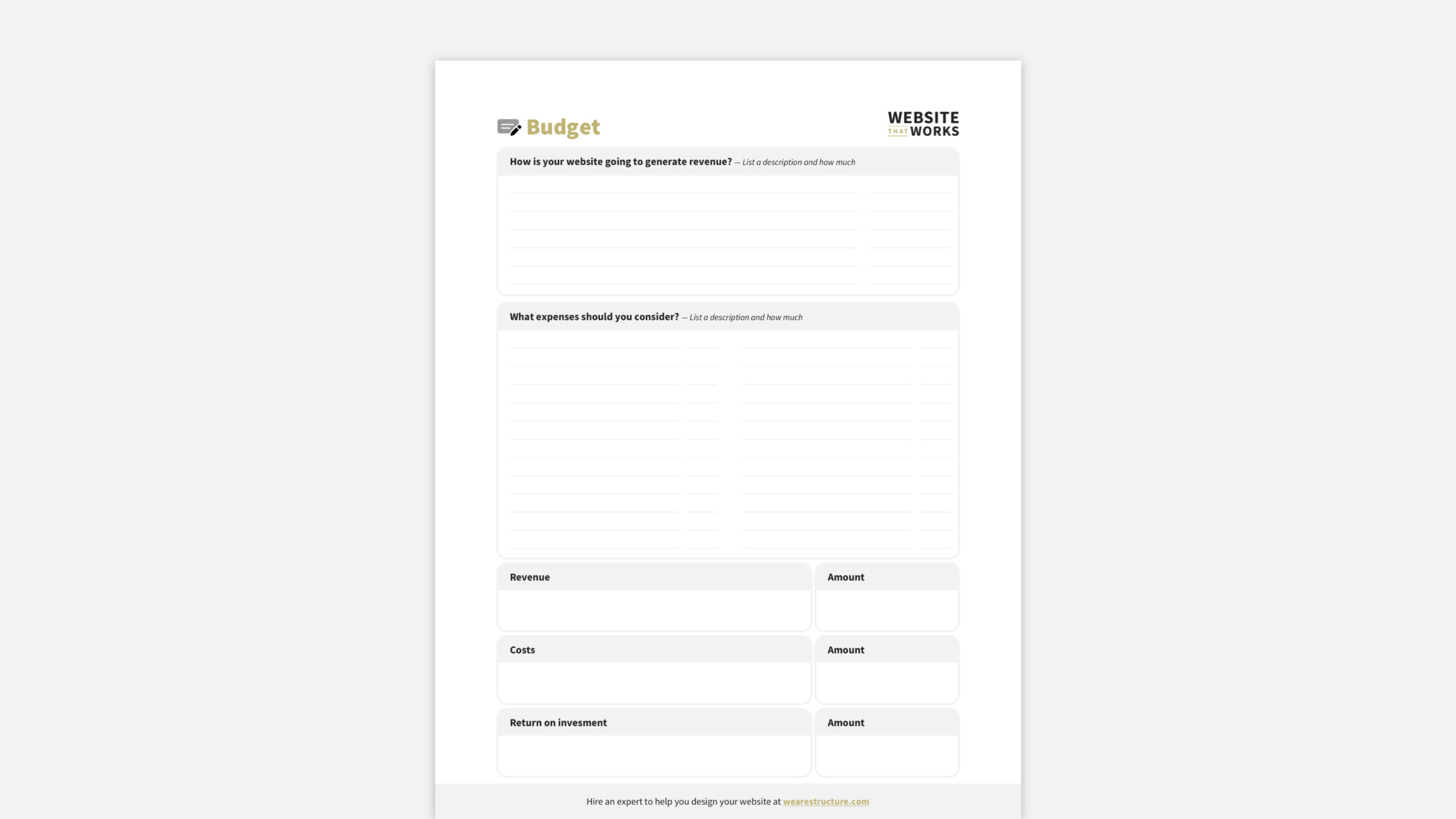
Website build budget
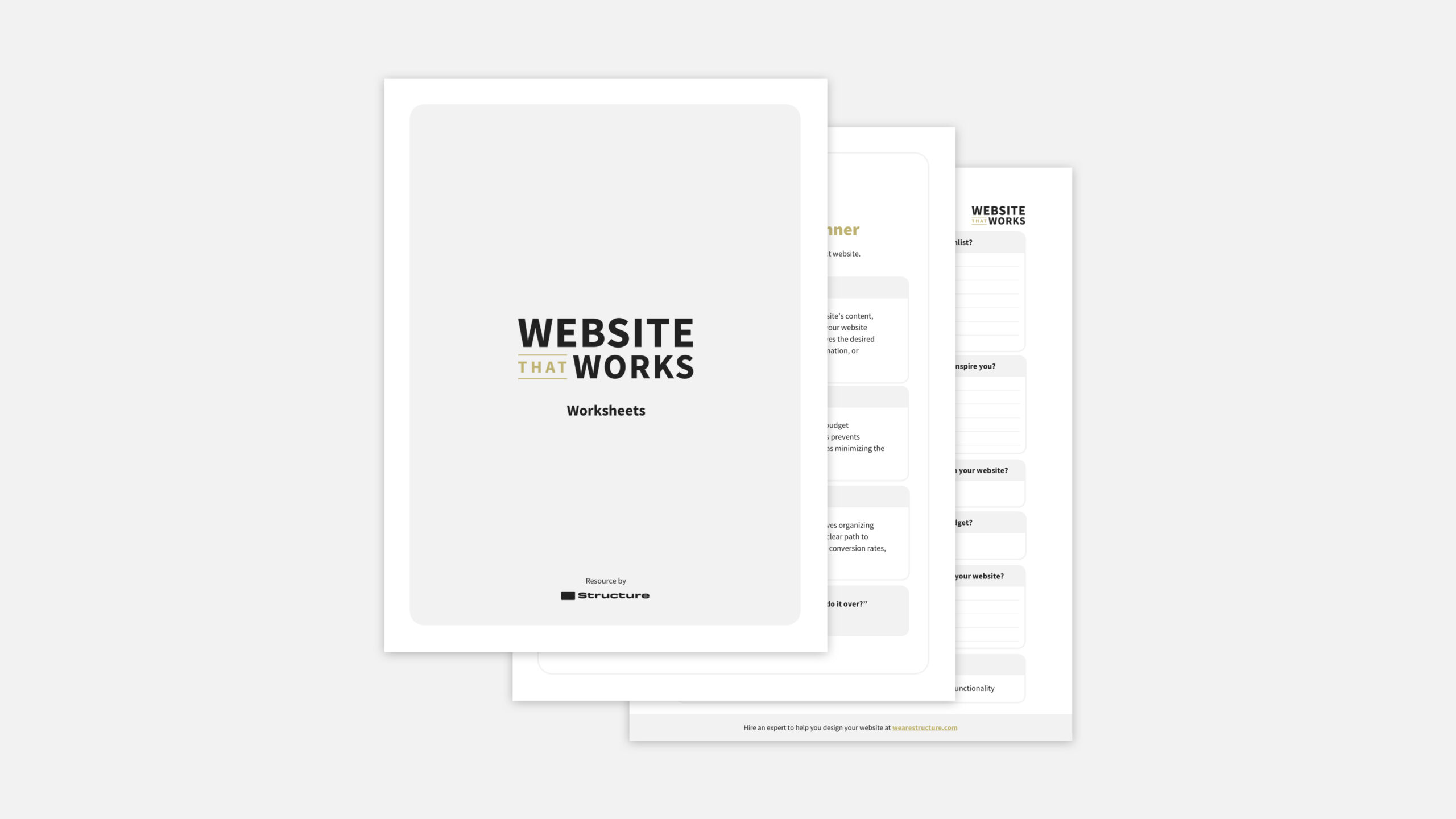
At Structure, all website projects start with a strategy. Our clients can bring an existing strategy to the table for us to implement or work together on a strategy in our Website Workshops.
In the Website Workshops, we walk our clients through a detailed worksheet for each of the 10 pieces of information listed above so they hit the ground running. It’s incredible how much confidence a documented Website Plan can give your team.
2. Design – Mockup your website for all devices
Putting yourself in your audience’s shoes is crucial in the design stage.
Craft mockups of your website that cater to all devices, ensuring a seamless user experience for your visitors. Consider the challenges and preferences of your target market and design with them in mind: this user-centric approach, which you’re adopting, results in a visually appealing and functional website.
3. Develop – Build your website pages and functionality
When developing your website, you’ll build the site to match the designs completed in the previous step.
Furthermore, this is where you ensure your website functions seamlessly to meet your goals, technology, and users’ needs documented in the Website Plan. You’ll have a website that works harmoniously with your business goals if you can accomplish these things.
Like Step 2: Design, you’ll also want to hire a freelance designer or a web design agency here. Depending on your website plan, website development can get pretty complicated, no matter what industry you serve or your business type.
4. Manage – Ensure your website runs smoothly
The post-launch phase requires vigilant management.
As a leader, you understand the importance of a smoothly running website. Devote resources to ongoing maintenance, security updates, and performance optimization.
Establish processes that address the issues you’re concerned about, ensuring your website meets your high standards consistently.
Specifically, you’ll want to have a system to cover your bases:
Daily site backups
Weekly testing of forms and conversion funnels
Monthly plugin and software updates
Performance reporting and monitoring
Quarterly review of website content for accuracy
Test device and browser compatibility
Review and optimize the UX
Annual performance optimization
Annual technical SEO optimization
5. Grow – Drive traffic, leads, and sales
Ultimately, the success of your website launch is measured by its ability to drive traffic, leads, and sales.
But you can’t do that if your website doesn’t work. In this last stage, you’ll implement marketing campaigns that resonate with your target audience.
Then, you’ll continuously refine your approach based on your unique challenges and opportunities. The growth phase is where your website fulfills its potential.
Get a FREE Customized Digital Growth Plan
Take our 10-minute Digital Maturity Assessment and receive a FREE, personalized digital growth score that uncovers gaps and drives your business forward.
Follow this checklist when you launch your website
When it comes to the actual launch of your website, pressure can build.
The worst thing to do is get there and need help figuring out what to do with yourself. That’s why we put together this no-nonsense website launch checklist—so you know exactly what actions you need to take to direct and manage your team.
It’s not exhaustive; we did that intentionally so you could focus on the essentials. The checklist comprises two launch phases: pre-launch and post-launch. It starts when you’re ready to launch your new website and ends after you’ve verified the site works as intended.
Pre-launch website checklist
Make sure the text is accurate and error-free
Replace all placeholder images with final images and designs
Check that all styling preferences have been implemented
Ensure that rights to images, fonts, and other content have been appropriately licensed or cited
Test the site on desktop, mobile, and tablet devices
Test the site on Chrome, Safari, and Firefox browsers
Test all forms, entries, checkout processes, and integrations thoroughly
Create an easy-to-access backup of your website
Ensure regular backups are scheduled
Pause marketing communications and digital ads
Post-launch website checklist
Visit your URL
Ensure your website Privacy Settings allow search engine indexing
Search and Replace DEV or STG URLs with new PRD URLs
Run a Technical SEO site audit to quickly identify any significant issues preventing customers from accessing your site
Make sure the text is accurate and error-free
Check that all styling preferences have migrated correctly
Test the site on desktop, mobile, and tablet devices
Test the site on Chrome, Safari, and Firefox browsers
Test all forms, entries, checkout processes, and integrations thoroughly
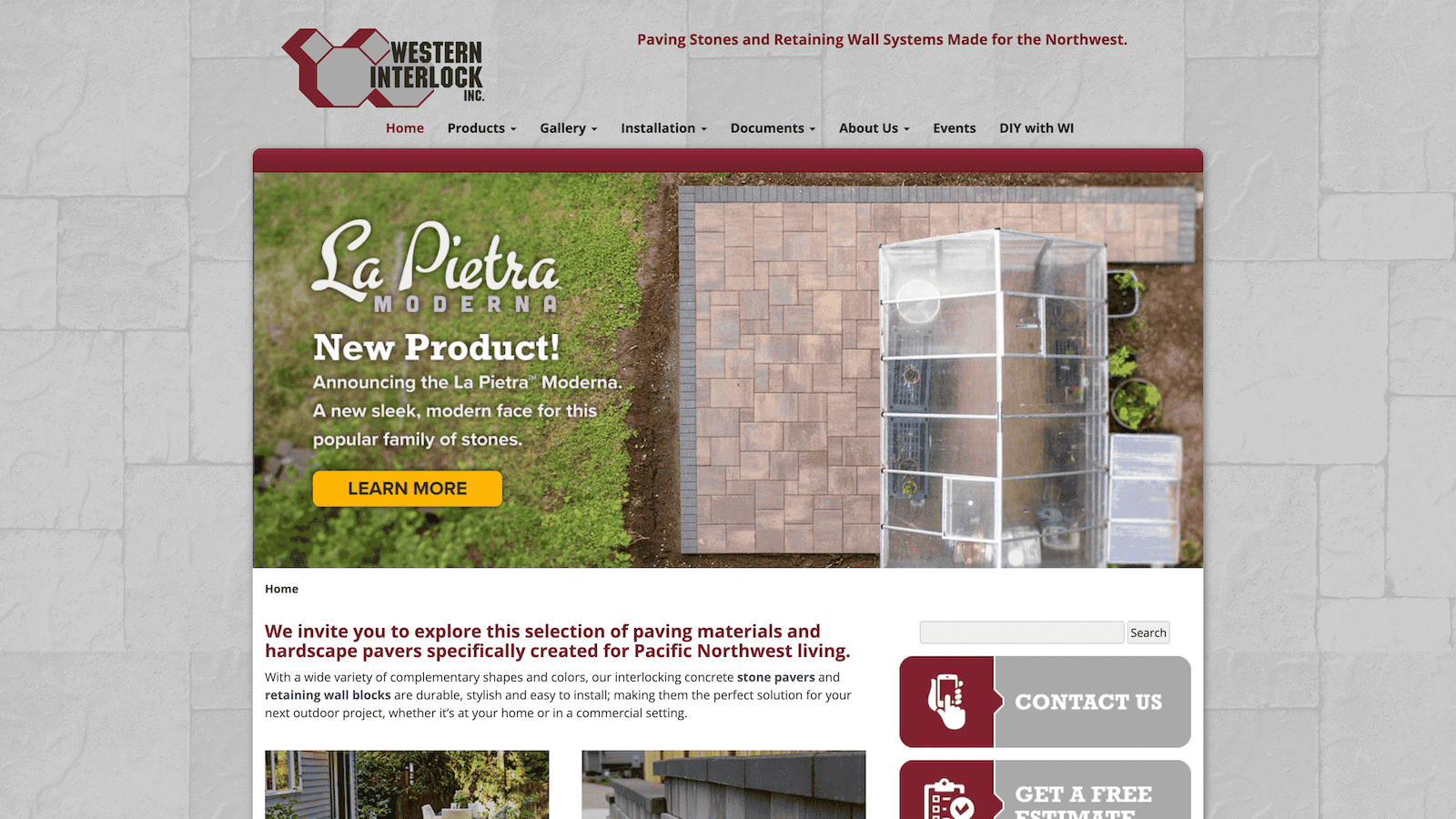
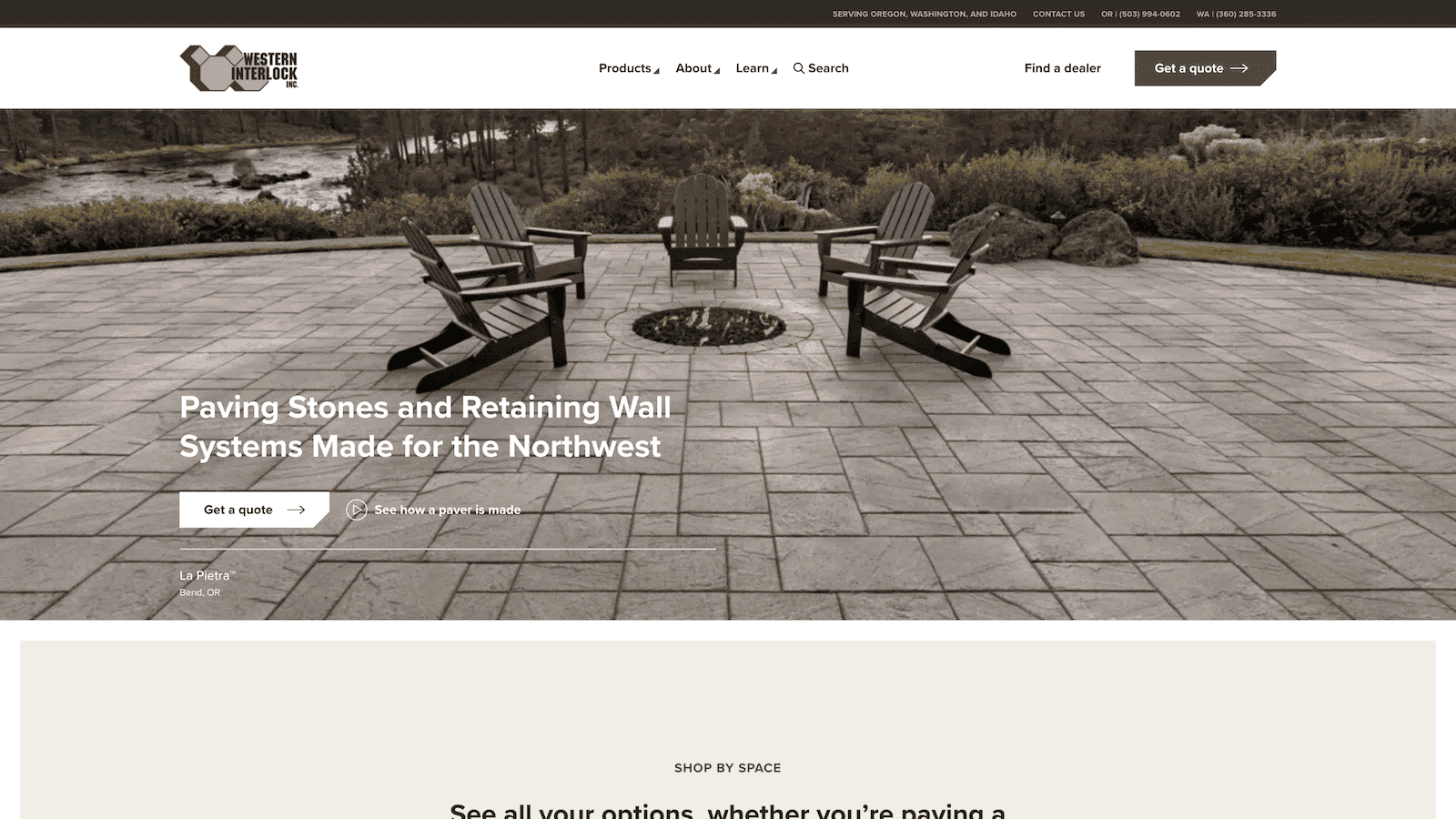
The Western Interlock website needed a new look to align with its brand and accommodate high-traffic DIY blog content while ensuring easy navigation.
The solution involved a brand refresh and a streamlined information architecture for user-friendly navigation.
The outcome is a visually appealing and fast website optimized for mobile and engagement. Shortly after launch, estimate requests and traffic more than doubled, making it a successful transformation. Specifically, a 65% increase in users and a 2.9% decreased bounce rate.
western interlock — Before
western interlock — After
They are the only vendor that I’ve ever met that gets down and dirty to make sure work gets done well and on time.
NATHAN, DIRECTOR OF MARKETING
2. Totem Mats
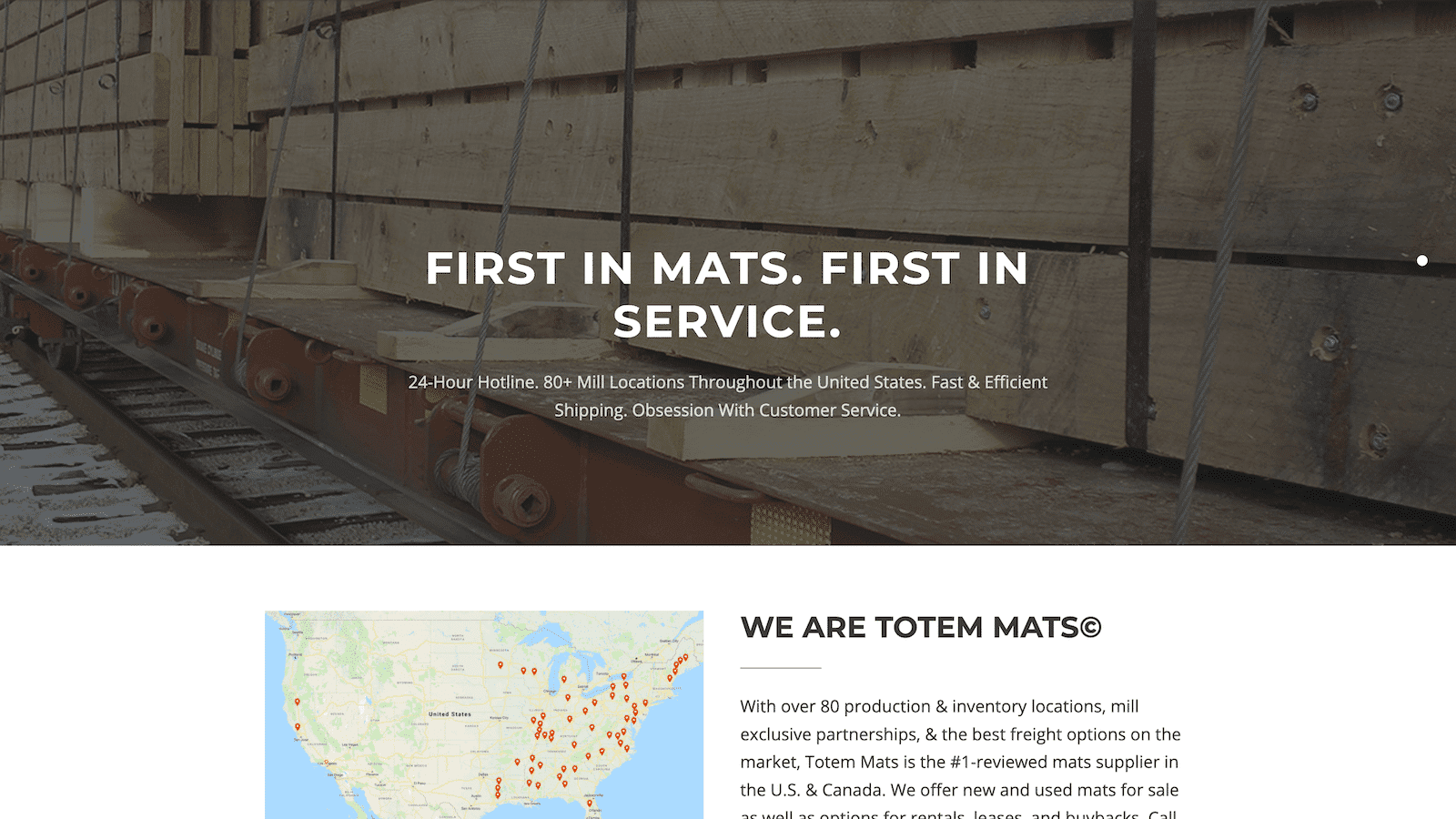
Totem Mats faced the challenge of an outdated and underperforming website that needed redesigning and additional features without losing organic search traction. They also required lead integration with Salesforce.
The solution involved a complete website overhaul, including visual enhancements, product page restructuring, and performance optimization.
The result was a seamless website launch with no traffic losses, a 69% increase in SEO traffic, improved lead generation, streamlined business processes, and increased confidence in the website’s appearance and functionality.
Totem Mats — before
totem mats — after
Their continued efforts on everything we threw and their abilities to overcome challenging problems were incredible.
Trevor Sarazin, CEO
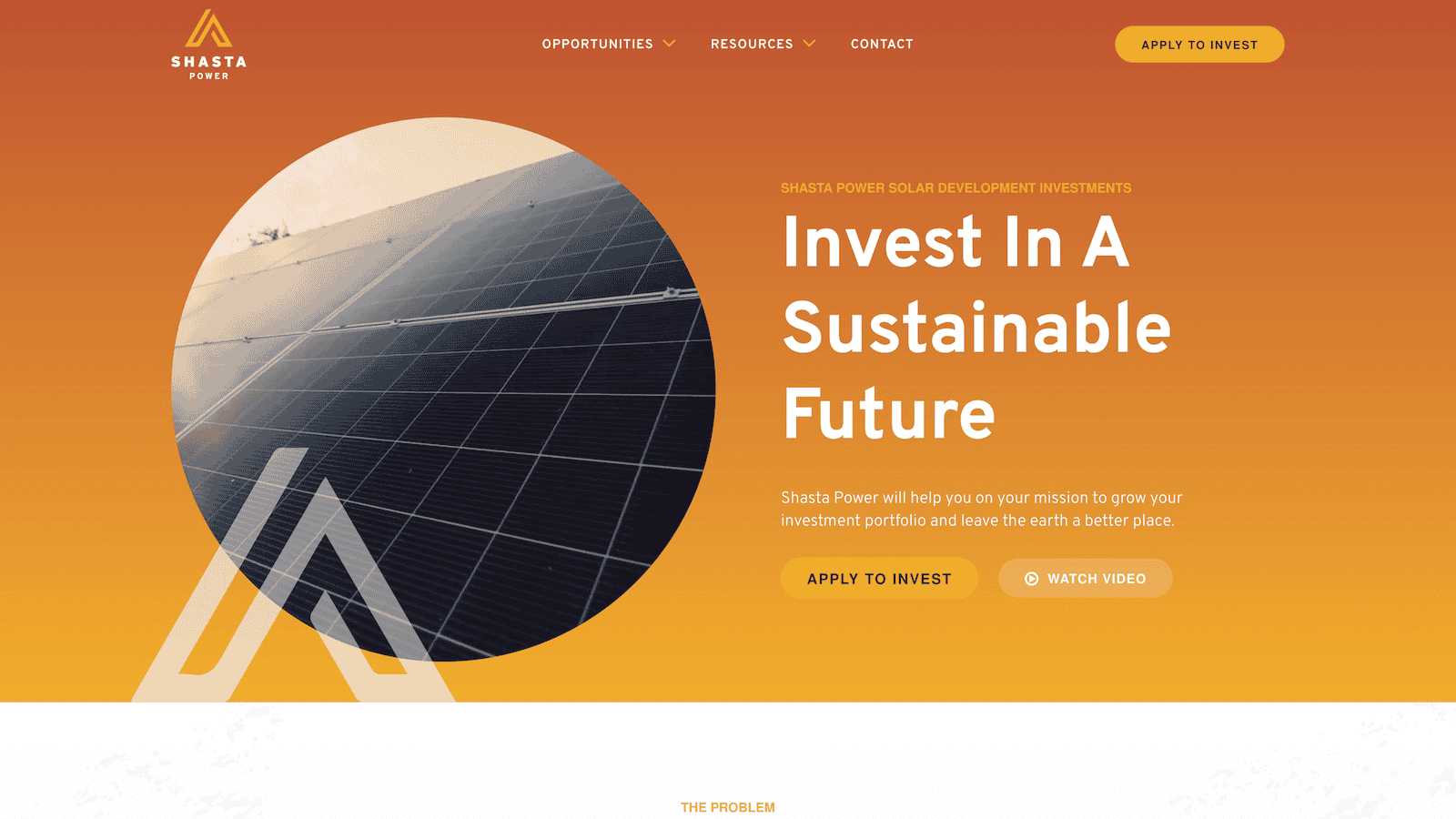
3. Shasta Power
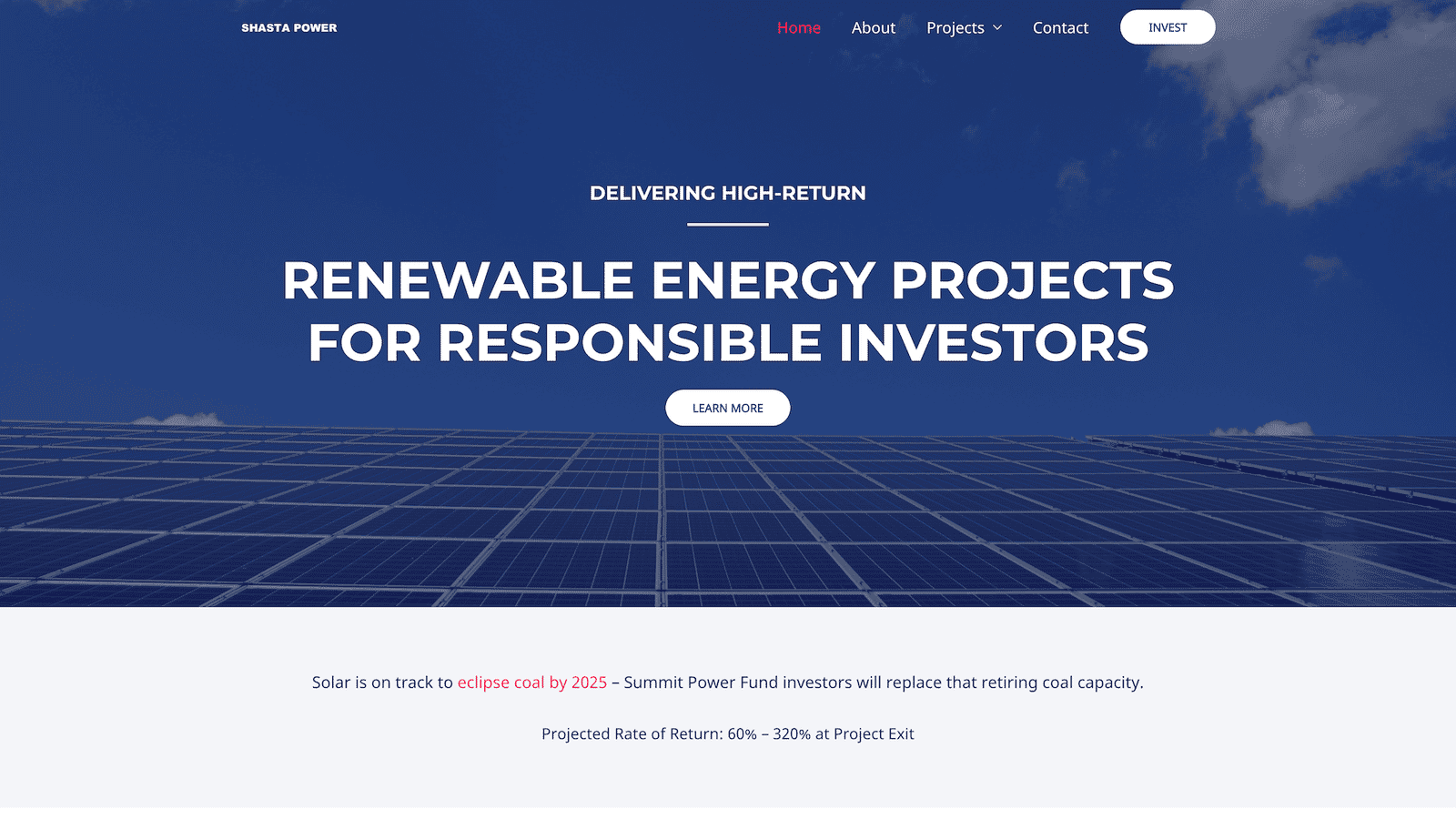
Shasta Power faced the challenge of needing a professional website but encountering design firms that didn’t consider their unique business needs.
The solution involved a comprehensive website process, starting with understanding goals, then a brand refresh, and creating a custom, responsive WordPress website with integrated business systems.
The results were impressive, with a significant increase in awareness metrics, including a 600% rise in new followers and a 200% increase in site visitors. Despite a tight timeline, the brand’s quality was maintained, showcasing the project’s success.
Shasta Power — before
Shasta Power — after
I get a sense of honesty and quality from them; they take their work seriously.
MAX, co-FOUNDER
Pro tools and resources for developing a website launch plan
Developing a comprehensive website launch plan requires access to various tools and resources. Here are some valuable tools and resources we use regularly and will assist you in creating a successful website launch plan.
1. Free website planning guide PDF
If you haven’t yet, download our free Website Design Planner to streamline your web design planning process and ensure a clear roadmap for your project.
Most website planners are just dressed-up spreadsheets that are boring and analytical. The Structure Website Planner is fun and helps you organize your goals and tasks to ensure you create your desired website.
In our fun and productive workshop with Structure, you’ll get coaching, feedback, and plans from website experts so you know you’re doing it right.
3. Slickplan website planning tool
If you’re semi-technical and detailed regarding digital strategy, Slickplan offers a low-cost digital website planning tool that covers much of the in-the-weeds planning.
It’s a great tool to complement the Structure Website Planning Guide PDF if you’re doing it yourself.
4. Structure web design, development, and management services
If you’re not looking to do any work yourself but are just looking to hand the website project off to a team of experts, that’s okay!
Structure can manage and complete the entire website launch planning and implementation process from start to finish.
We’ve streamlined the sub-standard web design experience you get from most local agencies, so you’re in safe hands.
5. WordPress & WP Engine
If you’re looking for a fail-proof CMS + Host combo, go no further than WordPress and WP Engine.
They’re industry-leading platforms that are the ones to beat. Being the most familiar platform + managed hosting, you will make your work easier regarding website launch plan implementation.
Common questions about how to launch a new website
How do you announce a new website launch?
When launching a new website, think of it like a food product label update in the grocery store.
Customers care if it still meets their needs, not just the look. So, introduce your website as an improvement for them, not just a design change. And just like the food label, skip shouting it on external channels; instead, focus on welcoming users with a video or announcement bar on your site.
What are the steps to launch a website?
The steps to launching a website, from beginning to end, are:
If you’re launching a new or redesigned website and need to promote it, here are the three next steps:
Write blog articles about your product or service
Run Paid Search ads to help people find you right away
Create a free offer to generate leads and provide value to your customers
What is the best day of the week to launch a website?
Your buyer’s needs in this area are unpredictable. However, website launch timing matters for your business.
For that reason, Tuesday is ideal.
Mondays are for final preparations, and launching after Thursday risks a weekend workload. Tuesday offers a buffer with Wednesday and sets you up for a smooth week ahead.
How long should it take to launch a website?
3-6 months, on average. Most simple websites launch within three months, and websites with a standard level of complexity launch within six months.
However, as you know, websites are complex. Therefore, there’s no definitive way to pinpoint a boilerplate website launch timeline. At Structure, we’ve launched websites in as little as 30 days and as long as two years. It all depends on the complexity, team, goals, and budget.
If you’re a marketing or business leader, you’re no stranger to setting website redesign goals—or just the challenge of a website redesign (sans the “goal” part). But what if you could do more than make things look better this time—what if you could magically create 10x growth?
You can, but there’s a hitch: without a plan and solid goals for your website redesign, it might only end up as a costly makeover that ends in frustration and disappointment.
You’ve been around the block, so you know your brand’s online presence is worth investing in.
But with everyone expecting top-notch digital experiences (not to mention the competition breathing down your neck), a botched redesign could mean confused customers, a drop in revenue, and missed opportunities.
Let’s not do that, okay?
So here’s the solution: your redesign must tackle specific goals to create predictable results.
Goals like, “I just don’t like how our website looks,” or “Someone in my networking group said we need to switch website platforms” aren’t specific enough.
In other words, they’re ideas to consider but not good enough reasons to redesign your website.
It all begins by changing how you look at the redesign: from a surface-level change to a strategic effort that improves every business function.
In simpler terms, it’s not about how it looks—it’s about how it works.
When you start with a plan and clear goals, you can reverse engineer growth. Once your goals, vision, brand, budget, and team align, your website redesign will create tangible, long-term results.
Get a FREE Customized Digital Growth Plan
Take our 10-minute Digital Maturity Assessment and receive a FREE, personalized digital growth score that uncovers gaps and drives your business forward.
Another way of saying this is “why” are you redesigning your website?
When considering a redesign, you should have a good reason. Often, these reasons coincide with a change or growth in the business that triggers the need for a redesign.
If you’ve tweaked your brand’s look or message, your website should reflect those changes.
It’s about ensuring your online image matches what you stand for now.
2. When you launch a new product or service
Your website can be a powerful tool for gearing up to introduce something new and exciting.
It can help you spotlight your fresh offerings and get potential customers interested.
3. When it’s been more than two years since your website launch
Think of your website like a car – it needs regular maintenance.
If it’s been more than two years since you last spruced it up, chances are it’s not performing as well as it could.
4. When your industry changes
In the fast-paced business world, industries change.
Your website should keep pace if your industry evolves due to new trends or technology. It’s all about staying relevant.
5. When the business gets bought or sold
When new owners step in, they might have different plans for the business. That often means the website needs a makeover to match the new vision.
In short, consider website redesign as a way to stay current, showcase your latest offerings, and reflect any changes in your business journey.
It’s a strategic initiative to keep your online presence in sync with your evolving goals.
Get a FREE Customized Digital Growth Plan
Take our 10-minute Digital Maturity Assessment and receive a FREE, personalized digital growth score that uncovers gaps and drives your business forward.
No matter what you want your website to achieve, remember this: your website is your company’s most crucial tool.
It’s always open, often where customers connect and order from you.
It’s even more valuable than a fancy office, a big sign, or updated vehicle wraps. Your website is all those things all the time.
You might remember when things were different if you’ve been around for a while. But now, especially in the digital age, your website is your most important investment. It’s time to update your thinking to get the most out of it.
To do that, let’s clarify what your website isn’t.
1. Your website isn’t a digital brochure; it’s an ecommerce platform.
It’s time to let go of the old-style brochure websites.
Remember when customers used to call for price quotes? Those days are long gone, and an essential webpage isn’t enough.
Websites have a new role now. They’re not just about sharing information; they’re a two-way street, which is excellent for you! If you sell products directly or through dealers, your website must be more than just a digital pamphlet.
If you sell things, your website must act like an online store. An online store is where people browse and buy and where you earn money.
This isn’t just a passing trend; it’s a significant change in how people want to buy from you. They want it to be easy and quick. An online shopping experience isn’t just nice—it’s essential!
Turning your website into an online store can be the key to keeping customers and making sales. People who can’t buy from your website might go to your competition instead. So, it’s time to upgrade!
2. Your website isn’t just a pretty face; it’s how customers experience every aspect of your brand.
Looks are important, but your website does way more than look good.
It’s where people find you, talk to you, and buy from you. What we call the “Flywheel,” your website makes your business work in the digital age.
It’s the primary way people see your brand.
It’s often the first thing customers see.
It’s where folks learn about you.
People use it to talk to you.
It’s where they shop for your stuff.
And it does even more!
So, remember, your website is not just about looks.
It’s about making things happen – like transactions, sharing info, engaging customers, and gathering data. To make it work for you, think beyond the visuals. It’s a powerful tool for your whole business.
3. Your website is not an announcement board; it’s a storefront
As a business owner or marketing manager, treating your website like a giant news billboard is tempting.
You might want to shout about your achievements from the mountaintop.
Celebrating your successes is important, but there’s a better way than plastering them all over your website’s front page.
Your website should be more about your customers and what they need. It’s not just a place to brag.
So, while showcasing your accomplishments is great, remember to keep your website focused on what matters most to your visitors—helping them find what they’re looking for and making it easy for them to do business with you.
Elevate Your Website Game
Snag your complimentary Structure Website Design Planner now and start crafting a website strategy that leads to undeniable project success!
Website redesign goals impact more than marketing
When most people think of “website goals,” they immediately think of traffic, leads, and sales.
Those are great goals—in fact, they’re vitally important! But if your website only provides traffic, leads, and sales to your business, you’re missing out on its full potential.
The truth is that your website can improve all business functions, from marketing to HR.
Here’s a short list of the different business functions that your website can impact—and how it affects them.
1. Strategy and Administrative
Your website can be pivotal in shaping your overall business strategy.
It can serve as a platform to communicate your mission, vision, and goals to internal and external stakeholders.
Internally, it can streamline administrative processes by providing a centralized hub for communication, document sharing, and project management.
Externally, it can showcase your strategic priorities and initiatives, helping investors, partners, and customers understand your direction and values.
2. Sales and Marketing
This is the more traditional website role, but it remains crucial.
Your website is often the first point of contact for potential customers. It should generate leads and sales and serve as a powerful marketing tool.
It can also provide valuable content, demonstrate your expertise, and create a positive brand image—and utilizing analytics and user data helps refine marketing strategies and effectively target the right audience.
For example, it can serve as a platform for online billing and payment processing, simplifying financial transactions.
Regarding HR, it can assist in recruiting talent by showcasing job openings, detailing company culture, and offering an easy application process. Additionally, it can be a resource for existing employees by providing access to essential documents, training materials, and benefits information.
4. Information Technology
From an IT perspective, your website must be secure, scalable, and well-maintained.
It is your organization’s backbone for many digital tools and platforms.
Properly managing your website ensures it remains a reliable and efficient resource for all other IT-related functions. Regular updates, security measures, and technical maintenance are essential for a smooth operation.
5. Operations and Manufacturing
Even for businesses involved in operations and manufacturing, a website can have a significant impact.
It can be a customer portal for placing orders, tracking shipments, and managing accounts.
It can also act as a knowledge base, providing technical information, troubleshooting guides, and customer support resources. Your website can improve efficiency and customer satisfaction in these operational areas by offering self-service options.
Supercharge Your Website Strategy
Get your hands on the Structure Website Design Planner absolutely FREE and supercharge your website strategy for guaranteed project success!
How to set goals for your website redesign
There are many approaches to setting goals for your website redesign.
While many of them are helpful, at Structure, we’ve found that using your Customer Journey as a guide is most beneficial.
Planning based on your customer journey is the most natural and logical way to think critically about the goals you need your website to accomplish for your customers and your business.
Here’s how to go about it:
1. Start with the End – What Do You Want Your Customers to Do?
It’s crucial to clarify your primary objective.
Consider what final action you want your website visitors (customers) to take on your website. Let’s call this your “ultimate goal.”
This ultimate goal can include:
Buy a Product: If you’re an e-commerce business, your goal may be to increase product sales directly through your website.
Request a Quote: Obtaining quote requests from potential clients can be crucial for service-based industries.
Schedule a Call: If your business relies on consultations or appointments, encouraging visitors to schedule a call or meeting is essential.
Consume Content: Some websites aim to provide valuable content, so the goal might be to increase content consumption, such as blog post views or video watching.
Visit a Location: If you have physical locations, guiding visitors to find and visit those locations can be a goal.
Share Content/Product: Social sharing and referrals can be important for spreading the word about your products or content.
Donate: Non-profit organizations often aim to increase donations through their websites.
Register for an Event: Encouraging registrations is a goal if you host events or webinars.
Other: Depending on your unique business model, there may be other specific actions you want visitors to take.
2. Know Where It Starts – How Do Customers Find Your Website?
Next, you need to understand how customers find your website.
Think of this like a map’s “you are here” arrow.
Consider the various possible entry points:
Paid Search: Do visitors visit your site through paid search campaigns on search engines like Google?
Paid Ads: Are online advertisements, such as display or social media ads, driving traffic?
Blog Posts: Is your blog a significant traffic source, attracting users through organic search or referrals?
Podcast: If you run a podcast, are listeners coming to your site through podcast-related content?
Referral Marketing – Influencer/Affiliate: Are influencers or affiliates driving visitors to your site?
Now, you know where you are and where you want to go. All that’s left to do is fill in the gaps.
3. Steps Along the Way – What’s the Next Action?
Once visitors arrive at your website, consider the steps they need to take to fulfill your ultimate goal.
This may involve navigating various pages, interacting with specific elements, or filling out forms.
Pro tip: using the AIDA Framework for this step is helpful.
Use the AIDA framework to document action steps
The AIDA framework is a widely used marketing and advertising model that outlines a potential customer’s stages when interacting with a product or service.
AIDA stands for:
Attention
This is the stage where you grab the audience’s attention.
You must create awareness and pique their interest in your product or service.
This can be achieved through compelling headlines, eye-catching visuals, or engaging content.
Interest
Once you have their attention, you must generate interest in your offering.
This stage involves providing more information about the product or service, highlighting its features and benefits, and addressing the audience’s needs or pain points.
Desire
You aim to create a strong desire or craving for your product or service at this stage.
This is often achieved by showcasing how it can fulfill the audience’s desires, solve their problems, or improve their lives.
Customer testimonials, reviews, and success stories can be powerful tools in building desire.
Action
The ultimate goal of the AIDA framework is to prompt the audience to take action.
This action could be purchasing, requesting more information, signing up for a newsletter, or any other desired outcome.
Clear and compelling calls to action (CTAs) facilitate movement.
At each stage, ask yourself two questions
At each action stage in the AIDA framework, you need to ask yourself the following:
What content is needed to communicate value at this action step?
What is the following action step our customers need to take to proceed toward the ultimate goal?
Take the time to document each action step at each stage in the AIDA framework. I know this sounds like a lot of work. And it is, but it’s how you set great goals for your website.
3. Set SMART website redesign Goals
Now that you have full context and aren’t shooting in the dark, it’s time to determine your website redesign goals.
Do this in two steps.
1. Benchmark your current metrics so you can measure success
As you set goals, it’s essential to understand where you currently stand.
That way, you can measure success. This involves conducting a comprehensive assessment of your website’s existing performance metrics. These metrics may include:
Website Traffic: Analyze the volume of visitors to your site. This includes overall traffic and specific traffic sources, such as organic search, social media, or paid advertising.
Conversion Rates: Examine how effectively your website converts visitors into customers or achieves other desired actions. This might involve tracking form submissions, purchases, or sign-ups.
Bounce Rates: Assess how many visitors leave your website shortly after arriving. High bounce rates can indicate issues with user experience or content relevance.
Average Session Duration: Measure how long users typically spend on your website. Longer sessions can indicate engagement and interest.
Page Load Times: Page speed is crucial for user experience and SEO. Evaluate how quickly your pages load and identify any slow-loading elements.
Traffic Sources: Understand where your website traffic is coming from. Are visitors finding you through search engines, referrals, social media, or other channels?
Keyword Rankings: If SEO is a focus, track the rankings of important keywords to assess your visibility in search engine results.
Conversion Funnel Metrics: If applicable, analyze users’ steps from initial interaction to conversion. Identify drop-off points in the funnel.
Benchmarking these metrics provides a baseline for assessing the impact of your website redesign. It allows you to identify areas that need improvement and sets the stage for defining specific goals.
2. Set SMART goals so you know you’ve succeeded
As an intelligent leader, SMART goals may already be second nature to you.
If so, great! You can skip down to the bullet points below.
However, if you’re new to SMART goals, SMART is an acronym for Specific, Measurable, Achievable, Relevant, and Time-Bound.
Setting SMART goals is crucial in ensuring your website redesign project is well-defined and aligned with your business objectives. Here’s a breakdown of each element:
Specific: Goals should be clear and precise. Avoid vague objectives and instead articulate precisely what you want to achieve. For example, instead of a broad goal like “increase website traffic,” a specific goal might be “increase organic website traffic by 20% in the next six months.”
Measurable: Goals should be quantifiable. You need to be able to measure progress and determine when you’ve achieved the goal. This might involve using metrics like percentages, numbers, or other quantifiable units.
Achievable: Goals should be realistic and attainable. While it’s good to aim high, setting unattainable goals can lead to frustration. Consider your available resources, constraints, and historical performance when setting goals.
Relevant: Goals should be relevant to your business objectives and the overall mission of your website. Ensure that achieving the goal contributes meaningfully to your organization’s success.
Time-Bound: Goals should have a clear time frame or deadline. This creates a sense of urgency and helps with project planning. For example, “increase newsletter sign-ups by 15% within three months.”
By setting SMART goals, you’ll have clear targets that guide decision-making, resource allocation, and progress tracking throughout the redesign process.
3 website redesign goals you should focus on in 2024
So, you’re probably wondering about the critical goals for your website redesign in 2024.
Well, the thing is, your website goals should always sync up with what your company aims to achieve, what’s happening in your industry, and what your audience expects.
Now, let’s dive into the top three website goals that should be on your radar for 2024:
1. Mobile and performance optimization
This one’s been around for a while but is more critical than ever.
Why? Because the number of folks using smartphones and tablets to access websites keeps increasing. So, having a website that looks great and works smoothly on mobile devices is non-negotiable, regardless of your industry or what you offer.
It’s all about delivering a top-notch customer experience.
Let’s say you run an online health supplement retail store.
Mobile optimization ensures customers can effortlessly browse and shop for supplements using smartphones while waiting for a bus or during lunch breaks. Fast-loading pages and a smooth checkout process enhance the user experience, leading to more completed purchases.
Optimizing for mobile and performance doesn’t just meet user expectations; it’s a competitive advantage.
It reduces bounce rates, increases user engagement, improves SEO rankings, and leads to higher conversions and customer satisfaction.
2. Create human, original content
You’ve probably noticed that artificial intelligence (AI) is making waves in our world.
It’s everywhere, and with it comes a flood of generic, machine-generated content taking over the internet. The thing is, some of your competitors might be going all-in on this robotic content, and it can make your customers feel, well, a little weird.
But here’s the exciting part: amidst this AI revolution, you have a golden opportunity.
It’s all about staying human in this increasingly artificial landscape. That means finding genuine ways to connect with your customers, to make them feel heard and valued, and to provide an authentic experience that stands out in a sea of automated content.
If you manage a healthcare blog, original content might include in-depth articles written by medical experts, real patient stories, and interviews with healthcare professionals.
This content provides valuable information and establishes your site as a trusted and credible resource in the industry.
Human, original content builds trust, loyalty, and brand authenticity.
It also helps with rankings, as search engines prefer unique and valuable content. Moreover, it creates a lasting impression on your audience, making them more likely to engage with and advocate for your brand.
3. Personalization
Your customers want your website to understand their needs and preferences.
It’s almost like having a friendly, knowledgeable guide.
Personalization is not just a trend; it’s becoming a standard for successful websites. It’s about showing your customers that you truly know them and care about their journey on your site.
Let’s say you run an e-commerce website selling outdoor gear. Through personalization, you can show hiking enthusiasts content related to their interests, recommend hiking equipment based on past purchases, and even alert them to nearby local hiking events or trails.
This not only enhances their user experience but also drives more targeted sales. In 2024, personalization is the key to making each visitor feel like your website was tailor-made just for them.
In this way, personalization can significantly impact your bottom line. It improves user engagement, increases conversion rates, and boosts customer retention. When customers feel understood and catered to, they’re more likely to stay, purchase, and become loyal advocates for your brand.
10 more website redesign goals to consider for 2024
Your company can have one or various goals for their websites, depending on their industry, target audience, and overall business objectives.
I intend for these examples below to inspire your planning and illustrate how specific website redesign goals can impact your business, from growth and revenue to reputation and community-building.
1. Brand Awareness
Goal: Elevate your brand’s online presence.
Why: A website revamp can boost your brand’s online visibility, making it easier for potential customers to find and recognize your business.
Example: After a website redesign, your Consulting company’s improved branding and content strategy resulted in a 30% increase in organic search traffic.
2. Lead Generation
Goal: Capture more high-quality leads.
Why: A redesigned website with optimized lead generation forms can increase your pool of potential customers, providing your sales and marketing teams with valuable prospects.
Example: Your Software Company’s website redesign led to a 25% rise in lead conversions, thanks to strategically placed lead capture forms and compelling content offers.
3. Sales and E-commerce
Goal: Drive more online sales.
Why: An e-commerce website overhaul can enhance the online shopping experience, increasing revenue through more successful online transactions.
Example: Your E-Commerce company saw a 40% surge in online sales within six months of the website redesign, thanks to a user-friendly interface and a streamlined checkout process.
4. Educational Content
Goal: Establish your company as an industry authority.
Why: By showcasing thought leadership content such as insightful blogs, whitepapers, and webinars on your website, you can position your brand as a trusted industry expert.
Example: Your Coaching company website redesign featured comprehensive blog and industry reports and solidified your position as a thought leader, resulting in a 50% increase in event speaking invitations. Hooray!
5. Information Dissemination
Goal: Keep stakeholders informed with timely updates.
Why: A well-designed information hub on your website ensures that clients, partners, and stakeholders stay informed, fostering transparency and trust.
Example: Your Private Equity Firm’s revamped website included a dedicated news section that saw a 20% increase in media coverage and positive public perception.
6. User Engagement
Goal: Foster a vibrant online community.
Why: Websites encouraging user engagement through interactive content, discussions, and social sharing features create a loyal and active customer community.
Example: Your Travel Company’s website redesign included a forum for travel enthusiasts, resulting in a 15% increase in user-generated content and user retention.
7. Customer Support
Goal: Provide efficient customer support.
Why: Redesigned customer support sections with FAQs, live chat, and knowledge bases to reduce support ticket volume and enhance overall customer satisfaction.
Example: Your EdTech Company’s website redesign, featuring a simple help center, led to a 30% reduction in support tickets and faster issue resolution.
8. Event Promotion
Goal: Promote events effectively.
Why: Event-focused website enhancements ensure potential attendees can easily access event details, boosting registrations and attendance.
Example: Your Non-Profit website redesign included a user-friendly event calendar and registration system, resulting in a sold-out conference within weeks.
9. Portfolio Showcase
Goal: Showcase your company’s standout work.
Why: A portfolio-rich website builds trust with potential clients by showcasing your track record of successful projects.
Example: Your redesigned Real Estate website highlighted case studies, resulting in a 40% increase in inquiries from high-profile clients.
10. Recruitment and Careers
Goal: Attract top talent and showcase company culture.
Why: A revamped career page attracts skilled job seekers and provides insights into your organization’s values and work environment.
Example: Your Manufacturing Company career page redesign featuring employee testimonials led to a 35% increase in applications from top-tier candidates.
These are just a few examples of the diverse range of website goals that companies might have. Each goal is tailored to the company’s needs, target audience, and overall business strategy.
Common questions about setting website redesign goals
What is a website redesign goal?
Website goals are the specific things your website aims to do.
Why are website goals important? Well, they give you a roadmap for how your website should look, what content it should have, and how you market it online.
These goals can be diverse for marketing managers and business leaders like you. It could be about getting your brand out there, attracting potential customers, boosting sales, sharing valuable info, getting folks engaged, or achieving specific business targets like making more money or gaining more customers.
But here’s the kicker: keeping an eye on these goals is crucial. It’s how you measure if your website is doing its job and contributing to your overall success.
So, in a nutshell, website goals are the key to a successful website redesign.
What is an example of a SMART goal for a website redesign?
In summary, a SMART goal focuses on a specific aspect of website performance (organic traffic), is measurable, achievable, relevant to the organization, and has a defined time frame for completion.
It provides a clear and actionable target for website improvement.
Here’s an example of a common SMART goal for a website:
Specific: Increase organic website traffic by 20% over six months.
Measurable: This goal is measurable because you can track website traffic using tools like Google Analytics. You can quickly determine whether you’ve achieved a 20% increase in traffic.
Achievable: The goal is realistic and possible based on historical data and industry benchmarks. A 20% increase in organic traffic is challenging but feasible with the right strategies.
Relevant: Increasing website traffic aligns with the organization’s broader marketing and business objectives. It’s appropriate to expand the online presence and attract potential customers.
Time-Bound: The goal has a specific timeframe of six months, providing a clear deadline for achieving the 20% increase in organic traffic.
Many companies are looking to increase web traffic. Maybe you want to steal this SMART goal for your website!
How do you measure the success of a website redesign?
This is a fantastic question.
Most results will give you a list of generic performance indicators to evaluate your website redesign performance. Or, someone will tell you it’s based on how you feel it looks at the end of the project.
Throw out that generic list and pretty brand. Instead, create SMART goals for your website redesign. SMART goals are measurable, so your success metrics are already built in. That’s it!
Measure the success of your website redesign based on how you achieve your goals.
What should be included in a website redesign?
Goals! That’s always a great starting point.
However, it can be tough to pull goals out of thin air.
That’s why we recommend using your unique customer’s buying journey as an easy way to walk through everything that your website must do well to make a sale.
We call this “creating a customer.”
Therefore, your website redesign should include everything necessary to create a customer (and keep them around). Often, this runs the gamut from blog posts to a help center—and everything in between.
What is the main goal of a website redesign?
Great question! Some would say: “sales.” Others would say, “lead generation.”
They’re both right! And you’ll talk to plenty of folks who will say the main goal of a website is “to look impressive.”
Ultimately, every website exists to help a company produce a profit. So, in short, that’s the point. However, other goals are often at play, tailored to the unique needs and objectives of the company it represents.
What’s important is that you take the time to define clear and measurable goals for your website to ensure that it effectively serves its intended purpose—whatever that may be!
What are the best tools and resources for setting website redesign goals?
Setting website redesign goals requires careful planning and consideration of various factors.
While there are many tools available to help you with different aspects of goal-setting and website redesign, here are some of the best tools and resources:
Google Analytics: It almost goes without saying, but Google Analytics is essential for benchmarking your website performance. It provides insights into your website’s traffic, user behavior, and conversion rates, helping you identify improvement areas.
Google Search Console: This tool helps you monitor your website’s presence in Google search results. It provides data on how your site appears in searches, which keywords drive traffic, and any issues affecting your site’s visibility.
Heatmap and User Recording Tools: We use Hotjar to provide heatmaps and session recordings that visualize user interactions on the websites we manage. This often helps identify areas of interest and pain points our website visitors are experiencing.
SEO Tools: Our favorite SEO platform is Ahrefs. It can assist in keyword research, competitive analysis, and SEO performance tracking. Setting SEO-related goals is crucial for website redesign. Note there are many great options with different price points and features like Moz, SEMrush, and Ubersuggest.
User Survey and Feedback Tools: It’s worth getting feedback from your website users with a pay-per-test tool like Userfeel. This economic feedback loop can provide valuable insights into user preferences and issues.
Website Performance Monitoring: We use PageSpeed Insights daily to look under the hood at a website’s performance, including page load times and uptime. Ensuring your website loads quickly is essential for user satisfaction and is a goal worth considering.
Customer Relationship Management (CRM) Systems: CRM platforms like Salesforce or HubSpot can help you set and track goals related to customer engagement, lead generation, and sales.
Competitor Analysis Tools: Tools like SimilarWeb can help you analyze competitor websites to identify areas for improvement and set competitive goals.
User Persona and Journey Mapping Tools: Tools like Whimsical can make creating user personas easy and mapping out the customer journey, which is crucial for setting user-centric goals. If you’re savvy and want to take your website planning a step further, check out Slickplan.
As with all tools, there are dozens to choose from. We recommend selecting tools that align with your website redesign goals and requirements. A combination of any of these tools can help you plan, execute, and measure the success of your website redesign project effectively.
The value of web strategy is this: the most beautiful, best performing, and highly profitable websites powering fast-growing companies weren’t built overnight—they were carefully planned. That’s why we created a web strategy template to help you think through every key decision before you ever write a line of code or choose a design.
If I showed you two websites—one that got rave design reviews and another that made millions of dollars yearly—which would you choose? If you’re like most of our clients, you’d say, “Duh, show me the money.”
The thing is that because many websites look fantastic and showcase the latest design trends, you think they’re producing incredible results. Yet, the reality is they fail to meet the expectations of their owners and users. You’d never know it, but they’re challenging to manage in the background, yield terrible ROI, and are just a pretty liability.
Your website should work like an engine that helps you get where you want to go
If you’re working on a new website, you likely want your website to be a strategic asset contributing to your organization’s growth, supporting your marketing efforts, and delivering a seamless customer experience.
Free Web Strategy Template
Download the Structure Website Design Planner to create a web strategy that makes your project successful!
Similarly, your customers want your website to provide readily available solutions to their problems. This happens by providing resources, products, or services that improve their life and offer quick and practical solutions to their concerns.
If you’re considering what you want for your website, this short list of expectations from multiple sources will likely stop you in your tracks! If you didn’t already know it, you might be starting to see that building a website is much more complex than choosing the right colors, fonts, and layouts.
Web design is not just an art. It’s a science. You see, designing and creating a website starts with a web strategy—which involves making a plan, aligning with your team, and putting it into motion.
The good news is that you don’t have to figure it out yourself! Using our Website Strategy Template and following the advice and proven 10-step plan in this article, you can plan a beautifully designed website that produces incredible results.
What is a website strategy?
At face value, “Website strategy” is a scary word. It sounds serious, intimidating, and hard to create. The word “strategy” must make it feel this way. Whatever it is, it feels like it’s something you don’t want to mess up.
But don’t worry; it’s not so bad after all. If it helps to know, the most significant way you can “mess it up” is by not doing it. More on what happens when you fail to plan your website later.
Here’s the skinny: a website strategy is simply a strategic plan for your website. That’s it—just a plan for what you want, what customers want, and how you will satisfy those expectations.
Take our 10-minute Digital Maturity Assessment and receive a FREE, personalized digital growth score that uncovers gaps and drives your business forward.
If you’re delving into website strategy, you’re likely tackling a website project, either creating a new site or redesigning an existing one. Here are the scenarios you might be in:
Launching a new product or business
Outgrowing your current website, hindering your team
Rebranding with fresh design changes
Migrating to a more suitable platform
Don’t underestimate the significance of the situation. Your project’s success or failure impacts the company’s reputation, finances, and possibly your job.
If it succeeds, you’ll be proud and likely rewarded for your excellent work. If it fails, on the other hand, you’ll be frustrated and embarrassed and might need to find another job or prove yourself again.
Don’t make the biggest website mistake most leaders make
Rushing into action is a common mistake—it’s easy to dive into website design hastily, thinking it’s simple with no-code builders like Wix, Squarespace, Elementor, and others.
It’s super duper easy, right? You don’t need to know how to code, design, or hardly even think. You don’t even have to be alive! In fact, you could be a corpse and still build an excellent website.
I’m kidding—that’s grossly untrue. But I hope you see my point!
Between amateur “web designers” and no-code website builders, many clients come to us completely confused about what it takes to build a website. They often have a false impression that websites practically build themselves. Either that, or they appear when you snap your fingers and pay your brother’s buddy $5,000.
Okay, I’m still being a bit cheeky.
I’m being extreme to clearly articulate that this way of thinking is a rude misconception—especially if you want a website that produces tangible ROI such as leads and sales. The truth is that website strategy is essential because high-performing sites are planned.
This might contradict your desire for quick results, but it’s the key to success. Ultimately, planning saves time and money and ensures an effective outcome.
12 benefits of creating a website strategy
As discussed, a website strategy is your roadmap to avoid random changes. It ensures your redesign aligns with business goals, user needs, and systems integration, among other things. This strategic approach has multiple benefits for your business.
Here’s more about the advantages of investing in a well-defined website strategy.
Free Website Strategy Template
Download the Structure Website Design Planner to create a website strategy that makes your project successful!
1. You’ll have a clear redesign roadmap
A website strategy outlines specific goals for the website, guiding all efforts toward achieving them.
2. You’ll know what content you need to create
An effective website plan helps you prioritize content creation by aligning it with target audience needs and business objectives.
A straightforward website strategy ensures logical and easy-to-follow navigation by mapping the site’s structure, helping users find information quickly.
5. You’ll have better SEO
We always get the question, “How do I redesign a website without losing SEO?” The answer is: with a website strategy. Part of your strategy should include strategic internal linking, relevant keywords, and structured content that will contribute to improved search engine visibility and organic traffic.
6. Your brand will be cohesive
Considering your brand in your website strategy helps you maintain a consistent brand image across all customer touchpoints with your business, reinforcing brand identity and recognition.
7. You’ll see better conversion rates
By optimizing for user actions, a carefully planned website strategy can lead to higher conversion rates, whether for sales, lead generation, or other goals.
8. You’ll pass up the competition
It’s likely while you’re planning a perfect website, your competition is aimlessly running and gunning. A well-executed strategy sets your website apart from competitors by ensuring you offer unique value and address customer pain points.
9. You’ll save money (yes, it’s true!)
By establishing clear goals and priorities in your website strategy—along with a budget—you’ll prevent wasting time and resources on ineffective initiatives.
10. You’ll have a reusable website strategy template
After you’ve developed your website strategy, you can adapt it over time to immediately pivot or respond to changing market trends, allowing the website to remain relevant for longer.
11. You’ll know if your website redesign is successful
Well-defined goals and key performance indicators (KPIs) enable tracking and measurement of success.
12. You’ll have an easier time managing the website
In the long term, having a strategy makes future redesigns or minor updates more organized and efficient for those working on them.
What happens if you don’t use our website strategy template?
Conversely, disregarding a website strategy during redesign wastes time and energy, causing frustration and unmet expectations. Proceeding without a strategy undoubtedly harms online presence and business goals. To quote Benjamin Franklin, “If you fail to plan, you plan to fail.”
Here’s more about what will happen if you fail to plan:
1. You’ll be aimlessly wandering
Without clear objectives, the redesign might lack a central focus, resulting in scattered content and an unclear message.
2. Your content won’t connect
Website content might be missing or fail to align with user needs or business goals, leading to reduced engagement and relevance.
3. Your website will be messy
A lack of strategic thinking can lead to a clunky user experience, causing frustration, high bounce rates, and decreased engagement.
4. Your customers will be confused
Poorly planned navigation and content organization can confuse users, challenging finding what they’re looking for.
5. You’ll lose SEO
Ignoring SEO considerations during the redesign can result in lost organic search visibility and rankings.
6. Your brand will be inconsistent
Without a strategy, the redesign might not align with your brand’s identity, leading to user confusion and diluting your brand image.
7. You’ll see poor conversion rates
Failing to optimize for conversions can decrease conversion rates, impacting sales, leads, or other desired actions.
8. Your competition will pass you up
A strategy identifies potential opportunities for growth, innovation, or market differentiation. Failing to follow it can mean missing out and losing to your competitors.
9. You’ll waste money
A strategy helps allocate resources effectively; without one, you might invest time and money into ineffective or unnecessary elements. Or, you’ll have to keep spending more to get what you want because you didn’t plan for it in the first place.
10. You’ll always have to start from scratch
Without a website strategy, you’ll quickly find it difficult to iterate on the redesign and make informed improvements over time. It’s like every time you start; you’re starting over.
11. You’ll experience change orders and delays
Lack of direction can lead to indecision and revisions, resulting in change orders that cost more money and delay the launch. Talk about frustration and failed expectations!
12. You’ll constantly be playing catch-up
Without a strategy, you’ll only be focused on pre-launch rather than looking ahead at post-launch and how to sustainably manage your website and use it to grow the company long-term.
Develop an effective website strategy template (10 steps)
Now that you understand the importance of website strategy and its impacts, let’s explore the ten starting steps.
We’re offering a free Website Strategy Template to make it even easier. Follow the outlined steps for a fail-proof strategy, simplifying an otherwise complex process. By completing this, you’ll have a robust website strategy.
Free Website Strategy Template
Download the Structure Website Design Planner to create a website strategy that makes your project successful!
While numerous website strategy templates exist, they’re often unengaging spreadsheets or overly complex. Our template streamlines the process, making it accessible to business and marketing leaders, not just content strategists, UX designers, and developers.
Without further ado, here are the ten steps!
Step 1: Document basic company information
The Company Worksheet addresses fundamental company-related queries. It’s not a comprehensive brand strategy, but it confirms existing decisions. It delves into specifics by starting with the company name, core values, target market, and offerings.
Step 2: Organize your ideas into a clear vision
Begin with the end in mind. The Vision Worksheet captures your ideas and focuses on the process and end product rather than a vague vision.
Step 3: Set SMART website Goals
Consider the Goals Worksheet your project’s compass, aligning your team on purpose and tracking success indicators. It functions as a roadmap, ensuring your project stays on course.
Don’t forget to set “Milestones” and “performance indicators.” While these items might make it feel complex, they will make it more manageable. They represent specific steps towards your goal (begin with three) and how you measure their achievement.
Step 4: Build a team around you
According to the African proverb, “If you want to go fast, go alone. If you want to go far, go together.” The conclusion is this: don’t bear all the responsibilities alone. Envision forming a team, whether internal or external, to collectively share the load and guide the project.
Moreover, imagine seamless teamwork where everyone knows their roles and responsibilities, preventing overlaps. Using the DARCI framework, the Team Worksheet in our website strategy template facilitates this result.
Step 5: Unify your branding
The disconnection between a powerful ad and a lackluster website negatively influences how the business is perceived. Ensuring harmonious marketing across online and offline channels is essential to maintain professionalism and credibility.
Completing this worksheet is pivotal for your website strategy, as it may unveil asset gaps or outdated elements requiring refreshment.
Step 6: Plan your pages
Most businesses planning a website redesign have a basic site map, but that’s the start. You’ll want to document your navigation (header and footer), page templates, and main pages associated with those templates.
The notable question you might be asking yourself: “What’s a website page vs. page template?” A website page is a single page that uses a page template but with unique content like text, images, and videos that fit that page’s purpose. A page template is a pre-designed layout serving as a blueprint for multiple pages with consistent design and structure—for instance, one template for all products.
Step 7: Map your buyer’s journey
Your website isn’t an isolated entity; its pages aren’t isolated experiences. They should work together for a seamless customer journey, often called the “buyer’s journey.”
In web design, a customer journey is the series of steps a visitor takes on a site, from arrival to completing a goal like purchasing. It comprises stages like Awareness, Consideration, Decision, and Action. The aim is a positive experience turning visitors into customers and nurturing relationships.
For each stage, you’ll want to define desired customer actions and the content needed to support those actions. Use our website strategy template “Website Journey” worksheet quickly and efficiently.
Step 8: Analyze competitor websites
To stand out, understanding your competition is vital. To understand your competition, and identify how it impacts your website, follow these actions:
Examine a competitor’s site
Note three likes
Note three dislikes
Note three improvements or ideas for your site
Repeat for at least three competitors or similar businesses.
Step 9: Call out your business systems
Often, focus on appearance overshadows functionality. Integrations matter for social media, email marketing, CRM, or lead generation. Neglecting integrations during your website’s design and build phases can be costly.
Step 10: Create a budget
The Budget Worksheet marks the final step, presenting the awaited website redesign cost. However, the challenge lies in seeing beyond costs alone. A website is an investment, not just an expense. Your budget should encompass potential earnings, savings, and expenses, calculating its long-term profit value.
A well-defined website strategy helps guide design, content creation, and user experience decisions to achieve desired outcomes. Your website’s specific strategy should align with its goals, target audience, and industry.
But if you’re looking for inspiration, here are some examples of common website goals that organizations might employ to achieve their website strategy:
1. E-commerce website goals
Focus on a user-friendly and intuitive design to encourage seamless shopping experiences.
Implement personalized product recommendations based on user behavior.
Optimize the checkout process to reduce cart abandonment.
Offer various payment options to cater to different customer preferences.
Utilize email marketing for abandoned cart recovery and customer retention.
Prioritize fast loading times to prevent user frustration.
Simplify navigation and content presentation for smaller screens.
Use touch-friendly elements and buttons to enhance the mobile user experience.
Test the website across different devices and browsers to ensure compatibility.
7. User experience goals
Incorporate interactive elements like quizzes, polls, and surveys to engage users.
Enable user-generated content, such as reviews or comments, to foster a sense of community.
Implement live chat or chatbots to provide instant customer support.
Host webinars, live events, or online workshops to interact with the audience in real time.
Utilize gamification elements to encourage user participation and loyalty.
What is the strategy of a website?
For most business websites, the primary purpose is driving sales through products, services, information, or ideas to a global or targeted audience.
Your website can inform, educate, entertain, or sell, depending on your goals. Whether you aim to reach new customers, provide support, share your expertise, or even express yourself, your website serves as a central platform to achieve those aims and engage with your customers.
Think of a website strategy as the roadmap for your website project. It’s like having a plan that guides all your decisions and actions to ensure your website does what you want. This strategy involves everything from who your website is for, what it’s supposed to do, how it looks, and how people will use it. It’s like setting the direction for your website to help you achieve your business goals.
What makes a website successful?
Successful websites engage and educate visitors, converting them into leads and customers. This purpose should guide design, content, and features.
What makes a website successful is that it accomplishes its goals. As I said in the last question, most businesses deem their website successful if it drives sales. If sales aren’t the goal for you, that’s okay! You’ll want to identify your ultimate goal: donations, inquiries, or impressions.
Either way, your website is an investment that evolves with your business to accomplish something. Figure out what that “something” is, and you will have defined success for your business.
What is a responsive web strategy?
A responsive website strategy involves designing and developing a website that adapts and functions seamlessly across various devices and screen sizes.
The goal is to ensure that the user experience remains consistent and user-friendly whether visitors access the site on a desktop computer, tablet, smartphone, or other devices.
This strategy involves creating a flexible layout, using responsive design techniques, and optimizing content for different screens. By implementing a responsive website strategy, businesses can cater to the preferences of their diverse audience and provide an accessible and enjoyable browsing experience regardless of the device used.
What is a web branding strategy?
That’s a good question! A web branding strategy is a comprehensive plan to establish and reinforce a consistent and compelling brand identity across a company’s website—and ensure that the website identity is consistent across all channels.
A successful web branding strategy ensures that visitors can immediately recognize and connect with the brand when they land on the website. This involves consistently incorporating elements such as the logo, color palette, typography, imagery style, and tone of voice throughout the site. By implementing a solid web branding strategy, businesses can create a memorable and authentic online presence that resonates with their target audience and fosters brand loyalty.
How do you approach a website design?
At Structure, we take a strategic approach to web design. We’ve identified that most websites don’t work like their managers and users want them to because of a failure to plan. That isn’t good if you invested tens of thousands of dollars in something that looks amazing but doesn’t help your business.
That’s why every website project at Structure starts with a website strategy process. We also call it “website planning” or “website definition.” In short, it’s the process we take clients through to figure out what is needed in as much detail as possible, so we can deliver a headache-free design and build process—and, ultimately, a website that works for you.
We aim to help 1,000 businesses and organizations plan and realize successful websites over the next ten years.
What is a web strategy document?
A website strategy document outlines the goals, objectives, tactics, and guidelines for developing, designing, and managing a website.
It serves as a roadmap that guides all decisions related to the website’s creation and requirements. This document typically includes information about the target audience, website purpose, content strategy, design principles, user experience considerations, technical requirements, integration with other systems, and more.
The result of a well-structured website strategy document ensures that all stakeholders are on the same page and provides a clear direction for the entire website project, from conception to execution.
Download our free website strategy template if you’re looking for a simple way to get started.
Free Website Strategy Template
Download the Structure Website Design Planner to create a website strategy that makes your project successful!
What web strategy would help an ecommerce business drive traffic to its website and increase sales?
Several digital marketing strategies would help an ecommerce business drive traffic and sales to its website. It wouldn’t be hard to find a 13-point list. But that’s too complicated.
If you’re looking to drive traffic and sales to an ecommerce website, do these three things:
Use pay-per-click advertising (like Google Ads) to drive targeted traffic to the quiz
Ensure there are as few steps to purchase as possible.
If you do these three things, your ecommerce website will be successful.
What is a web strategy to determine the internal linking structure of a website?
The strategy to determine the internal linking structure of a website is often called “Content Siloing.” This involves organizing the content on your website into distinct groups or categories, each focused on a specific topic or theme.
Within each content silo, you create internal links between related pages, enhancing user navigation and improving SEO by indicating content relevance to search engines. This strategy helps users and search engines understand the relationships between different pieces of content on your site.
This is best done while developing your website strategy to ensure you execute consistently and effectively.
Creating a website redesign budget is essential for all businesses and organizations—no matter how small or large you are. Unfortunately, when it comes to website redesigns, they’re often planned to fail because the stakeholders fail to plan.
This article aims to help you budget and plan for your website redesign. The reason it’s so important is that your website is way more than just a pretty face for your company. It’s a strategic asset that serves as an online presence, drives business growth, engages customers, and contributes to achieving your overall marketing and business objectives.
Website redesign conversations often begin with a rush for quick answers on cost and time. They typically go something like this: “Hi, Simon! We want to redesign our website, and it needs to be done in two weeks. How much is it going to cost?”
Most people want the answer: “Sounds like a simple project! It’ll probably cost $5,000, and I can start redesigning your website tomorrow.”
If I do it for $5,000 and get started tomorrow, the client would be thrilled… until they realized it was amateur hour and I failed to complete any due diligence (aka, planning).
Skipping planning can lead to costly issues like hidden costs, scope changes, and failed expectations. Each of those issues cost everyone involved extra time and money they weren’t anticipating spending. And if it wasn’t planned time and money, the additional costs always come with significant frustration and disappointment.
Furthermore, it’s important to remember that your website is your business’s flywheel. It runs your marketing and sales efforts, connects customers to your products or service, and is often the main thing that sets you apart from competitors. If there’s one place not to go cheap, it’s with your website redesign.
The best analogy for a website is a physical building. I liken it to a skyscraper, so I often explain website principles to my clients regarding building construction. It’s much easier to understand an idea as it relates to an apparent physical object than it is a digital ideal.
Imagine if you were a builder, and I came to you and asked, “Can you remodel my skyscraper? How much is it going to cost?”
If you answered, “Sounds like a $10,000 job to me. I can pick up the materials and get started tomorrow,” I should immediately be concerned for several reasons.
You have no idea how giant my skyscraper is
You don’t know what I want the remodel to look like
My plumbing could be from the 1950s
Without knowing this information and much more, you have no idea what the remodel will cost, what materials you’ll need, and how long it should take.
Even more, it would be unsafe.
Whether you’re building a website or a skyscraper, what might seem like a “simple project” will quickly become a series of headaches due to failure to plan and communicate.
This is precisely why most website designers are accused of betraying trust. They consistently over-promise and under-deliver. It’s not because they’re unskilled in design or don’t know how a website works—they often do! They don’t know how to plan a website or run a professional service business.
So, how much for a website redesign? The answer is, “It depends on what you want. Let’s begin by making a plan.”
And it all starts with addressing the essential question: “What’s the cost?” Let’s dive into budgeting for your website redesign.
3 steps to creating a website redesign budget
Step One: Download our Website Design Planner
There are dozens of website redesign budget templates available online, but you’ll find that most are just dressed-up spreadsheets that are boring and analytical. Or, they’re insanely complicated and are meant for website professionals like content strategists, UX designers, and developers.
I created the Website That Works Planner by accident. It was after a series of mistakes, migraines, and failure to plan the websites we were redesigning for our clients. When I started Structure, our team mostly worked on small websites that didn’t require as much planning (although they still needed it at some level).
As our web design client base grew, we met companies with more complex websites that needed to be redesigned. After failing to complete due diligence on a few projects, our team created a framework to keep us from screwing up a project again. And it worked! What came out was the Website That Works Planner and many successful website redesigns after that.
This is why we created the Website That Works Planner. If you follow the ten steps outlined in our planner, you’ll create a fail-proof website redesign plan (including the budget) to ensure your team is aligned and ready to start the design process. It’s incredible how difficult it can be to screw it up.
Using the Planner makes budgeting more manageable than it seems. Despite the many factors at play, our proven process simplifies it all. Finish this process, and you’ll gain a solid website plan and budget to be proud of.
Step Two: Complete the Website Planner Worksheets (They Will Inform Your Website Redesign Budget)
The planner covers ten specific areas related to your website redesign project. Each area is broken down with a single worksheet that asks a series of questions.
One of the worksheets is the Website Budget Worksheet. You can download and use that worksheet individually if you are inclined to do so. However, we’ve found that isolating the Budget Worksheet makes you more likely to overlook important information. Either that, or you’ll quickly over or underestimate the costs because you don’t know the whole picture.
Simple truth: no part of a website is isolated. Instead, it must integrate with all aspects of your business.
To make your website work, you must take your time. If planning feels overwhelming or you’re eager to be done, remember: a solid plan now ensures a smoother journey ahead.
Many of our clients are freewheeling visionary entrepreneurs or run-and-gun types of people. In many ways, that’s why they’re successful. The problem is that completing all the worksheets in our planner sounds as beneficial as using a boulder to lift a feather. Can anyone say, “Overkill?”
The truth about website redesign budgeting (or planning) from a like-minded visionary entrepreneur
Trust me; I get it. When we created the Website That Works Planner and started using it for our clients, I was convinced it was overboard. I unnecessarily extended the website redesign process, making it more expensive.
Here’s the thing: it took more effort upfront but consistently saved our team hundreds of hours and our clients tens of thousands of dollars.
The point of the Website Design Planner is to cause you to doubt yourself, which in this case, is very beneficial. If you can survive the pain of filling out the worksheets, you’ll feel insanely confident in your direction and know what your website redesign will cost.
Often, new questions are generated spontaneously for each answered question. But attempt to answer these questions as briefly as possible and document further notes in the notes portion of the Website Planner.
Here’s a quick rundown of each worksheet and how it impacts your website redesign budget.
1. Company Information Worksheet
You’ll want to address basic company-related questions in the Company Worksheet. This worksheet isn’t intended to be a comprehensive brand-strategy process (although it might spark one). Instead, it’s meant to document and confirm alignment on the company basics that are already decided. You’ll start with your business’s name, core values, target market, and offerings, then drill down into more details.
The questions you’ll answer in the Company Worksheet are:
What is the company name?
When was the company founded?
What do you sell?
Who do you sell to (people)?
Who do you sell to (vertical)?
Why should customers choose your products or services over the competition?
What are your core values
What is your product or service guarantee?
What is your product or service warranty?
Answering these questions will help define the basics of your company so you know if you need to include funding to revisit any of these aspects before continuing with your website redesign.
2. Website Vision
The best place to start is at the end. The vision worksheet is your tool for putting your ideas on paper. It won’t encourage a grand, generic vision. Instead, it keeps you focused on the process and final product.
The questions you’ll answer in the Vision Worksheet are:
What type of website are you making?
What’s on your redesign wishlist?
When do you want to start your website redesign?
When do you want to finish your website redesign?
What’s your minimum website redesign budget?
What’s your maximum website redesign budget?
Answering these questions will help define the basics of your vision and help you know what kinds of functionality and requirements to account for in your website redesign budget.
3. Website Goals
Think of the goals worksheet as your team’s compass for your website redesign project. It gets everyone on the same page about the project’s purpose and goals. Plus, it helps you track success by defining clear indicators. It’s like a roadmap to keep your project heading in the right direction!
The questions you’ll answer in each Goals Worksheet are:
What is your goal?
What is the deadline for this goal?
Describe the goal in detail
Why does this goal matter to you?
What milestones lead up to this goal?
What are your performance indicators?
Most people get stuck on the “milestones’ and “performance indicators.” They’re not as troublesome as they seem. The way to think about them is the specific steps to reach your goal (start with three steps) and how you know you’ve achieved each step.
There’s nothing worse than wearing all the hats yourself—whether you intended it to be that way. Instead of being overworked and overwhelmed, imagine assembling a team around you (internal or external) and assigning areas of ownership to others so they can help guide the project. Phew! What a relief already.
As the African proverb tells us, “If you want to go fast, go alone. If you want to go far, go together.”
Furthermore, what if everyone on the team knows exactly who’s doing what, so you’re all on the same page? No stepping on toes, just smooth teamwork! That’s what the Website Team worksheet provides.
You’ll answer the questions in your Team Worksheet:
Who is the Decider, and has final approval?
Who is the Accountant and ensures tasks are completed?
Who is Responsible to do the work?
Who is the Consultant who will provide input and advice?
Who needs to be Informed of progress?
What tasks must be completed, and who is responsible?
You might recognize the DARCI framework from this list if you know project management frameworks. We think that using a framework like DARCI simplifies roles and responsibilities. As the project lead, you can say, “This meeting is for those Responsible and Accountable only; we’ll discuss next week’s deadlines.” Or, “This meeting is for those who need to be Informed; it’s a milestone check-in.”
Filling out these roles and responsibilities will help ensure that you include the additional costs for the team members in your website redesign budget.
5. Website Brand
We’ve all seen it before—a great ad paired with a terrible website. Consistency matters, and when lacking, it leaves a negative impression. Even if customers can’t pinpoint the issue, they’ll sense that things aren’t cohesive, affecting their business perception.
That’s why a robust website can’t stand alone. Consistency in all your marketing efforts, online and offline, is vital for a professional and credible business image.
In the website brand worksheet, you’ll answer these questions:
Who can access our logo and brand guidelines?
What is their contact information?
Which colors are you using?
Which fonts are you using?
How feminine or masculine do you want your website (on a scale of 1-5)?
How classy or modern do you want your website (on a scale of 1-5)?
How abstract or literal do you want your website (on a scale of 1-5)?
How playful or sophisticated do you want your website (on a scale of 1-5)?
How geometric or organic do you want your website (on a scale of 1-5)?
Do you want to use more images or illustrations (on a scale of 1-5)?
Completing the Brand Worksheet is vital for your website redesign budget because your branding will shape your website’s overall structure and design. While completing this worksheet, you may realize you don’t have all the brand assets required to accomplish your vision. Or, you might realize the logo is 20 years old and needs a refresh before plugging an outdated brand image into a flashy new website.
6. Website Pages
Most businesses seeking a budget for their website redesign will have developed a simple site map or a general list of pages. But it’s usually just the tip of the iceberg.
In the Pages Worksheet, you’ll start by documenting the most important pages of your website by defining which pages are listed in your header and footer navigation. Then, you’ll list each page template on the site.
The most common question is: “What’s the difference between a website page and a website page template?”
A website page is a single, individual web page containing specific content such as text, images, videos, and other elements. Each page is designed to serve a particular purpose, provide information, or engage users—for example, a Product Page for a blue doggie pool.
On the other hand, a website page template is a pre-designed layout that serves as a blueprint for creating multiple pages with a consistent design and structure. For example, a Product page template will be used for all products on the website, not just the blue doggie pool. But also the doggie toys and doggie blankets as well.
You’ll answer these questions in the website pages worksheet:
What is the URL?
What is the primary call to action?
What are the header navigation items?
What are the footer menu items?
What are the page templates?
This worksheet directly impacts the website redesign budget because it sets the size or scope of the redesign project. There’s a significant difference between a redesign for a 5-page and a 50-page website. You’ll want to ensure that you account for the website size in your website redesign budget.
7. Website Journey
As I stated, your website is not an isolated part of your business. In the same way, your website’s pages are not isolated experiences on your website. Instead, they should work together to orchestrate a seamless buying experience for your customers. This is commonly referred to as the “buyer’s journey.”
A customer journey in the context of web design refers to the path or series of steps that a website visitor takes as they interact with a website. It encompasses their entire experience, from their initial arrival on the site to completing a specific goal or action, such as purchasing, signing up for a newsletter, or contacting customer support.
The customer journey is often divided into several stages: Awareness, Consideration, Decision, and Action. There are many variants of the stages, but we feel that these four stages allow our clients to understand the customer journey from start to finish clearly.
For each stage, you’ll answer these questions in the website pages worksheet:
What actions do we want the customer to take?
What content (e.g., pages, resources, media) do we need to support that action?
Of course, the goal is to provide a positive and seamless experience that encourages visitors to become customers and fosters long-term relationships.
The Journey worksheet directly impacts your website budget because you’ll need to factor in the costs of creating the content that will guide your visitors through each stage of the buyer’s journey.
8. Website Inspiration
If you want a website that will set you apart from the competition, you must know what the competition is doing. There are many ways to do this, but we like to keep it simple.
That’s why the Inspiration worksheet invites you to:
Look at a competitor’s website
Write down three things you like
Write down three things you dislike
Write down three things you want to improve or ideas to implement on your website
We recommend you do this for at least three competitor’s websites. If you’re unaware of, or can’t find a direct competitor, find an indirect competitor or a business with a similar model.
As you can probably imagine, the ideas you generate on this worksheet will impact the line items on your budget. If one of your competitors uses a Product Recommendation Quiz that you like and you want to implement something similar on your website, you’ll want to include that in the budget.
9. Website Technology
Frequently, people get caught up in how the website looks, and this focus overshadows how the website works. Your website’s integration with other functions, such as social media, email marketing, customer relationship management, and lead generation, is critical. You don’t want to lose connections or fail to account for re-connections required during the design process.
This is why our technology worksheet asks the following questions for each integration to document your technology requirements:
What is the technology name?
What does the technology cost?
What kind of technology (server/hosting, API, CRM, etc.)?
Who uses the technology (sales, marketing, operations, etc.)?
Describe the technology
Why does this technology matter to you?
How is this technology connected to your website?
Additional costs may be associated with integrating new or existing technology during the website redesign. If so, this will be beneficial information as you complete your website redesign budget.
10. Website Budget
Finally! We arrived at the Budget worksheet. Every worksheet in the Website That Works Planner comes together to give you what you’ve been waiting for—the cost of your website redesign.
But there’s a problem. The problem is that most website budgets only focus on the costs: what expenses must be considered? Don’t get me wrong; it’s essential to know the costs. But if you only look at the costs, you only see part of the masterpiece.
You must view your website as an investment rather than a liability. In your budget, consider potential earnings, savings, and expenses. Calculate your website’s long-term value in terms of profits. Our Budget Worksheet helps you do just that.
In the budget worksheet, you’ll answer the following questions:
How will your website generate revenue? And how much?
How will your website save on operating costs? And how much?
What expenses do you need to consider? And how much for each?
What’s the total revenue and savings?
What’s the total cost?
What is the return on investment (revenue minus costs)?
This website redesign budget exercise will help you (and your team) understand your significant role in your business and why you can justify spending more on a website that works for your business.
I encourage our clients to budget for their website’s lifespan, typically 1.5 to 2.5 years. Typically, we see significant returns on investment in the millions or tens of millions of dollars.
Step Three: Share Your Website Plan (Including Your Website Redesign Budget) like an RFP
Many companies and organizations will create and send an RFP (Request for Proposal) to website designers to get an estimate for their website redesign project. Unfortunately, the RFP typically lacks 90% of the needed info for an accurate proposal. Even a multi-page RFP often lacks the correct details for an estimate.
This means that either the web designer provides a vast ballpark estimate or they require you to submit to their discovery process… which means you wasted a couple of dozen hours writing an RFP that they’ll never look at. You need a comprehensive website plan and budget to determine an accurate cost.
Imagine this: you download the Website That Works Website Planner and complete the worksheets. Then, you send your website redesign plan, including the budget, to a website designer and request their estimate. They’d be able to see exactly what you want, your goals, your competitive analysis, your budget, and much more.
You’ve already done the planning. This means they can get started on the design! Use the Website That Works Planner like an RFP, and you’ll get better estimates and timelines—guaranteed.
How a website redesign budget can make your project successful and profitable
A well-planned budget is a guiding framework that promotes effective decision-making, streamlined execution, and alignment with strategic objectives. It ensures that your website redesign is successful and efficient, delivering a solid return on investment while meeting user and business needs. Here’s how it can lead to positive outcomes.
1. You’ll have a clear direction
A budget provides a roadmap for the entire redesign process. It outlines available resources, achievable tasks, and the project’s scope. This clarity prevents confusion and keeps the project on track.
2. You’ll be able to prioritize
Budgeting forces you to prioritize tasks and features. By allocating funds to the most impactful elements, you ensure the redesign aligns with your strategic goals and meets your business priorities.
3. You’ll create a source of truth
A budget helps define the scope of the redesign. By clearly outlining what’s feasible within the allocated funds, you avoid scope creep—unplanned additions to the project that can lead to delays and cost overruns.
4. You’ll know which resources you’ll need
Budgeting allows you to effectively allocate resources like time, personnel, and tools. You can assemble the right team, set realistic timelines, and secure the necessary assets for the project.
5. You’ll reduce the risk of failure
A budget accounts for potential risks and uncertainties. If you’re extra cautious or have a large or complex site, we often recommend a 10-20% contingency fund to ensure you have enough set aside in case unexpected extra fees occur. A contingency fund helps address unexpected challenges without derailing the entire project, ensuring smooth progress.
6. You’ll have an easier time finding help
With a clear budget, you can confidently select vendors or contractors that fit within your financial constraints. This ensures you’re getting quality services without compromising your budget.
7. You’ll share a common language
A well-defined budget is a communication tool among team members, stakeholders, and external partners. It fosters transparency and a shared understanding of financial expectations.
8. You’ll ensure the website is done right
Budgeting encourages a focus on quality. When you allocate resources thoughtfully, you can invest in high-quality design, development, and content creation, resulting in a more polished outcome.
9. You’ll have what you need to set timelines
A budget helps you manage time effectively. Properly allocating resources and monitoring progress can prevent delays and guarantee the project’s timely completion.
10. You’ll know if the project was profitable
A budget provides a benchmark for success. Staying within budget signals effective project management, financial responsibility, and a project that meets its goals.
11. You’ll have a reference point
A budget isn’t set in stone; it can be adjusted as needed. If priorities change or unforeseen circumstances arise, having a budget allows you to reallocate resources while staying mindful of financial constraints.
12. You’ll account for hidden or future expenses
A budget doesn’t end at launch. It sets the stage for post-launch activities, such as ongoing maintenance and updates, ensuring the website’s longevity and relevance.
Pro tips for creating a perfect website redesign budget
After working on countless website redesign projects, we’ve learned a few things we would recommend anyone budgeting for a website redesign should consider. Remember that some tips might require a designer or developer’s input.
People often use web design and development interchangeably. This is the web industry’s fault because it’s not uncommon for a web designer to develop and a web developer to design. Freelancers or studios commonly exhibit this “jack of all trades” profile, where they handle both web design and development.
To add fuzziness on top of fogginess, many of these freelancers or studios estimate website projects as one cost for both design and development. Therefore, it’s tough to see a clear line between the two.
In short, web design focuses on a website’s visual and user interface aspects. In contrast, web development is responsible for turning those designs into a functional website through coding and programming. Both design and development are integral to creating a successful and effective website.
To use our physical building analogy, a web designer is like an architect. They make the plans, and they draw up the plans. But the architect isn’t on-site with a hammer. The builder is on-site with their team of specialized trades to turn building supplies into a building that matches the design.
We estimate web design and development as distinct project phases in the professional world. There’s no way to know precisely what the “build” will cost if you don’t know what the “design” spec looks like.
In summary, as part of your website redesign budget, creating separate line items for design and development is essential. They’re distinct skill sets and project phases—and will require separate costs.
2. Plan for content creation (and migration)
After handling many website redesigns, we’ve got some tips for your budget. These vary based on project scope and content complexity, and some might need input from a designer or developer. But ballpark estimates are available online for most.
Remember, your initial budget might need adjusting. It’s a tool, not a contract. Working with a web team gets accurate estimates, keeping costs aligned with your goals.
Copywriting
Hiring professional copywriters to create or revise the textual content for the website, including product descriptions, service offerings, about pages, and other relevant information.
Editing and Proofreading
Ensuring that all content is accurate, error-free, and consistent in tone and messaging might involve costs for professional editing and proofreading services.
Graphic Design and Visual Content
Costs for designing custom graphics, infographics, images, icons, and other visual elements that enhance the overall look and feel of the website. An agency’s web design fees may include these costs, but they’re not always guaranteed to be included.
Photography and Videography
If you need new photos or videos to showcase products, services, team members, or facilities, you might incur costs related to hiring photographers or videographers.
SEO Optimization
Search engine optimization (SEO) is always essential after a website redesign. Include costs for keyword research, optimization of content, and, potentially, ongoing SEO monitoring and adjustments.
Transitioning from an old website to a new one might involve costs related to migrating existing content to the new platform.
Translation Services
Translational services could become a significant cost if your website needs to be available in multiple languages. Don’t forget to factor in additional costs if localization is also necessary.
Project Management
Managing the content creation process may require project management, which could involve additional costs. Some agencies will include this as part of their estimate, but you’ll always need to dedicate some internal resources to managing the content aspects of the project internally.
Licensing and Permissions
There could be licensing or permission costs if using third-party images, videos, or other content.
User Experience (UX) and User Interface (UI) Content
Designing and developing features like tooltips, pop-ups, and interactive forms could incur costs for more interactive elements. You’ll likely have to get these specific costs with your estimates.
3. Factor time for internal testing and quality assurance
After building your website, you’ll need to test it and ensure it looks and functions as expected. Think of it like a “walkthrough” of a new skyscraper. You want to ensure the paint color is correct, the toilet flushes, and the heater pumps out hot air.
Now, you should expect your website developer to do thorough testing—for functionality, responsiveness, and user experience. Before you do your “walkthrough,” they need to ensure that the new site performs well, adapts to various devices, and provides a positive interaction for visitors.
However, you’ll want to allocate internal resources to your own testing and quality assurance (QA) process. Bank on spending time on each testing activity.
Functionality Testing
You’ll want to ensure all the cool stuff on your website works how it should. We’re talking about checking links, forms, buttons—everything that helps people get around and do stuff on your site. Don’t forget to make a test purchase or schedule a sales call to ensure customers can get through!
Responsiveness Testing
Your customers are surfing your site on various gadgets—from tiny phones to big laptops. That’s why you’ll want to ensure your website looks and works great on all your devices. Virtual testing tools like BrowserStack can help you view your website on devices that aren’t readily available.
Browser Testing
Browser testing is another crucial aspect of website development and redesign. It’s all about ensuring your website looks and works perfectly on web browsers like Chrome, Firefox, Safari, and Edge. You might be surprised, but having a site that looks perfect on one browser but turns messy on another isn’t uncommon. Again, your web developer should be testing this, but you’ll also want to check.
User Experience Testing
User experience (UX) testing is like testing your website by seeing how folks use it. This can be done virtually using tools like PageSpeed Insights. Tests help spot issues, confusing paths, or roadblocks that might hinder customers’ buying.
4. Prepare for unexpected costs in your website redesign budget with a contingency fund
Along the way, unexpected things can pop up, like surprise guests at a party. These could be unforeseen technical glitches, sudden design tweaks, or even changes in what you thought you wanted. That’s where your contingency fund comes in.
Setting aside a stash of funds to handle any surprises or changes along the way is always a relief. Instead of scrambling or compromising the project, you have a cushion to handle those extra costs or changes without derailing the whole thing.
The truth is that no matter how much due diligence you complete, website redesigns can still be a bit unpredictable. At Structure, we do an excellent job of sticking to scope, but I don’t want to set unrealistic expectations. Scope changes or unexpected hiccups can sneak in from any side.
We typically encourage our clients to set aside a 10% contingency fund. If there are a significant amount of variables or complexities, we encourage them up to 20%. Plan for between 10–20% of your website redesign budget.
5. Plan for management and maintenance in your website redesign budget
After you complete your website redesign, there’s still work to tackle. I’ve used the physical building analogy for websites in this article, which works well.
Website management and maintenance is a lot like hiring a property management company to manage your properties. You own them, and they bring you value, but you have better things to do than attend to renter requests and routine maintenance. If you’re planning to buy or build a rental property, hiring property management help is something you want to consider upfront.
One of our clients likened website management to an oil change for their car. They said they wouldn’t dare drive it for years without an oil change. It would ruin the engine!
Similarly, your website needs regular check-ups and tune-ups, and maintenance. Technology changes, bugs might creep in, and you might want to add new features. All of this requires ongoing care that you may not be equipped or interested in doing.
Website management and maintenance are valuable over the lifetime of your website
Setting aside funds for maintenance and updates means you’re future-proofing your site. You’re ensuring that it stays fresh, fast, and functional. It’s not just about keeping the lights on; it’s about keeping your site relevant and user-friendly.
Plus, remember that your business evolves. For example, you might launch with certain content, but as you grow and adapt, your website should too. That’s why having a budget for updates means you won’t be caught off guard when you want to revamp content or add new sections.
So, in a nutshell, allocating funds for post-launch maintenance and updates is like giving your website a long and healthy life. It keeps up-to-date, functional, and aligned with your ever-changing business needs. It’s not just a one-time launch; it’s an ongoing commitment to the success of your online presence.
Common questions about budgeting for a website redesign
If you’re a marketing or business leader, you might have various questions about budgeting for a website redesign. Here are some common questions and our best take on answering them!
How much should we budget for a website redesign?
Great question! Conversations about website redesigns often start with a rush for quick answers on cost and time. It’s common to seek a simple solution, but the truth is that most websites are much more complex than they look on the surface. Therefore, a website redesign is rarely ever simple.
If you want a broad ballpark figure, many website designers and developers can provide that. But to get an accurate cost for budget approval, you’ll want to create a website plan that includes a thought-through website redesign budget.
What factors affect our website redesign budget?
You probably want to know which elements impact the budget the most, so you can at least account for the big numbers.
A website redesign has dozens of cost factors, but the heavy hitters are the number of pages, custom functionality, and design complexity.
The number of pages
The size of your website matters. More pages require more design work, content creation, and potentially additional coding. Additionally, if you need to create new content or optimize existing content for SEO, this can add to the cost.
Custom functionality
More complex features, customizations, interactive elements, and integrations with third-party tools will likely increase the cost. E-commerce functionality, user accounts, booking systems, and advanced animations are examples of features that can impact cost.
Design complexity
It will likely increase the cost if you aim for a unique and intricate design involving custom graphics, animations, or illustrations. The complexity of the layout, color schemes, typography, and overall aesthetic impact the required design work.
Are there ongoing costs beyond the initial redesign?
Yes, there are always post-launch costs, like maintenance, updates, and hosting fees. The good news is that most of those fees will be familiar if you’re redesigning your website.
The only reason you’ll need to revisit the ongoing costs is if you plan on changing anything. For example, if you want to upgrade your hosting or switch website management providers.
How do we ensure a good return on investment (ROI)?
The best way to ensure a good ROI on your website redesign is to download the Website That Works Planner and plan a website with a good ROI.
There’s never a guarantee that you’ll get a good ROI, but the truth is that the best performing, highest-converting, most beautiful websites weren’t built overnight. They were planned to be excellent from the very beginning.
Can we repurpose existing content to save costs?
Absolutely! I would encourage you to keep what works. In other words, if it ain’t broke, don’t fit it!
The benefit of keeping as much content as possible is that it saves on content creation costs. Furthermore, it ensures that you don’t keep your organic traffic and search rankings instead of taking it by changing too many things at once.
Do we need to hire external professionals, like designers or developers?
Yes, you do. If you’re a professional, you’ll hire a professional.
I’ve seen it too many times. A client gets a quote from a professional website designer, and after the paramedics bring them back to life after severe sticker shock, they quickly hire their brother’s buddy, who has built a few sick websites on the side from his mom’s closet.
Chaos ensues, and you experience relational headaches, price hikes, and forgotten deadlines.
Here’s the blunt reality: what you pay is often what you get. If the budget seems unrealistically good, there’s usually a catch. It’s that simple.
How much do most companies and organizations budget for a website redesign?
Great question! As you might expect, the answer varies significantly based on many of the cost factors outlined in this article. However, you can expect to invest $15,000–$150,000 with a professional web agency like Structure.
If your website is straightforward, and you’re using a semi-custom website design process that entails customizing a pre-designed template or theme—and building based on that theme functionality, expect to create a website redesign budget of $15,000–$25,000. This includes all factors, including hosting, content, design, and development.
Website redesign budgets in the range of $50,000–$150,000+ are often for large, significantly complex websites that have hundreds or thousands of pages, require a substantial amount of custom functionality like translation and localization into different languages, and have a lot of custom design features like illustrations or video.
One of the first questions we get during a Consult Call is, “Which website platform should we use, WordPress?”
Our clients often suggest using WordPress alongside other platforms like Shopify, Squarespace, or HubSpot. But they almost always suggest WordPress because it’s the most popular Content Management System (CMS).
There’s a reason The New York Times, Forbes, eBay, The Walt Disney Company, and Best Buy (among others) are powered by WordPress.
However, when planning a website revamp, many decisions can feel crushing. An abundance of free resources is available to assist you with optimizing your site’s design and copywriting. However, choosing a suitable CMS can still be a tough decision.
At Structure, we specialize in designing and developing custom WordPress websites. That’s the bulk of what we do. We also help our clients with web strategy, website management, and digital marketing. But most projects start with a custom WordPress website.
Why a Custom WordPress Website is Valuable
Most marketing starts with a custom WordPress website or landing page. This is because your website is at the heart of all your marketing efforts—digital and traditional.
A flywheel is a mechanical device that conserves angular momentum to store rotational energy. That may sound not very easy, but it’s straightforward.
A flywheel is a circular device used on trains, tractors, trucks, and any large machine with a big job to increase horsepower and create explosive momentum.
Your website is like a flywheel. It’s intended to create momentum and be a force multiplier for your marketing and business efforts. And when it’s designed and built to accomplish that objective, more often than not, it succeeds!
The Glaring Problem with Website Builders, Templates, and Themes
Need help with a Squarespace or Wix website? We can’t help you (other than help you move your website away from them).
Those website builders (like Wix, Squarespace, Duda, GoDaddy, Weebly, etc.) don’t help you create a flywheel that multiplies force for your business.
Instead, they help you create a clusterfuck (pardon my French) of a website. It makes you want to throw your laptop out of your office window.
Those are not my words, by the way. They came from a recent client who desperately needed help migrating his website from Squarespace to WordPress because Squarespace drove him mad!
Website builders do this by requiring you to start the entire process by picking a template. Then, jumping right into the building without giving the nod to your goals or unique needs as a business. They skip the entire planning process, assuming you did or will never do it.
WordPress is used by 42.8% of the top 10 million websites
There are over 455 Million WordPress websites, accounting for more than 39% of all websites
62% of Inc. 5,000 websites run on WordPress
The New York Times, Forbes, eBay, The Walt Disney Company, and Best Buy are powered by WordPress
WordPress has been around since May 27, 2003
There are over 58,000 plugins (integrations) available for WordPress
WordPress is the web’s most widely used CMS (content management system)
We all know that facts tell and stories sell. So why does Structure use WordPress, and why do we recommend you use it for your project? Here are the reasons.
Why Structure Uses WordPress (and You Should Use Too)
1. WordPress is widely adopted
As you can see from the facts above, WordPress dominates the website market. This means somebody will always be available to help you with troubleshooting or customization needs.
I frequently mention this assurance to my clients. If an unfortunate event renders Structure unable to continue working with them, they would have no difficulty locating a developer replacement who could work on their WordPress websites.
For the record, Structure isn’t going anywhere. However, knowing you’re not choosing an obscure platform only specialists can use is peace of mind.
We recently migrated a client’s website from a platform called Higher Logic to WordPress. The client is so much happier after the transition. I share this story because Higher Logic is one of those obscure platforms. While some use it, it’s highly specialized and requires paying a high-rate developer to make almost any update.
2. It is easy-to-use
There’s a myth that WordPress offers a user-friendly interface that does not require coding knowledge or experience. It does provide a user-friendly interface. But we have to be realistic with setting expectations to ensure that we know not everyone understands it.
“WordPress does not require coding knowledge or experience” is also misleading. It may not require knowing a coding language like CSS or Javascript. But a basic understanding of HTML and development principles will take a long way.
If you do not have a basic understanding, you will struggle. That’s precisely why folks hire Structure to help. You value the system WordPress offers, but you don’t know how to manage the technical details of the platform yourself.
You can easily add pages and posts to your site, customize layouts, create menus and links, upload images and videos, and more. This still makes WordPress an excellent choice for small businesses and large teams.
WordPress has the potential to provide you with a simple-to-navigate backend CMS. Alas, that doesn’t always seem to be the case. I have conversations with numerous customers apprehensive about using WordPress due to their prior negative experiences while trying cumbersome interfaces.
WordPress Training & Support
Our website development packages at Structure include an optional 1-hour recorded training and support video call. In this call, we train you to use your website and navigate WordPress. Furthermore, we include two additional support hours within 30 days of launch. That way, you have no reservations about contacting us for questions, big or small.
Last but not least, our WordPress websites are designed especially for user convenience. Content can easily and quickly be edited or updated with little technical expertise. We accomplish this by using Custom Fields. You can edit copy or media in the back end without breaking your website on the front end.
3. It is excellent with SEO
WordPress’s most powerful benefit is its impact on your SEO (Search Engine Optimization). Some powerful plugins like YoastSEO for WordPress and LinkWhisper can significantly enhance how your website is tagged to rank for Google. It also makes it brain-dead simple to optimize your content for search.
It’s worth noting that SEO is not automatic, and WordPress doesn’t do all the work for you. However, the data structure allows you to input and optimize data without jerry-rigging anything.
In short, think of WordPress SEO like T-ball. The baseball is just sitting on the tee—you need to hit it. Same thing with SEO on WordPress. It tees you up, and you have a swing if you know how to hit a ball.
4. WordPress is owned
This might be one of the most significant selling points of WordPress. It’s what’s called an ‘open source’ platform. It is accessible worldwide, and you don’t have to pay for a license.
With a WordPress site, you own the code base and don’t have to pay a license fee to anyone to keep your website. You also can modify and change the code as needed.
That said, you still have to pay for infrastructure costs like domain and website hosting, which often come all-inclusive with other platforms like Squarespace, Shopify, and Wix.
5. WordPress is secure
Website security has always been a concern but is becoming increasingly so as time goes on. As the internet becomes more widely adopted, cybercriminals and hackers (that’s what they’re called!) are getting more innovative and savvier, while website managers are getting more relaxed and trusting.
If you’re worried about the safety and security of your website, you should be at ease because it’s a secure platform as long as you keep it up to date.
WordPress security vulnerabilities commonly come from outdated plugins and themes, weak passwords, and other preventable issues. So you’ll need to ensure your WordPress Core, Themes, and Plugins are current. We recommend doing this monthly at a minimum. If you’re particularly concerned, weekly updates are sufficient.
The benefit of hiring Structure for WordPress Website Management is ensuring your site is safe, secure, always running 24/7, and working as expected to grow your business.
WordPress is widely used for eCommerce, as well as blogs, news sites, membership sites, auction sites, and more. You can also choose from thousands of plugins and themes, so you’re never limited in design or functionality.
Integrations
As we mentioned in the facts above, there are over 58,000 plugins available. That means there are 58,000+ ways you can integrate your business systems—no matter what they may be—with your WordPress website.
A few popular plugin integrations we’ve configured are:
LearnDash
Salesforce
HubSpot
MailChimp
Intercom
Zapier
Convert Kit
Slack
Square
Authorize.net
Stripe
ShipStation
Airtable
WordPress is not limited by space or bandwidth. Your website can grow as large as needed without any performance issues. Particularly those that might occur if you used a platform like Squarespace or Wix.
Website Hosting
For example, website Hosting is highly flexible and scalable. You’re not trapped by the quality of hosting that Squarespace or Shopify has chosen.
If you’re a small business start, you can buy cheaper hosting. It will integrate with WordPress.
Or maybe you’re a growing business with tens or hundreds of thousands of monthly visitors. You can plug in a quality host like WP Engine (our recommendation), which will integrate well.
The scalable nature of WordPress makes it the ideal CMS for startups and growing businesses.
7. WordPress is stable
There’s a big problem with content management systems. Can you tie your business to something new if it won’t be around next year?
If you’re evaluating some of the website builders out there, you should. be concerned—mainly those created and managed in other countries.
However, WordPress has been around since May 27, 2003. It is so widely adopted you have the comfort of knowing that, in all likelihood, it’s not going anywhere.
The platform is continually updated and improved, keeping current with the ever-changing technology landscape. And because it’s open source, developers are constantly working on significant updates, new features, and security patches. This means your website will stay up-to-date and secure.