You’re here because you want to launch a new website successfully, without a hitch. Good news, you’ve come to the right place! We have the perfect website launch plan for you.
Launching a website is a big deal. I’m sure you know that already.
You also understand that it’s your company’s most visible asset and is where most customers will connect with you.
Your website is more than a brochure, a billboard, or a logo. It’s what we call the “flywheel” that digitally connects the company and moves it forward.
Unfortunately, the problem you’re likely facing is that websites are complex. And yours is no exception.
If you’re building a new website, you must ensure you’ve covered your bases. If you’re redesigning a website, you probably have a few additional things you’re already concerned about, like traffic, SEO rankings, brand reputation, conversion rates, and more.
You know that during your website project, many things could go wrong. It’s true, and research backs it up. 80% of website launches fail, and these failed launches cost an average of $55,000 plus an additional $115,000 over the next 12 months to fix.
If you follow this website launch plan, that won’t happen to you.
Get a FREE Customized Digital Growth Plan
Take our 10-minute Digital Maturity Assessment and receive a FREE, personalized digital growth score that uncovers gaps and drives your business forward.
Most website launch plan how-to’s, guides, and checklists are written for designers or developers.
They’re not actionable enough, and they get too deep into the weeds regarding technical items that you, as the marketing manager or business leader, aren’t thinking about… nor want to think about.
This guide was written with leaders in mind so that you could plan and manage a successful website launch, ensuring that you don’t miss any vital pieces along the way.
Keep reading to learn how to launch smoothly and accomplish your team’s goals.
It’s worth noting that this guide is non-technical, and everything is explained in plain English. So don’t worry if you are unfamiliar with domains, hosting, CMS, etc. I’ve included clear, strategic guidance for every step along the way.
7 website launch best practices for marketing and business leaders
Launching a website is a pivotal moment for your business. As a marketing or business leader, you understand its unique challenges.
To help you navigate this crucial process, let’s delve into seven best practices tailored to your needs.
By implementing these best practices, you’re well on your way to a successful website launch. Every step you take, from meticulous planning to post-launch management, plays a pivotal role in shaping your online presence and achieving your business objectives.
1. Slow down and take time to make a plan
Before you rush into the website launch, it’s essential to pause and create a comprehensive plan.
As a leader, you understand the significance of setting clear objectives and strategies. A well-structured plan, like the one you’re about to create, sets the stage for a successful launch.
2. Focus on how it works, not just how it looks
If you haven’t already, you must recognize that aesthetics alone won’t guarantee the success of your website.
Ensure that the website’s functionality is seamless. Prioritize the user experience (UX) by considering how visitors will interact with your site. User-centric design goes beyond vision into function, leading to higher satisfaction and conversion rates.
3. Build a team of technical experts
You can’t build your website alone.
Building a website requires technical expertise, which is why, as a leader, assembling the right team is crucial. Consider hiring skilled developers, designers, and digital marketing specialists to ensure your website is robust, secure, and high-performing.
4. Invite your target audience to test your website
Engaging your target audience in testing is a strategic move to get honest user feedback.
Before the official launch, involve a select group from your audience to uncover hidden or overlooked issues, ensuring that your website meets their expectations.
5. Keep an easy-to-access backup of your current site
When your new website goes live, you’ll realize that your customers aren’t the only ones who have to learn a new layout.
That’s why you’ll love having a readily accessible backup of your current website to reference.
This precautionary step ensures you can find the information or regularly reference—and quickly revert to the previous version if unforeseen issues arise during the launch.
6. Line up post-launch support
In the same way, a marriage is much more than a wedding; it’s essential to plan beyond launch.
Retain your team long enough, or bring in some extra support for the week or two after launch to monitor website performance and address unforeseen problems (God forbid there are any!).
Have a dedicated support plan in place to handle these post-launch responsibilities effectively. Your proactive approach ensures a smoother transition and ongoing success.
7. Outsource website management
Recognizing your time is valuable, consider outsourcing website management after the launch.
Delegate security updates, content updates, and performance optimization tasks to experts who can handle these technical aspects efficiently.
This decision will save you 2-3 hours per week and allow you to focus on your core business objectives while experts manage the intricacies of website maintenance.
Get a FREE Customized Digital Growth Plan
Take our 10-minute Digital Maturity Assessment and receive a FREE, personalized digital growth score that uncovers gaps and drives your business forward.
As a marketing or business leader, you’re acutely aware that the success of a website launch hinges on addressing specific challenges. Let’s dive into the five stages of a successful website launch plan to assist you in this endeavor.
Each stage builds on the previous stage to accomplish your plan.
1. Define – Plan a website strategy
The first step to creating a successful website launch plan is defining a website strategy that aligns with your unique business goals and objectives.
Consider your target audience, market trends, and the competitive landscape. Doing so will create a roadmap tailored to your needs, setting the stage for a successful launch.
At the core, your website strategy should include the following information:
Basic company information
Who is on your team
The vision for your website
A competitive analysis
Brand documentation
Your buyer’s journey
A sitemap of your pages
Content plans for each page
Technology requirements
Website build budget
At Structure, all website projects start with a strategy. Our clients can bring an existing strategy to the table for us to implement or work together on a strategy in our Website Workshops.
In the Website Workshops, we walk our clients through a detailed worksheet for each of the 10 pieces of information listed above so they hit the ground running. It’s incredible how much confidence a documented Website Plan can give your team.
2. Design – Mockup your website for all devices
Putting yourself in your audience’s shoes is crucial in the design stage.
Craft mockups of your website that cater to all devices, ensuring a seamless user experience for your visitors. Consider the challenges and preferences of your target market and design with them in mind: this user-centric approach, which you’re adopting, results in a visually appealing and functional website.
3. Develop – Build your website pages and functionality
When developing your website, you’ll build the site to match the designs completed in the previous step.
Furthermore, this is where you ensure your website functions seamlessly to meet your goals, technology, and users’ needs documented in the Website Plan. You’ll have a website that works harmoniously with your business goals if you can accomplish these things.
Like Step 2: Design, you’ll also want to hire a freelance designer or a web design agency here. Depending on your website plan, website development can get pretty complicated, no matter what industry you serve or your business type.
4. Manage – Ensure your website runs smoothly
The post-launch phase requires vigilant management.
As a leader, you understand the importance of a smoothly running website. Devote resources to ongoing maintenance, security updates, and performance optimization.
Establish processes that address the issues you’re concerned about, ensuring your website meets your high standards consistently.
Specifically, you’ll want to have a system to cover your bases:
Daily site backups
Weekly testing of forms and conversion funnels
Monthly plugin and software updates
Performance reporting and monitoring
Quarterly review of website content for accuracy
Test device and browser compatibility
Review and optimize the UX
Annual performance optimization
Annual technical SEO optimization
5. Grow – Drive traffic, leads, and sales
Ultimately, the success of your website launch is measured by its ability to drive traffic, leads, and sales.
But you can’t do that if your website doesn’t work. In this last stage, you’ll implement marketing campaigns that resonate with your target audience.
Then, you’ll continuously refine your approach based on your unique challenges and opportunities. The growth phase is where your website fulfills its potential.
Get a FREE Customized Digital Growth Plan
Take our 10-minute Digital Maturity Assessment and receive a FREE, personalized digital growth score that uncovers gaps and drives your business forward.
Follow this checklist when you launch your website
When it comes to the actual launch of your website, pressure can build.
The worst thing to do is get there and need help figuring out what to do with yourself. That’s why we put together this no-nonsense website launch checklist—so you know exactly what actions you need to take to direct and manage your team.
It’s not exhaustive; we did that intentionally so you could focus on the essentials. The checklist comprises two launch phases: pre-launch and post-launch. It starts when you’re ready to launch your new website and ends after you’ve verified the site works as intended.
Pre-launch website checklist
Make sure the text is accurate and error-free
Replace all placeholder images with final images and designs
Check that all styling preferences have been implemented
Ensure that rights to images, fonts, and other content have been appropriately licensed or cited
Test the site on desktop, mobile, and tablet devices
Test the site on Chrome, Safari, and Firefox browsers
Test all forms, entries, checkout processes, and integrations thoroughly
Create an easy-to-access backup of your website
Ensure regular backups are scheduled
Pause marketing communications and digital ads
Post-launch website checklist
Visit your URL
Ensure your website Privacy Settings allow search engine indexing
Search and Replace DEV or STG URLs with new PRD URLs
Run a Technical SEO site audit to quickly identify any significant issues preventing customers from accessing your site
Make sure the text is accurate and error-free
Check that all styling preferences have migrated correctly
Test the site on desktop, mobile, and tablet devices
Test the site on Chrome, Safari, and Firefox browsers
Test all forms, entries, checkout processes, and integrations thoroughly
The Western Interlock website needed a new look to align with its brand and accommodate high-traffic DIY blog content while ensuring easy navigation.
The solution involved a brand refresh and a streamlined information architecture for user-friendly navigation.
The outcome is a visually appealing and fast website optimized for mobile and engagement. Shortly after launch, estimate requests and traffic more than doubled, making it a successful transformation. Specifically, a 65% increase in users and a 2.9% decreased bounce rate.
western interlock — Before
western interlock — After
They are the only vendor that I’ve ever met that gets down and dirty to make sure work gets done well and on time.
NATHAN, DIRECTOR OF MARKETING
2. Totem Mats
Totem Mats faced the challenge of an outdated and underperforming website that needed redesigning and additional features without losing organic search traction. They also required lead integration with Salesforce.
The solution involved a complete website overhaul, including visual enhancements, product page restructuring, and performance optimization.
The result was a seamless website launch with no traffic losses, a 69% increase in SEO traffic, improved lead generation, streamlined business processes, and increased confidence in the website’s appearance and functionality.
Totem Mats — before
totem mats — after
Their continued efforts on everything we threw and their abilities to overcome challenging problems were incredible.
Trevor Sarazin, CEO
3. Shasta Power
Shasta Power faced the challenge of needing a professional website but encountering design firms that didn’t consider their unique business needs.
The solution involved a comprehensive website process, starting with understanding goals, then a brand refresh, and creating a custom, responsive WordPress website with integrated business systems.
The results were impressive, with a significant increase in awareness metrics, including a 600% rise in new followers and a 200% increase in site visitors. Despite a tight timeline, the brand’s quality was maintained, showcasing the project’s success.
Shasta Power — before
Shasta Power — after
I get a sense of honesty and quality from them; they take their work seriously.
MAX, co-FOUNDER
Pro tools and resources for developing a website launch plan
Developing a comprehensive website launch plan requires access to various tools and resources. Here are some valuable tools and resources we use regularly and will assist you in creating a successful website launch plan.
1. Free website planning guide PDF
If you haven’t yet, download our free Website Design Planner to streamline your web design planning process and ensure a clear roadmap for your project.
Most website planners are just dressed-up spreadsheets that are boring and analytical. The Structure Website Planner is fun and helps you organize your goals and tasks to ensure you create your desired website.
In our fun and productive workshop with Structure, you’ll get coaching, feedback, and plans from website experts so you know you’re doing it right.
3. Slickplan website planning tool
If you’re semi-technical and detailed regarding digital strategy, Slickplan offers a low-cost digital website planning tool that covers much of the in-the-weeds planning.
It’s a great tool to complement the Structure Website Planning Guide PDF if you’re doing it yourself.
4. Structure web design, development, and management services
If you’re not looking to do any work yourself but are just looking to hand the website project off to a team of experts, that’s okay!
Structure can manage and complete the entire website launch planning and implementation process from start to finish.
We’ve streamlined the sub-standard web design experience you get from most local agencies, so you’re in safe hands.
5. WordPress & WP Engine
If you’re looking for a fail-proof CMS + Host combo, go no further than WordPress and WP Engine.
They’re industry-leading platforms that are the ones to beat. Being the most familiar platform + managed hosting, you will make your work easier regarding website launch plan implementation.
Common questions about how to launch a new website
How do you announce a new website launch?
When launching a new website, think of it like a food product label update in the grocery store.
Customers care if it still meets their needs, not just the look. So, introduce your website as an improvement for them, not just a design change. And just like the food label, skip shouting it on external channels; instead, focus on welcoming users with a video or announcement bar on your site.
What are the steps to launch a website?
The steps to launching a website, from beginning to end, are:
If you’re launching a new or redesigned website and need to promote it, here are the three next steps:
Write blog articles about your product or service
Run Paid Search ads to help people find you right away
Create a free offer to generate leads and provide value to your customers
What is the best day of the week to launch a website?
Your buyer’s needs in this area are unpredictable. However, website launch timing matters for your business.
For that reason, Tuesday is ideal.
Mondays are for final preparations, and launching after Thursday risks a weekend workload. Tuesday offers a buffer with Wednesday and sets you up for a smooth week ahead.
How long should it take to launch a website?
3-6 months, on average. Most simple websites launch within three months, and websites with a standard level of complexity launch within six months.
However, as you know, websites are complex. Therefore, there’s no definitive way to pinpoint a boilerplate website launch timeline. At Structure, we’ve launched websites in as little as 30 days and as long as two years. It all depends on the complexity, team, goals, and budget.
Creating a website redesign budget is essential for all businesses and organizations—no matter how small or large you are. Unfortunately, when it comes to website redesigns, they’re often planned to fail because the stakeholders fail to plan.
This article aims to help you budget and plan for your website redesign. The reason it’s so important is that your website is way more than just a pretty face for your company. It’s a strategic asset that serves as an online presence, drives business growth, engages customers, and contributes to achieving your overall marketing and business objectives.
Website redesign conversations often begin with a rush for quick answers on cost and time. They typically go something like this: “Hi, Simon! We want to redesign our website, and it needs to be done in two weeks. How much is it going to cost?”
Most people want the answer: “Sounds like a simple project! It’ll probably cost $5,000, and I can start redesigning your website tomorrow.”
If I do it for $5,000 and get started tomorrow, the client would be thrilled… until they realized it was amateur hour and I failed to complete any due diligence (aka, planning).
Skipping planning can lead to costly issues like hidden costs, scope changes, and failed expectations. Each of those issues cost everyone involved extra time and money they weren’t anticipating spending. And if it wasn’t planned time and money, the additional costs always come with significant frustration and disappointment.
Furthermore, it’s important to remember that your website is your business’s flywheel. It runs your marketing and sales efforts, connects customers to your products or service, and is often the main thing that sets you apart from competitors. If there’s one place not to go cheap, it’s with your website redesign.
The best analogy for a website is a physical building. I liken it to a skyscraper, so I often explain website principles to my clients regarding building construction. It’s much easier to understand an idea as it relates to an apparent physical object than it is a digital ideal.
Imagine if you were a builder, and I came to you and asked, “Can you remodel my skyscraper? How much is it going to cost?”
If you answered, “Sounds like a $10,000 job to me. I can pick up the materials and get started tomorrow,” I should immediately be concerned for several reasons.
You have no idea how giant my skyscraper is
You don’t know what I want the remodel to look like
My plumbing could be from the 1950s
Without knowing this information and much more, you have no idea what the remodel will cost, what materials you’ll need, and how long it should take.
Even more, it would be unsafe.
Whether you’re building a website or a skyscraper, what might seem like a “simple project” will quickly become a series of headaches due to failure to plan and communicate.
This is precisely why most website designers are accused of betraying trust. They consistently over-promise and under-deliver. It’s not because they’re unskilled in design or don’t know how a website works—they often do! They don’t know how to plan a website or run a professional service business.
So, how much for a website redesign? The answer is, “It depends on what you want. Let’s begin by making a plan.”
And it all starts with addressing the essential question: “What’s the cost?” Let’s dive into budgeting for your website redesign.
3 steps to creating a website redesign budget
Step One: Download our Website Design Planner
There are dozens of website redesign budget templates available online, but you’ll find that most are just dressed-up spreadsheets that are boring and analytical. Or, they’re insanely complicated and are meant for website professionals like content strategists, UX designers, and developers.
I created the Website That Works Planner by accident. It was after a series of mistakes, migraines, and failure to plan the websites we were redesigning for our clients. When I started Structure, our team mostly worked on small websites that didn’t require as much planning (although they still needed it at some level).
As our web design client base grew, we met companies with more complex websites that needed to be redesigned. After failing to complete due diligence on a few projects, our team created a framework to keep us from screwing up a project again. And it worked! What came out was the Website That Works Planner and many successful website redesigns after that.
This is why we created the Website That Works Planner. If you follow the ten steps outlined in our planner, you’ll create a fail-proof website redesign plan (including the budget) to ensure your team is aligned and ready to start the design process. It’s incredible how difficult it can be to screw it up.
Using the Planner makes budgeting more manageable than it seems. Despite the many factors at play, our proven process simplifies it all. Finish this process, and you’ll gain a solid website plan and budget to be proud of.
Step Two: Complete the Website Planner Worksheets (They Will Inform Your Website Redesign Budget)
The planner covers ten specific areas related to your website redesign project. Each area is broken down with a single worksheet that asks a series of questions.
One of the worksheets is the Website Budget Worksheet. You can download and use that worksheet individually if you are inclined to do so. However, we’ve found that isolating the Budget Worksheet makes you more likely to overlook important information. Either that, or you’ll quickly over or underestimate the costs because you don’t know the whole picture.
Simple truth: no part of a website is isolated. Instead, it must integrate with all aspects of your business.
To make your website work, you must take your time. If planning feels overwhelming or you’re eager to be done, remember: a solid plan now ensures a smoother journey ahead.
Many of our clients are freewheeling visionary entrepreneurs or run-and-gun types of people. In many ways, that’s why they’re successful. The problem is that completing all the worksheets in our planner sounds as beneficial as using a boulder to lift a feather. Can anyone say, “Overkill?”
The truth about website redesign budgeting (or planning) from a like-minded visionary entrepreneur
Trust me; I get it. When we created the Website That Works Planner and started using it for our clients, I was convinced it was overboard. I unnecessarily extended the website redesign process, making it more expensive.
Here’s the thing: it took more effort upfront but consistently saved our team hundreds of hours and our clients tens of thousands of dollars.
The point of the Website Design Planner is to cause you to doubt yourself, which in this case, is very beneficial. If you can survive the pain of filling out the worksheets, you’ll feel insanely confident in your direction and know what your website redesign will cost.
Often, new questions are generated spontaneously for each answered question. But attempt to answer these questions as briefly as possible and document further notes in the notes portion of the Website Planner.
Here’s a quick rundown of each worksheet and how it impacts your website redesign budget.
1. Company Information Worksheet
You’ll want to address basic company-related questions in the Company Worksheet. This worksheet isn’t intended to be a comprehensive brand-strategy process (although it might spark one). Instead, it’s meant to document and confirm alignment on the company basics that are already decided. You’ll start with your business’s name, core values, target market, and offerings, then drill down into more details.
The questions you’ll answer in the Company Worksheet are:
What is the company name?
When was the company founded?
What do you sell?
Who do you sell to (people)?
Who do you sell to (vertical)?
Why should customers choose your products or services over the competition?
What are your core values
What is your product or service guarantee?
What is your product or service warranty?
Answering these questions will help define the basics of your company so you know if you need to include funding to revisit any of these aspects before continuing with your website redesign.
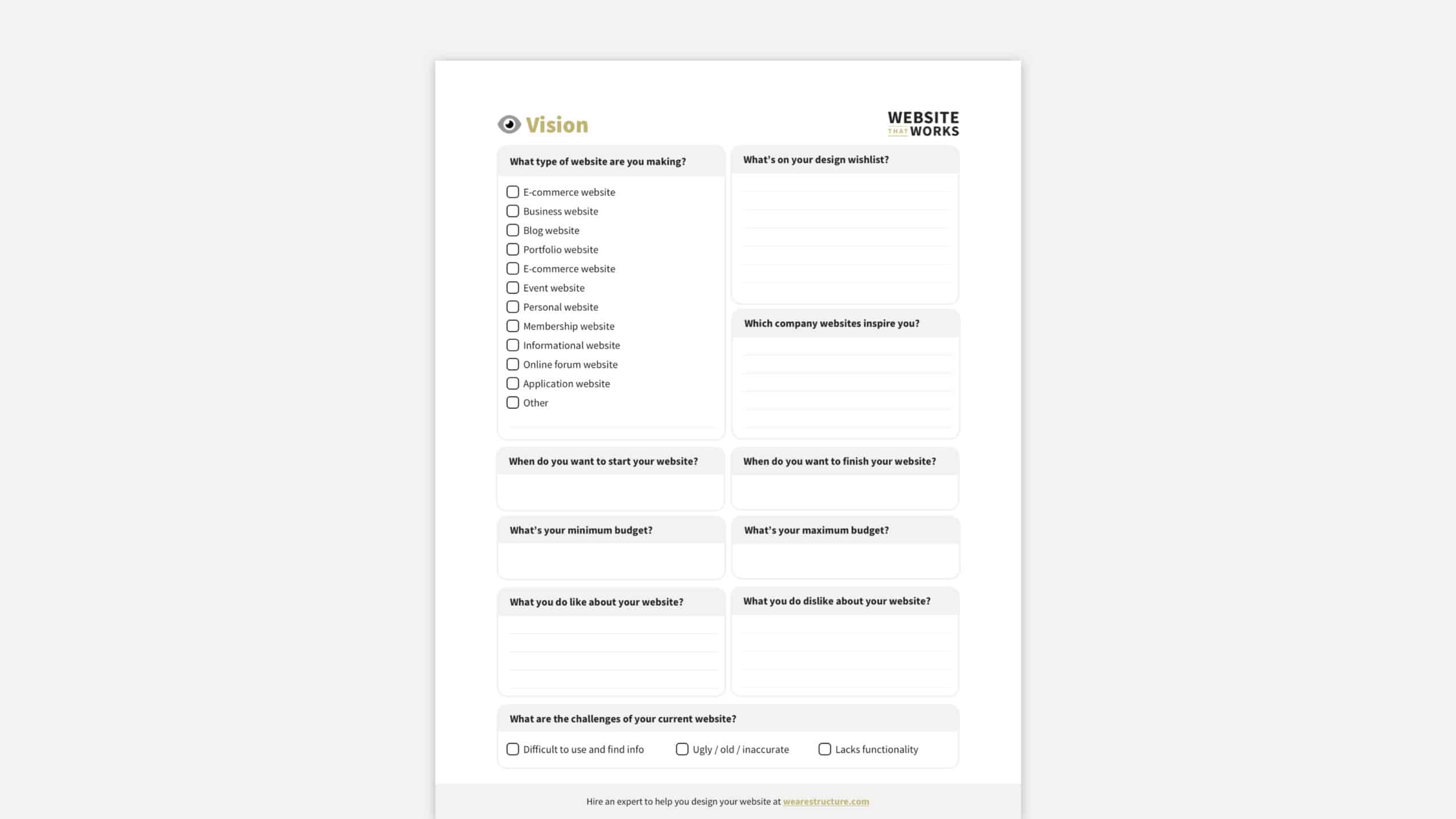
2. Website Vision
The best place to start is at the end. The vision worksheet is your tool for putting your ideas on paper. It won’t encourage a grand, generic vision. Instead, it keeps you focused on the process and final product.
The questions you’ll answer in the Vision Worksheet are:
What type of website are you making?
What’s on your redesign wishlist?
When do you want to start your website redesign?
When do you want to finish your website redesign?
What’s your minimum website redesign budget?
What’s your maximum website redesign budget?
Answering these questions will help define the basics of your vision and help you know what kinds of functionality and requirements to account for in your website redesign budget.
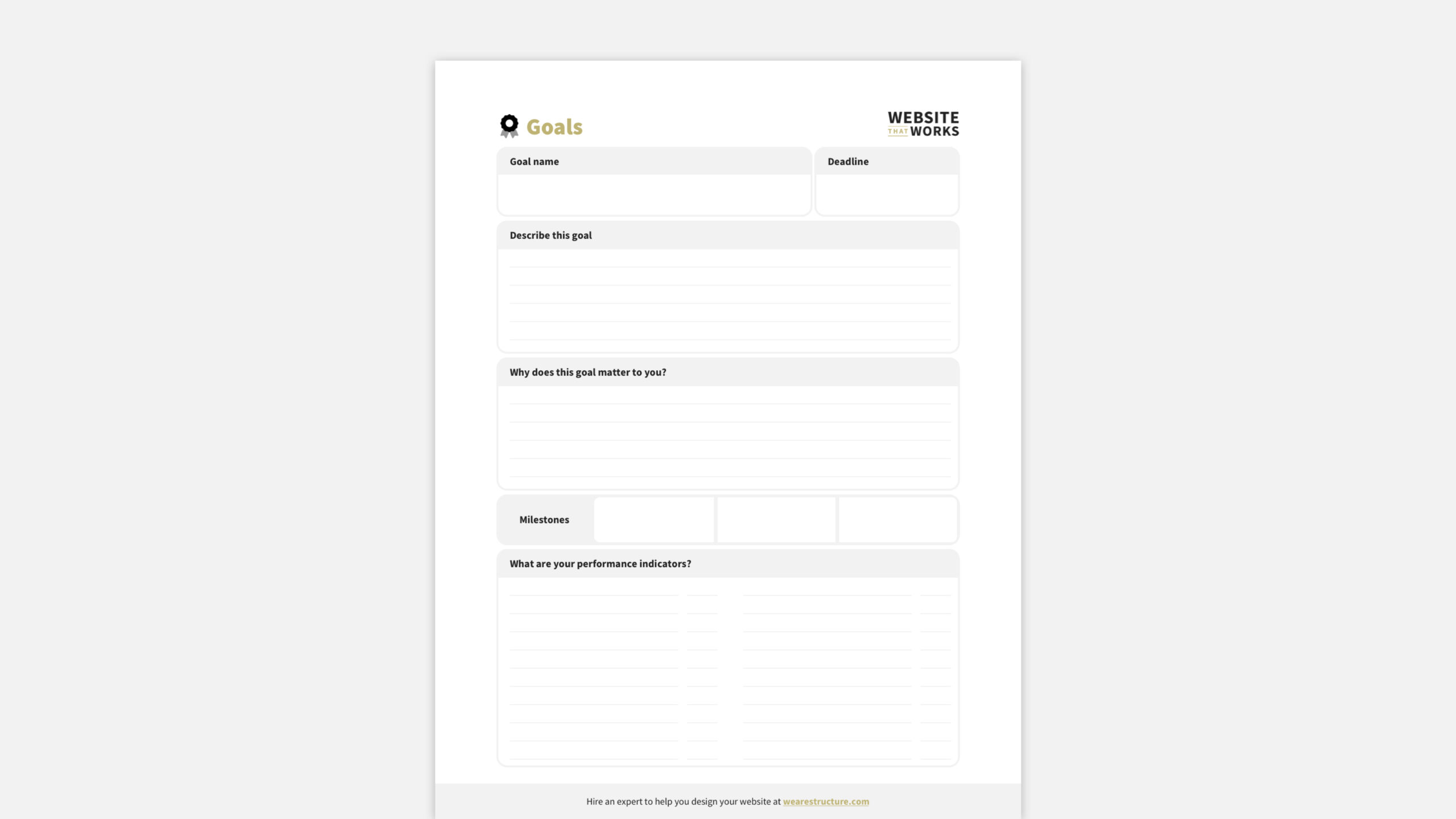
3. Website Goals
Think of the goals worksheet as your team’s compass for your website redesign project. It gets everyone on the same page about the project’s purpose and goals. Plus, it helps you track success by defining clear indicators. It’s like a roadmap to keep your project heading in the right direction!
The questions you’ll answer in each Goals Worksheet are:
What is your goal?
What is the deadline for this goal?
Describe the goal in detail
Why does this goal matter to you?
What milestones lead up to this goal?
What are your performance indicators?
Most people get stuck on the “milestones’ and “performance indicators.” They’re not as troublesome as they seem. The way to think about them is the specific steps to reach your goal (start with three steps) and how you know you’ve achieved each step.
There’s nothing worse than wearing all the hats yourself—whether you intended it to be that way. Instead of being overworked and overwhelmed, imagine assembling a team around you (internal or external) and assigning areas of ownership to others so they can help guide the project. Phew! What a relief already.
As the African proverb tells us, “If you want to go fast, go alone. If you want to go far, go together.”
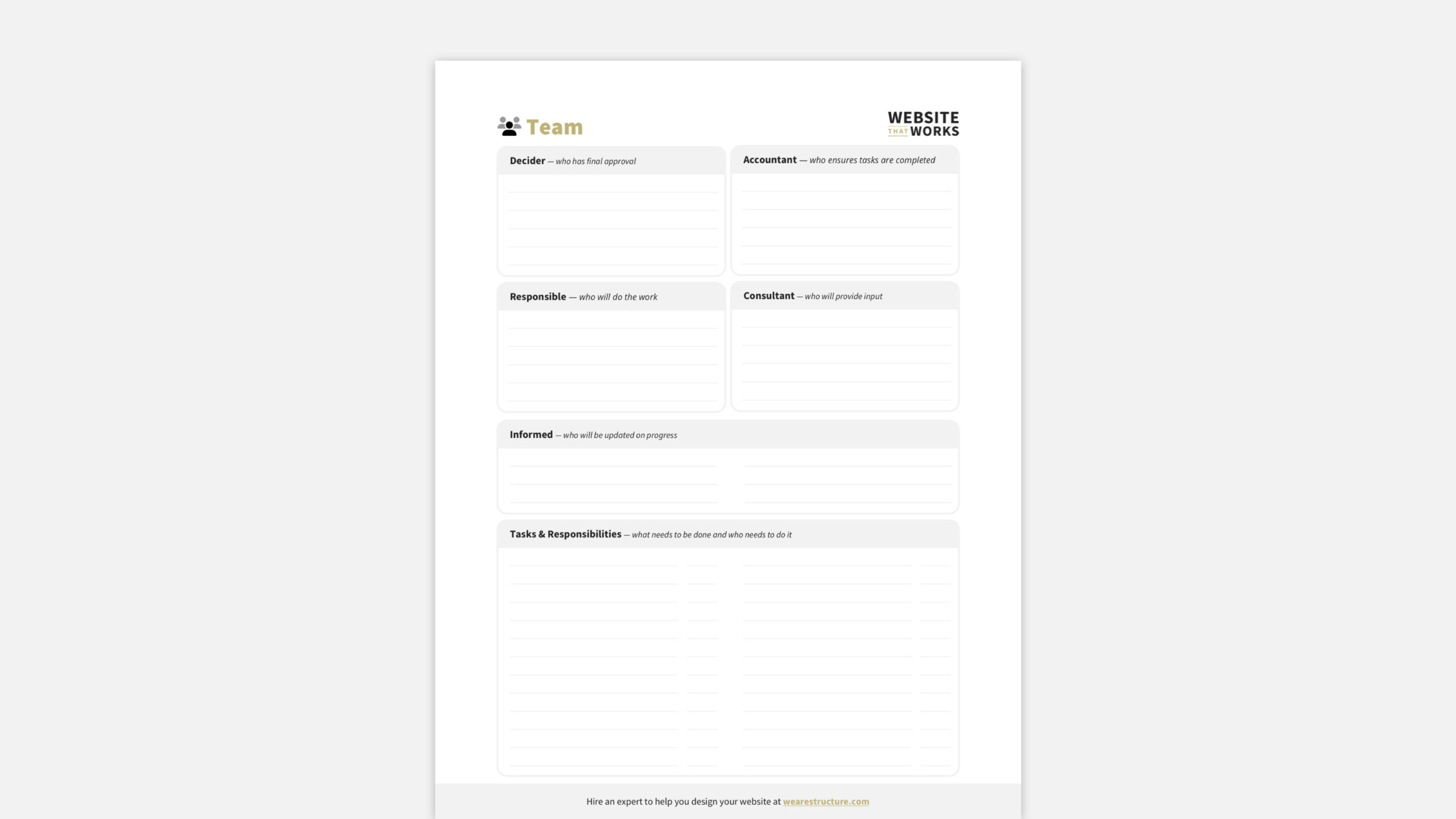
Furthermore, what if everyone on the team knows exactly who’s doing what, so you’re all on the same page? No stepping on toes, just smooth teamwork! That’s what the Website Team worksheet provides.
You’ll answer the questions in your Team Worksheet:
Who is the Decider, and has final approval?
Who is the Accountant and ensures tasks are completed?
Who is Responsible to do the work?
Who is the Consultant who will provide input and advice?
Who needs to be Informed of progress?
What tasks must be completed, and who is responsible?
You might recognize the DARCI framework from this list if you know project management frameworks. We think that using a framework like DARCI simplifies roles and responsibilities. As the project lead, you can say, “This meeting is for those Responsible and Accountable only; we’ll discuss next week’s deadlines.” Or, “This meeting is for those who need to be Informed; it’s a milestone check-in.”
Filling out these roles and responsibilities will help ensure that you include the additional costs for the team members in your website redesign budget.
5. Website Brand
We’ve all seen it before—a great ad paired with a terrible website. Consistency matters, and when lacking, it leaves a negative impression. Even if customers can’t pinpoint the issue, they’ll sense that things aren’t cohesive, affecting their business perception.
That’s why a robust website can’t stand alone. Consistency in all your marketing efforts, online and offline, is vital for a professional and credible business image.
In the website brand worksheet, you’ll answer these questions:
Who can access our logo and brand guidelines?
What is their contact information?
Which colors are you using?
Which fonts are you using?
How feminine or masculine do you want your website (on a scale of 1-5)?
How classy or modern do you want your website (on a scale of 1-5)?
How abstract or literal do you want your website (on a scale of 1-5)?
How playful or sophisticated do you want your website (on a scale of 1-5)?
How geometric or organic do you want your website (on a scale of 1-5)?
Do you want to use more images or illustrations (on a scale of 1-5)?
Completing the Brand Worksheet is vital for your website redesign budget because your branding will shape your website’s overall structure and design. While completing this worksheet, you may realize you don’t have all the brand assets required to accomplish your vision. Or, you might realize the logo is 20 years old and needs a refresh before plugging an outdated brand image into a flashy new website.
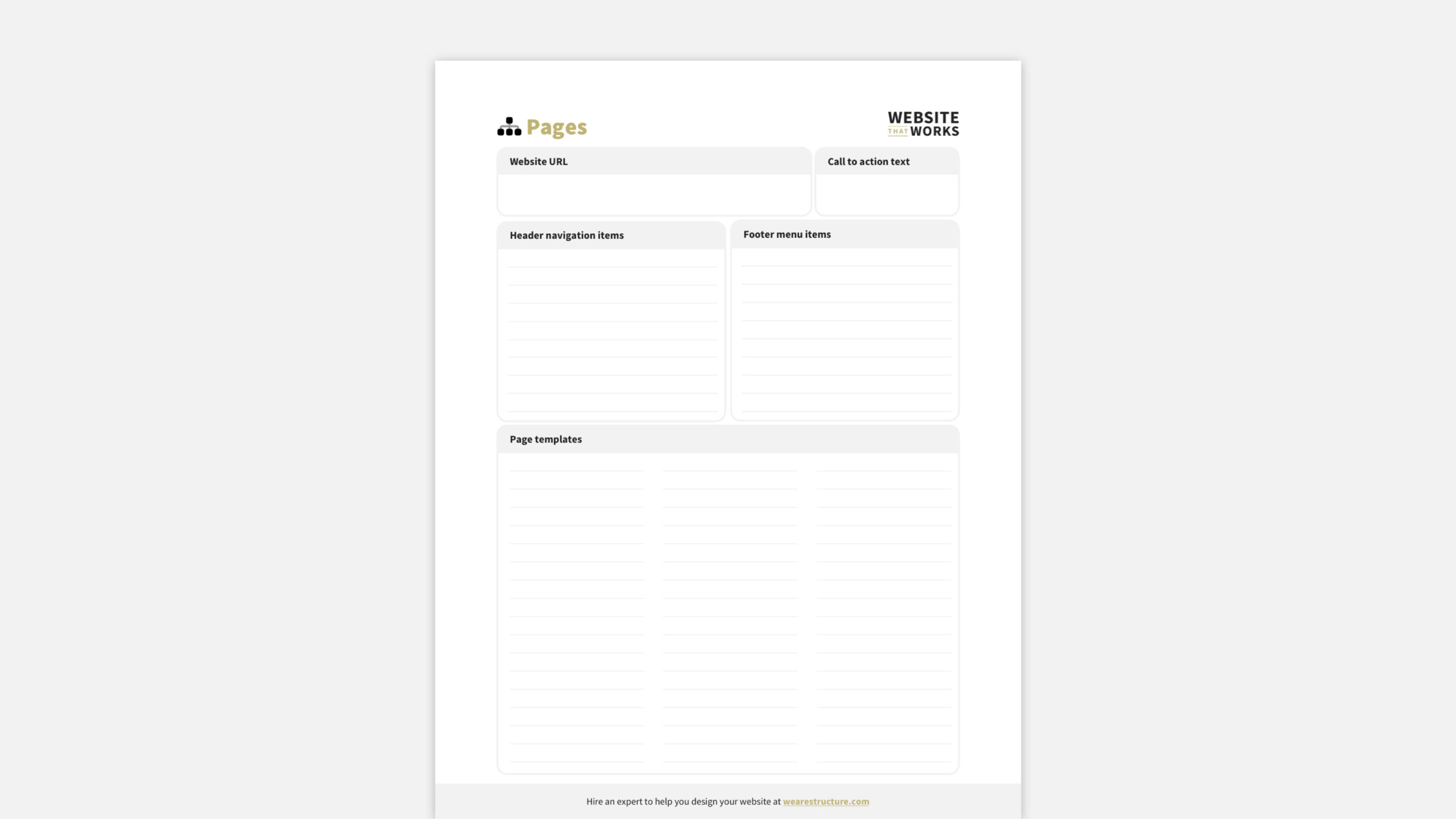
6. Website Pages
Most businesses seeking a budget for their website redesign will have developed a simple site map or a general list of pages. But it’s usually just the tip of the iceberg.
In the Pages Worksheet, you’ll start by documenting the most important pages of your website by defining which pages are listed in your header and footer navigation. Then, you’ll list each page template on the site.
The most common question is: “What’s the difference between a website page and a website page template?”
A website page is a single, individual web page containing specific content such as text, images, videos, and other elements. Each page is designed to serve a particular purpose, provide information, or engage users—for example, a Product Page for a blue doggie pool.
On the other hand, a website page template is a pre-designed layout that serves as a blueprint for creating multiple pages with a consistent design and structure. For example, a Product page template will be used for all products on the website, not just the blue doggie pool. But also the doggie toys and doggie blankets as well.
You’ll answer these questions in the website pages worksheet:
What is the URL?
What is the primary call to action?
What are the header navigation items?
What are the footer menu items?
What are the page templates?
This worksheet directly impacts the website redesign budget because it sets the size or scope of the redesign project. There’s a significant difference between a redesign for a 5-page and a 50-page website. You’ll want to ensure that you account for the website size in your website redesign budget.
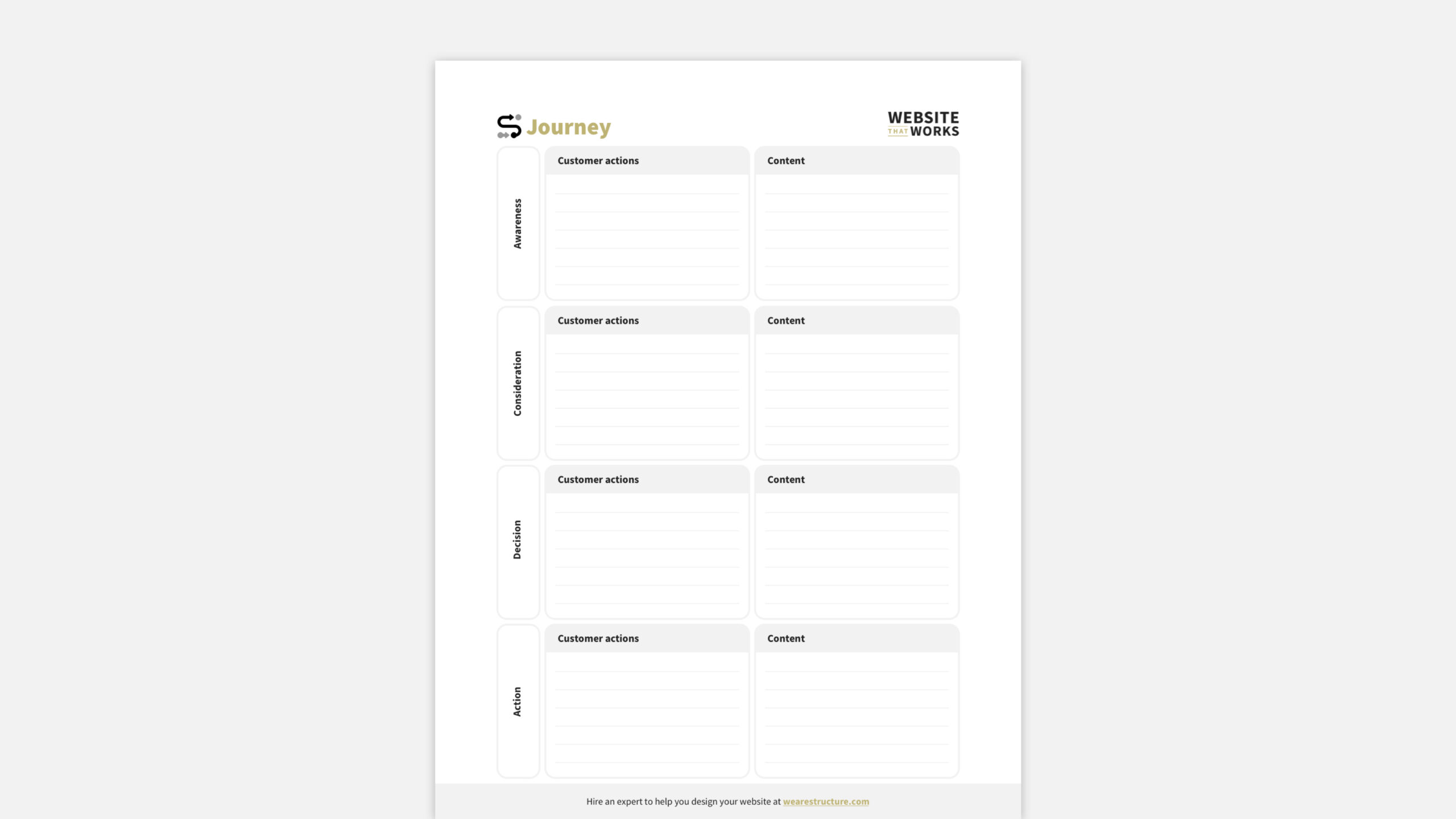
7. Website Journey
As I stated, your website is not an isolated part of your business. In the same way, your website’s pages are not isolated experiences on your website. Instead, they should work together to orchestrate a seamless buying experience for your customers. This is commonly referred to as the “buyer’s journey.”
A customer journey in the context of web design refers to the path or series of steps that a website visitor takes as they interact with a website. It encompasses their entire experience, from their initial arrival on the site to completing a specific goal or action, such as purchasing, signing up for a newsletter, or contacting customer support.
The customer journey is often divided into several stages: Awareness, Consideration, Decision, and Action. There are many variants of the stages, but we feel that these four stages allow our clients to understand the customer journey from start to finish clearly.
For each stage, you’ll answer these questions in the website pages worksheet:
What actions do we want the customer to take?
What content (e.g., pages, resources, media) do we need to support that action?
Of course, the goal is to provide a positive and seamless experience that encourages visitors to become customers and fosters long-term relationships.
The Journey worksheet directly impacts your website budget because you’ll need to factor in the costs of creating the content that will guide your visitors through each stage of the buyer’s journey.
8. Website Inspiration
If you want a website that will set you apart from the competition, you must know what the competition is doing. There are many ways to do this, but we like to keep it simple.
That’s why the Inspiration worksheet invites you to:
Look at a competitor’s website
Write down three things you like
Write down three things you dislike
Write down three things you want to improve or ideas to implement on your website
We recommend you do this for at least three competitor’s websites. If you’re unaware of, or can’t find a direct competitor, find an indirect competitor or a business with a similar model.
As you can probably imagine, the ideas you generate on this worksheet will impact the line items on your budget. If one of your competitors uses a Product Recommendation Quiz that you like and you want to implement something similar on your website, you’ll want to include that in the budget.
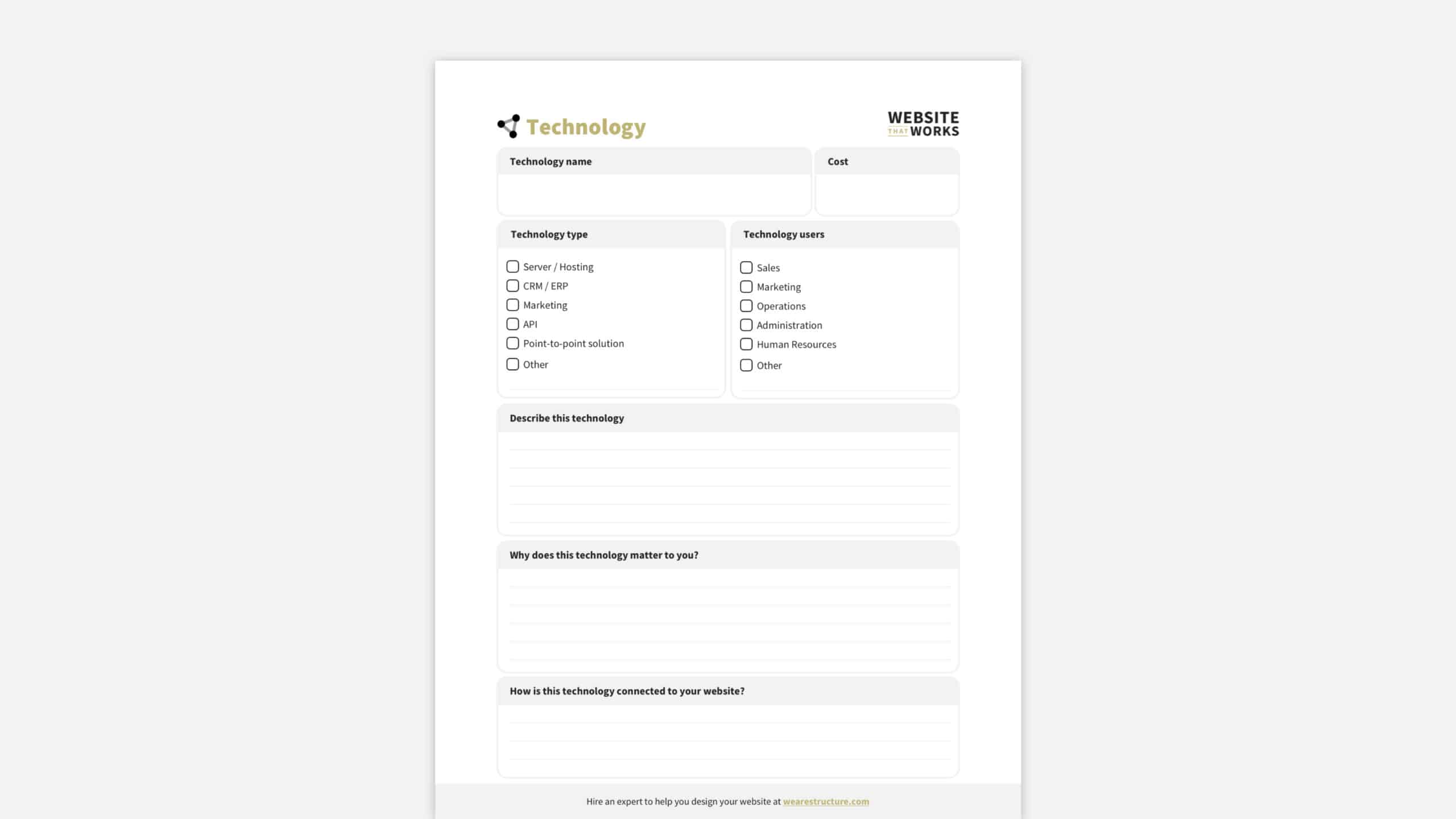
9. Website Technology
Frequently, people get caught up in how the website looks, and this focus overshadows how the website works. Your website’s integration with other functions, such as social media, email marketing, customer relationship management, and lead generation, is critical. You don’t want to lose connections or fail to account for re-connections required during the design process.
This is why our technology worksheet asks the following questions for each integration to document your technology requirements:
What is the technology name?
What does the technology cost?
What kind of technology (server/hosting, API, CRM, etc.)?
Who uses the technology (sales, marketing, operations, etc.)?
Describe the technology
Why does this technology matter to you?
How is this technology connected to your website?
Additional costs may be associated with integrating new or existing technology during the website redesign. If so, this will be beneficial information as you complete your website redesign budget.
10. Website Budget
Finally! We arrived at the Budget worksheet. Every worksheet in the Website That Works Planner comes together to give you what you’ve been waiting for—the cost of your website redesign.
But there’s a problem. The problem is that most website budgets only focus on the costs: what expenses must be considered? Don’t get me wrong; it’s essential to know the costs. But if you only look at the costs, you only see part of the masterpiece.
You must view your website as an investment rather than a liability. In your budget, consider potential earnings, savings, and expenses. Calculate your website’s long-term value in terms of profits. Our Budget Worksheet helps you do just that.
In the budget worksheet, you’ll answer the following questions:
How will your website generate revenue? And how much?
How will your website save on operating costs? And how much?
What expenses do you need to consider? And how much for each?
What’s the total revenue and savings?
What’s the total cost?
What is the return on investment (revenue minus costs)?
This website redesign budget exercise will help you (and your team) understand your significant role in your business and why you can justify spending more on a website that works for your business.
I encourage our clients to budget for their website’s lifespan, typically 1.5 to 2.5 years. Typically, we see significant returns on investment in the millions or tens of millions of dollars.
Step Three: Share Your Website Plan (Including Your Website Redesign Budget) like an RFP
Many companies and organizations will create and send an RFP (Request for Proposal) to website designers to get an estimate for their website redesign project. Unfortunately, the RFP typically lacks 90% of the needed info for an accurate proposal. Even a multi-page RFP often lacks the correct details for an estimate.
This means that either the web designer provides a vast ballpark estimate or they require you to submit to their discovery process… which means you wasted a couple of dozen hours writing an RFP that they’ll never look at. You need a comprehensive website plan and budget to determine an accurate cost.
Imagine this: you download the Website That Works Website Planner and complete the worksheets. Then, you send your website redesign plan, including the budget, to a website designer and request their estimate. They’d be able to see exactly what you want, your goals, your competitive analysis, your budget, and much more.
You’ve already done the planning. This means they can get started on the design! Use the Website That Works Planner like an RFP, and you’ll get better estimates and timelines—guaranteed.
How a website redesign budget can make your project successful and profitable
A well-planned budget is a guiding framework that promotes effective decision-making, streamlined execution, and alignment with strategic objectives. It ensures that your website redesign is successful and efficient, delivering a solid return on investment while meeting user and business needs. Here’s how it can lead to positive outcomes.
1. You’ll have a clear direction
A budget provides a roadmap for the entire redesign process. It outlines available resources, achievable tasks, and the project’s scope. This clarity prevents confusion and keeps the project on track.
2. You’ll be able to prioritize
Budgeting forces you to prioritize tasks and features. By allocating funds to the most impactful elements, you ensure the redesign aligns with your strategic goals and meets your business priorities.
3. You’ll create a source of truth
A budget helps define the scope of the redesign. By clearly outlining what’s feasible within the allocated funds, you avoid scope creep—unplanned additions to the project that can lead to delays and cost overruns.
4. You’ll know which resources you’ll need
Budgeting allows you to effectively allocate resources like time, personnel, and tools. You can assemble the right team, set realistic timelines, and secure the necessary assets for the project.
5. You’ll reduce the risk of failure
A budget accounts for potential risks and uncertainties. If you’re extra cautious or have a large or complex site, we often recommend a 10-20% contingency fund to ensure you have enough set aside in case unexpected extra fees occur. A contingency fund helps address unexpected challenges without derailing the entire project, ensuring smooth progress.
6. You’ll have an easier time finding help
With a clear budget, you can confidently select vendors or contractors that fit within your financial constraints. This ensures you’re getting quality services without compromising your budget.
7. You’ll share a common language
A well-defined budget is a communication tool among team members, stakeholders, and external partners. It fosters transparency and a shared understanding of financial expectations.
8. You’ll ensure the website is done right
Budgeting encourages a focus on quality. When you allocate resources thoughtfully, you can invest in high-quality design, development, and content creation, resulting in a more polished outcome.
9. You’ll have what you need to set timelines
A budget helps you manage time effectively. Properly allocating resources and monitoring progress can prevent delays and guarantee the project’s timely completion.
10. You’ll know if the project was profitable
A budget provides a benchmark for success. Staying within budget signals effective project management, financial responsibility, and a project that meets its goals.
11. You’ll have a reference point
A budget isn’t set in stone; it can be adjusted as needed. If priorities change or unforeseen circumstances arise, having a budget allows you to reallocate resources while staying mindful of financial constraints.
12. You’ll account for hidden or future expenses
A budget doesn’t end at launch. It sets the stage for post-launch activities, such as ongoing maintenance and updates, ensuring the website’s longevity and relevance.
Pro tips for creating a perfect website redesign budget
After working on countless website redesign projects, we’ve learned a few things we would recommend anyone budgeting for a website redesign should consider. Remember that some tips might require a designer or developer’s input.
People often use web design and development interchangeably. This is the web industry’s fault because it’s not uncommon for a web designer to develop and a web developer to design. Freelancers or studios commonly exhibit this “jack of all trades” profile, where they handle both web design and development.
To add fuzziness on top of fogginess, many of these freelancers or studios estimate website projects as one cost for both design and development. Therefore, it’s tough to see a clear line between the two.
In short, web design focuses on a website’s visual and user interface aspects. In contrast, web development is responsible for turning those designs into a functional website through coding and programming. Both design and development are integral to creating a successful and effective website.
To use our physical building analogy, a web designer is like an architect. They make the plans, and they draw up the plans. But the architect isn’t on-site with a hammer. The builder is on-site with their team of specialized trades to turn building supplies into a building that matches the design.
We estimate web design and development as distinct project phases in the professional world. There’s no way to know precisely what the “build” will cost if you don’t know what the “design” spec looks like.
In summary, as part of your website redesign budget, creating separate line items for design and development is essential. They’re distinct skill sets and project phases—and will require separate costs.
2. Plan for content creation (and migration)
After handling many website redesigns, we’ve got some tips for your budget. These vary based on project scope and content complexity, and some might need input from a designer or developer. But ballpark estimates are available online for most.
Remember, your initial budget might need adjusting. It’s a tool, not a contract. Working with a web team gets accurate estimates, keeping costs aligned with your goals.
Copywriting
Hiring professional copywriters to create or revise the textual content for the website, including product descriptions, service offerings, about pages, and other relevant information.
Editing and Proofreading
Ensuring that all content is accurate, error-free, and consistent in tone and messaging might involve costs for professional editing and proofreading services.
Graphic Design and Visual Content
Costs for designing custom graphics, infographics, images, icons, and other visual elements that enhance the overall look and feel of the website. An agency’s web design fees may include these costs, but they’re not always guaranteed to be included.
Photography and Videography
If you need new photos or videos to showcase products, services, team members, or facilities, you might incur costs related to hiring photographers or videographers.
SEO Optimization
Search engine optimization (SEO) is always essential after a website redesign. Include costs for keyword research, optimization of content, and, potentially, ongoing SEO monitoring and adjustments.
Transitioning from an old website to a new one might involve costs related to migrating existing content to the new platform.
Translation Services
Translational services could become a significant cost if your website needs to be available in multiple languages. Don’t forget to factor in additional costs if localization is also necessary.
Project Management
Managing the content creation process may require project management, which could involve additional costs. Some agencies will include this as part of their estimate, but you’ll always need to dedicate some internal resources to managing the content aspects of the project internally.
Licensing and Permissions
There could be licensing or permission costs if using third-party images, videos, or other content.
User Experience (UX) and User Interface (UI) Content
Designing and developing features like tooltips, pop-ups, and interactive forms could incur costs for more interactive elements. You’ll likely have to get these specific costs with your estimates.
3. Factor time for internal testing and quality assurance
After building your website, you’ll need to test it and ensure it looks and functions as expected. Think of it like a “walkthrough” of a new skyscraper. You want to ensure the paint color is correct, the toilet flushes, and the heater pumps out hot air.
Now, you should expect your website developer to do thorough testing—for functionality, responsiveness, and user experience. Before you do your “walkthrough,” they need to ensure that the new site performs well, adapts to various devices, and provides a positive interaction for visitors.
However, you’ll want to allocate internal resources to your own testing and quality assurance (QA) process. Bank on spending time on each testing activity.
Functionality Testing
You’ll want to ensure all the cool stuff on your website works how it should. We’re talking about checking links, forms, buttons—everything that helps people get around and do stuff on your site. Don’t forget to make a test purchase or schedule a sales call to ensure customers can get through!
Responsiveness Testing
Your customers are surfing your site on various gadgets—from tiny phones to big laptops. That’s why you’ll want to ensure your website looks and works great on all your devices. Virtual testing tools like BrowserStack can help you view your website on devices that aren’t readily available.
Browser Testing
Browser testing is another crucial aspect of website development and redesign. It’s all about ensuring your website looks and works perfectly on web browsers like Chrome, Firefox, Safari, and Edge. You might be surprised, but having a site that looks perfect on one browser but turns messy on another isn’t uncommon. Again, your web developer should be testing this, but you’ll also want to check.
User Experience Testing
User experience (UX) testing is like testing your website by seeing how folks use it. This can be done virtually using tools like PageSpeed Insights. Tests help spot issues, confusing paths, or roadblocks that might hinder customers’ buying.
4. Prepare for unexpected costs in your website redesign budget with a contingency fund
Along the way, unexpected things can pop up, like surprise guests at a party. These could be unforeseen technical glitches, sudden design tweaks, or even changes in what you thought you wanted. That’s where your contingency fund comes in.
Setting aside a stash of funds to handle any surprises or changes along the way is always a relief. Instead of scrambling or compromising the project, you have a cushion to handle those extra costs or changes without derailing the whole thing.
The truth is that no matter how much due diligence you complete, website redesigns can still be a bit unpredictable. At Structure, we do an excellent job of sticking to scope, but I don’t want to set unrealistic expectations. Scope changes or unexpected hiccups can sneak in from any side.
We typically encourage our clients to set aside a 10% contingency fund. If there are a significant amount of variables or complexities, we encourage them up to 20%. Plan for between 10–20% of your website redesign budget.
5. Plan for management and maintenance in your website redesign budget
After you complete your website redesign, there’s still work to tackle. I’ve used the physical building analogy for websites in this article, which works well.
Website management and maintenance is a lot like hiring a property management company to manage your properties. You own them, and they bring you value, but you have better things to do than attend to renter requests and routine maintenance. If you’re planning to buy or build a rental property, hiring property management help is something you want to consider upfront.
One of our clients likened website management to an oil change for their car. They said they wouldn’t dare drive it for years without an oil change. It would ruin the engine!
Similarly, your website needs regular check-ups and tune-ups, and maintenance. Technology changes, bugs might creep in, and you might want to add new features. All of this requires ongoing care that you may not be equipped or interested in doing.
Website management and maintenance are valuable over the lifetime of your website
Setting aside funds for maintenance and updates means you’re future-proofing your site. You’re ensuring that it stays fresh, fast, and functional. It’s not just about keeping the lights on; it’s about keeping your site relevant and user-friendly.
Plus, remember that your business evolves. For example, you might launch with certain content, but as you grow and adapt, your website should too. That’s why having a budget for updates means you won’t be caught off guard when you want to revamp content or add new sections.
So, in a nutshell, allocating funds for post-launch maintenance and updates is like giving your website a long and healthy life. It keeps up-to-date, functional, and aligned with your ever-changing business needs. It’s not just a one-time launch; it’s an ongoing commitment to the success of your online presence.
Common questions about budgeting for a website redesign
If you’re a marketing or business leader, you might have various questions about budgeting for a website redesign. Here are some common questions and our best take on answering them!
How much should we budget for a website redesign?
Great question! Conversations about website redesigns often start with a rush for quick answers on cost and time. It’s common to seek a simple solution, but the truth is that most websites are much more complex than they look on the surface. Therefore, a website redesign is rarely ever simple.
If you want a broad ballpark figure, many website designers and developers can provide that. But to get an accurate cost for budget approval, you’ll want to create a website plan that includes a thought-through website redesign budget.
What factors affect our website redesign budget?
You probably want to know which elements impact the budget the most, so you can at least account for the big numbers.
A website redesign has dozens of cost factors, but the heavy hitters are the number of pages, custom functionality, and design complexity.
The number of pages
The size of your website matters. More pages require more design work, content creation, and potentially additional coding. Additionally, if you need to create new content or optimize existing content for SEO, this can add to the cost.
Custom functionality
More complex features, customizations, interactive elements, and integrations with third-party tools will likely increase the cost. E-commerce functionality, user accounts, booking systems, and advanced animations are examples of features that can impact cost.
Design complexity
It will likely increase the cost if you aim for a unique and intricate design involving custom graphics, animations, or illustrations. The complexity of the layout, color schemes, typography, and overall aesthetic impact the required design work.
Are there ongoing costs beyond the initial redesign?
Yes, there are always post-launch costs, like maintenance, updates, and hosting fees. The good news is that most of those fees will be familiar if you’re redesigning your website.
The only reason you’ll need to revisit the ongoing costs is if you plan on changing anything. For example, if you want to upgrade your hosting or switch website management providers.
How do we ensure a good return on investment (ROI)?
The best way to ensure a good ROI on your website redesign is to download the Website That Works Planner and plan a website with a good ROI.
There’s never a guarantee that you’ll get a good ROI, but the truth is that the best performing, highest-converting, most beautiful websites weren’t built overnight. They were planned to be excellent from the very beginning.
Can we repurpose existing content to save costs?
Absolutely! I would encourage you to keep what works. In other words, if it ain’t broke, don’t fit it!
The benefit of keeping as much content as possible is that it saves on content creation costs. Furthermore, it ensures that you don’t keep your organic traffic and search rankings instead of taking it by changing too many things at once.
Do we need to hire external professionals, like designers or developers?
Yes, you do. If you’re a professional, you’ll hire a professional.
I’ve seen it too many times. A client gets a quote from a professional website designer, and after the paramedics bring them back to life after severe sticker shock, they quickly hire their brother’s buddy, who has built a few sick websites on the side from his mom’s closet.
Chaos ensues, and you experience relational headaches, price hikes, and forgotten deadlines.
Here’s the blunt reality: what you pay is often what you get. If the budget seems unrealistically good, there’s usually a catch. It’s that simple.
How much do most companies and organizations budget for a website redesign?
Great question! As you might expect, the answer varies significantly based on many of the cost factors outlined in this article. However, you can expect to invest $15,000–$150,000 with a professional web agency like Structure.
If your website is straightforward, and you’re using a semi-custom website design process that entails customizing a pre-designed template or theme—and building based on that theme functionality, expect to create a website redesign budget of $15,000–$25,000. This includes all factors, including hosting, content, design, and development.
Website redesign budgets in the range of $50,000–$150,000+ are often for large, significantly complex websites that have hundreds or thousands of pages, require a substantial amount of custom functionality like translation and localization into different languages, and have a lot of custom design features like illustrations or video.
A website design brief is like a unique plan for making a website. Imagine you want to build a five-bedroom house. Before you start, you need a program that describes what it will look like, how big it will be, and what finishes it will have. A five-page website is the same—you need a plan that details your wants.
Your web design brief explains what the website is for, who will use it, and what it should do. It also talks about the website’s colors, pictures, and words. Just like when you plan a home build, the design brief helps anyone helping make the website understand what it should look like and how it should work.
This type of plan is essential because it ensures everyone is on the same page and knows what to do. In other words, it serves as a foundational roadmap for the project’s designers, developers, and other stakeholders to ensure everyone is on the same page and working towards a shared vision.
If you do not use a design brief, you’ll lack the essential information to guide the entire design process, from the initial concept to the final implementation.
First, what is a web design brief for?
At the core of a successful website design project is a clear and comprehensive design brief—a crucial roadmap outlining goals, requirements, and preferences. This document goes beyond documentation, acting as a bridge between stakeholders, aligning visions, and avoiding pitfalls.
Portrait of a cheerful female student studying at home, looking at camera.
Why writing a website design brief sucks—but it doesn’t have to
Nobody likes planning, which is why so many websites fail to work. They don’t get enough traffic, they don’t get enough leads, and they don’t get enough sales.
That’s why John Wooden, the Legendary UCLA Basketball Coach, famously said:
If you don’t have time to do it right, when will you have time to do it over?
John Wooden
You don’t want confused customers or a frustrated team struggling with your website. Here’s why writing a website design brief can be frustrating and how we’ve devised a better solution to make it easier.
1. Web design planning is boring
When people think about website design, they usually focus on its appearance—the logo, colors, and images. But what many don’t realize is that a website is mostly science, not just art. It’s like an iceberg—the visible part is the art, but a lot is happening behind the scenes. We tell our clients that successful websites are more like a formula than they might think—and our Website Planner is a proven formula that works if you use it.
2. Planning a website design takes a lot of time
Designing a website takes time, and busy business leaders often prioritize quick tasks over planning. Even though planning is crucial for clarity, finding time can be tricky. That’s why website builders like Wix and Squarespace let you start without a plan. Oof! The great news is, planning a website doesn’t have to be super time-consuming. Follow our steps and use our guide to save time while knowing what to do.
3. Website planning takes specific knowledge
Website planning requires a basic grasp of how websites function and their business role. When planning a website, you might not know where to start, which is why our Website Design Planner can assist!
If you’re uncertain, watch our (free) training on your website’s business impact and its role in marketing. This will help you grasp your website’s significance before you start planning.
4. A great website plan requires alignment
Here’s the challenge: the team must agree and decide when planning a website. This can be hard, whether for website design or almost anything. The agreement is why organizations often struggle to define their website; even if they do, it’s tough. Our Website Design Planning Brief helps organizations align. It’s a clear, structured process that takes only a few brief meetings.
5. Most website planning templates are technical
Most website planning tools are like fancy spreadsheets – they’re boring and numbers-focused. The Structure Website Planner is different. It’s designed to be enjoyable, acting like a creative guide that excitingly helps you organize your ideas, goals, and tasks. It makes website planning fun.
Plus, it’s not just about fun. The Structure Website Planner increases your chances of creating the website you want. It provides a clear path, ensuring you don’t miss the necessary steps. So, it’s enjoyable and handy for achieving your website goals.
The benefits of a design brief go beyond a checklist of to-do’s and information for designers to work from. It also reduces misunderstandings, aligns expectations, and optimizes resource use internally. Here are ten benefits you’ll experience by starting your web design project with a design brief.
1. Minimize misunderstandings
When you have a well-thought-out design brief, it’s like having a crystal-clear picture of the project. This helps avoid any confusion between the people involved, whether they’re the stakeholders, designers, or developers. In simple terms, it ensures that everyone is on the same page.
2. Align expectations
Think of the design brief as a map that lays out what the project aims to achieve, how it should look, and what it needs to do. When everyone agrees on this map, it’s like having a team on the same page. This way, there are fewer chances of arguments or surprises down the road.
3. Save time and money
When you’ve got a thorough design brief, it’s like having a well-organized plan that keeps things moving along smoothly. Designers and developers can get things done quicker because they know exactly where they’re going. This cuts down on many back-and-forth talks and changes, making the whole process work like a charm.
4. Enhance collaboration
Imagine the design brief as a meeting point for everyone on the team—the designers, developers, content folks, and all stakeholders. It’s a go-to spot where everyone can gather and figure things out together. This helps keep conversations and decisions organized as the project moves along.
5. Guide ideation
Think of the design brief as the frame of a painting. It gives a structure to the project, but inside that frame, designers get to unleash their creativity. They can develop cool, exciting ideas within the frame’s boundaries. This leads to a design that’s one-of-a-kind and works well.
6. Manage expectations
By detailing the scope, features, and functionalities in the design brief, clients can have a realistic expectation of what the final website will offer. Picture this: the design brief is like a menu that shows precisely what dishes a restaurant serves. You’ll know what to expect when you see all the details about the website—like what it can do and how it’ll look. This way, there’s no over-promising and under-delivering. And when you get what you expected, you’re pretty happy!
7. Reduce revisions
Having clear instructions in the design brief is like giving web designers a map that guides them to what the client wants. This means fewer times going back and forth to make changes. Both you and the designer save time and effort, making the whole process smoother and more efficient.
8. Improve your customer’s experience
A well-written design brief reveals who will use the website and what they like. Armed with this info, designers can create a user-centered design that caters to the needs and expectations of the intended users.
9. Make decisions a piece of cake
As the design takes shape, you have a roadmap to follow and a source of truth to know where you started. It’s like having a map that shows the best route to take. This makes deciding what looks great happen faster and with less hassle.
10. Know if the project was a success
The design brief acts like a yardstick to measure how well the final design turned out. You can check if the completed website matches the goals and things you wanted, and that’s how you figure out if the project aced its goals.
These essential elements should be included in every design brief.
1. Vision
Start at the end. Provide a high-level view of the website you want to exist for your company. Your vision is influenced by a combination of factors that shape its purpose, design, and overall direction. You’ll want to ensure you note these specific things:
Website type
Design wishlist
Target audience
Start and end dates
Budget minimum and maximum
Feelings about your current website
Some key influences on a website’s vision include what you sell, who you sell it to, design trends, and timeline or budget ideals. A successful website vision emerges from a thoughtful blend of these factors, creating a cohesive and purpose-driven online presence that resonates with the target audience and achieves the company’s goals.
2. Goals
Think about it this way: different companies have different goals for their websites. What they want to achieve with their website depends on what kind of business they’re in, who they’re trying to reach, and what they’re aiming for overall.
Goal name
Goal deadline
Goal description
Why the goal matters
Milestones
Key performance indicators
Some common types of website goals relate to lead generation, user engagement, or community building. Not all websites set out to achieve the same thing, which is why there’s no one-size-fits-all. Ensure you get clear and list what specific things you want to accomplish with your website.
3. Team
You’ll also want to document your team members and what they will be responsible for. This can be done in many ways, but we use the DARCI method (or DARCI framework) to ensure someone owns all tasks.
Decider: who has the final approval
Accountant: who ensures tasks are completed
Responsible: who will do the work
Consultant: who will provide input
Informed: who will be updated on the progress
Tasks and responsibilities
Your website team should include everyone involved in the project at some point. This includes your agency, freelancers, friends, advisors, and internal team members if you have them.
4. Brand guidelines
Your company’s visual identity, including logos, colors, typography, and brand voice, influences the design and aesthetics of the website to ensure consistency and reinforce brand recognition. What you document in your Website Design Brief is also known as shared information—don’t leave anything out!
Who has access to our logo and guidelines?
What is their contact information?
Which colors are you using?
Which fonts are you using?
What are the brand’s personality or characteristics?
Do you use images or illustrations more?
5. Pages
Just like a house is made up of its rooms, so is a website. Website pages play a fundamental role in a website design plan, serving as the building blocks that structure and organize the content and functionality of the site.
This is where you’ll specify each room you need in the house.
Website URL
Call-to-action text
Header navigation items
Footer navigation items
Page templates
Your website pages contribute to the overall design plan because they serve as the canvas upon which the design plan is executed. Each page has a specific role in delivering information, guiding user interactions, and achieving the website’s objectives. A well-thought-out arrangement of pages ensures a coherent, user-friendly, and effective website design.
Don’t forget to factor in contact pages, paid landing pages, a 404 template, and your legal pages!
6. User journey
Each part of your web design brief builds on the other part. After we have a vision, goals, brand, and pages, you can plan how a customer goes from prospect to purchase. This includes effective call-to-actions, landing pages, and content guiding visitors toward desired actions, such as purchasing or signing up.
Document the Customer Actions and Content to support each stage in the buyer’s journey. We often refer to the AIDA marketing framework to help remember the main steps of the journey:
Attention
Interest
Desire
Action
Use the Customer Actions portion to define a user’s actions to get to the next step. Then outline the types of content (text, images, videos) that will be included on the website to aid in that process.
7. Inspiration
Highlight key competitors and mention aspects you’d like to emulate or differentiate from them. Share design examples, websites, or styles that resonate with the desired look and feel.
Inspiration serves as a creative spark that ignites the design process. It involves seeking new ideas, design trends, and innovative approaches to elevate the website’s aesthetics and user experience. Here’s how inspiration impacts website design planning.
The competitive analysis involves studying similar websites in the same industry to understand their strengths, weaknesses, and strategies.
Incorporating both inspiration and competitive analysis in website design planning strikes a balance between creativity and strategic decision-making. It empowers designers to create visually appealing, user-friendly websites that are aligned with industry trends while ensuring the website’s unique identity and competitive advantage.
8. Technology
Technology and integrations are significant and evolving in a website design plan. They determine the functionality, performance, and user experience of the website.
Today, many technology types, functions, and roles impact things like Functionality, content management (CMS), e-commerce, data collection, security, accessibility, and so much more. We’re barely at the tip of the iceberg.
For your website brief, you’ll want to document each main piece of technology you need to work with your website to run your business. This includes the following information to start:
Technology name
Cost
Technology type
Users & roles
Tech description
Why the technology matters to you
How the tech is connected to your website
In essence, technology and integrations provide the foundation and capabilities for the website’s design. Choosing the right technologies and seamlessly integrating them into the design plan enhances the website’s functionality, user experience, and overall effectiveness in achieving its goals.
Be sure to address any technical constraints, platforms, and hosting preferences.
9. Budget
I get it; talking about budgets isn’t the most thrilling part. But trust me; it’s super important. Your budget is like a roadmap that shows you what can happen, what can’t, and the decisions you’ll need to make for your website design project.
Many companies look at the money they’re spending and see it as a problem. But here’s a more brilliant way: treat your website like an investment that brings you back something good. Think about the money you can make and save and what you spend. That way, you can determine how much your website could make for you in the long run.
Your website budget should include the following elements:
Expected revenue
Expected savings
Expected costs
Return on investment
Clearly defining the budget in the website brief helps set realistic expectations and ensures the project aligns with the available resources and desired outcomes.
At Structure, we’ve done everything – planning, designing, building, managing, and growing websites. We’ve got loads of experience and even crafted a Website Planner based on it. Here’s what we’ve figured out from working with websites of all sizes and budgets.
1. Don’t aim for perfection
While perfection might seem tempting in a web design plan, it slows things down. Embracing an iterative approach for continuous improvement within your project’s limits is more efficient and effective.
2. Use clear and descriptive language
Using clear language in a web design plan makes things smooth. It avoids confusion, errors, and delays, leading to a successful website.
3. Take your time and sleep on it
Taking your time and giving yourself a chance to sleep on a web design plan is a wise strategy. It promotes better decision-making, reduces stress, enhances creativity, and contributes to a more thoughtful and effective plan.
4. Focus on results
A results-focused website design plan ensures every detail drives excellent outcomes. Users love your site, you gain maximum value, and your website becomes a business superhero.
5. Set SMART goals
Using SMART goals in a web design plan is like having a smart strategy. It sets up a clear path to success, gets everyone working together, and boosts the chances of reaching your goals exactly as you want.
Common questions about creating and using a design brief effectively
People have some common questions about creating and using a design brief effectively. Remember, a well-crafted design brief is a valuable tool that streamlines the design process fosters collaboration, and sets your project up for success.
Why do I need a web design brief?
A design brief acts as a roadmap for your project. It clarifies goals, expectations, and requirements, ensuring everyone is on the same page.
What should be included in a web design brief?
At a minimum, your design brief should include project objectives, target audience, design preferences, functionalities, branding guidelines, and technical specifications. Download our free Website Design Brief Template to ensure you don’t miss anything.
How detailed should a web design brief be?
The level of detail depends on the complexity of your project. It should be clear enough to guide designers and developers but not overly complex.
How long should a web design brief be?
Think of it this way: you’ve got to talk about your vision, goals, and what you want to achieve. Our Web Design Planner has nine worksheets, but some, like the Goals and Technology Worksheets, can be copied for all your goals and techie stuff. So, your web design brief could be anywhere from two to thirty pages, depending on how big and fancy your website is.
What is a typical format for a web design brief?
Typically, people write a web design brief in a digital format like Google Docs, Microsoft Word documents, or Pages documents. However, our Web Design Planner provides a guided format you don’t have to imagine from scratch! Just fill in the blanks, and you’re done.
What is the difference between a project brief and a web design brief?
A project brief is a broader document that covers the entire scope of a project, while a web design brief is a more specialized subset of a project brief that specifically addresses the requirements and goals of designing a website.
What’s the difference between a website design brief and a website design proposal?
A website design brief is a document that guides the design process, while a website design proposal is a document that outlines how a designer or agency plans to fulfill the project’s requirements and meet the client’s needs.
How do you write requirements for a website design?
In a web design brief! Luckily, we’ve got a sleek web design brief that you can print, punch holes in, and pop into a binder. Fill it out with your team or as an RFP for a web designer, and you’re good to roll.
Who should be involved in creating a design brief?
You, the project managers, the creative designers, the tech wizards, and sometimes even the clients all come together to cook up a top-notch design brief.
Can a web design brief change during the project?
Website design briefs are like clay that can be shaped as you go. If new ideas pop up or things change, that’s cool. Just keep everyone in the loop so we’re all on the same page.
How does a design brief improve communication?
A design brief eliminates ambiguity by providing clear guidelines. It ensures everyone understands the project’s direction and reduces misunderstandings.
How can a design brief help avoid scope creep?
Think of a design brief as your project’s rulebook. It lays out what’s expected. When someone suggests changes, you can compare them to the rulebook’s goals and see if they fit.
Website design planning will set you up for success in every project stage, whether you do it yourself or hire help. Learn how to plan a website that attracts and converts visitors.
Imagine if your website delivered as many leads, sales, and opportunities as you wanted.
Imagine if your website looked impressive, and you were proud to use it to represent your business.
What if it connected with all your business systems and automatically processed data, so you didn’t have to do it manually?
Of course, our website redesign process includes planning, but most people don’t start there.
Instead, they start at a random point in the process and hope they don’t skip over anything with too many downstream effects.
I’m giving most folks a hard rap, but the truth is, I understand entirely. Website design planning sucks (most of the time) for a few reasons.
Structure can help your team with website design planning
1. Planning a website design takes time
Let’s be honest.
Most business leaders, marketing leaders, and entrepreneurs are busy. They want to accomplish work quickly.
Planning in general (and website planning in specific) is the last thing we want to slow down to do.
We all love a good plan’s clarity, calmness, and conclusion. However, it is tricky to block out the time on your calendar and prioritize the thinking time to do it.
That’s why, when you sign up to build a DIY website, you start by picking a template and jump right into the building. They skip the planning, assuming you already did or will never do it.
The good news is that website planning doesn’t have to take as much time as you’d think.
By following the planning process we share in this article and utilizing our free Website Design Planning Guide, you’ll save lots of time because you’ll know what to do.
2. Website planning takes knowledge
It’s true.
Website planning takes a basic understanding and knowledge of a website, how it works, and its role in your business.
Therefore, when you go to “plan” a website, you may not know where to start or what to do. That’s okay; it’s another reason why having a Website Design Planning Guide can help.
If this is you, consider watching our (free) training on your website’s role in your business and how it affects each part of your marketing. It will help you better understand your website before you start the planning process. You can check it out HERE.
3. Web design planning is uninteresting
When most people think about a website design (or redesign), they think first about the art aspect of the website.
They think about the website’s appearance: the logo, colors, fonts, and images.
We like to look at beautiful things.
However, most people don’t realize a website is 25% art and 75% science.
In some ways, a website is like an iceberg. The art is the tip—the piece that stands out that everyone can see.
However, most of what goes into a website happens behind the scenes.
We tell our clients this: great websites are much more FORMULAIC than most people think. Our website design planning process is a formula that will give you results if you follow it.
4. The work to define a website requires alignment
The Structure Website Design Planning Process starts with the Define Phase, which takes four work sessions in our Website Planning Workshop, utilizing different worksheets in each work session.
Session 1: Strategy
Session 2: Shape
Session 3: Systems
Session 4: Schedule
Let’s start by digging into the first item.
1. Strategy Worksession
This work session serves as the kickoff point for the planning process.
In this session, you won’t think about your website or user needs as much as your business needs.
This session includes the following worksheets:
Vision Worksheet
The vision worksheet helps you document what you’re hoping to create.
It won’t help you create a lofty, unrealistic vision for something you can’t afford. It’s intended to stay practical and specific.
The team worksheet uses the DARCI Framework to define roles and responsibilities for your team.
This helps you know your strengths and weaknesses and ensures you aren’t stepping on each other’s toes.
2. Shape Worksession
This work session is the second of three.
It builds on your website strategy to define the systems that will make your website work for your business—and create an exceptional experience for your customers, too!
Customer Journey Worksheet
The customer journey worksheet helps you document how your customers buy from you. It lets you know your customers’ touchpoints with your website—which is a pivotal factor in knowing which pages are vital to the website.
But most importantly, the Customer Journey worksheet lays the foundation for your website’s information architecture.
If you’re not familiar with this term, it essentially means:
What information is included on your website
How that information is laid out
Where it has the most impact
Diving into information architecture is worth another blog post in itself and is something that you’ll lean on a UI (user interface) and a UX (user experience) website designer to help you with.
They’ll structure the information and lay out the visual elements to guide your customers through the perfect journey.
More on this after the website planning process is complete.
Sitemap Worksheet
The sitemap worksheet helps you assess your website’s current pages and, in conjunction with the Customer Journey Worksheet, enables you to define the pages needed on your new website.
You can also determine which pages to link in your header and footer navigation.
The third website design planning work session looks at how your website interacts with all functions in your business.
You see, many think that the website is only a marketing and sales function. But that’s not true!
It can be a tremendous resource for other functions like Administration, Finance and Human Resources, Operations, and more.
Spend this time planning how your website systematically can save time and money through digital automation.
Business Systems Worksheet
The last worksheet in this session is the business systems worksheet.
This helps your team become aware of the business systems you’re currently integrating with your website. Additionally, it helps facilitate any changes or upgrades needed before you get too far down the road.
This final session includes one worksheet intended to set the stage for the design process by bridging the gap between your plans and visual design. Everything you’ve done so far in the planning process will be summarized in your wireframe worksheet.
Most website budget worksheets only focus on the cost—ours take a more value-based approach and looks at the Return on Investment (ROI).
We help you list how your website will generate revenue and what expenses should be considered. The goal is to answer this question: Revenue – Costs = ROI.
How Structure Can Help with Website Design Planning
So, that’s how we do website design planning at Structure.
It’s a process, no doubt!
However, I hope you can see that you’ll walk away with a comprehensive website plan by breaking down the planning process into three focused sessions with a few worksheets.
It will help you better understand your website and set you up perfectly for the planning process.
4. Learn How Our Process Works
Now that you know the Structure website design planning process, you might wonder how the other steps work.
When do we start the design?
Where does development fit into the process?
What steps do you need to take in which order?
Check out our website’s How It Works page for the step-by-step breakdown.
5. Take Our WebsiteBuilder Quiz
If you’re considering hiring a Structure to help with your website design or redesign and want to know what it would cost, take our quick Website Design Quiz.
It lets you tell us about your business, website goals, and timeline and will recommend a design package to get you started.
6. Schedule a Free, 30-minute Consult Call
We’re excited to help!
You can take the call yourself or bring your team (the more, the merrier). Schedule a call if you’re ready to talk to one of our experts about your website.
We’ll discuss your website, you’ll get free advice and guidance, and we’ll recommend a personalized package that fits your unique needs.
Website Design Planning FAQs
What is website design planning?
The first step of a website redesign is web design planning.
Planning entails determining and documenting the type of and how exactly your firm wants to create a website and why or what the goals are.
This step is crucial because it allows everyone on the project to be on the same page about what needs to be accomplished with the new or redesigned website.
A well-crafted website strategy will answer five key questions:
Who are we designing this website for? (Hint: It’s not just “anyone who visits the site.”)
What do we want them to do when they get there?
What content will be most useful/relevant/engaging for this audience?
What are our business goals for this website?
Who is responsible for content creation and maintaining the website content?
You must return to the drawing board if you can’t answer these five questions. Trying to build a website without a clear strategy is like playing darts in the dark—you might eventually hit the target, but it will take much longer (and be much less fun) than if you turned on the lights first.
Does every website need website design planning?
The answer is yes… if you want your website to accomplish clear goals—such as generating leads, taking orders, or communicating with your target audience.
However, there’s always an exception; not every website needs formal design planning.
For example, a website for a personal blog or small business that’s just getting started, for example, may not need the same level of strategic thinking as a large enterprise website or an ecommerce site.
In these cases, “Yes, informally may be a sufficient answer. You should consider the five website strategy questions in the above answer from a high level.
Project stakeholders are often high-level decision-makers, such as the CEO, CFO, or CIO.
Often, for our clients, it’s the CEO, VP of Marketing, and Marketing Director. Some may not be intimately familiar with all the project details, but they must understand enough to make informed decisions about allocating resources.
On the other hand, the project team will be deeply involved in every step of the process, from researching the competition to writing content to designing and coding the website.
They must understand the project goals to do their jobs effectively and clearly.
Both groups need to be involved in the website design planning process.
Stakeholders need to provide input on the website’s overall purpose and goals, while the project team can offer insights on how best to achieve those goals.
What are the benefits of website design planning?
There are many benefits to taking the time to do formal website design planning, including:
A more precise understanding of the project goals
Improved communication between stakeholders and the project team
A more efficient and effective design and development process
A website that’s more likely to meet the needs of its users
Improved ROI for the business
When done correctly, website design planning can help everyone understand what needs to do and why. This, in turn, leads to better communication, a smoother design and development process, and a final product that’s more likely to achieve its goals.
What are the steps I need to take to plan a website?
No one-size-fits-all answer to this question exists; every team will do it differently. Our team, however, uses the three-step process outlined in this article’s body.
Strategy Worksession
System Worksession
Shape Worksession
We’ve found that this approach leads to the best results, but you may need to adjust it to fit the specific needs of your project.
By taking a structured approach and involving all the key stakeholders, you can ensure everyone is on the same page. You will save time and money in the long run, and it will help you build a better website structure.
Where can I find a website design planning template?
Furthermore, this is the same website planning template we use to create $50,000+ websites that look amazing and generate more business than you believe.
How important is website design planning?
Website design planning is the most critical part of a website design.
Period.
Unquestionably, there’s nothing more vital that you can do for your future website than starting with a plan.




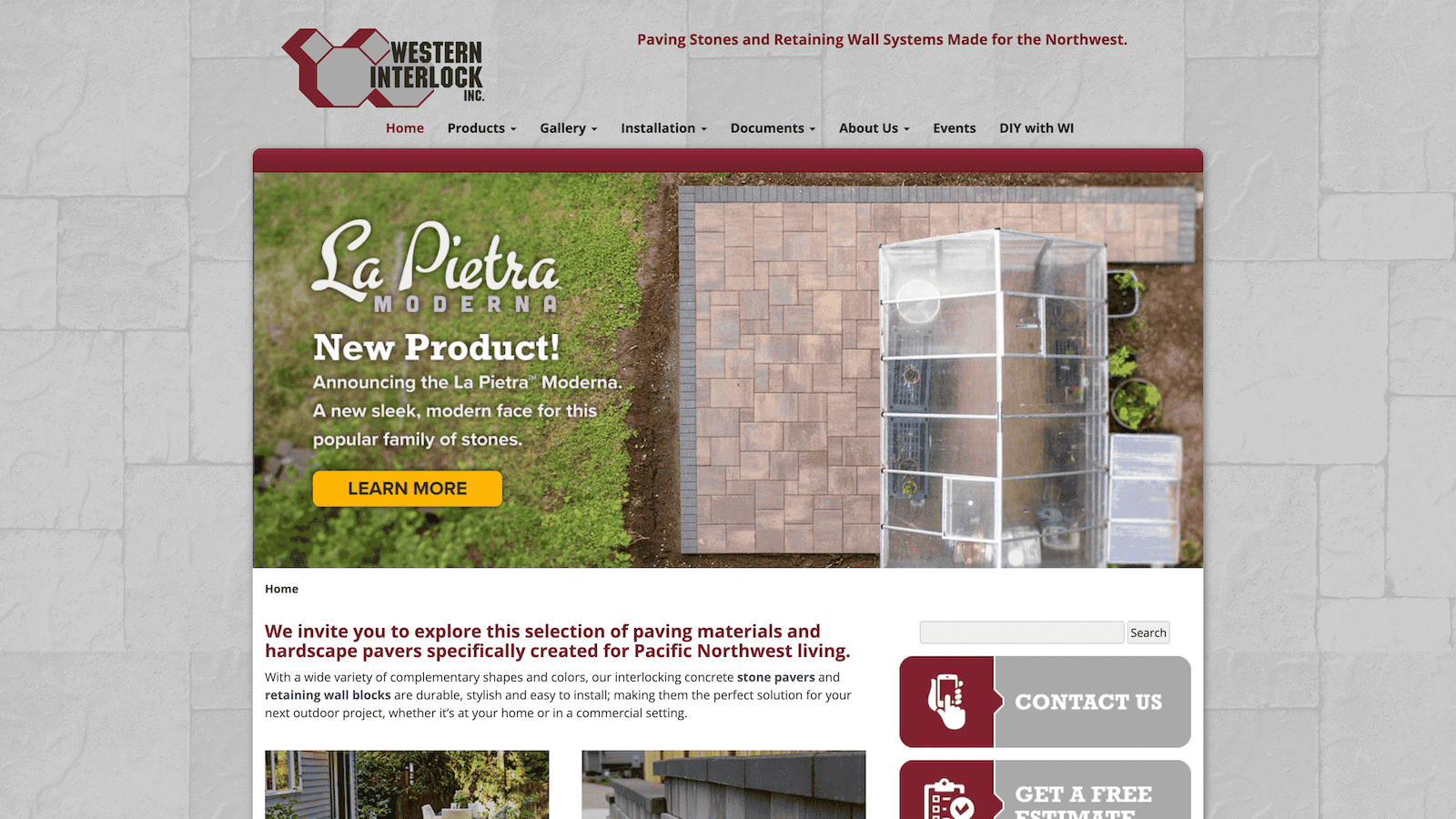
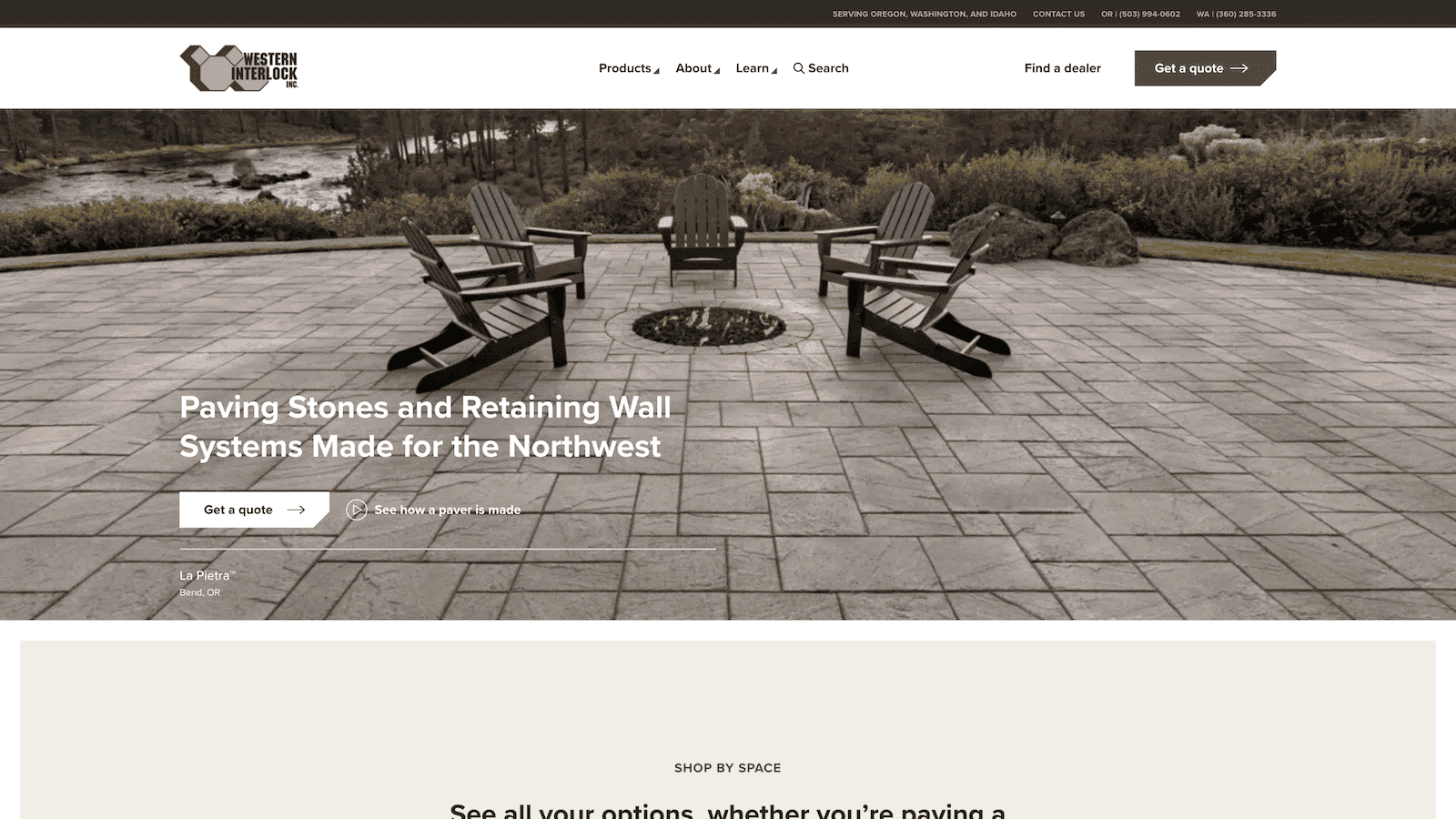
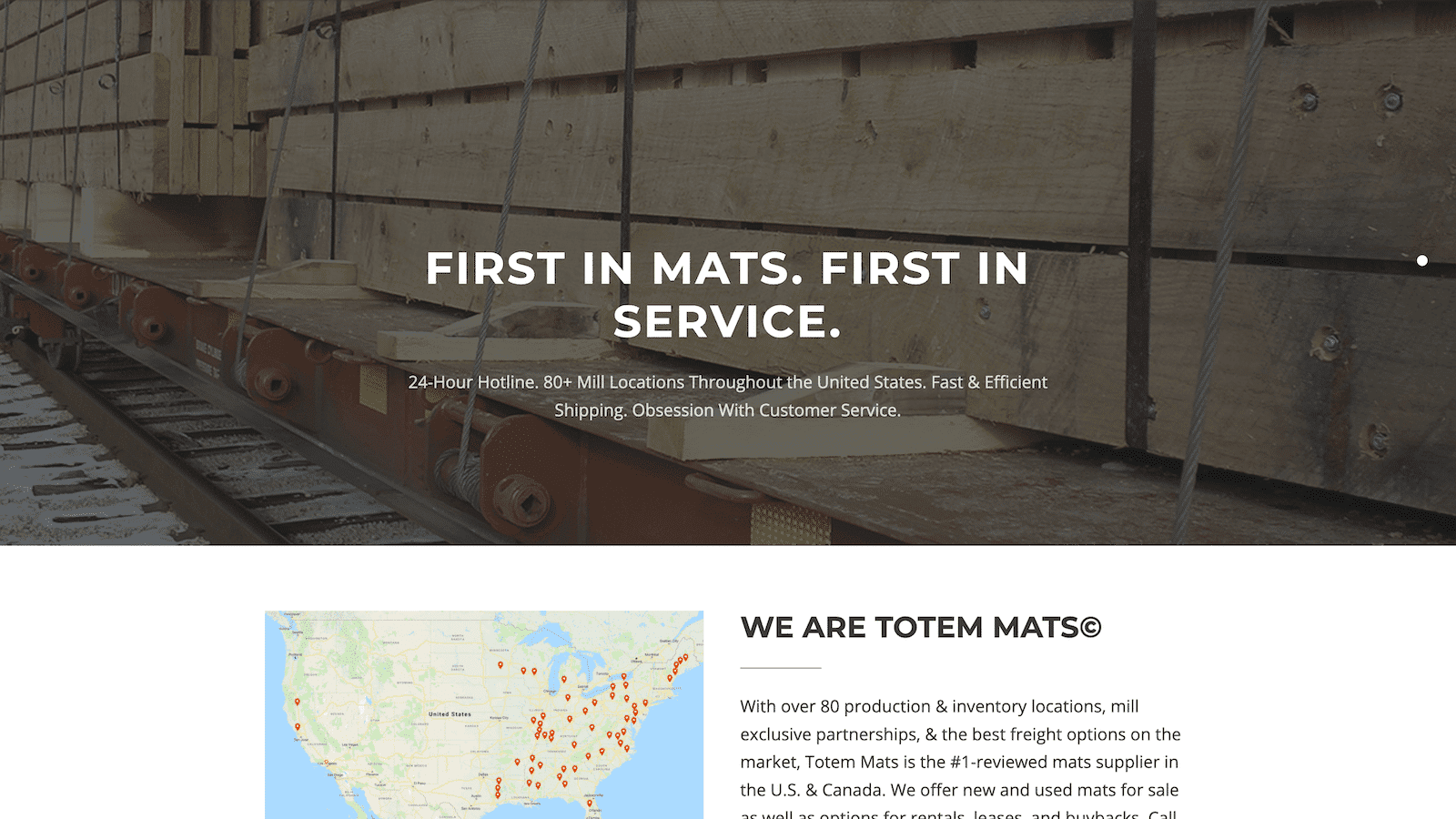

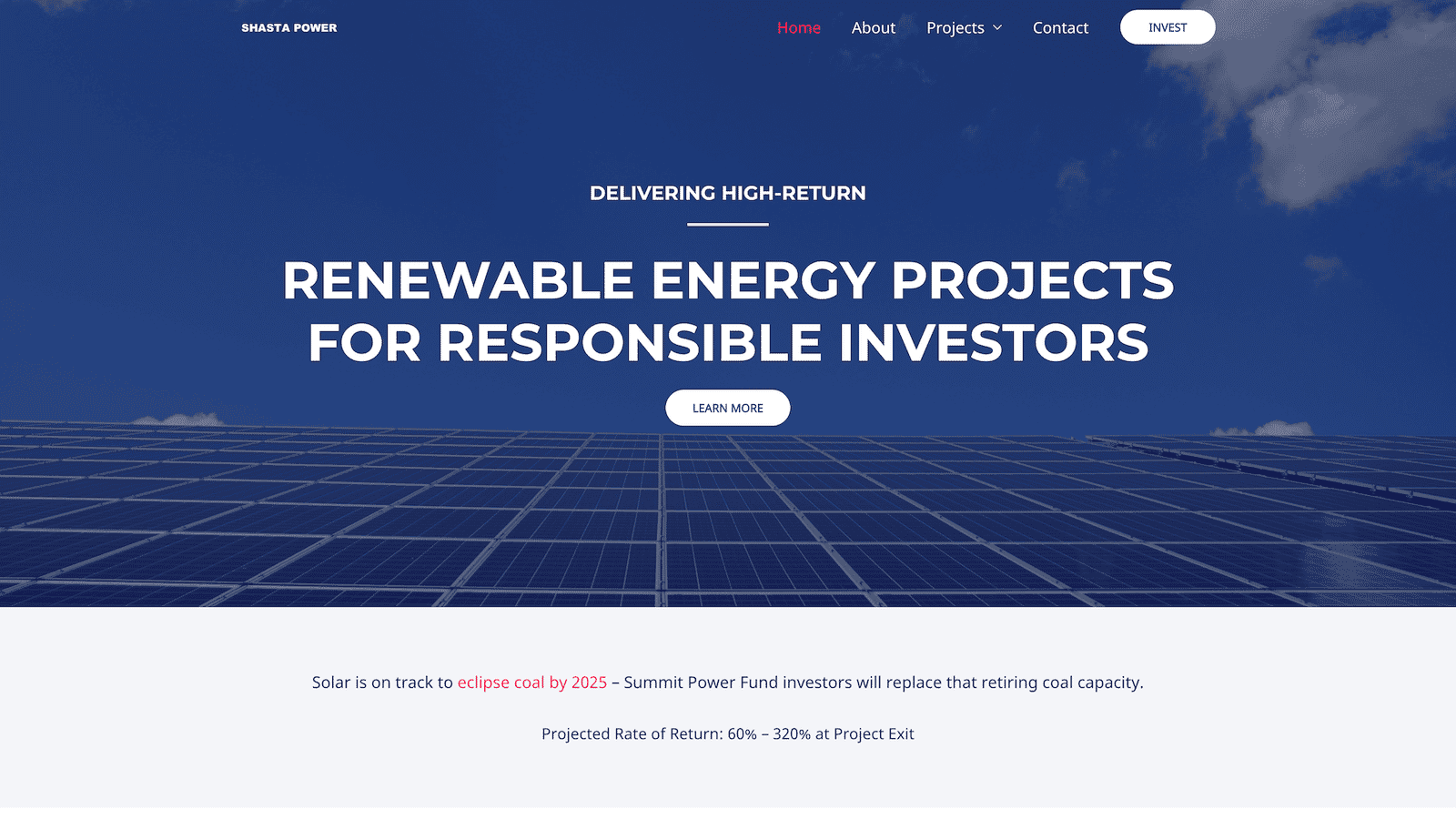




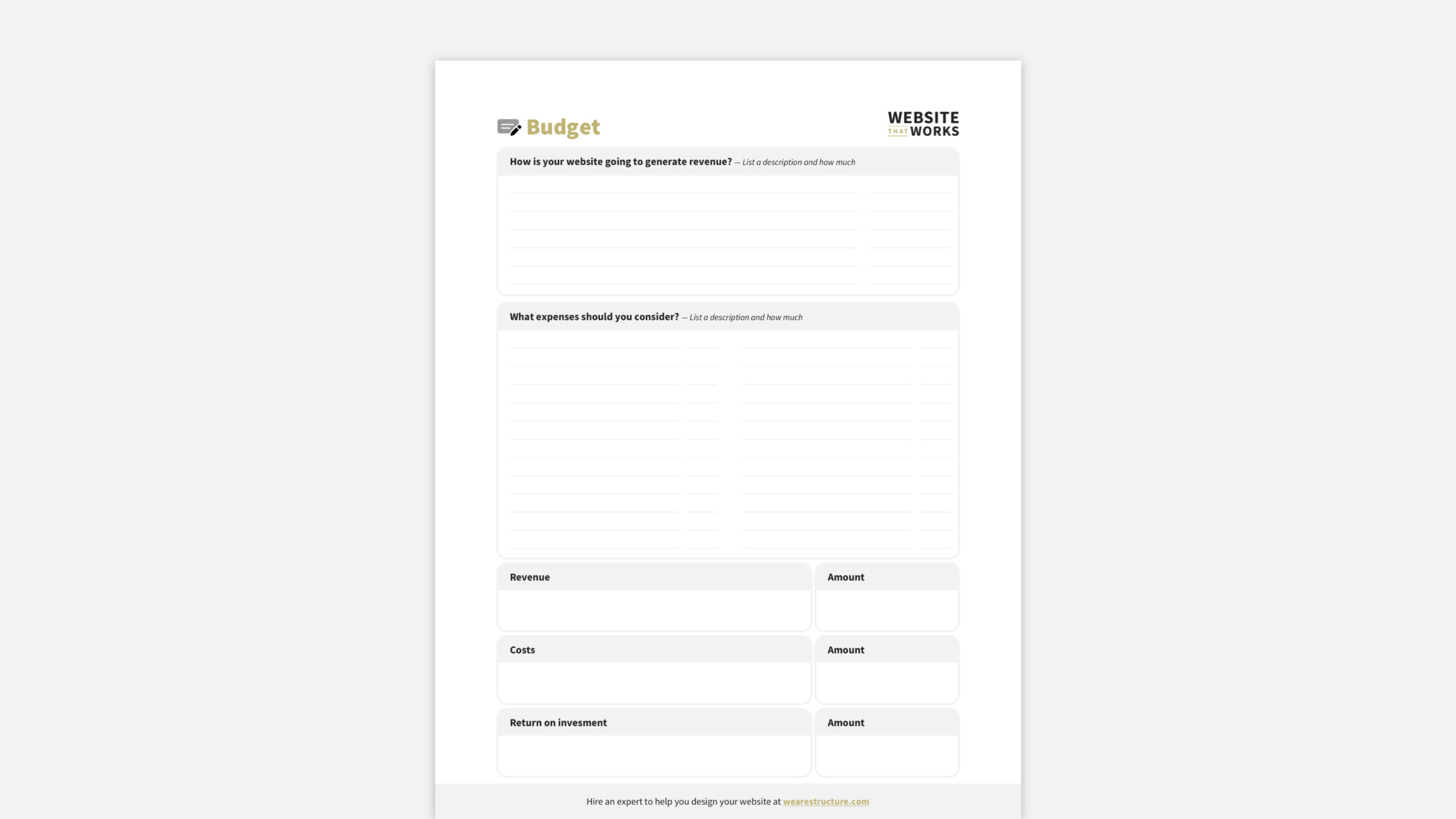







![Website Design Planning: Our Simple, 3-Step Process [Free Template]](https://wearestructure.com/wp-content/uploads/2022/09/website-design-planning-structure.jpeg)