A website design brief is like a unique plan for making a website. Imagine you want to build a five-bedroom house. Before you start, you need a program that describes what it will look like, how big it will be, and what finishes it will have. A five-page website is the same—you need a plan that details your wants.
Your web design brief explains what the website is for, who will use it, and what it should do. It also talks about the website’s colors, pictures, and words. Just like when you plan a home build, the design brief helps anyone helping make the website understand what it should look like and how it should work.
Free Website Design Brief Template
Download our FREE Website Design Planner and use it to plan your website!
This type of plan is essential because it ensures everyone is on the same page and knows what to do. In other words, it serves as a foundational roadmap for the project’s designers, developers, and other stakeholders to ensure everyone is on the same page and working towards a shared vision.
If you do not use a design brief, you’ll lack the essential information to guide the entire design process, from the initial concept to the final implementation.
First, what is a web design brief for?
At the core of a successful website design project is a clear and comprehensive design brief—a crucial roadmap outlining goals, requirements, and preferences. This document goes beyond documentation, acting as a bridge between stakeholders, aligning visions, and avoiding pitfalls.

Why writing a website design brief sucks—but it doesn’t have to
Nobody likes planning, which is why so many websites fail to work. They don’t get enough traffic, they don’t get enough leads, and they don’t get enough sales.
That’s why John Wooden, the Legendary UCLA Basketball Coach, famously said:
If you don’t have time to do it right, when will you have time to do it over?
John Wooden
You don’t want confused customers or a frustrated team struggling with your website. Here’s why writing a website design brief can be frustrating and how we’ve devised a better solution to make it easier.
1. Web design planning is boring
When people think about website design, they usually focus on its appearance—the logo, colors, and images. But what many don’t realize is that a website is mostly science, not just art. It’s like an iceberg—the visible part is the art, but a lot is happening behind the scenes. We tell our clients that successful websites are more like a formula than they might think—and our Website Planner is a proven formula that works if you use it.
2. Planning a website design takes a lot of time
Designing a website takes time, and busy business leaders often prioritize quick tasks over planning. Even though planning is crucial for clarity, finding time can be tricky. That’s why website builders like Wix and Squarespace let you start without a plan. Oof! The great news is, planning a website doesn’t have to be super time-consuming. Follow our steps and use our guide to save time while knowing what to do.
3. Website planning takes specific knowledge
Website planning requires a basic grasp of how websites function and their business role. When planning a website, you might not know where to start, which is why our Website Design Planner can assist!
If you’re uncertain, watch our (free) training on your website’s business impact and its role in marketing. This will help you grasp your website’s significance before you start planning.
4. A great website plan requires alignment
Here’s the challenge: the team must agree and decide when planning a website. This can be hard, whether for website design or almost anything. The agreement is why organizations often struggle to define their website; even if they do, it’s tough. Our Website Design Planning Brief helps organizations align. It’s a clear, structured process that takes only a few brief meetings.
5. Most website planning templates are technical
Most website planning tools are like fancy spreadsheets – they’re boring and numbers-focused. The Structure Website Planner is different. It’s designed to be enjoyable, acting like a creative guide that excitingly helps you organize your ideas, goals, and tasks. It makes website planning fun.
Plus, it’s not just about fun. The Structure Website Planner increases your chances of creating the website you want. It provides a clear path, ensuring you don’t miss the necessary steps. So, it’s enjoyable and handy for achieving your website goals.
Free Website Design Brief Template
Download our FREE Website Design Planner and use it to plan your website!
Ten benefits of writing a web design brief
The benefits of a design brief go beyond a checklist of to-do’s and information for designers to work from. It also reduces misunderstandings, aligns expectations, and optimizes resource use internally. Here are ten benefits you’ll experience by starting your web design project with a design brief.

1. Minimize misunderstandings
When you have a well-thought-out design brief, it’s like having a crystal-clear picture of the project. This helps avoid any confusion between the people involved, whether they’re the stakeholders, designers, or developers. In simple terms, it ensures that everyone is on the same page.
2. Align expectations
Think of the design brief as a map that lays out what the project aims to achieve, how it should look, and what it needs to do. When everyone agrees on this map, it’s like having a team on the same page. This way, there are fewer chances of arguments or surprises down the road.
3. Save time and money
When you’ve got a thorough design brief, it’s like having a well-organized plan that keeps things moving along smoothly. Designers and developers can get things done quicker because they know exactly where they’re going. This cuts down on many back-and-forth talks and changes, making the whole process work like a charm.
4. Enhance collaboration
Imagine the design brief as a meeting point for everyone on the team—the designers, developers, content folks, and all stakeholders. It’s a go-to spot where everyone can gather and figure things out together. This helps keep conversations and decisions organized as the project moves along.
5. Guide ideation
Think of the design brief as the frame of a painting. It gives a structure to the project, but inside that frame, designers get to unleash their creativity. They can develop cool, exciting ideas within the frame’s boundaries. This leads to a design that’s one-of-a-kind and works well.
6. Manage expectations
By detailing the scope, features, and functionalities in the design brief, clients can have a realistic expectation of what the final website will offer. Picture this: the design brief is like a menu that shows precisely what dishes a restaurant serves. You’ll know what to expect when you see all the details about the website—like what it can do and how it’ll look. This way, there’s no over-promising and under-delivering. And when you get what you expected, you’re pretty happy!
7. Reduce revisions
Having clear instructions in the design brief is like giving web designers a map that guides them to what the client wants. This means fewer times going back and forth to make changes. Both you and the designer save time and effort, making the whole process smoother and more efficient.
8. Improve your customer’s experience
A well-written design brief reveals who will use the website and what they like. Armed with this info, designers can create a user-centered design that caters to the needs and expectations of the intended users.
9. Make decisions a piece of cake
As the design takes shape, you have a roadmap to follow and a source of truth to know where you started. It’s like having a map that shows the best route to take. This makes deciding what looks great happen faster and with less hassle.
10. Know if the project was a success
The design brief acts like a yardstick to measure how well the final design turned out. You can check if the completed website matches the goals and things you wanted, and that’s how you figure out if the project aced its goals.
Free Website Design Brief Template
Download our FREE Website Design Planner and use it to plan your website!
What your design brief should include
These essential elements should be included in every design brief.

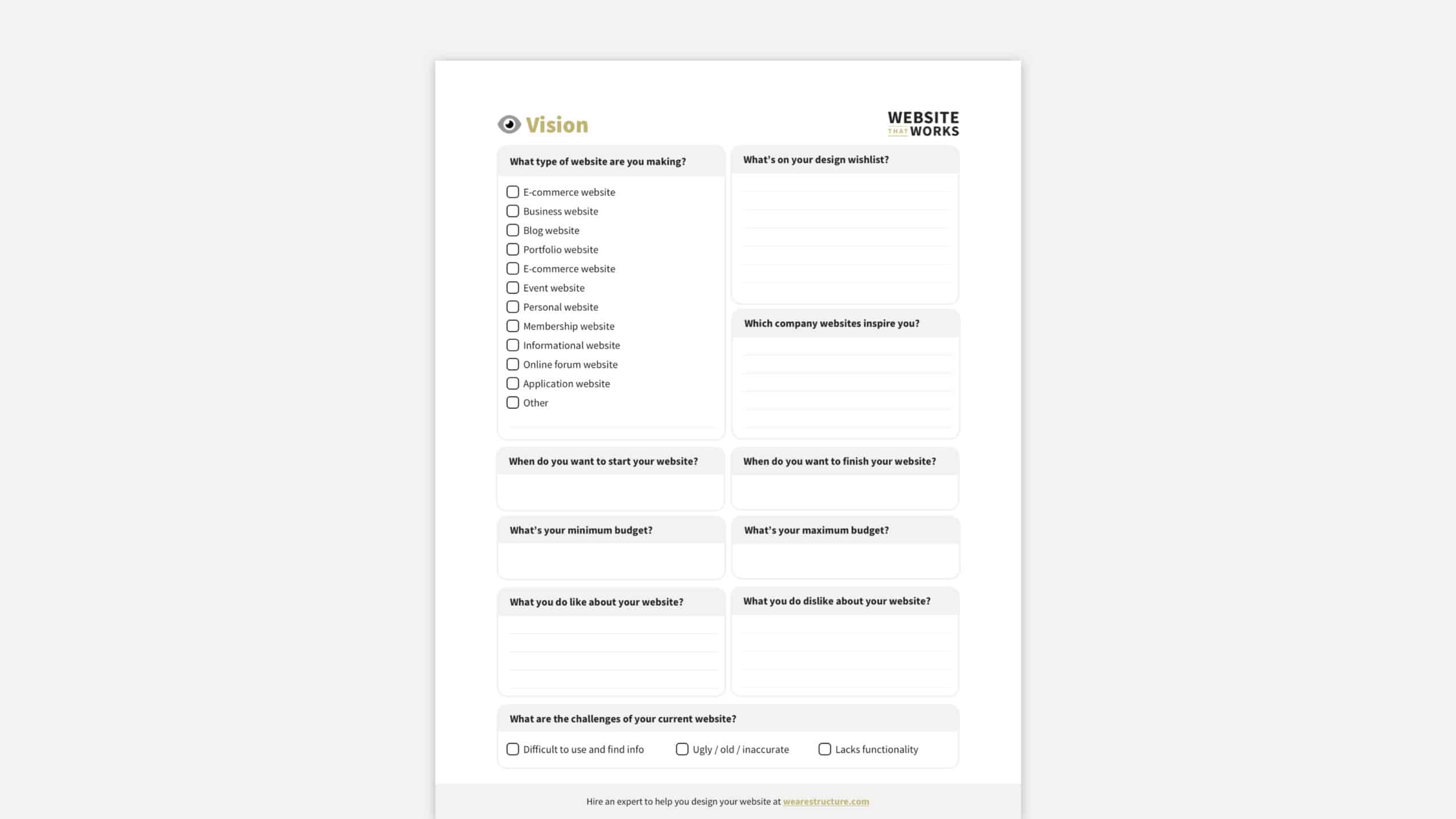
1. Vision
Start at the end. Provide a high-level view of the website you want to exist for your company. Your vision is influenced by a combination of factors that shape its purpose, design, and overall direction. You’ll want to ensure you note these specific things:
- Website type
- Design wishlist
- Target audience
- Start and end dates
- Budget minimum and maximum
- Feelings about your current website
Some key influences on a website’s vision include what you sell, who you sell it to, design trends, and timeline or budget ideals. A successful website vision emerges from a thoughtful blend of these factors, creating a cohesive and purpose-driven online presence that resonates with the target audience and achieves the company’s goals.
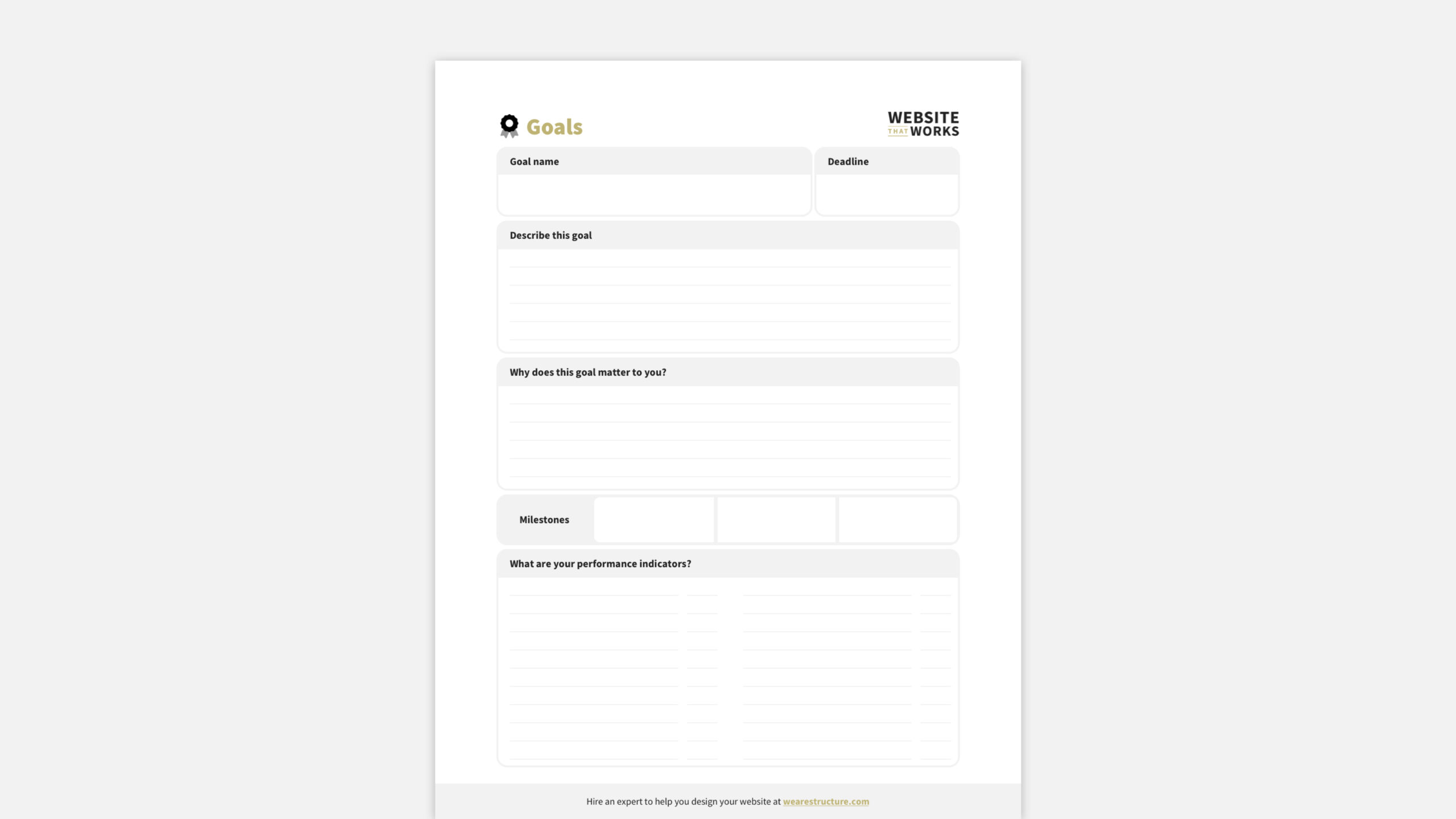
2. Goals
Think about it this way: different companies have different goals for their websites. What they want to achieve with their website depends on what kind of business they’re in, who they’re trying to reach, and what they’re aiming for overall.
- Goal name
- Goal deadline
- Goal description
- Why the goal matters
- Milestones
- Key performance indicators
Some common types of website goals relate to lead generation, user engagement, or community building. Not all websites set out to achieve the same thing, which is why there’s no one-size-fits-all. Ensure you get clear and list what specific things you want to accomplish with your website.
3. Team
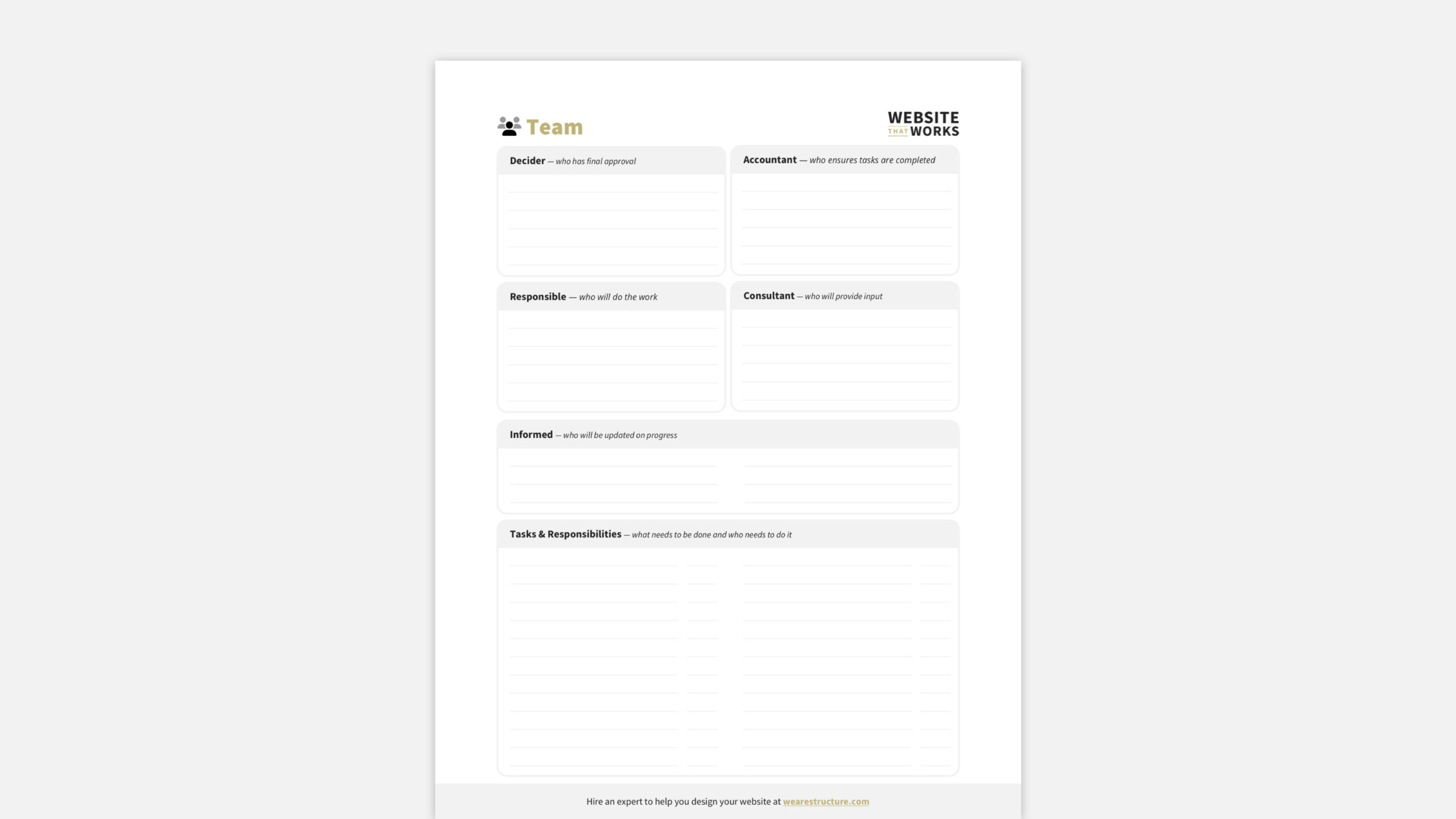
You’ll also want to document your team members and what they will be responsible for. This can be done in many ways, but we use the DARCI method (or DARCI framework) to ensure someone owns all tasks.
- Decider: who has the final approval
- Accountant: who ensures tasks are completed
- Responsible: who will do the work
- Consultant: who will provide input
- Informed: who will be updated on the progress
- Tasks and responsibilities
Your website team should include everyone involved in the project at some point. This includes your agency, freelancers, friends, advisors, and internal team members if you have them.
4. Brand guidelines
Your company’s visual identity, including logos, colors, typography, and brand voice, influences the design and aesthetics of the website to ensure consistency and reinforce brand recognition. What you document in your Website Design Brief is also known as shared information—don’t leave anything out!
- Who has access to our logo and guidelines?
- What is their contact information?
- Which colors are you using?
- Which fonts are you using?
- What are the brand’s personality or characteristics?
- Do you use images or illustrations more?
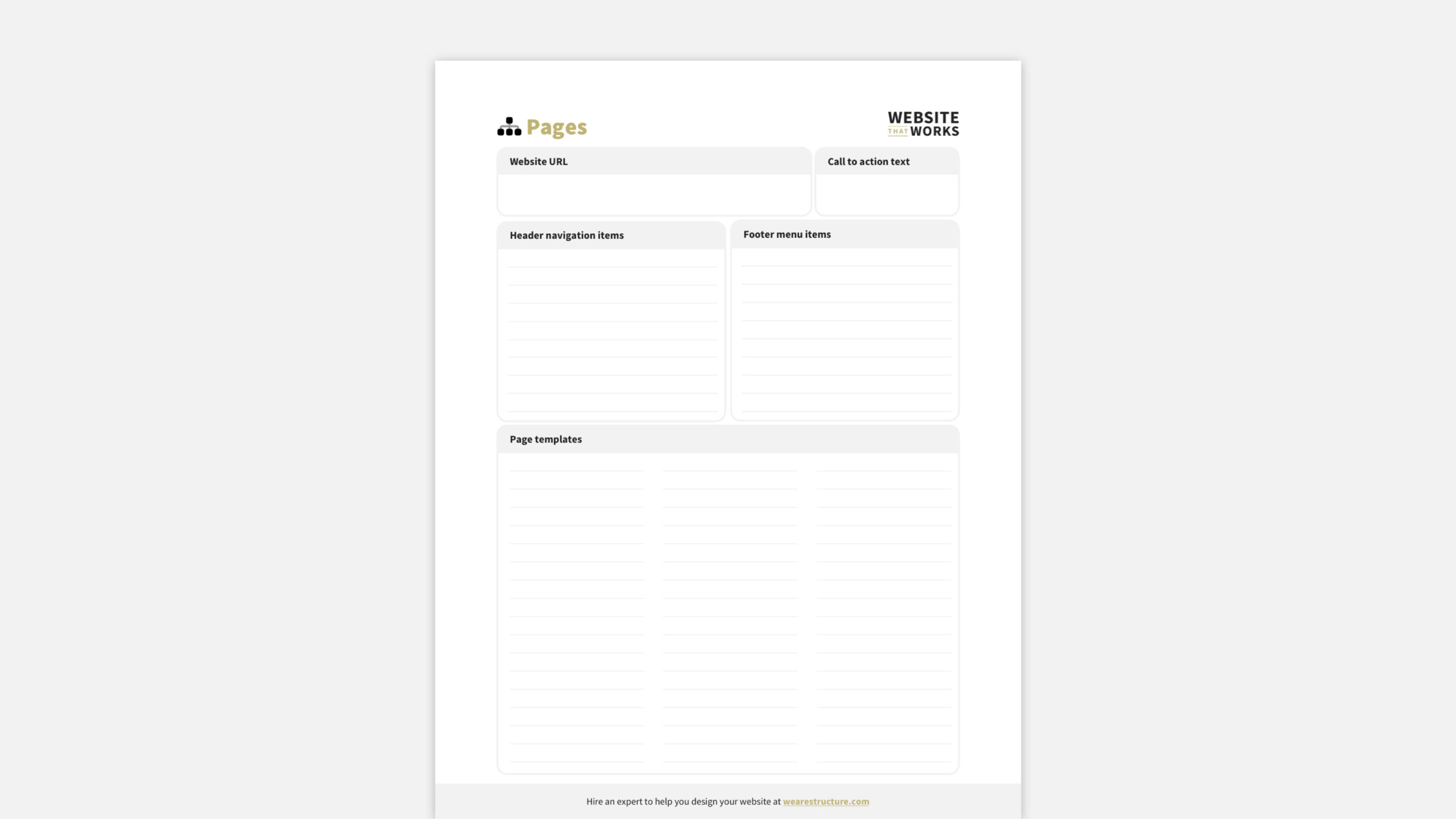
5. Pages
Just like a house is made up of its rooms, so is a website. Website pages play a fundamental role in a website design plan, serving as the building blocks that structure and organize the content and functionality of the site.
This is where you’ll specify each room you need in the house.
- Website URL
- Call-to-action text
- Header navigation items
- Footer navigation items
- Page templates
Your website pages contribute to the overall design plan because they serve as the canvas upon which the design plan is executed. Each page has a specific role in delivering information, guiding user interactions, and achieving the website’s objectives. A well-thought-out arrangement of pages ensures a coherent, user-friendly, and effective website design.
Don’t forget to factor in contact pages, paid landing pages, a 404 template, and your legal pages!
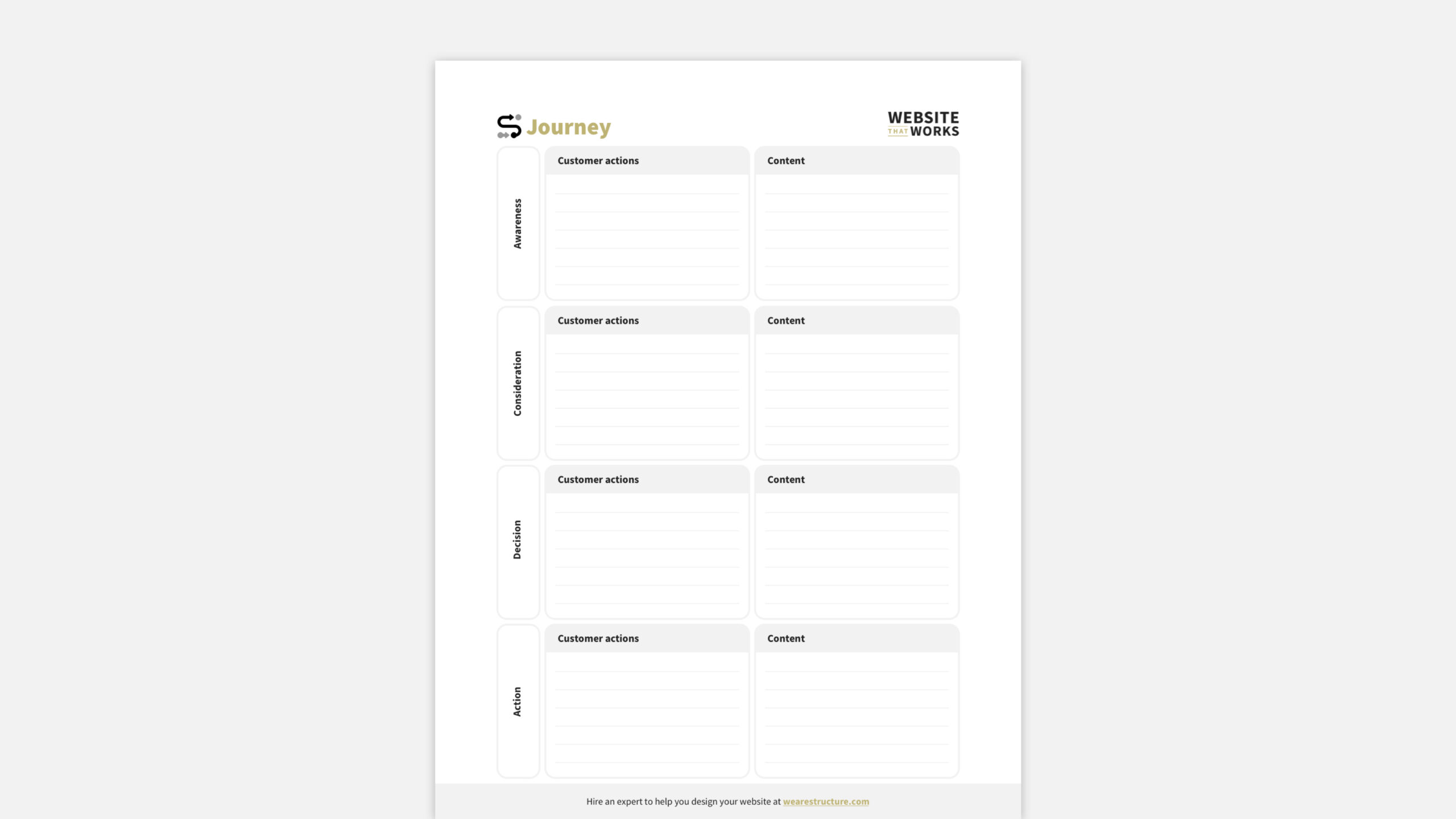
6. User journey
Each part of your web design brief builds on the other part. After we have a vision, goals, brand, and pages, you can plan how a customer goes from prospect to purchase. This includes effective call-to-actions, landing pages, and content guiding visitors toward desired actions, such as purchasing or signing up.
Document the Customer Actions and Content to support each stage in the buyer’s journey. We often refer to the AIDA marketing framework to help remember the main steps of the journey:
- Attention
- Interest
- Desire
- Action
Use the Customer Actions portion to define a user’s actions to get to the next step. Then outline the types of content (text, images, videos) that will be included on the website to aid in that process.
7. Inspiration
Highlight key competitors and mention aspects you’d like to emulate or differentiate from them. Share design examples, websites, or styles that resonate with the desired look and feel.
- Things we like
- Things we dislike
- Things we want to do better
Both inspiration and competitive analysis play crucial roles in the process of website design planning.
Inspiration serves as a creative spark that ignites the design process. It involves seeking new ideas, design trends, and innovative approaches to elevate the website’s aesthetics and user experience. Here’s how inspiration impacts website design planning.
The competitive analysis involves studying similar websites in the same industry to understand their strengths, weaknesses, and strategies.
Incorporating both inspiration and competitive analysis in website design planning strikes a balance between creativity and strategic decision-making. It empowers designers to create visually appealing, user-friendly websites that are aligned with industry trends while ensuring the website’s unique identity and competitive advantage.
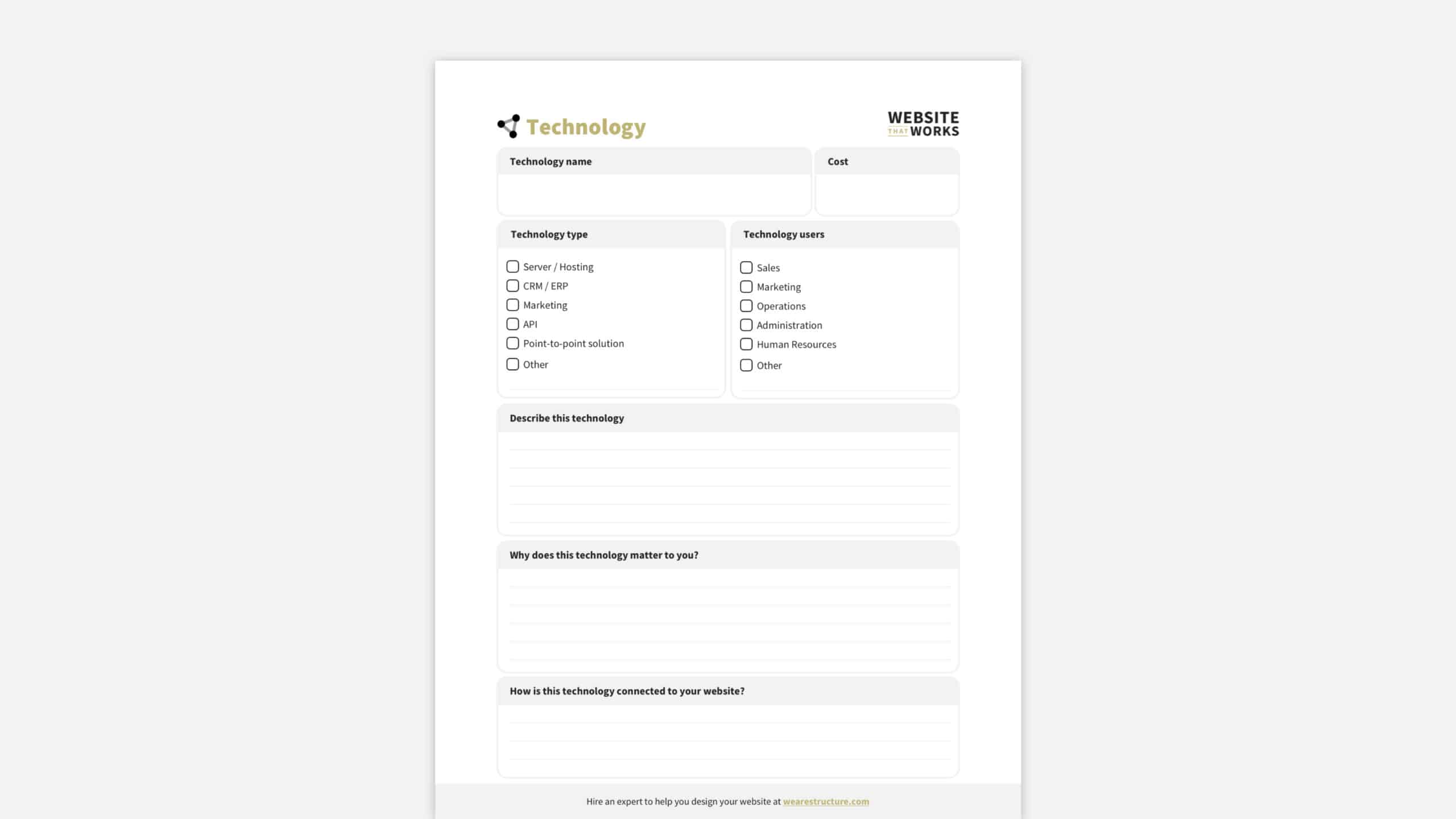
8. Technology
Technology and integrations are significant and evolving in a website design plan. They determine the functionality, performance, and user experience of the website.
Today, many technology types, functions, and roles impact things like Functionality, content management (CMS), e-commerce, data collection, security, accessibility, and so much more. We’re barely at the tip of the iceberg.
For your website brief, you’ll want to document each main piece of technology you need to work with your website to run your business. This includes the following information to start:
- Technology name
- Cost
- Technology type
- Users & roles
- Tech description
- Why the technology matters to you
- How the tech is connected to your website
In essence, technology and integrations provide the foundation and capabilities for the website’s design. Choosing the right technologies and seamlessly integrating them into the design plan enhances the website’s functionality, user experience, and overall effectiveness in achieving its goals.
Be sure to address any technical constraints, platforms, and hosting preferences.
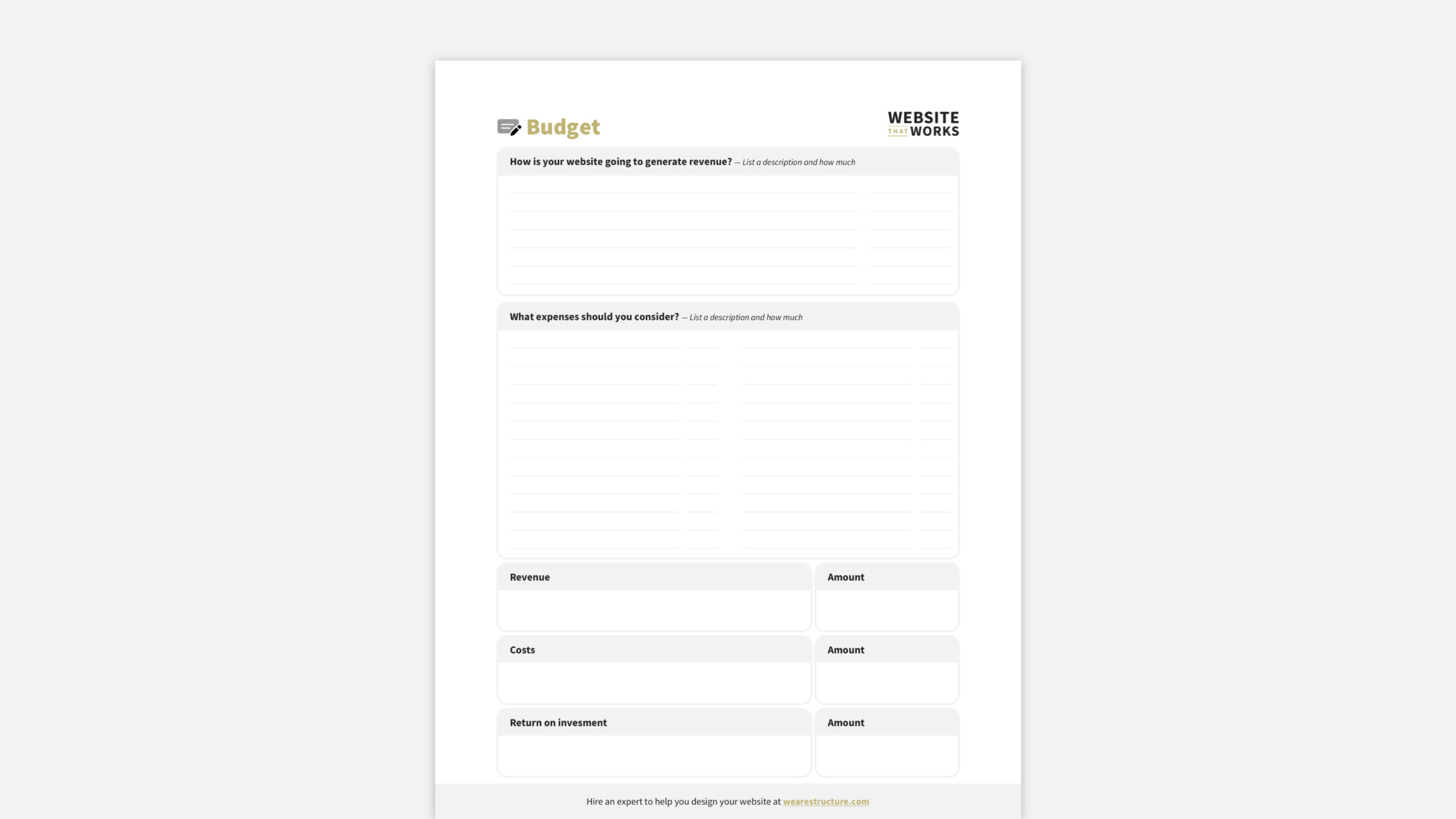
9. Budget
I get it; talking about budgets isn’t the most thrilling part. But trust me; it’s super important. Your budget is like a roadmap that shows you what can happen, what can’t, and the decisions you’ll need to make for your website design project.
Many companies look at the money they’re spending and see it as a problem. But here’s a more brilliant way: treat your website like an investment that brings you back something good. Think about the money you can make and save and what you spend. That way, you can determine how much your website could make for you in the long run.
Your website budget should include the following elements:
- Expected revenue
- Expected savings
- Expected costs
- Return on investment
Clearly defining the budget in the website brief helps set realistic expectations and ensures the project aligns with the available resources and desired outcomes.
Free Website Design Brief Template
Download our FREE Website Design Planner and use it to plan your website!
Five expert tips for writing your design brief
At Structure, we’ve done everything – planning, designing, building, managing, and growing websites. We’ve got loads of experience and even crafted a Website Planner based on it. Here’s what we’ve figured out from working with websites of all sizes and budgets.

1. Don’t aim for perfection
While perfection might seem tempting in a web design plan, it slows things down. Embracing an iterative approach for continuous improvement within your project’s limits is more efficient and effective.
2. Use clear and descriptive language
Using clear language in a web design plan makes things smooth. It avoids confusion, errors, and delays, leading to a successful website.
3. Take your time and sleep on it
Taking your time and giving yourself a chance to sleep on a web design plan is a wise strategy. It promotes better decision-making, reduces stress, enhances creativity, and contributes to a more thoughtful and effective plan.
4. Focus on results
A results-focused website design plan ensures every detail drives excellent outcomes. Users love your site, you gain maximum value, and your website becomes a business superhero.
5. Set SMART goals
Using SMART goals in a web design plan is like having a smart strategy. It sets up a clear path to success, gets everyone working together, and boosts the chances of reaching your goals exactly as you want.
Free Website Design Brief Template
Download our FREE Website Design Planner and use it to plan your website!
Common questions about creating and using a design brief effectively
People have some common questions about creating and using a design brief effectively. Remember, a well-crafted design brief is a valuable tool that streamlines the design process fosters collaboration, and sets your project up for success.

Why do I need a web design brief?
A design brief acts as a roadmap for your project. It clarifies goals, expectations, and requirements, ensuring everyone is on the same page.
What should be included in a web design brief?
At a minimum, your design brief should include project objectives, target audience, design preferences, functionalities, branding guidelines, and technical specifications. Download our free Website Design Brief Template to ensure you don’t miss anything.
How detailed should a web design brief be?
The level of detail depends on the complexity of your project. It should be clear enough to guide designers and developers but not overly complex.
How long should a web design brief be?
Think of it this way: you’ve got to talk about your vision, goals, and what you want to achieve. Our Web Design Planner has nine worksheets, but some, like the Goals and Technology Worksheets, can be copied for all your goals and techie stuff. So, your web design brief could be anywhere from two to thirty pages, depending on how big and fancy your website is.
What is a typical format for a web design brief?
Typically, people write a web design brief in a digital format like Google Docs, Microsoft Word documents, or Pages documents. However, our Web Design Planner provides a guided format you don’t have to imagine from scratch! Just fill in the blanks, and you’re done.
What is the difference between a project brief and a web design brief?
A project brief is a broader document that covers the entire scope of a project, while a web design brief is a more specialized subset of a project brief that specifically addresses the requirements and goals of designing a website.
What’s the difference between a website design brief and a website design proposal?
A website design brief is a document that guides the design process, while a website design proposal is a document that outlines how a designer or agency plans to fulfill the project’s requirements and meet the client’s needs.
How do you write requirements for a website design?
In a web design brief! Luckily, we’ve got a sleek web design brief that you can print, punch holes in, and pop into a binder. Fill it out with your team or as an RFP for a web designer, and you’re good to roll.
Who should be involved in creating a design brief?
You, the project managers, the creative designers, the tech wizards, and sometimes even the clients all come together to cook up a top-notch design brief.
Can a web design brief change during the project?
Website design briefs are like clay that can be shaped as you go. If new ideas pop up or things change, that’s cool. Just keep everyone in the loop so we’re all on the same page.
How does a design brief improve communication?
A design brief eliminates ambiguity by providing clear guidelines. It ensures everyone understands the project’s direction and reduces misunderstandings.
How can a design brief help avoid scope creep?
Think of a design brief as your project’s rulebook. It lays out what’s expected. When someone suggests changes, you can compare them to the rulebook’s goals and see if they fit.
![Website Design Planning: Our Simple, 3-Step Process [Free Template]](https://wearestructure.com/wp-content/uploads/2022/09/website-design-planning-structure.jpeg)