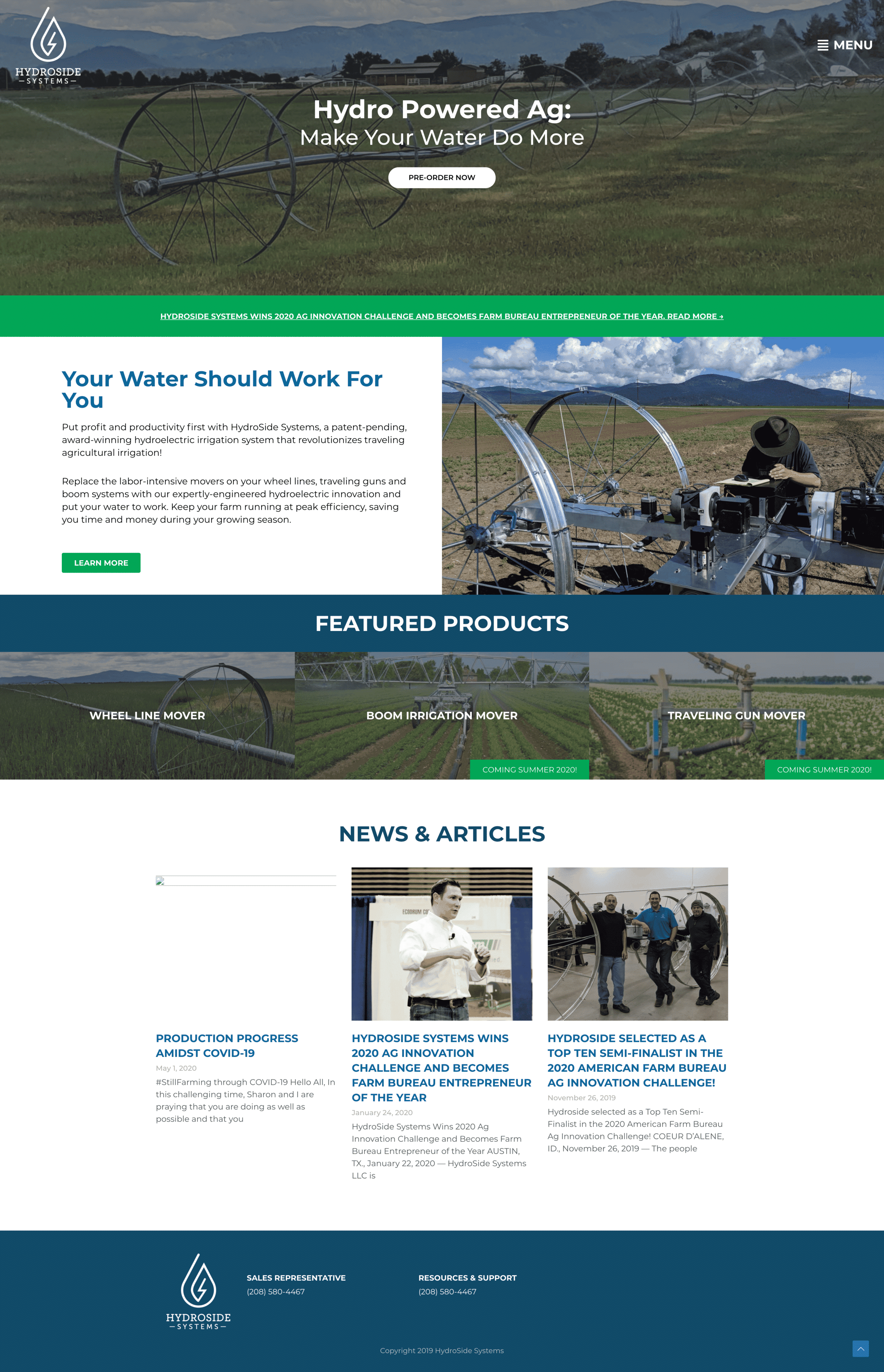
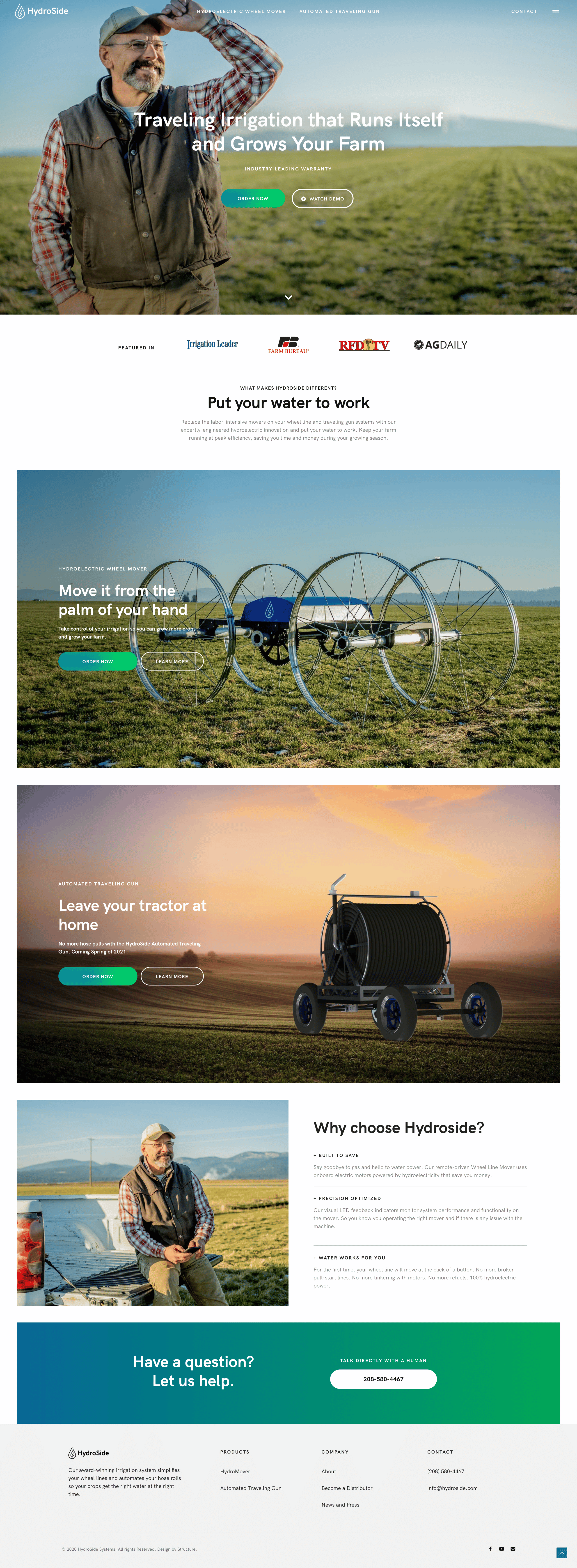
HydroSide is bringing technology and automation to the irrigation niche of the agriculture industry. As an industry disrupter, HydroSide needed a bold website and digital experience that looked, felt, and smelled less like farm equipment and more like farm technology.
Challenge
HydroSide needed a new website that matched its role as a technology disrupter in the marketplace. The efficiency of their product offering was opposed to the confusing user interface customers experienced on their website.
Solution
After a deep dive into their user needs, we uncovered a much deeper story that guided the web strategy and information architecture. With creative copy and a fresh visual design, we could use the client’s existing CMS to transform this website.
Results
A website redesigned with a straightforward and more strategic approach to communicating the information growers were looking for.
Early traction
HydroSide not only provides a fresh face in their space but delivers a solution to a real problem farmers and growers have across the world.
Due to their bonafide product-market fit, HydroSide.com gets thousands of new organic visitors each month without much effort. The extra consideration we put into performance, accessibility, and implementing best practices made both Google bots and actual humans happy when they visited the website.
The back-story
Our team came-in early as a digital advisor for the HydroSide founders, back in 2018 when the company was mostly just an idea.
The HydroSide website redesign was a long time coming, but that’s part of what made the project successful. There were years of foundational work together before we redesigned the website. As is often the case, the HydroSide website is more than just a pretty face—it’s an engaging storyteller and an effective sales tool.
As is often the case, we operated as a true partner and close extension of their marketing team. The relationship with HydroSide continues as we help develop their digital presence and make advanced enhancements to their website to help them both move forward and stay ahead.
Strategy
Information Architecture Content Strategy UX Strategy
Design
UI / UX Design Visual Design
Content
Copywriting Art Direction
Development
Front-end Development Back-end Development Quality Assurance Consulting
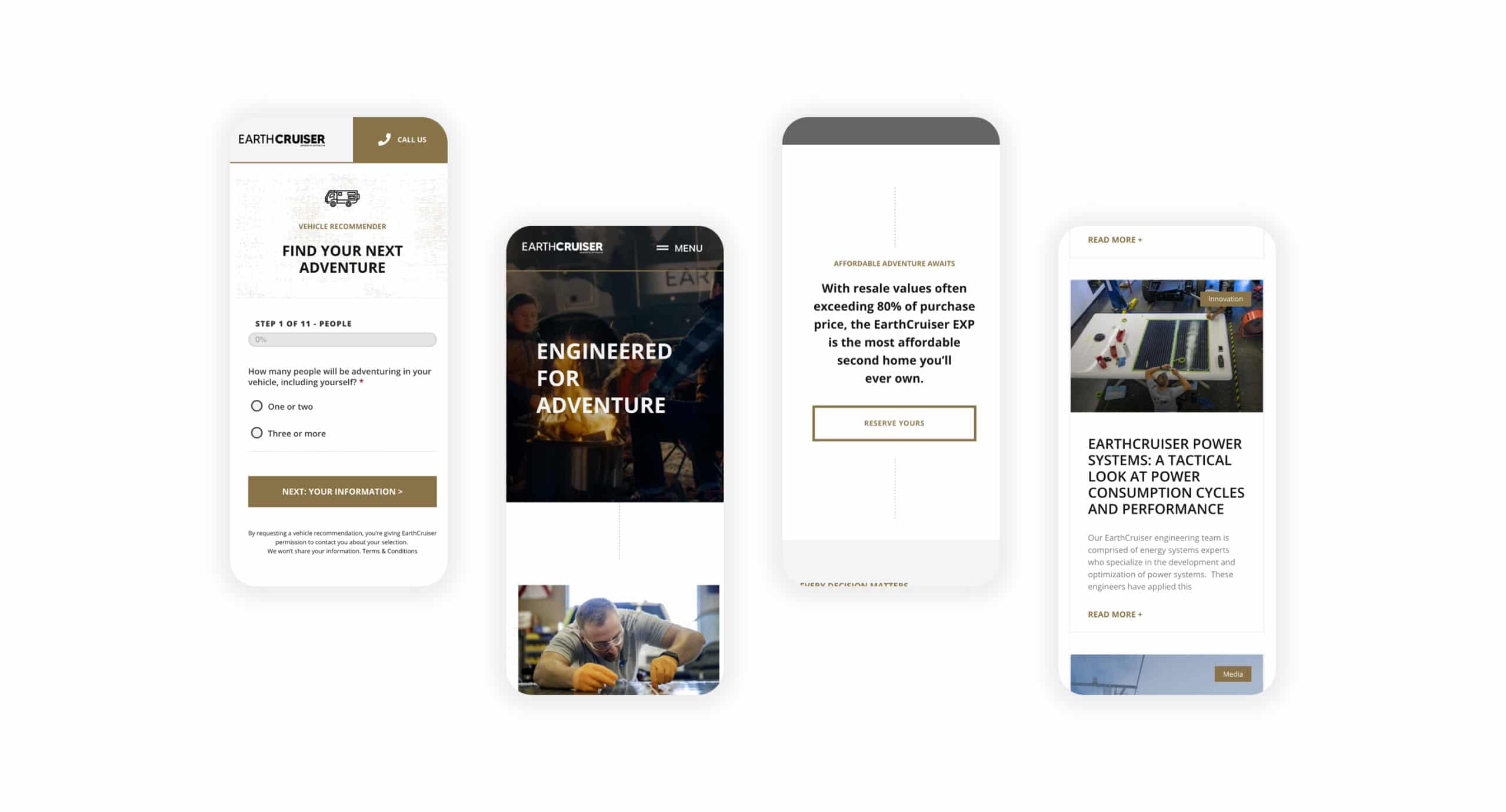
EarthCruiser manufactures luxury Overlanding vehicles. What began in Australia and made its mark in Bend, Oregon, is now an iconic global brand. To ensure the world saw EarthCruiser as the trustworthy brand they are, we created a website as exciting as the vehicles themselves.
Challenge
Any EarthCruiser owner trusts their vehicle can traverse the most challenging terrain without fail—because it will. But EarthCruiser found that potential customers couldn’t navigate, let alone traverse their website without encountering a problem. Not to mention, it didn’t display the quality of the products and services they provide.
Solution
The EarthCruiser website was full of generic messaging, dense architecture, and shallow details of what the brand offered. Embracing the creative direction of “Show, Not Tell,” we reimagined the EarthCruiser website from the ground up. With rich media front and center, we unveiled a fresh experience that customers could trust.
The work included integrating the website with many of EarthCruiser’s marketing and sales systems, including HubSpot and MailChimp.
We set up the Vehicle Recommender so that the sales team could see each user’s recommendation and contact information so they could follow up and have visibility into what the customer is looking for.
Beyond the Project
EarthCruiser.com launched without a hitch. Some team members said it was the smoothest website launch they’d ever seen.
During this website redesign, we operated as a critical extension of their marketing team. Much to the project’s success, we’ve taken over the website’s management and continued working together on additional phases of website work to enhance the user experience further.
Strategy
Website Strategy Information Architecture Content Strategy UX Strategy
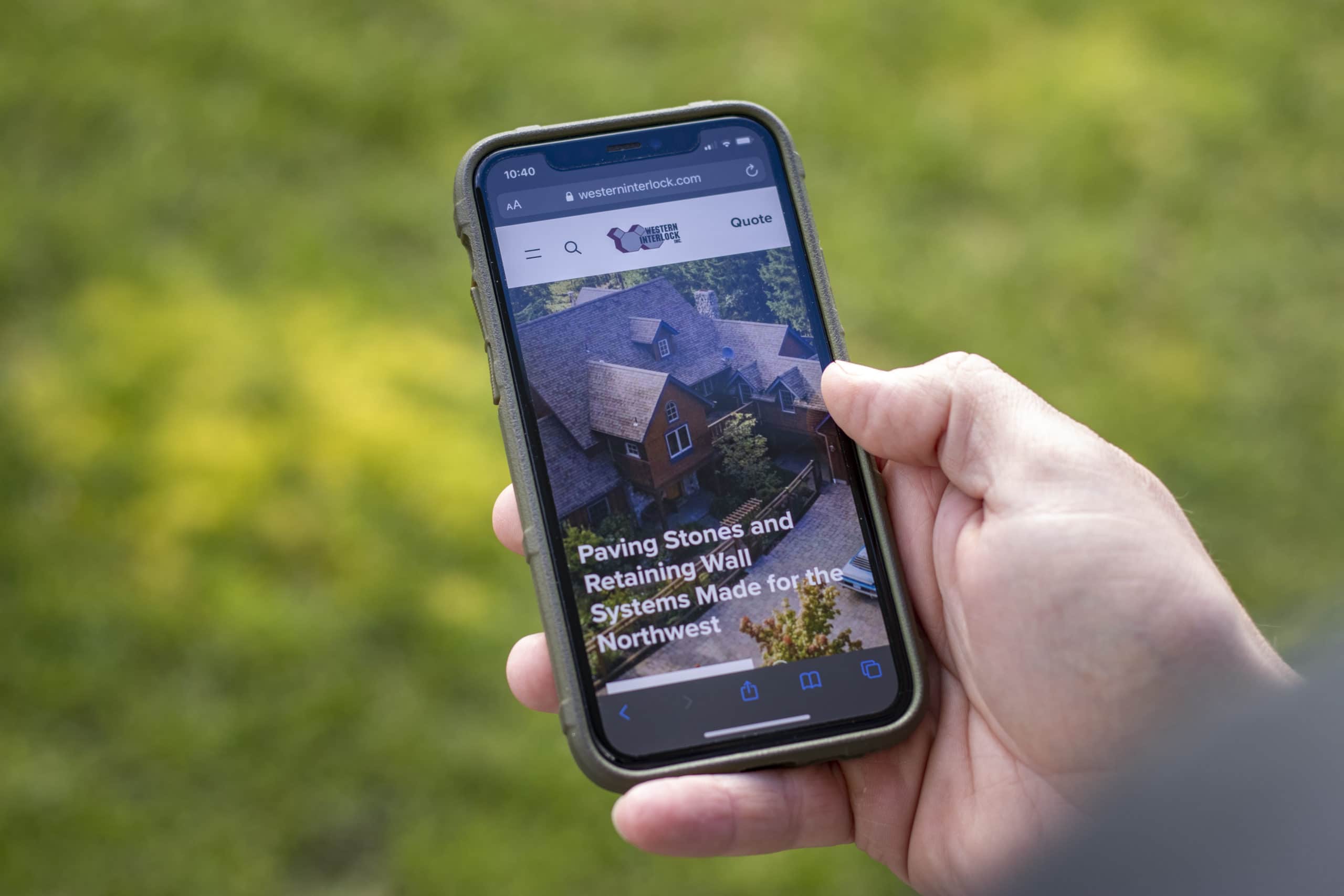
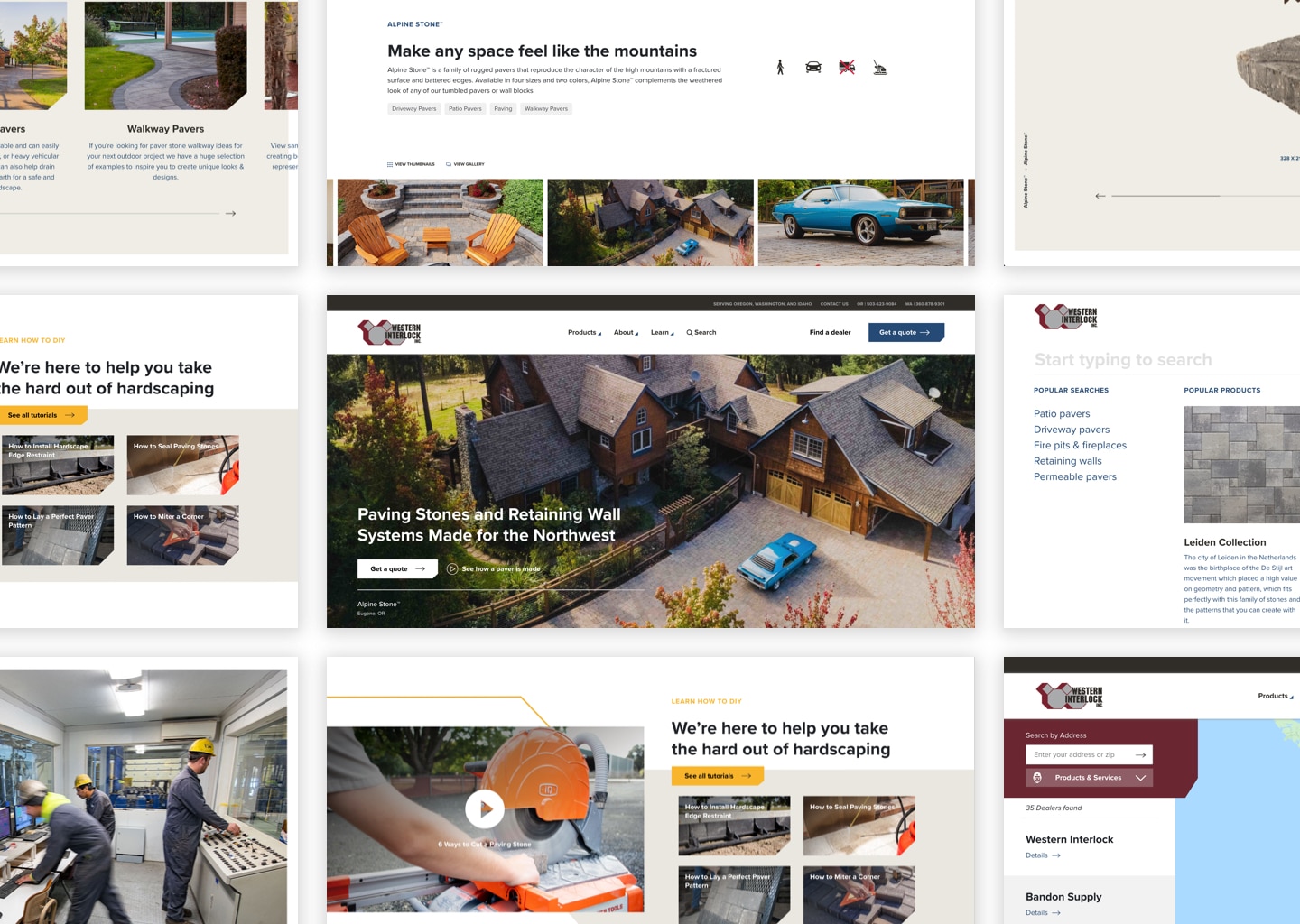
Western Interlock is a paving stone manufacturing company with state-of-the-art manufacturing facilities in Oregon and Washington. We worked on a website redesign to bring their brand into the present day with a fresh look in a fully optimized digital experience, with lead generation and thought leadership at the center.
Challenge
The Western Interlock website needed a new look that better matched the quality of its brand and the products it delivered. It also had to facilitate high-traffic DIY blog content and be easy to navigate.
Solution
We stretched their current brand while delivering a simple yet strategic information architecture with simple navigation that was easy for customers and team members.
Results
The result is a beautiful and swift experience for potential buyers that’s optimal for mobile and built for engagement. Within a few days of launch, estimate requests and traffic more than doubled.
Up, up, and up some more
This website redesign helped potential customers discover and engage with Western Interlock’s highly successful DIY marketing campaign at a much deeper level. As a result, we’re seeing the most significant increase in new users, the lowest bounce rate, most extended session durations the company has ever seen. Not to mention a backlog of sales requests they couldn’t be happier about.
The following statistics were reported by Google Analytics 30 days after launching the updated website.
users
43.8k
+65.0%
sessions
57.7k
+59.9%
bounce rate
77.6%
-2.9%
ave session duration
00:01:24
+12.1%
Beyond the project
Beyond WesternInterlock.com, our work on this website redesign brought about an evolution of digital thinking at Western Interlock—and instituted a more refined approach to branding and marketing moving forward.
We hope this site ushers in a new era for Western Interlock and the hardscaping industry.
Strategy
Website Strategy User Testing Information Architecture Content Strategy UX Strategy
Redesigning a company website can feel intimidating, especially if you’ve never done it before or you’re already overwhelmed by the projects on your plate. It’s so much easier when you have a proven website redesign process to follow.
In this article, we will walk you through the Structure Website Redesign Process that we’ve used for hundreds of clients over the last five years (September 20, 2023, at the time of this writing).
To cut to the chase, we have a 5 Step Website Redesign Process that works every time (if you follow it!).
You can do these steps on your own or with your internal team. You could probably get a solid head start with this article and our Free Website Redesign Planning Guide.
However, if you’re considering hiring an expert to help with your website redesign project, it’s much easier to trust someone who has a plan and has worked on it repeatedly.
Unfortunately, you don’t get that with most local web design agencies or freelancers.
If you’re in one of those industries, that’s great! But even if you’re not, this website redesign process will still work for you.
And even if you’ve got a small website or spinning off a new one, you can use this process. While it’s perfect for a website redesign, it works great for a new website.
Unfortunately, in the many website redesign projects we’ve worked on, the primary problem with any web project that doesn’t meet goals or expectations is a failure to plan.
Of course, at Structure, we start with planning. So that’s not an issue when you work with us.
But in my experience as a digital marketing veteran at software companies and agencies, the same website issues have come up over the years.
And they all come back to one thing: failure to plan.
It’s not just my experience, either!
Research suggests that 68% of marketers did a site redesign in the last 12 months – but 1/3 were unhappy with the results.
Furthermore, failed website redesigns cost an average of $55,000 plus an additional $115,000 over the next 12 months to fix.
Ralf Speth, CEO of Jaguar Land Rover, said it best:
If you think good design is expensive, you should look at the cost of bad design.
Likewise, if you think a goodwebsite is expensive, you should see the cost of a bad website.
What do you need your website to do for your business?
How did your last website perform? What worked/didn’t work?
Which platforms are you using, and do you like them?
During this call, we’ll also be able to recommend a website design package that fits your goals. Once you decide on a package, we’ll start with a virtual or in-person Website Workshop.
During this workshop, we’ll help you define and document the following information:
Basic company information
Who is on your team
The vision for your website
A competitive analysis
Brand documentation
Your buyer’s journey
A sitemap of your pages
Content plans for each page
Technology requirements
Website build budget
The final answers comprise your Website Plan.
Step 2: Design – Website Layout
Website design is more than mocking up a pretty version of your brand for a webpage; it’s designing a home for your customers to visit to engage with your business and buy from you!
Creating a strategic website design that meets all these criteria can seem daunting, but it’s important to remember that your website is a vital part of your business and should reflect your brand and meet your business goals.
How does the “design” stage of the Structure website redesign process work?
The Structure Website Design Package you choose will determine what you receive from the process. However, here are some of the deliverables you can expect:
Wireframes
Desktop Designs
Mobile Designs
Tablet Designs
Content & Media
Functional Specification
If you’re unsure what this means, that’s okay! Our team of website design experts can help. We’ll coach and consult with you to clearly understand the goals and needs of your website, and then we’ll create a custom website design that’s right for you.
Step 3: Develop – Build
During the website development process, the aim is to create a site that aligns with the design concepts established in the prior phase.
Moreover, this is the stage where you guarantee that your website operates smoothly, catering to the objectives, technology, and user requirements outlined in the Website Plan.
This is another reason the website plan is so critical. It is a guiding source of truth throughout the website redesign process.
Achieving these objectives will create a website that accomplishes your plan and sets you up to crush your business goals.
How does the “development” stage of the Structure website redesign process work?
Upon your approval of the Functional Specification (the final design deliverable), our development team will begin building your website on a separate development site so your live website isn’t affected.
We’ll optimize your website for all devices and browsers and essential SEO, accessibility, and load speed as standard practice.
Then, we’ll break your website. But don’t worry, it won’t stay broken!
We’ll fix any issues and put checks in place to ensure it’s bulletproof for your team and users.
Testing is completed with a Training Call so you know exactly how everything works. Then, you’ll get to review and approve your website.
And we have a Work For Free Warranty to cover you in case of any unexpected flaws.
Step 4: Manage – Updates & Monitoring
All websites must be updated and optimized, especially after being redesigned.
It’s a common practice for local agencies to “lock” you into a management plan with them. Often, this subscription is part of the deal. Or, they might hold the key to your hosting.
Either way, we’re not fans of locking you into anywhere you don’t want to be.
That includes a management or hosting plan you don’t know why you’re paying for. That’s not our style.
You’ll have every tool and resource if you want to manage it yourself.
However, managing your website takes time. It can easily take a few hours a week.
Most clients don’t have a team to hand their website to, so we continue working with an active WordPress Website Management package.
We love managing websites we’ve built, and it’s honestly one of our favorite partnerships for long-term growth.
The reason is that we’re “in your corner” to support any ongoing initiatives, optimizations, and projects.
We’re here for whatever you need, as long as you need it.
How does the “manage” stage of the Structure website redesign process work?
Website management with Structure is more hands-off for you than most other steps in the website redesign process.
This means you may not see much of what’s happening in the background.
But as soon as you hand off your website for management, we immediately do the following:
Setup daily site backups
Test forms and conversion funnels
Make monthly plugin and software updates
Report on website performance monthly
Audit website performance & SEO annually
Make ourselves readily available to answer any questions you have
That’s it! If you want to learn more, you can download our free PDF Overview (no email required).
Step 5: Grow – Increase Results
In the end, the effectiveness of your website launch hinges on its capacity to generate traffic, capture leads, and drive sales.
However, achieving these objectives becomes impossible if your website isn’t functioning correctly. In this final phase, you will execute marketing campaigns tailored to your target audience.
Subsequently, you will consistently fine-tune your strategies in response to the distinctive challenges and opportunities you encounter. The growth phase is where your website truly reaches its full potential.
How does the “grow” stage of the Structure website redesign process work?
Often, we work with our clients to develop a sales funnel to drive sign-ups and sales.
For most clients, this means focusing on three initiatives, in order:
There comes a time when every company, business leader, or entrepreneur needs help with their website. Usually, that happens when they’re starting a new company, launching a new product or service in an existing company, they realize their current website just isn’t bringing in the leads or sales they wanted, or maybe most common, their website doesn’t reflect the quality of work they do anymore. You wonder should you hire a web designer or do it yourself.
So what should you do?
The problem is . . . it’s SO EASY to waste a ton of time trying to do it yourself. It’s also SO EASY to waste a ton of money with an agency . . . especially if your website doesn’t work any better than it did before you hired that agency.
Within the last year, I’ve had two clients who made both of these mistakes. One wanted to rebuild their old company’s new website by himself, but it didn’t take long before he started and got way over his head and realized he was wasting endless amounts of time getting nowhere.
I also had a client who came to me because he spent $5,000 on a brand new website that, when it was done, didn’t correctly represent their product.
Let me pay your dumb tax. I’ve spent my 10,000 hours in the school of website hard knocks, and I want to help you avoid the website money pit—so you don’t make the same mistakes so many of our clients do before they come to us for help.
Let’s break down should you hire a web designer or do it yourself – and in the process, I hope to help you find a framework to decide for yourself. I’ll also share a third option you may not have considered before but might be just the thing you need.
DIY Business Websites
The option most business leaders consider first when deciding should you hire a web designer or do it yourself, is DIY. Let’s call this the done-by-you option.
Could they or could someone on their team do it BY themselves?
So they check out Squarespace because they’ve seen ads that say “A Website Makes It Real.”
Or, if they’re tech-savvy, use a drag-and-drop builder like Elementor on WordPress.
I’m not going to dissect each platform, as both can be good. But I want to look at the idea of done-by-you, why you’d do that, and why you shouldn’t.
These three reasons are precisely why so many people are DIYing their websites. It’s cheaper than hiring an agency, and they don’t trust someone else to do it as well as they could. All good. However, this presents a few trade-offs.
If you DIY your website…
You have to do it yourself
You spend time instead of money
You may feel lost and confused, not knowing if you’re doing it right
You may have heard it said to make money, you have to spend money. That’s precisely why people hire landscapers and house cleaners because it’s better to hire someone to do that than do it themselves. The same thing in business is why people hire an executive assistant. It’s not very useful for an executive to make travel plans instead of closing a deal.
In business and life, everything is about opportunity cost. It’s about time and money you’re either earning, spending, or wasting.
That’s why considering DIY website building; you must look at the opportunity cost. Opportunity cost is what you will lose by choosing this decision. If it takes you 100 hours or an agency $5,000, what’s more expensive? If your time is valued at 100 per hour, you’re technically paying twice what you’d pay an agency by doing it yourself.
By DIYing, you get to control the entire process, and you’ll know your website inside and out, but you’re still not an expert in website design. You have to expect that the website will be quirky, may be confusing to customers, and may feel “homemade.” Is that something you can afford? Another way of thinking about it is, can you afford to do it wrong? Is ROI so fluid that you can risk it not working as it should?
If you’re just starting and you don’t have much to lose, you’ve got all the time in the world, or you’re confident in your ability to make a website, then DIY might be your option.
If you’re unsure, here are some reasons to (and not to) hire an agency and what that would look like.
Hire a Professional Web Design Agency
Some business leaders are wise and jump to hire someone for their website. Let’s call this done-for-you.
They understand specialization and opportunity cost and can easily do the math to know they can’t afford to do it wrong or can’t do it themselves.
Maybe this is you. If so, this works out well because…
You’ll feel confident they know how to do it right
You’ll pay an agency $10-25k for a small to medium-sized website. A more extensive, more complex website will cost you $25-50k if you already have products, services, and heavy traffic. But, it’s honestly not too difficult to justify either of those costs if you’re a growing business.
The best part is, you don’t have to do it yourself. It’ll be done well and will likely be beautiful, and will reflect the quality of your products or services.
However, when you hire a web design agency…
You lose control of the process
The cost can feel intimidating
There’s a chance it may not work in the end
Do you remember the story I told at the beginning of this video about my client who paid an agency $5k for a crappy website? Yeah, he was just starting, and $5k was a lot, especially for a small website for a startup with no traffic. And the fact that after it was all done, he hated the experience with the agency, felt like he wasted precious seed money, and didn’t reflect well on his products, was a sign that he should’ve done it himself.
The truth is that he could’ve made a website himself. I believe most business leaders would do it themselves if they could. But like this client, they don’t know how and don’t have a step-by-step plan for getting there. They’re not confident that they can do it right and want more control over the process than an agency can give them.
The Bottom Line: Should You Hire a Web Designer or Do It Yourself?
You know your website could be making more money for your business. But when customers don’t understand how your product or service helps them, they tune you out and take their dollars elsewhere.
I’ll guide you through a simple process that will help turn your website into a sales machine because you remove the obstacles that are stopping people from buying from you and implement automated and sustainable sales systems that could DOUBLE or TRIPLE your revenue.
If you’re a marketing or business leader, your website goals include wanting customers to engage with your website and buy your products or services.
But you’ve probably learned by now that you’re good at getting in your way of success. I’m speaking from experience here.
When we communicate with customers on our website, we have our “business hat” on; which means we do everything backward from how the customer wants to see, hear, and experience it.
In short, we communicate what we want to say—not what they want to hear.
We do this by using photos of our team or our office building instead of photos of our customers using our products or services.
And we explain our services in the most detail but leave out the details that matter most.
And people leave. Never coming back and never buying.
It’s because they’re looking for two things you never give them.
These things aren’t complicated. It’s so stupid that you’ll kick yourself after I tell you.
Here it is…
They’re looking to understand and be understood.
If you give them these two things, no matter what you sell, they’ll want to buy from you. And there’s no better place to communicate those two things than on your website.
Let’s look at how you can use your website to accomplish your customer’s goals, starting with their desire to be understood.
Website Goals #1: To Be Understood
To be understood, your customers must know you care more about their problem than your product.
Most business leaders can’t seem to make their customers feel understood because they have the curse of knowledge.
This is something you and your company need to avoid at all costs.
What is the curse of knowledge? The curse of knowledge happens when someone like you knows so much about their products and services they project that knowledge onto their potential customers. You care, and you genuinely think you are doing them a service.
The problem is most customers will only give you a couple of seconds to make your pitch on your website. That means it needs to be easy to understand. And the best way to be easy to understand is to make your pitch less about you and more about them.
Less about your product and more about their problem.
When you do this and communicate with empathy and authority, they’ll trust you and feel like you understand them.
This works because your competition isn’t doing this. They’re over there strutting their stuff, and you’re over here caring for customers. While they may look better, you’re doing better.
And as I’ve mentioned before, what’s better than padding your pride with a website that stuns impressive is padding your pockets with one that sells.
Now, don’t leave out your product or service from your website altogether because your customers need it to win the day—make sure it’s in its place.
So before you present your product or service, present your understanding of your customer’s life and pain. They’ll feel understood and want to buy.
Website Goals #2: To Understand
Second, they want to understand HOW your product or service will help them overcome their challenge.
In our website design planning work with clients, I teach much about the difference between information and transformation.
We go super deep in the process, but I’ll distill it into a fundamental principle here for you.
People will get bogged down and lost if you list all your products and services on your home page.
Most agencies would tell you to break down your products and services into bite-sized categories so it’s much easier to digest what you sell. That’s good advice and would probably be helpful in many ways. But that advice only touches the surface of the subject.
Your customers aren’t just looking to understand better what you sell or how your product works. They don’t need more features or facts. They don’t need to be bogged down by new releases.
Not that those things aren’t cool because you worked hard on them, but your customers want more. Your customers want much more than that.
They want to understand how your product works for them.
All you have to do is explain it to them.
Let me get practical.
You know the Skittles tagline, “Taste the rainbow?” Skittles isn’t stupid. That’s precisely what your customers want. They want to taste the transformation they’ll experience when they buy from you.
So, on your website, do this: talk less about your products and more about how your products help your customers.
Make your website an engaging marketing tool—not a painful one
You know your website could be making more money for your business. But when customers don’t understand how your products or services help them, they tune you out and take their dollars elsewhere.
I’ll guide you through a simple process that will help turn your website into a sales machine because you remove the obstacles that are stopping people from buying from you and implement automated and sustainable sales systems that could actually DOUBLE or TRIPLE your revenue.