Tag: Website Optimization

  • Free Web Strategy Template: A Simple 10-Step Plan to Make Your Website Work

    Free Web Strategy Template: A Simple 10-Step Plan to Make Your Website Work

    The value of web strategy is this: the most beautiful, best performing, and highly profitable websites powering fast-growing companies weren’t built overnight—they were carefully planned. That’s why we created a web strategy template to help you think through every key decision before you ever write a line of code or choose a design.

    If I showed you two websites—one that got rave design reviews and another that made millions of dollars yearly—which would you choose? If you’re like most of our clients, you’d say, “Duh, show me the money.”

    The thing is that because many websites look fantastic and showcase the latest design trends, you think they’re producing incredible results. Yet, the reality is they fail to meet the expectations of their owners and users. You’d never know it, but they’re challenging to manage in the background, yield terrible ROI, and are just a pretty liability.

    Your website should work like an engine that helps you get where you want to go

    If you’re working on a new website, you likely want your website to be a strategic asset contributing to your organization’s growth, supporting your marketing efforts, and delivering a seamless customer experience.

    Free Web Strategy Template

    Download the Structure Website Design Planner to create a web strategy that makes your project successful!

    Similarly, your customers want your website to provide readily available solutions to their problems. This happens by providing resources, products, or services that improve their life and offer quick and practical solutions to their concerns.

    If you’re considering what you want for your website, this short list of expectations from multiple sources will likely stop you in your tracks! If you didn’t already know it, you might be starting to see that building a website is much more complex than choosing the right colors, fonts, and layouts.

    Web design is not just an art. It’s a science. You see, designing and creating a website starts with a web strategy—which involves making a plan, aligning with your team, and putting it into motion.

    The good news is that you don’t have to figure it out yourself! Using our Website Strategy Template and following the advice and proven 10-step plan in this article, you can plan a beautifully designed website that produces incredible results.

    Team Brainstorming Website Tactics

    What is a website strategy?

    At face value, “Website strategy” is a scary word. It sounds serious,  intimidating, and hard to create. The word “strategy” must make it feel this way. Whatever it is, it feels like it’s something you don’t want to mess up.

    But don’t worry; it’s not so bad after all. If it helps to know, the most significant way you can “mess it up” is by not doing it. More on what happens when you fail to plan your website later.

    Here’s the skinny: a website strategy is simply a strategic plan for your website. That’s it—just a plan for what you want, what customers want, and how you will satisfy those expectations.

    Typically, a website strategy includes specific details about the company, website goals, brand direction, buyer journey, technology, budget, and more. We’ll outline the particular parts of the perfect website strategy in our ten steps below, but those are the basics.

    Get a FREE Customized Digital Growth Plan

    Take our 10-minute Digital Maturity Assessment and receive a FREE, personalized digital growth score that uncovers gaps and drives your business forward.

    Take the Free Assessment →

    Why do you need a website strategy?

    If you’re delving into website strategy, you’re likely tackling a website project, either creating a new site or redesigning an existing one. Here are the scenarios you might be in:

    • Launching a new product or business
    • Outgrowing your current website, hindering your team
    • Rebranding with fresh design changes
    • Migrating to a more suitable platform

    Don’t underestimate the significance of the situation. Your project’s success or failure impacts the company’s reputation, finances, and possibly your job.

    If it succeeds, you’ll be proud and likely rewarded for your excellent work. If it fails, on the other hand, you’ll be frustrated and embarrassed and might need to find another job or prove yourself again.

    Don’t make the biggest website mistake most leaders make

    Rushing into action is a common mistake—it’s easy to dive into website design hastily, thinking it’s simple with no-code builders like Wix, Squarespace, Elementor, and others. 

    It’s super duper easy, right? You don’t need to know how to code, design, or hardly even think. You don’t even have to be alive! In fact, you could be a corpse and still build an excellent website.

    I’m kidding—that’s grossly untrue. But I hope you see my point! 

    Digital Strategy Discussion

    Between amateur “web designers” and no-code website builders, many clients come to us completely confused about what it takes to build a website. They often have a false impression that websites practically build themselves. Either that, or they appear when you snap your fingers and pay your brother’s buddy $5,000.

    Okay, I’m still being a bit cheeky. 

    I’m being extreme to clearly articulate that this way of thinking is a rude misconception—especially if you want a website that produces tangible ROI such as leads and sales. The truth is that website strategy is essential because high-performing sites are planned.

    This might contradict your desire for quick results, but it’s the key to success. Ultimately, planning saves time and money and ensures an effective outcome.

    12 benefits of creating a website strategy

    As discussed, a website strategy is your roadmap to avoid random changes. It ensures your redesign aligns with business goals, user needs, and systems integration, among other things. This strategic approach has multiple benefits for your business. 

    Here’s more about the advantages of investing in a well-defined website strategy.

    Free Website Strategy Template

    Download the Structure Website Design Planner to create a website strategy that makes your project successful!

    1. You’ll have a clear redesign roadmap

    A website strategy outlines specific goals for the website, guiding all efforts toward achieving them.

    2. You’ll know what content you need to create

    An effective website plan helps you prioritize content creation by aligning it with target audience needs and business objectives.

    3. You’ll have happier customers

    Developing a website strategy ensures that the site is designed to provide a seamless and user-friendly experience, increasing engagement and reducing bounce rates.

    4. Your website will be easier to navigate

    A straightforward website strategy ensures logical and easy-to-follow navigation by mapping the site’s structure, helping users find information quickly.

    5. You’ll have better SEO

    We always get the question, “How do I redesign a website without losing SEO?” The answer is: with a website strategy. Part of your strategy should include strategic internal linking, relevant keywords, and structured content that will contribute to improved search engine visibility and organic traffic. 

    6. Your brand will be cohesive

    Considering your brand in your website strategy helps you maintain a consistent brand image across all customer touchpoints with your business, reinforcing brand identity and recognition.

    7. You’ll see better conversion rates

    By optimizing for user actions, a carefully planned website strategy can lead to higher conversion rates, whether for sales, lead generation, or other goals.

    8. You’ll pass up the competition

    It’s likely while you’re planning a perfect website, your competition is aimlessly running and gunning. A well-executed strategy sets your website apart from competitors by ensuring you offer unique value and address customer pain points.

    9. You’ll save money (yes, it’s true!)

    By establishing clear goals and priorities in your website strategy—along with a budget—you’ll prevent wasting time and resources on ineffective initiatives.

    10. You’ll have a reusable website strategy template

    After you’ve developed your website strategy, you can adapt it over time to immediately pivot or respond to changing market trends, allowing the website to remain relevant for longer.

    11. You’ll know if your website redesign is successful

    Well-defined goals and key performance indicators (KPIs) enable tracking and measurement of success. 

    12. You’ll have an easier time managing the website

    In the long term, having a strategy makes future redesigns or minor updates more organized and efficient for those working on them.

    What happens if you don’t use our website strategy template?

    Conversely, disregarding a website strategy during redesign wastes time and energy, causing frustration and unmet expectations. Proceeding without a strategy undoubtedly harms online presence and business goals. To quote Benjamin Franklin, “If you fail to plan, you plan to fail.” 

    Without a strategy, a redesign will fail and hamper company growth—resulting in a “website launch letdown.” It’s that moment when you finally get the website across the finish line and realize it’s not doing anything you hoped it would.

    Here’s more about what will happen if you fail to plan:

    1. You’ll be aimlessly wandering

    Without clear objectives, the redesign might lack a central focus, resulting in scattered content and an unclear message.

    2. Your content won’t connect

    Website content might be missing or fail to align with user needs or business goals, leading to reduced engagement and relevance.

    3. Your website will be messy

    A lack of strategic thinking can lead to a clunky user experience, causing frustration, high bounce rates, and decreased engagement.

    4. Your customers will be confused

    Poorly planned navigation and content organization can confuse users, challenging finding what they’re looking for.

    5. You’ll lose SEO

    Ignoring SEO considerations during the redesign can result in lost organic search visibility and rankings.

    6. Your brand will be inconsistent

    Without a strategy, the redesign might not align with your brand’s identity, leading to user confusion and diluting your brand image.

    7. You’ll see poor conversion rates

    Failing to optimize for conversions can decrease conversion rates, impacting sales, leads, or other desired actions.

    8. Your competition will pass you up

    A strategy identifies potential opportunities for growth, innovation, or market differentiation. Failing to follow it can mean missing out and losing to your competitors.

    9. You’ll waste money

    A strategy helps allocate resources effectively; without one, you might invest time and money into ineffective or unnecessary elements. Or, you’ll have to keep spending more to get what you want because you didn’t plan for it in the first place.

    10. You’ll always have to start from scratch

    Without a website strategy, you’ll quickly find it difficult to iterate on the redesign and make informed improvements over time. It’s like every time you start; you’re starting over.

    11. You’ll experience change orders and delays

    Lack of direction can lead to indecision and revisions, resulting in change orders that cost more money and delay the launch. Talk about frustration and failed expectations!

    12. You’ll constantly be playing catch-up

    Without a strategy, you’ll only be focused on pre-launch rather than looking ahead at post-launch and how to sustainably manage your website and use it to grow the company long-term.

    Develop an effective website strategy template (10 steps)

    Now that you understand the importance of website strategy and its impacts, let’s explore the ten starting steps.

    We’re offering a free Website Strategy Template to make it even easier. Follow the outlined steps for a fail-proof strategy, simplifying an otherwise complex process. By completing this, you’ll have a robust website strategy.

    Free Website Strategy Template

    Download the Structure Website Design Planner to create a website strategy that makes your project successful!

    While numerous website strategy templates exist, they’re often unengaging spreadsheets or overly complex. Our template streamlines the process, making it accessible to business and marketing leaders, not just content strategists, UX designers, and developers.

    Without further ado, here are the ten steps!
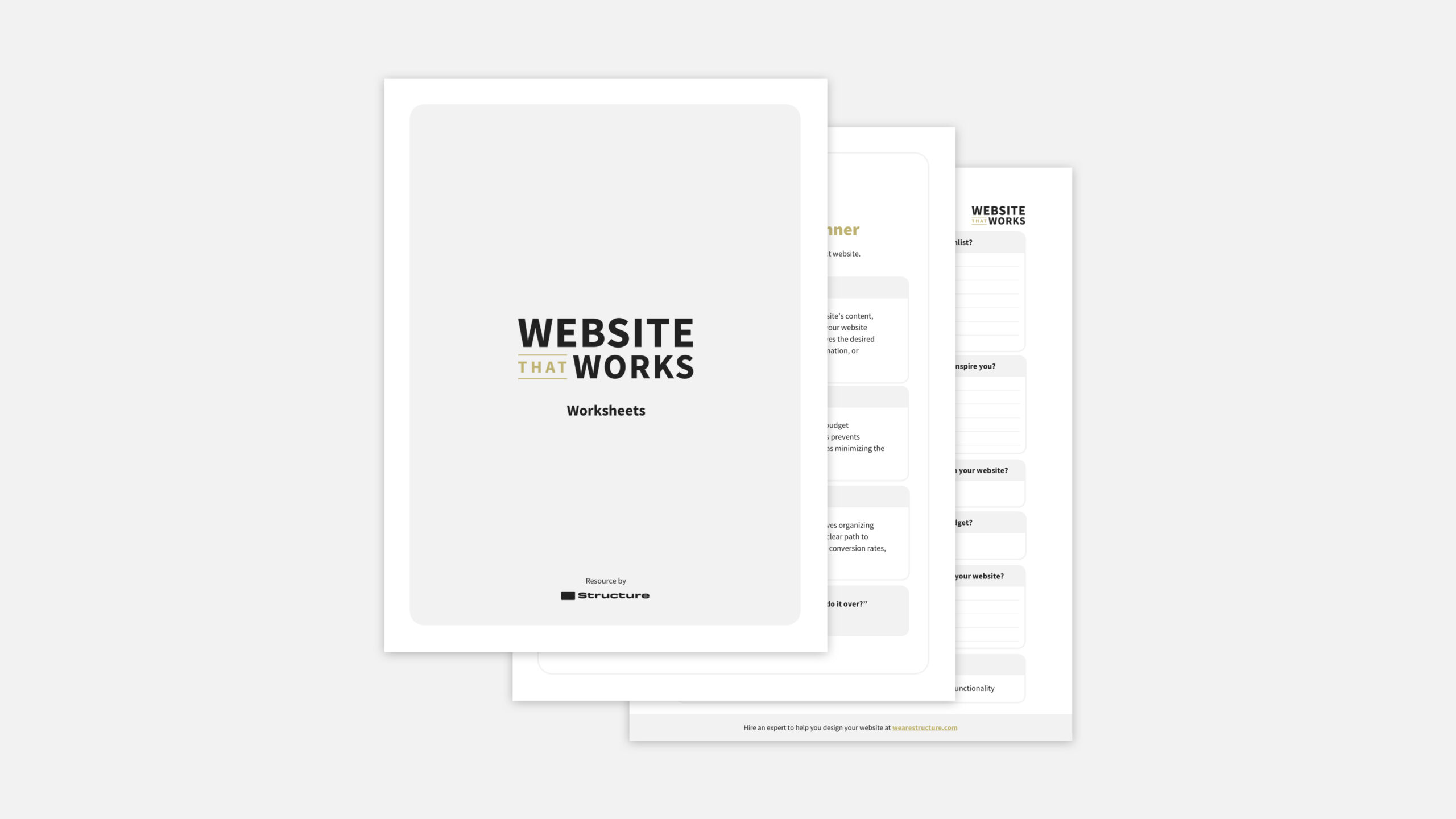
    Structure Website Design Planning Template

    Step 1: Document basic company information

    The Company Worksheet addresses fundamental company-related queries. It’s not a comprehensive brand strategy, but it confirms existing decisions. It delves into specifics by starting with the company name, core values, target market, and offerings. 

    Step 2: Organize your ideas into a clear vision

    Begin with the end in mind. The Vision Worksheet captures your ideas and focuses on the process and end product rather than a vague vision. 

    Step 3: Set SMART website Goals

    Consider the Goals Worksheet your project’s compass, aligning your team on purpose and tracking success indicators. It functions as a roadmap, ensuring your project stays on course.

    Don’t forget to set “Milestones” and “performance indicators.” While these items might make it feel complex, they will make it more manageable. They represent specific steps towards your goal (begin with three) and how you measure their achievement.

    Step 4: Build a team around you

    According to the African proverb, “If you want to go fast, go alone. If you want to go far, go together.” The conclusion is this: don’t bear all the responsibilities alone. Envision forming a team, whether internal or external, to collectively share the load and guide the project. 

    Moreover, imagine seamless teamwork where everyone knows their roles and responsibilities, preventing overlaps. Using the DARCI framework, the Team Worksheet in our website strategy template facilitates this result.

    Step 5: Unify your branding

    The disconnection between a powerful ad and a lackluster website negatively influences how the business is perceived. Ensuring harmonious marketing across online and offline channels is essential to maintain professionalism and credibility.

    Completing this worksheet is pivotal for your website strategy, as it may unveil asset gaps or outdated elements requiring refreshment.

    Step 6: Plan your pages

    Most businesses planning a website redesign have a basic site map, but that’s the start. You’ll want to document your navigation (header and footer), page templates, and main pages associated with those templates.

    The notable question you might be asking yourself: “What’s a website page vs. page template?” A website page is a single page that uses a page template but with unique content like text, images, and videos that fit that page’s purpose. A page template is a pre-designed layout serving as a blueprint for multiple pages with consistent design and structure—for instance, one template for all products.

    Step 7: Map your buyer’s journey

    Your website isn’t an isolated entity; its pages aren’t isolated experiences. They should work together for a seamless customer journey, often called the “buyer’s journey.”

    In web design, a customer journey is the series of steps a visitor takes on a site, from arrival to completing a goal like purchasing. It comprises stages like Awareness, Consideration, Decision, and Action. The aim is a positive experience turning visitors into customers and nurturing relationships.

    For each stage, you’ll want to define desired customer actions and the content needed to support those actions. Use our website strategy template “Website Journey” worksheet quickly and efficiently.

    Step 8: Analyze competitor websites

    To stand out, understanding your competition is vital. To understand your competition, and identify how it impacts your website, follow these actions:

    1. Examine a competitor’s site
    2. Note three likes
    3. Note three dislikes
    4. Note three improvements or ideas for your site

    Repeat for at least three competitors or similar businesses.

    Step 9: Call out your business systems

    Often, focus on appearance overshadows functionality. Integrations matter for social media, email marketing, CRM, or lead generation. Neglecting integrations during your website’s design and build phases can be costly.

    Step 10: Create a budget

    The Budget Worksheet marks the final step, presenting the awaited website redesign cost. However, the challenge lies in seeing beyond costs alone. A website is an investment, not just an expense. Your budget should encompass potential earnings, savings, and expenses, calculating its long-term profit value.

    This budget process emphasizes your pivotal role in the business and the rationale behind investing in a functional website. Consider a budget covering your site’s lifespan, often 1.5 to 2.5 years, revealing significant returns in millions or tens of millions.

    Leaders Crafting Website Strategy

    Website strategy template questions our clients commonly ask

    What are some common web strategy examples?

    A well-defined website strategy helps guide design, content creation, and user experience decisions to achieve desired outcomes. Your website’s specific strategy should align with its goals, target audience, and industry. 

    But if you’re looking for inspiration, here are some examples of common website goals that organizations might employ to achieve their website strategy:

    1. E-commerce website goals

    • Focus on a user-friendly and intuitive design to encourage seamless shopping experiences.
    • Implement personalized product recommendations based on user behavior.
    • Optimize the checkout process to reduce cart abandonment.
    • Offer various payment options to cater to different customer preferences.
    • Utilize email marketing for abandoned cart recovery and customer retention.

    2. Content marketing goals

    3. Lead generation goals

    • Implement compelling call-to-action buttons on relevant pages to encourage user interaction.
    • For contact information, offer gated content (e.g., webinars, case studies).
    • Develop landing pages focusing on a specific offer and providing a clear value proposition.
    • Utilize A/B testing to optimize landing page elements for higher conversion rates.
    • Nurture leads through email drip campaigns and targeted content.

    4. Membership or subscription website goals

    • Provide a clear description of membership benefits and pricing tiers.
    • Offer a free trial or limited access to encourage users to sign up.
    • Create a members-only area with exclusive content, resources, or tools.
    • Use email marketing to communicate updates, special offers, and member-exclusive content.
    • Continuously engage with members to enhance their experience and retention.

    5. Branding goals

    6. Performance goals

    • Implement a responsive design to ensure the website is accessible and functional on all devices.
    • Prioritize fast loading times to prevent user frustration.
    • Simplify navigation and content presentation for smaller screens.
    • Use touch-friendly elements and buttons to enhance the mobile user experience.
    • Test the website across different devices and browsers to ensure compatibility.

    7. User experience goals

    • Incorporate interactive elements like quizzes, polls, and surveys to engage users.
    • Enable user-generated content, such as reviews or comments, to foster a sense of community.
    • Implement live chat or chatbots to provide instant customer support.
    • Host webinars, live events, or online workshops to interact with the audience in real time.
    • Utilize gamification elements to encourage user participation and loyalty.

    What is the strategy of a website?

    For most business websites, the primary purpose is driving sales through products, services, information, or ideas to a global or targeted audience. 

    Your website can inform, educate, entertain, or sell, depending on your goals. Whether you aim to reach new customers, provide support, share your expertise, or even express yourself, your website serves as a central platform to achieve those aims and engage with your customers.

    Think of a website strategy as the roadmap for your website project. It’s like having a plan that guides all your decisions and actions to ensure your website does what you want. This strategy involves everything from who your website is for, what it’s supposed to do, how it looks, and how people will use it. It’s like setting the direction for your website to help you achieve your business goals.

    What makes a website successful?

    Successful websites engage and educate visitors, converting them into leads and customers. This purpose should guide design, content, and features.

    What makes a website successful is that it accomplishes its goals. As I said in the last question, most businesses deem their website successful if it drives sales. If sales aren’t the goal for you, that’s okay! You’ll want to identify your ultimate goal: donations, inquiries, or impressions. 

    Either way, your website is an investment that evolves with your business to accomplish something. Figure out what that “something” is, and you will have defined success for your business.

    What is a responsive web strategy?

    A responsive website strategy involves designing and developing a website that adapts and functions seamlessly across various devices and screen sizes. 

    The goal is to ensure that the user experience remains consistent and user-friendly whether visitors access the site on a desktop computer, tablet, smartphone, or other devices. 

    This strategy involves creating a flexible layout, using responsive design techniques, and optimizing content for different screens. By implementing a responsive website strategy, businesses can cater to the preferences of their diverse audience and provide an accessible and enjoyable browsing experience regardless of the device used.

    What is a web branding strategy?

    That’s a good question! A web branding strategy is a comprehensive plan to establish and reinforce a consistent and compelling brand identity across a company’s website—and ensure that the website identity is consistent across all channels. 

    A successful web branding strategy ensures that visitors can immediately recognize and connect with the brand when they land on the website. This involves consistently incorporating elements such as the logo, color palette, typography, imagery style, and tone of voice throughout the site. By implementing a solid web branding strategy, businesses can create a memorable and authentic online presence that resonates with their target audience and fosters brand loyalty.

    How do you approach a website design?

    At Structure, we take a strategic approach to web design. We’ve identified that most websites don’t work like their managers and users want them to because of a failure to plan. That isn’t good if you invested tens of thousands of dollars in something that looks amazing but doesn’t help your business.

    That’s why every website project at Structure starts with a website strategy process. We also call it “website planning” or “website definition.” In short, it’s the process we take clients through to figure out what is needed in as much detail as possible, so we can deliver a headache-free design and build process—and, ultimately, a website that works for you.

    We aim to help 1,000 businesses and organizations plan and realize successful websites over the next ten years.

    What is a web strategy document?

    A website strategy document outlines the goals, objectives, tactics, and guidelines for developing, designing, and managing a website. 

    It serves as a roadmap that guides all decisions related to the website’s creation and requirements. This document typically includes information about the target audience, website purpose, content strategy, design principles, user experience considerations, technical requirements, integration with other systems, and more. 

    The result of a well-structured website strategy document ensures that all stakeholders are on the same page and provides a clear direction for the entire website project, from conception to execution.

    Download our free website strategy template if you’re looking for a simple way to get started.

    Free Website Strategy Template

    Download the Structure Website Design Planner to create a website strategy that makes your project successful!

    How do you write a website content strategy?

    The best way to write a website content strategy is to follow a proven plan… not write it from scratch. Download our Website Strategy Template to streamline your web design planning process and ensure a clear roadmap for your project.

    What web strategy would help an ecommerce business drive traffic to its website and increase sales?

    Several digital marketing strategies would help an ecommerce business drive traffic and sales to its website. It wouldn’t be hard to find a 13-point list. But that’s too complicated.

    If you’re looking to drive traffic and sales to an ecommerce website, do these three things:

    1. Create a product recommendation quiz
    2. Use pay-per-click advertising (like Google Ads) to drive targeted traffic to the quiz
    3. Ensure there are as few steps to purchase as possible.

    If you do these three things, your ecommerce website will be successful.

    What is a web strategy to determine the internal linking structure of a website?

    The strategy to determine the internal linking structure of a website is often called “Content Siloing.” This involves organizing the content on your website into distinct groups or categories, each focused on a specific topic or theme. 

    Within each content silo, you create internal links between related pages, enhancing user navigation and improving SEO by indicating content relevance to search engines. This strategy helps users and search engines understand the relationships between different pieces of content on your site.

    This is best done while developing your website strategy to ensure you execute consistently and effectively.


  • 10 Reasons a Good WordPress Management Service Will Save You Time & Money

    10 Reasons a Good WordPress Management Service Will Save You Time & Money

    In this article, we share how (and why) a professional WordPress management service is worth the cost and will make you much more productive.

    WordPress Management Service Explained

    Your WordPress website should be a time-saver and a money-maker, but it needs to be well-managed to run like a well-oiled machine. This will take time and energy unless you’re a seasoned website developer. That’s when it’s time to turn to a WordPress Management Service.

    WordPress management services do various things, such as providing technical support, installing security patches, maintaining the WordPress database, optimizing WordPress performance, and more.

    If you have no idea what I just said, you’re in the right place.

    When you choose to use a WordPress management service, they’ll take care of all these tasks for you, freeing up your time so that you can focus on other aspects of running your website or growing your business.

    That said, it’s essential to choose a suitable WordPress management service provider who is experienced and has a proven process for managing your website. This will ensure that your website remains secure and functioning correctly.

    Get 2 Months of FREE WordPress Management

    Learn more about our WordPress Management Packages and get two months free when you commit annually.

    Problems with Bad WordPress Management Service

    With a good WordPress management service, you can rest assured that your WordPress website is in the hands of experts who know WordPress—and your website—inside out.

    However, we know that’s not always the case. Many WordPress management services take your money and don’t save you any time. If you’ve ever hired a WordPress management service, you may have experienced one of these things.

    1. You have no idea if they’re doing anything

    One of the biggest problems with WordPress management services is the need for more transparency regarding how they will manage your website.

    The thing is, anyone can sound like they know what they’re talking about. But when the end of the billing period rolls around, and you don’t see any improvements or reports, you start to wonder if they’re doing anything.

    2. Your website gets ignored and forgotten about

    WordPress websites require plugins to make specific functionality work. And plugin developers update their plugins regularly, which means your WordPress plugins may become increasingly outdated as the days go on during any given month.

    If your service provider doesn’t have a proven process for regularly updating your website and sharing the information with you, your website is getting forgotten, and you’re paying for nothing.

    3. They don’t know the ins and outs of your website

    Your website is complex, and it’s unique to your business. Unfortunately, many WordPress management services focus on one-size-fits-all solutions and often fail to address the specific needs of your website, thus leading to subpar performance or limited functionality in certain areas. 

    What happens is that they don’t save you any time or money. Instead, they took your money and gave you a headache—not to mention an outdated site burning oil.

    How to Find a WordPress Management Service Worth Hiring

    You must find WordPress management services that offer transparency in their WordPress management processes, provide tailored solutions, and understand WordPress trends well. Doing so will ensure that your WordPress website is up-to-date, secure, and optimized for maximum results. 

    Finally, it is essential to remember that WordPress management services vary widely, so it is vital to research WordPress management services thoroughly before making a decision. Doing so will ensure that WordPress websites receive the highest quality WordPress management service possible.

    Our article WordPress Management and Maintenance Services: How to Outsource, DIY, or Keep In House to learn more about finding the right service provider.

    Why Every Business Should Hire a WordPress Management Service

    WordPress management services are vital for businesses looking to grow their online presence.

    These services will save you time and money, keep your website secure and updated, and ensure that your website works. Here are the reasons why.

    If you or your team are still getting familiar with website development and maintenance, you need to hire a service to handle these tasks. Not only is website management going to drive you crazy, but it's also going to bog you down.

    1. Managing a website requires technical knowledge or expertise

    If you or your team are still getting familiar with website development and maintenance, you need to hire a service to handle these tasks. Not only will website management drive you crazy, but it will also bog you down.

    A WordPress management service will give you back hours each week and allow you to focus on high-value activities that will move your work forward.

    2. WordPress management takes a lot of time

    Managing a website can take significant time; some people may need more time or resources to do it themselves. A good WordPress management service will take the burden off your shoulders and free up time to focus on other aspects of your business.

    3. Regular updates and maintenance are required

    A WordPress management service can update your website with the latest core and plugin updates. This ensures you don’t experience any downtime or security breaches that would drive customers away.

    4. You want to improve optimization for search engines

    A management service can help optimize a website for search engines to improve its visibility and search rankings. This can result in more website traffic and, ultimately, more sales.

    5. You need help with customization and content updates

    A management service can help you add or update content on your website so it stays up-to-date and customers see the most relevant information. There’s nothing more effective at turning away customers than an outdated site. Don’t let that be yours!

    6. Website backups and security is a priority

    A management service can help ensure a website is backed up regularly and protected against hacking and other security threats. Not only will security issues create downtime on your site, but they can also mean someone has stolen your customer’s private information. Nobody wants to write that email.

    7. You want your website to perform well

    A management service can help optimize website performance by implementing caching, minifying resources, and other techniques to improve load times and overall user experience. You are losing customers if your website doesn’t load within 5 seconds. Ensuring your customers aren’t walking out the door the moment they walk in is invaluable.

    WordPress Management Service Common Questions

    WordPress Management Service Common Questions

    What is a WordPress management or maintenance service?

    A WordPress management or maintenance service is a service provider that offers WordPress website maintenance, support, and growth services.

    What are the benefits of a WordPress management service?

    A quality WordPress management service will give you many benefits:

    1. Complete peace of mind that a team of WordPress experts manages and maintains your website.
    2. Hours back every week so you can focus on high-value activities that drive your business forward.
    3. Happy customers love using your website because it works like a charm, it’s fast, and it’s easy to use.
    4. Advice and implementation for SEO and other digital marketing strategies that support your website.
    5. Quick customer support so you can rest easy knowing that help is available anytime.

    Ultimately, WordPress management services save time, energy, and money while ensuring optimal performance and security for WordPress websites.

    What types of WordPress management service is available?

    WordPress management services vary depending on the provider. Common WordPress maintenance and support services include:

    • WordPress updates
    • WordPress security monitoring
    • WordPress backups
    • Performance optimization
    • Content management

    Some providers may also offer additional web development or SEO services.

    Structure WordPress Management Packages include all of these services and more, including:

    • Dedicated Account Manager
    • 24-hour Response time (during the workweek)
    • Monthly detailed website report

    What should I consider when looking for a WordPress Management Service?

    When choosing WordPress management services, consider the provider’s reputation, experience, and customer support. It would be best to look at the types of services included in the package and how much it costs.

    Finally, read reviews from other customers to see if their experiences match what you need for your WordPress website.

    Why do I need WordPress maintenance?

    Without a working website, you won’t meet your marketing objectives—that’s where WordPress management services come in.

    Overall, WordPress management services provide peace of mind that your website is in good hands and looks professionally done. It also saves time, energy, and money while ensuring your WordPress website stays healthy and performs well.

    What is the difference between WordPress and a managed WordPress service?

    WordPress is the software used to create websites, while WordPress management services focus more on upkeep and maintenance than creating the website.

    What is the difference between managed WordPress and regular hosting?

    Managed WordPress hosting is a service that provides WordPress users with specialized WordPress-focused features for their websites, such as automatic WordPress updates, WordPress-specific security measures, daily backups, and more.

    On the other hand, regular hosting services provide the same features without WordPress-specific functionality, automatic updates, or premium support. The main difference is that managed WordPress hosting has been optimized for WordPress to ensure the best performance and security for WordPress websites.

    If I hire a WordPress management service, do I own my content on WordPress?

    Yes, you should! But it depends on the WordPress management service. If you hire a WordPress management service, they should give you complete ownership of your content and website. Before engaging their services, it’s essential to clarify this point with the WordPress management provider.

    How much do website management and maintenance services cost?

    The cost of WordPress maintenance services depends on the WordPress management service provider and their benefits. Some WordPress maintenance providers charge a one-time fee or an ongoing monthly subscription, while others offer packages tailored to your needs.

    It’s also worth noting that WordPress maintenance costs can vary depending on the size and complexity of the website.

    We have a few WordPress management packages at Structure, ranging from $249/mo for our Essential WordPress Management Package to $1,299/mo., for our Premium WordPress Management Package .

    Can WordPress manage multiple sites?

    Yes, WordPress can manage multiple sites. The WordPress Multisite Network is a feature that allows users to manage multiple sites from a single dashboard. This makes updating and maintaining a multi-site environment more accessible with minimal effort.

    However, note that WordPress management services are more complex when you have a WordPress network of sites. Structure provides additional support in our second-tier Professional WordPress Management Package for WordPress multisite clients because of the additional work and risk required to manage a network.

  • 3 Steps to Eliminate Contact Form Spam from Your WordPress Website 

    3 Steps to Eliminate Contact Form Spam from Your WordPress Website 

    There’s nothing more annoying than contact form spam bots burying your inbox in mountains of fake submissions. Here’s how to stop it—for good.

    Spam bots are automated computer programs that submit incorrect information onto your contact or email signup form. They’re always looking for ways to assume control of your site, server, or email address so they can use it to send out spam emails. Even worse, they might pilfer your email list, so they have a new set of people to bug with their spammy messages.

    Spamming is often an uphill battle because spammers and bots constantly change their methods. However, there are some steps you can take to reduce the amount of spam that gets through successfully.

    Get a FREE Customized Digital Growth Plan

    Take our 10-minute Digital Maturity Assessment and receive a FREE, personalized digital growth score that uncovers gaps and drives your business forward.

    Take the Free Assessment →

    How to Directly Prevent Contact Form Spam

    1. Enable a Honeypot

    Honeypots are hidden contact fields that spammers will likely fill in, but users never see. Spam bots will see these fields and try to submit them, revealing themselves as a bot. Best of all, when the bot fills out your form, that form submission will go straight to the trash instead of your inbox.

    The best way to enable a honeypot is to use a contact form plugin with built-in honeypot functionality. For example, plugins like Contact Form 7 and Gravity Forms have honeypots.

    2. Add reCAPTCHA

    Another great way to protect your contact form from spam is to add a reCAPTCHA field. This is a simple checkbox that users must tick off for their contact form submission. If it’s not checked, the contact form submission will automatically be thrown out, and nothing happens – no new client, user, or extra mail in your inbox.

    There are two different types of reCAPTCHA available: visible and invisible.

    Visible reCAPTCHA

    The little boxes you see on websites to confirm that you’re not a robot are called reCAPTCHA. They could be better, but they’re much better than previous options and do an excellent job filtering spam.

    They work by comparing the contact form submission against a database of known spam email addresses. The contact form submission is considered spam and discarded if there’s a match.

    Invisible reCAPTCHA

    Invisible reCAPTCHA works precisely the same way but replaces those visible contact forms with a tiny element that users never see. Like its visible counterpart, this invisible field successfully filters out all contact form submissions from bots.

    3. Add a Conditional Submit Button

    If the above two methods aren’t cutting, adding a single-line text field to your form, which asks a simple question that only humans can answer, will bypass any bot. A natural person should be able to answer the question correctly, whereas most bots won’t. If someone gets through your form at this point, you’ll know it’s a human.

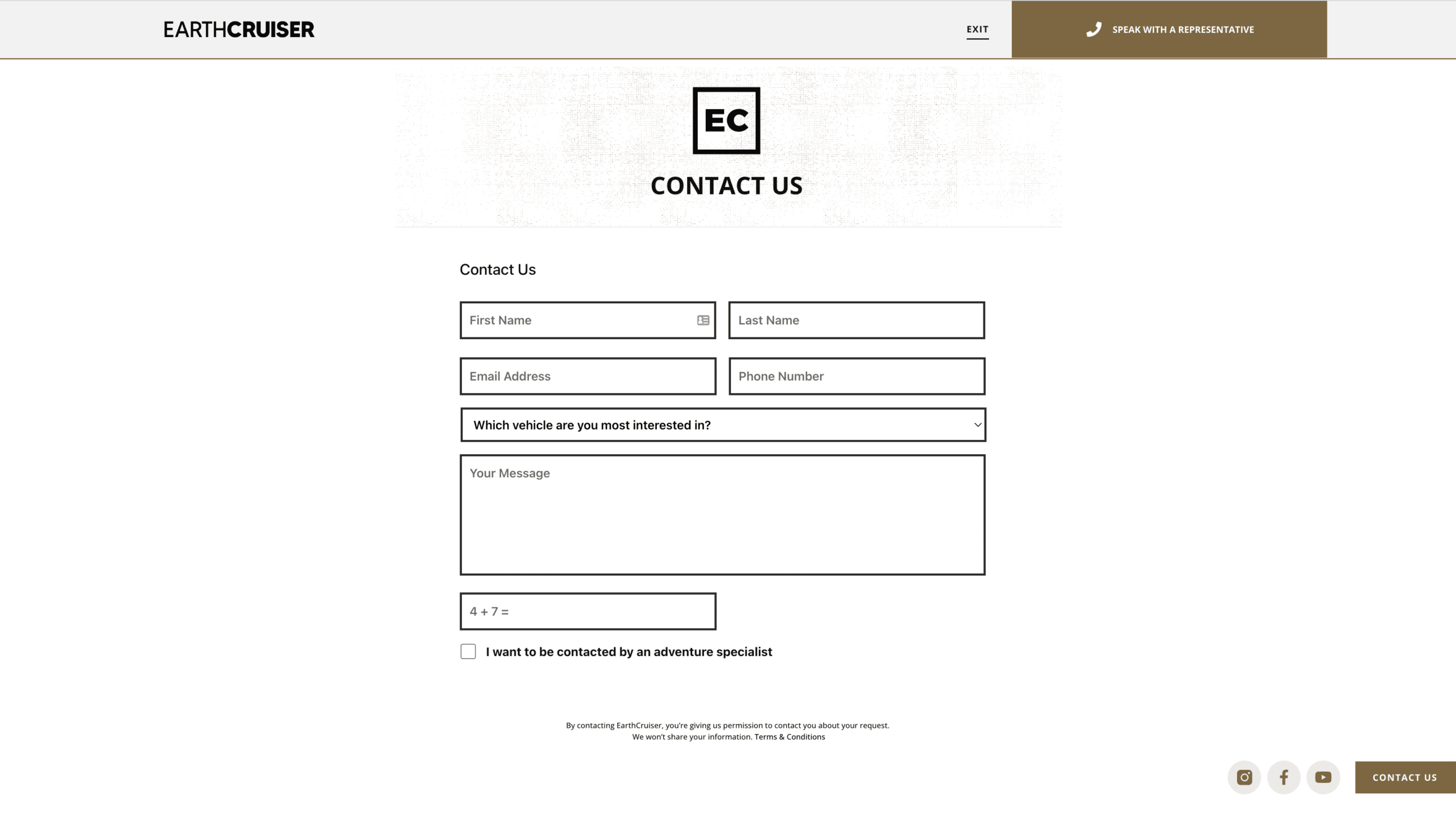
    Earthcruiser contact form submit button
    Earthcruiser conditional form submit button

    Enable button conditional logic based on this question field in your form plugin settings. If the submitter doesn’t input the correct answer, the form can’t submit. The trick is to simplify the question so anyone can answer and then only let through forms with the correct answer. 

    Here are some examples: 

    • 4+7=?
    • A dog has how many legs?
    • Everyone who lives, _________
    • USA is the acronym for __________

    No single anti-spam method in the world can catch 100% of spam. Because of that, you can find hundreds of anti-spam techniques and services across the internet, some that work and others that don’t. For complete elimination, we recommend using all three methods simultaneously.

    Get a FREE Customized Digital Growth Plan

    Take our 10-minute Digital Maturity Assessment and receive a FREE, personalized digital growth score that uncovers gaps and drives your business forward.

    Take the Free Assessment →

    How to Indirectly Prevent Contact Form Spam

    Choose a reputable WordPress website host

    Choosing a reputable WordPress website host is an essential step in preventing contact form spam.

    Many hosting providers are notorious for being plagued by contact form spam, so you must look into your potential host’s reputation and track record before committing. Some things to look for include: 

    • A history of contact from spam issues and how the hosting provider has dealt with them
    • Robust security features, including firewalls, malware protection, and data backups
    • Fast loading speeds and reliable uptime guarantee to minimize the likelihood of contact form submissions getting lost or stuck in a queue for too long

    The way to find out is by placing a simple Google search like, “Does GoDaddy have spam issues?” You might run into a community article posted in October 2021 titled, “Why does Godaddy have such a major problem with inbound/outbound spam?” It’s worth looking into.

    By choosing a reputable host with solid security measures, you can rest assured that your contact forms will stay as spam-free as possible and that you’ll be able to collect all of the valuable contact information you need from your website visitors.

    When you purchase a WordPress Website Management Package from Structure, we’ll evaluate your hosting and recommend switching to our preferred hosting partner with a good history. We’ll even help you make the switch!

    Use a quality WordPress form plugin

    Another critical component to preventing spam is using a high-quality WordPress contact form plugin. Because contact forms are so vulnerable to bot attacks, choosing a plugin with solid security measures and anti-spam features is essential. 

    Look for plugins that include: 

    • Email verification capabilities – these can prevent bots from submitting contact forms by requiring users to verify their email addresses before sending messages
    • IP filtering or restriction options – these will help keep your contact form submissions from being intercepted by spammers who might be spoofing legitimate IP addresses to bypass security filters
    • A built-in captcha feature – this will stop bots from accidentally submitting contact forms, either due to typing errors or simply not understanding the instructions on the form

    With a quality contact form plugin and reliable hosting, you can rest assured that your contact forms will be protected from contact form spam. At Structure, we recommend using the Gravity Forms plugin to create and manage contact forms on your WordPress site. 

    Install a WordPress anti-spam plugin

    Installing a WordPress anti-spam plugin is the final step in preventing contact form spam. There are many different plugins available, each with different features and capabilities. Some popular plugins to consider include: 

    • Akismet – this plugin uses an intelligent system to filter out contact form spam based on keywords and patterns that indicate bot behavior
    • WPForms AntiSpam – this plugin incorporates honeypot technology to fool bots into thinking contact forms are filled out by humans, thereby stopping the bots from submitting forms in the first place
    • Anti-Bot Contact Form – this plugin uses various security measures, such as CAPTCHAs and javascript logic tests, to prevent contact form submissions by spambots

    With the right WordPress anti-spam plugin, you can keep contact form spam to a minimum and ensure that only legitimate contact form submissions are received. All our WordPress Management Packages include a free anti-spam plugin.

    How to change the security preferences on your Google reCAPTCHA

    1. Log into your Google reCAPTCHA admin console to access your settings

    If reCAPTCHA is already set up:

    • Log into the Google reCAPTCHA Admin Console: Google reCAPTCHA
    • Click on the Gear Icon (top-right corner).
    • Adjust the Security Preferences Slider:
    • Increase security sensitivity if spam persists.
    • Click Save Changes.

    If reCAPTCHA is NOT set up:

    • Register a new site at Google reCAPTCHA Admin.
    • Fill in the necessary details:
      • Label: Client Name – Website reCAPTCHA
      • reCAPTCHA Type: Choose v3 (for seamless background security) or v2 (if client prefers the “I am not a robot” checkbox).
      • Domain: Enter the website URL(s).
      • Owners: Keep Structure Access as the primary owner.
      • Accept terms and submit the form.
    • Copy the Site Key and Secret Key and store them securely in Structure’s internal documentation.
    • Add the new reCAPTCHA keys to the WordPress contact form plugin settings.
    • Test the form to confirm functionality.

    Common Questions About Contact Form Spam

    What is contact form spam, and how can it affect my website?

    Contact form spam refers to sending automated messages through contact forms on websites, often in an attempt to promote unrelated products or services. This can negatively impact your website by clogging up contact forms with unwanted submissions and potentially disrupting workflows, business processes, and other essential activities that rely on contact information from contact forms.

    How does contact form spam affect my website and user experience?

    Contact form spam can negatively affect user experience. However, the effects are primarily behind the scenes.

    This behind-the-scenes contact form spam wastes resources and potentially harms your website’s credibility, security, and performance.

    1. Inundation of Irrelevant Content: Spam submissions flood your contact forms with irrelevant and often inappropriate content, making it challenging to manage genuine inquiries.
    2. Misuse of Resources: Dealing with spam consumes valuable time and resources that could be better spent on legitimate tasks.
    3. Loss of Legitimate Leads: Legitimate inquiries might get lost amidst spam submissions, causing you to miss potential business opportunities.
    4. Security Concerns: Some spam may contain malicious links or content, posing security risks to your website and its users.
    5. Performance Impact: Large volumes of spam can slow down your website’s performance, affecting loading times and user satisfaction.
    6. Data Integrity: If your contact form database is cluttered with spam, it becomes challenging to maintain accurate and valuable user data.
    7. SEO Implications: If spam content is published on your site, it could impact your SEO efforts and search engine rankings.

    Implementing effective spam prevention measures is essential to maintaining a positive online presence and providing a smooth user experience.

    Are there any common techniques spammers use to bypass contact form security?

    Spammers are quite crafty when it comes to bypassing contact form security.

    They often use sneaky tactics like automated bots that can flood forms super fast. Sometimes, they toss random characters in hidden or normal fields to confuse the system. They might even switch up their IP addresses to stay hidden.

    Some of them have software that’s pretty smart and can solve CAPTCHAs, making those puzzles less effective. And get this; they might even hire people to manually submit spam content, making it trickier to spot.

    They’re also known to disguise themselves as regular browsers by faking their user agent info. Plus, they can hide links, keywords, or stuff within the form fields to make it look real. Sneaky, right?

    It’s smart to use various security measures, like CAPTCHAs, honeypots, and IP blocking, to tackle all this trickery. Mixing it up helps keep those pesky spammers at bay.

    How can I prevent contact form spam from affecting my website?

    You can use key strategies to prevent contact form spam from affecting your website. These include choosing a reputable hosting provider with robust security features, using a high-quality WordPress plugin for contact forms, and installing an anti-spam plugin to protect contact form submissions from bots. Additionally, you can stay up-to-date on contact form spam trends and best practices by consulting resources like online forums and blogs dedicated to website management.

    What are some key considerations when choosing a contact form plugin that will help me prevent spam?

    Some key considerations when choosing a contact form plugin include its ability to integrate with your existing website, whether or not it includes security features like anti-spam capabilities, and its level of usability and accessibility for both you and your users. 

    Other important factors include the availability of support from the plugin’s developer and any built-in reporting tools that can help you monitor contact form activity over time. Overall, it’s essential to do thorough research to find a contact form plugin that meets all your needs and successfully protects your website from contact form spam.’

    With these strategies, you can eliminate contact form spam from your WordPress website and maintain high security and productivity. 

    Can spam entries still get through all three spam-eliminating steps?

    Unfortunately, yes. However, if you’re using all three spam-eliminating steps indicated in this article, you can be sure the contact form spam entries are from real humans.

    Unless you want to eliminate humans from filling out your form, you’ll have to put up with a few annoying folks here and there.

    Is there a way to eliminate humans from submitting spam entries?

    Yes, there is! One way to protect your contact forms from human spam is to disable right-click functionality on your WordPress site. 

    Here’s how this works. Disabling right-click functionality can help hinder human spammers from copying and pasting their information into your forms. This will require them to manually enter the information or use keyboard shortcuts (not everyone knows them).

    Several plugins can help you implement this functionality, namely WP Content Copy Protection & No Right Click and Disable Right Click For WP.

    I’ve heard you can Block Traffic by IP Address. Is that possible?

    Yes, it is possible to block contact from spam by IP address. However, it’s important to note that some IP blocking methods may inadvertently block legitimate traffic, so using this approach cautiously is essential. 

    If you want to block specific IPs, you can add them to the Comment Blacklist field on the Discussion settings page of your WordPress admin panel. Advanced site owners can do this through their web host, cPanel, or a security plugin like Wordfence or Sucuri.

    Cloudflare also offers several services that protect your site (and forms), such as IP Access Rules, allowing you to block entire countries easily. This is particularly helpful if you’re in the United States and notice a flurry of spam entries from Russia or China, for example. They also provide solutions to mitigate DDoS attacks or stop malicious bot abuse.

    Overall, many different approaches are available for effectively blocking contact from spam, one approach is by IP address, and each website owner must determine which strategy works best for their individual needs.

    See Structure’s WordPress Website Management Packages for help blocking IP or another method.

    What WordPress plugins are available to prevent form spam entries?

    Many WordPress plugins can help you prevent spam contact form entries. Some popular options include Akismet, Anti-Spam by CleanTalk, Really Simple Captcha, and Simple Cloudflare Turnstile. Additionally, numerous premium options are available if you’re looking for more robust features or support. 

    However, regardless of which plugins you choose, it’s important to regularly audit your contact forms, remove invalid entries, and respond quickly to any contact form submissions that look suspicious or potentially malicious. This will help keep your contact form spam-free and ensure the smooth operation of your website. 

    If you need additional support or guidance managing your contact forms, Schedule a Free Consult Call to review your website, suggest solutions based on your unique needs, and help you implement them quickly.

    Can CAPTCHA or reCAPTCHA solutions effectively stop contact form spam?

    You bet! CAPTCHA and reCAPTCHA solutions are like those tricky puzzles you solve to prove you’re not a robot. They’re pretty good at stopping most spam because they’re simple for humans but tough for automated bot spammers.

    CAPTCHA challenges might have you typing in twisted characters or solving basic puzzles. They’re decent at stopping some bots, but the smarter ones can sometimes get past them.

    Now, reCAPTCHA is like the superhero version. It’s from Google and uses fancier challenges, like identifying stuff in images or solving puzzles. Plus, it’s smart – if it smells something fishy, it makes the puzzles tougher on the spot.

    But remember, no solution is perfect. So, to ensure your forms are spam-free, think about using CAPTCHA or reCAPTCHA along with other tricks like honeypots, IP blocking, and checking the info people submit. It’s like building a fortress against those pesky spam bots!

    How do I balance spam prevention and user convenience for legitimate submissions?

    You’re walking a tightrope here… you want to keep the spam out while making it easy for real users to connect with you.

    Remember, the goal is a smooth user ride and a no-entry sign for spammers. It might take trial and error, but you’ll find that perfect balance quickly.

  • Product Recommendation Quiz Ideas: What They Are, How They Work & Why You Need One

    Product Recommendation Quiz Ideas: What They Are, How They Work & Why You Need One

    This article is all about product recommendation quiz ideas. If you’re an ecommerce shop owner, marketing director, or sales manager looking to create a better buying experience for your customers on your website—and automate business processes simultaneously—you’re in the right place.

    I ask for help almost every time I shop at a hardware store, and I’m sure I’m not alone! If you’ve ever shopped at one, whether your local hardware store, Home Depot, or Lowe’s, you’ll notice they staff their stores heavily because customers always have questions. 

    It is an extensive process of determining which supplies you need, selecting the right ones to solve your problem, and simultaneously feeling confident about it. By providing an available shopping assistant to their customers, hardware stores help them find the right product faster, which means they also buy more quickly.

    Online shoppers need guidance in finding what they want, just like brick-and-mortar shops. That is why we’ll talk about using a product recommendation quiz to help customers buy on your website, how they work, what they cost, and if it’s right for you.

    Structure’s mission is to deliver the most relational website design and web development experience available and improve our client’s business by helping them get better results from their website. One of the ways we do this is by providing free ideas to potential clients like you. 

    Contents

    Get a FREE Customized Digital Growth Plan

    Take our 10-minute Digital Maturity Assessment and receive a FREE, personalized digital growth score that uncovers gaps and drives your business forward.

    Take the Free Assessment →

    Why You Need a Product Recommendation Quiz

    Most websites have problems. They’re not engaging, helpful, or social. A product recommendation quiz can help you with all of those things. Here are a few reasons why.

    If your website is overwhelming

    Have you ever been to a website that bombarded you with tons of information immediately? There was so much there that you didn’t know what was necessary or what to look at next. It was just so overwhelming you had to leave.  

    This happens more often than we’d like to admit. Studies show that our attention span has decreased significantly over the years due to the overwhelming amount of information we’re constantly bombarded with.

    To avoid this, many website owners are now incorporating product recommendation quizzes into their sites. A quiz allows you to segment your audience and only give them the information that’s relevant to them. Not to mention, it’s a fun way to engage your readers and keep them on your site longer.

    If your website is challenging to navigate

    If information is hard to find and customers can’t get where they need to go. Websites are many things: transactional, informational, and transformation, but more than anything, a website is an experience. 

    If that experience is bad, people will leave and not come back. 88% of online shoppers say they wouldn’t return to a website after having a poor user experience.

    Part of providing a good user experience is ensuring your website is easy to navigate. A product recommendation quiz can help by giving users a specific path.

    With a quiz, you can guide users through your website and lead them to the right products. By doing this, you’ll not only improve the user experience on your website, but you’ll also increase sales.

    If your website is about your company, not your customer

    Many companies think their customers are coming to their websites to learn who they are. Wrong! They’re looking for a solution, answer, or product for their problem.  Your website should be focused on the customer and their needs, not on you and your company.

    Your customers don’t care about how long you’ve been in business or how big your team is. They want to know what you can do for them and how to solve their problem.

    A product recommendation quiz is a great way to do this because it’s focused on the customer and their needs. By asking questions about their situation, you can better understand what they’re looking for and recommend products to help them.

    Including a quiz on your website is a great way to show your customers that you care about their needs and are there to help them find the right product.

    If your website is too salesy

    Your website should be about more than just making a sale. If that’s all you’re focused on, your customers will be able to tell, and they won’t stay long. 61% of online shoppers say they would leave a website if it were too salesy.

    A product recommendation quiz can help because it allows you to build trust with your audience. By taking the time to understand their needs and recommend the right products, you’ll show your customers that you’re not just there to make a sale. You’re there to help them find the right product for their situation.

    Including a quiz on your website is a great way to build trust with your audience and increase sales.

    What Is a Product Recommendation Quiz?

    A product recommendation quiz is an automated quiz that helps customers find the right products for their needs. It’s a great way to engage your audience, generate leads, and boost social media engagement.

    Quizzes, in general, are a great way to engage your readers and help them find the right products for their needs. They’re also a great way to generate leads, as people are often more likely to share their quiz results than email addresses.

    A product recommendation quiz also does the selling for you. It’s like having a personal shopper at your store, guiding customers from start to cart and helping them find the products that best match their needs. It also helps recover abandoned carts, capture leads, and grow your audience.

    How Product Recommendation Quizzes Work

    Product recommendation quizzes work by asking your readers a series of questions about their needs and preferences. Based on their answers, the quiz recommends an ideal product for them.

    For example, you sell skincare products and want to create a product recommendation quiz for your website. 

    Your quiz might ask questions like:

    • What type of skin do you have? (Oily, dry, combination, etc.)
    • What are your main skin concerns? (Acne, wrinkles, uneven texture, etc.)
    • What is your budget for skincare products?

    Based on the answers to these questions, the quiz would recommend a specific product or set that would be perfect for the reader.

    How Product Recommendation Quizzes Can Be Used

    You can use a product recommendation quiz to benefit your business in many ways. Here are some of the most popular.

    A product recommendation quiz can be used to generate leads

    You can use a product recommendation quiz to generate leads for your business. You can encourage people to sign up for your newsletter or buy your products by offering valuable recommendations.

    A product recommendation quiz can create valuable content

    Your quiz questions can provide valuable content for your website or blog. This content can help educate your readers and position you as an expert.

    A product recommendation quiz can improve SEO

    By including relevant keywords in your quiz questions and answers, you can improve your site’s ranking in search engines and reach more potential customers.

    A product recommendation quiz can educate your customers

    Your quiz can help educate your audience about your products or services. You can turn valuable information into a powerful marketing tool by including valuable data in your quiz.

    How to Make a Product Recommendation Quiz

    If you’ve read this far, you’re probably looking to create a product recommendation quiz for your website. At Structure, we’ve made many quizzes for our clients. If you’d like to talk to us about yours, schedule a Free 30-minute Consult Call with our experts. We’d love to help! Here are the steps to take.

    1. Define your goals & metrics

    First, you need to define what success looks like. What are you trying to achieve with your quiz, and how do you know it’s successful?

    Common goals include the use cases we discussed: lead generation, content development, education, and more.

    In the website planning process that we take all of our design clients through, especially those who want a product quiz, we use a Goals Worksheet (free download) that helps define and document the goals you’re trying to achieve with your website and exactly how you’ll know if you’re meeting those goals. It’s a beneficial process!

    2. Map your customer journey

    Next, you’ll need to map your ideal customer journey. This can be done using our Customer Journey Worksheet (free download) or jotted down as bullet points in a document.

    The reason it’s important to map it out is that you need to know where customers are coming from and where they’ll go after your quiz. In short, this map identifies your customer’s start and endpoints. Now, all you need to do is fill in the gaps.

    3. Document your questions & answers

    Filling in the gaps includes figuring out what questions to ask your customers and anticipating their top answers.  This is where a lot of people get stuck.

    If you’re unsure what questions to ask or what answers to expect, consider surveying your target audience or talking to customer service. They likely have a good pulse on what customers are looking for and why they’re contacting you in the first place.

    Once you have a good handle on the questions and answers, document them in a Google Sheet or Excel document. You’ll need this when it comes time to create your quiz!

    4. Map your customer’s answers to your products

    The best way to map your customer’s answers to your products (unless you can keep it all in your head) is to create a flow chart with every variation. Depending on your questions, you can do this on a single page. If you have more questions, you might need multiple pages.

    Your flow chart maps out all the possible scenarios for your quiz and what product(s) should be recommended for each answer. Doing so will clearly show the steps in the process so you can hand it to a web designer to create.

    5. Design & build the quiz

    While the planning and strategy took most of the time and work, it’s worth it because you’ll make the next steps a breeze. Once mapped, you’ll want to hand it to a website designer to lay the quiz with your brand, goals, and user experience in mind.

    Our Startup Website Design Package could be used for a product recommendation quiz if you want to create a custom quiz. If you’re looking for a more DIY solution, here are a few to check out: 


    It’s noteworthy that Structure does not use software tools or quiz builders. We build custom product recommendation quizzes using GravityForms and integrate the results directly with your CRM, ERP, ESP, and other business systems.

    6. Measure & optimize

    Once your quiz is live, you’ll want to measure the results based on the goals and metrics you defined in Step 1: Define Your Goals & Metrics.

    You might also consider A/B testing different questions or quiz designs to see what works best for your audience. And don’t forget; you can always go back and tweak your quiz as you learn more about your customers and their needs! Likely, your quiz will always need to be updated as you add, remove, or refine your offer.

    6 Product Recommendation Quiz Ideas

    Maybe you’re unsure which quiz type is right for you or your customers. Or perhaps you know what you want to sell with your quiz, but you’re just not sure the best way to do it. Here are six examples of different types of quizzes to consider.

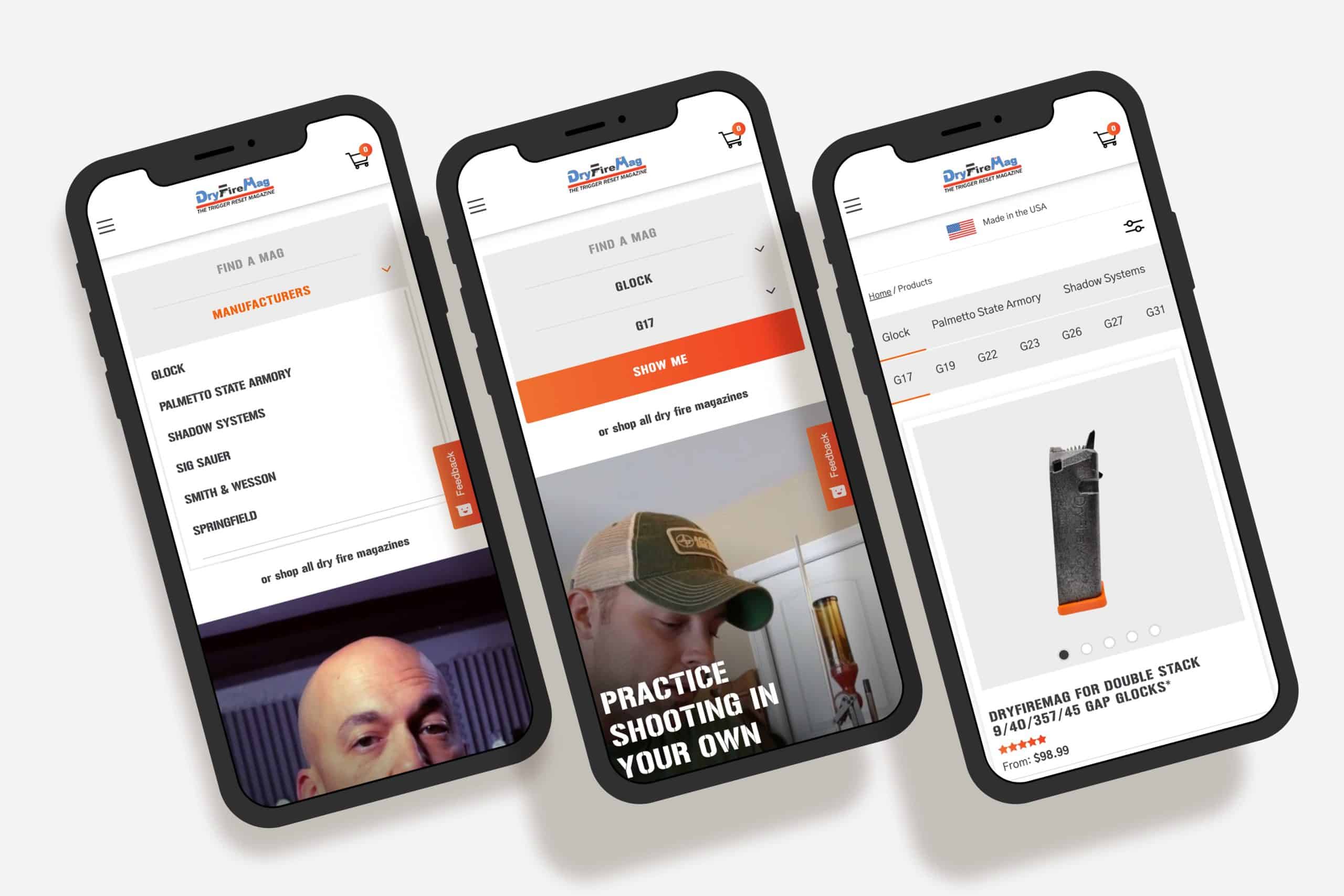
    dryfiremag drop down product recommendation quiz

    The first quiz type is the Drop Down quiz. Structure designed this quiz type for one of our clients, DryFireMag, and called it the Mag Finder.

    How it works is that once you click the button, a menu drops, allowing you to select your options. DryFireMag sells dry fire magazines for shooting practice. Their quiz is quite simple: it asks two questions.

    1. What manufacturer are you looking to buy from?
    2. Which model of their product are you looking to buy?

    Once you’ve made your selections, you click “show me,” and the website automatically redirects you to the shop page with any product options that match your answers.

    Structure built the Mag Finder as a custom plugin using WordPress Custom Post Types.

    2. Multiple Choice Product Recommendation Quiz

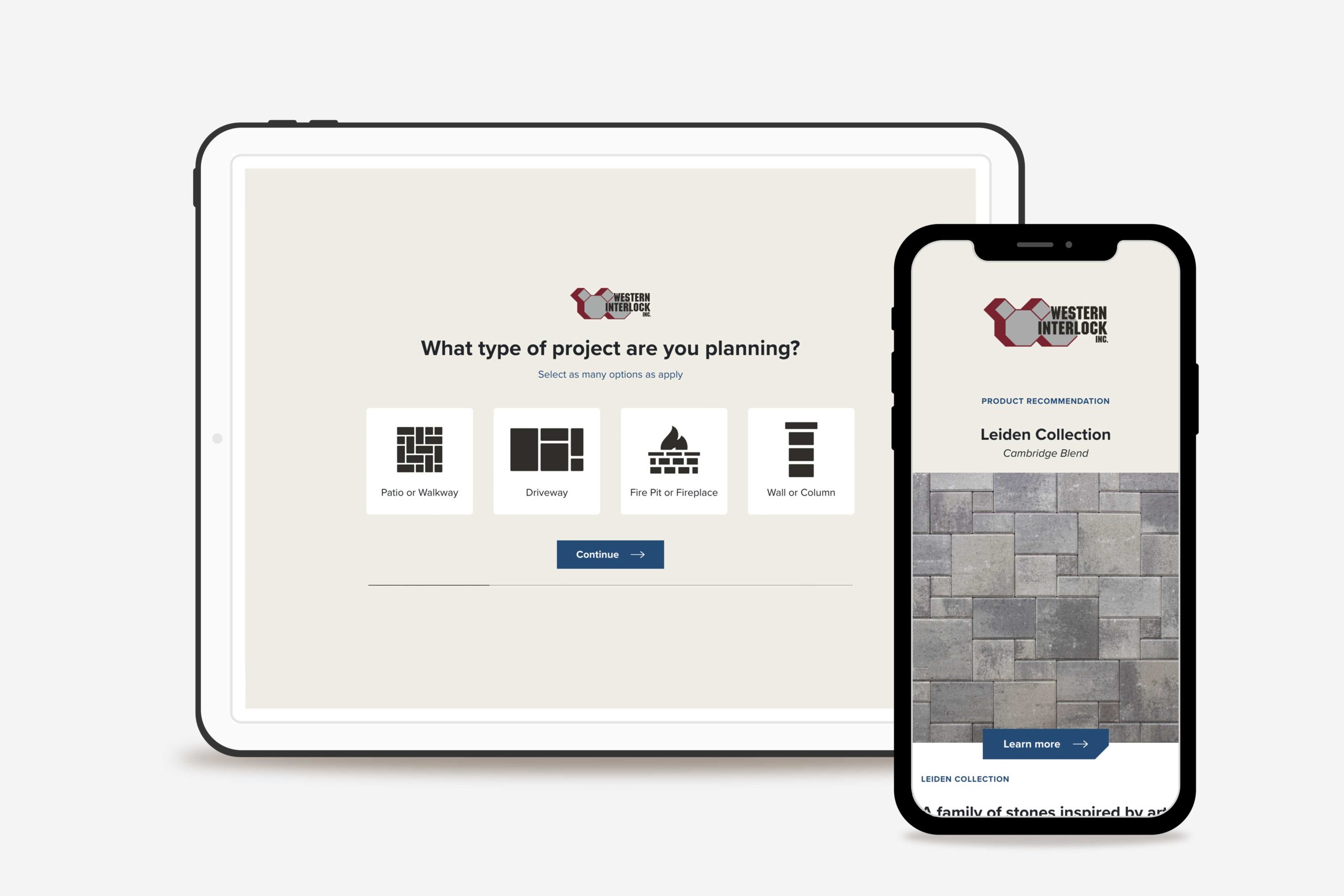
    western interlock multiple choice product finder

    Structure designed and built a multiple-choice product quiz for Western Interlock; we called it the Paver Finder. This quiz does not capture customer information but is strictly a shopping assistant.

    This quiz is one of the most straightforward user experience quizzes. The questionnaire walks you through a handful of questions (ideally 5–7), and you select the option that applies most to you. In the end, you’ll “submit” your selections, and the algorithm in the background reads your selections and provides you with an accurate product recommendation. 

    At that point, you could learn more about the product by clicking the Learn more button, scrolling down for additional information, or re-take the quiz if the result didn’t match your liking.

    Structure built the Paver Finder product quiz algorithm using WordPress and Airtable.

    3. Long-Form Product Recommendation Quiz

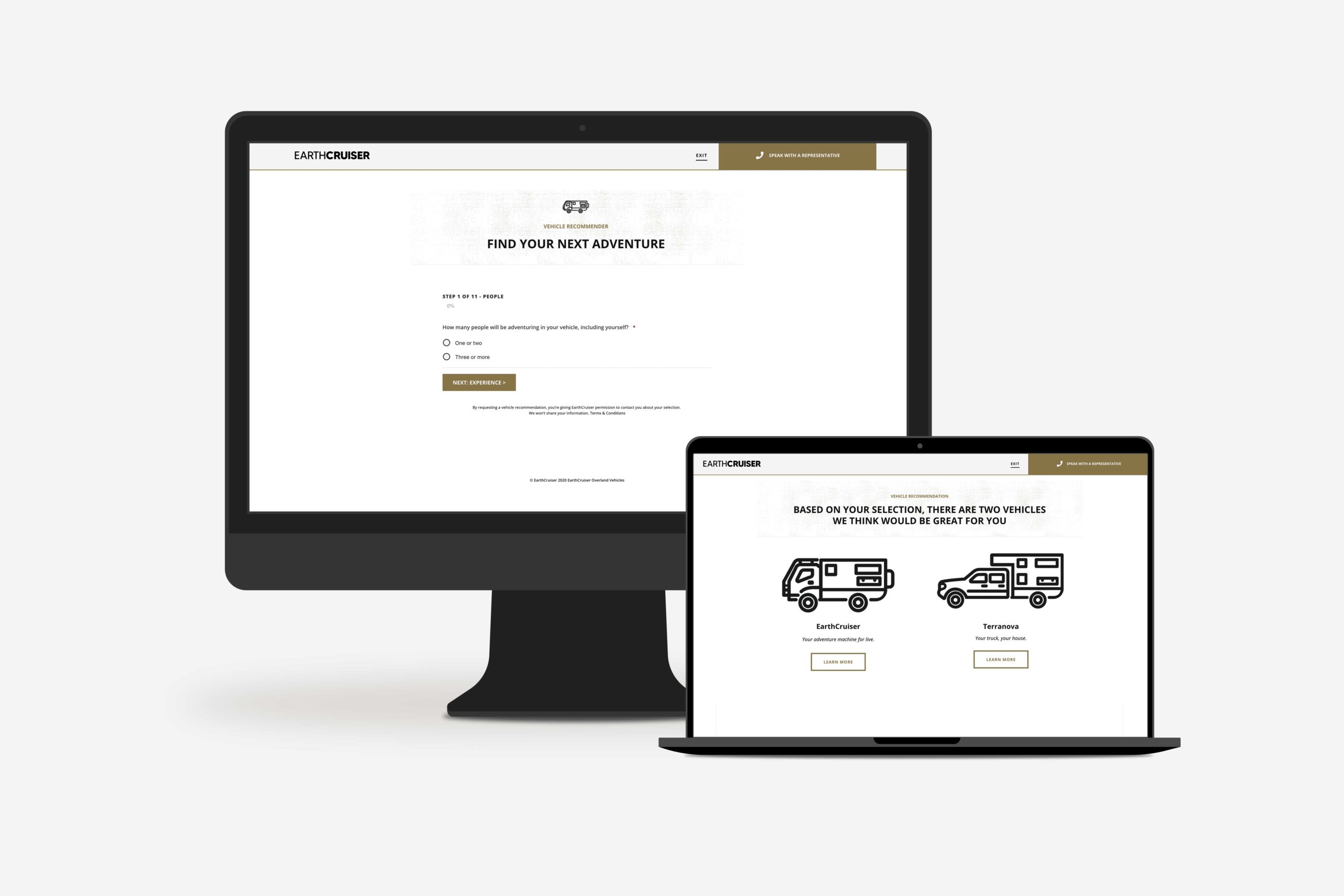
    earthcruiser long form product recommender

    The EarthCruiser Vehicle Recommender is a long-form quiz with 11 multiple-choice questions intended to generate leads and equip the sales team with as much information about the customer as possible.

    The questions range from “How many people will be adventuring in your vehicle?” and “How far do you intend to travel in your adventure vehicle?” to “How mechanical are you?” Ultimately, depending on a few conditional selections, the quiz presents a vehicle recommendation to the customer. They can then learn more about the vehicle or call a sales representative.

    4. Up-Sell Product Recommendation Quiz

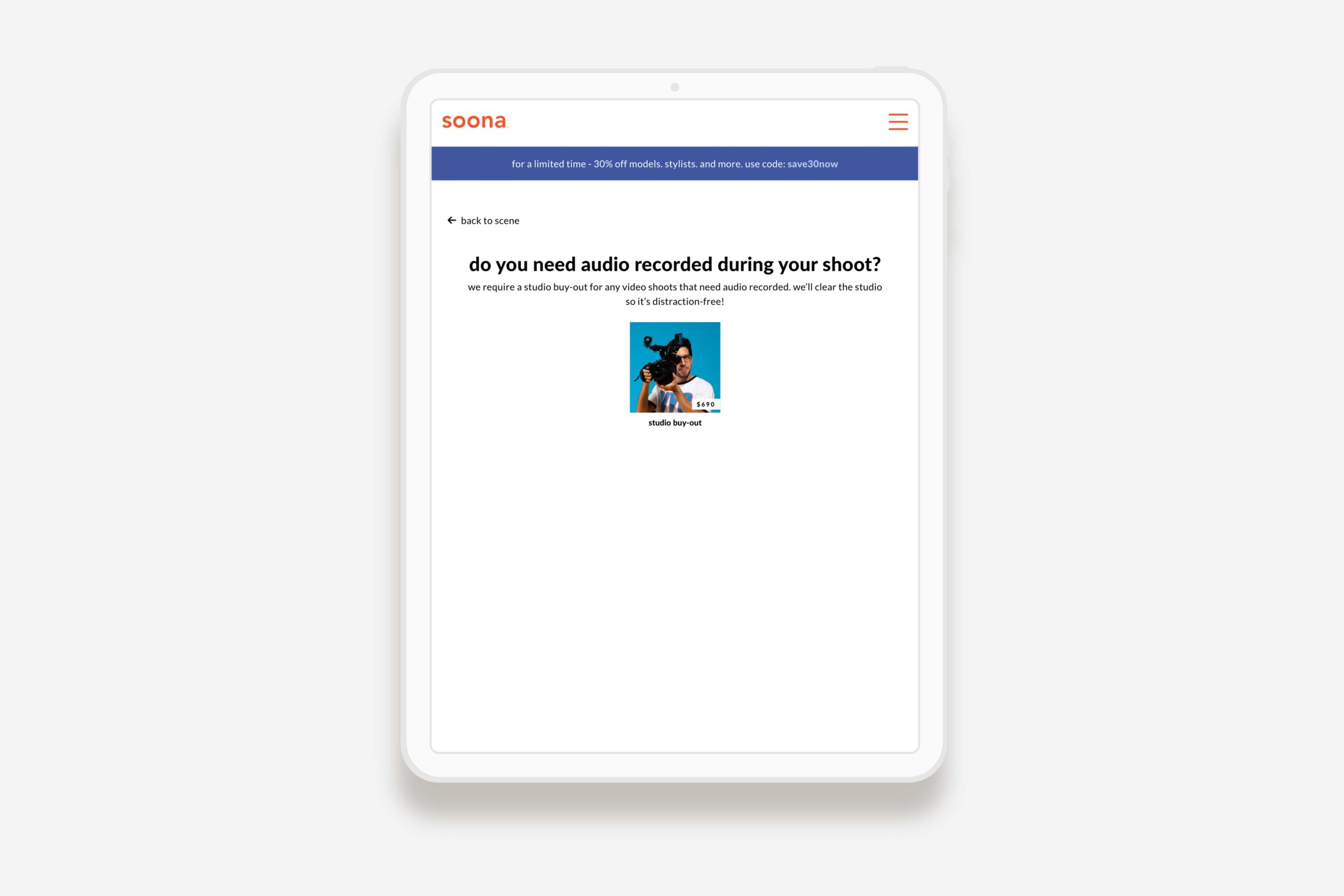
    soona upsell product quiz

    Soona, an online photo studio, uses its Build a Shoot quiz to present upsell opportunities that increase order value. In the example above, as soon as you select “video”, they present the opportunity to buy out the studio for an extra $690 so you can have audio.

    Otherwise, the quiz is much like the Multiple Choice Product Quiz where users are given visual options to select.

    5. Interactive Product Recommendation Quiz

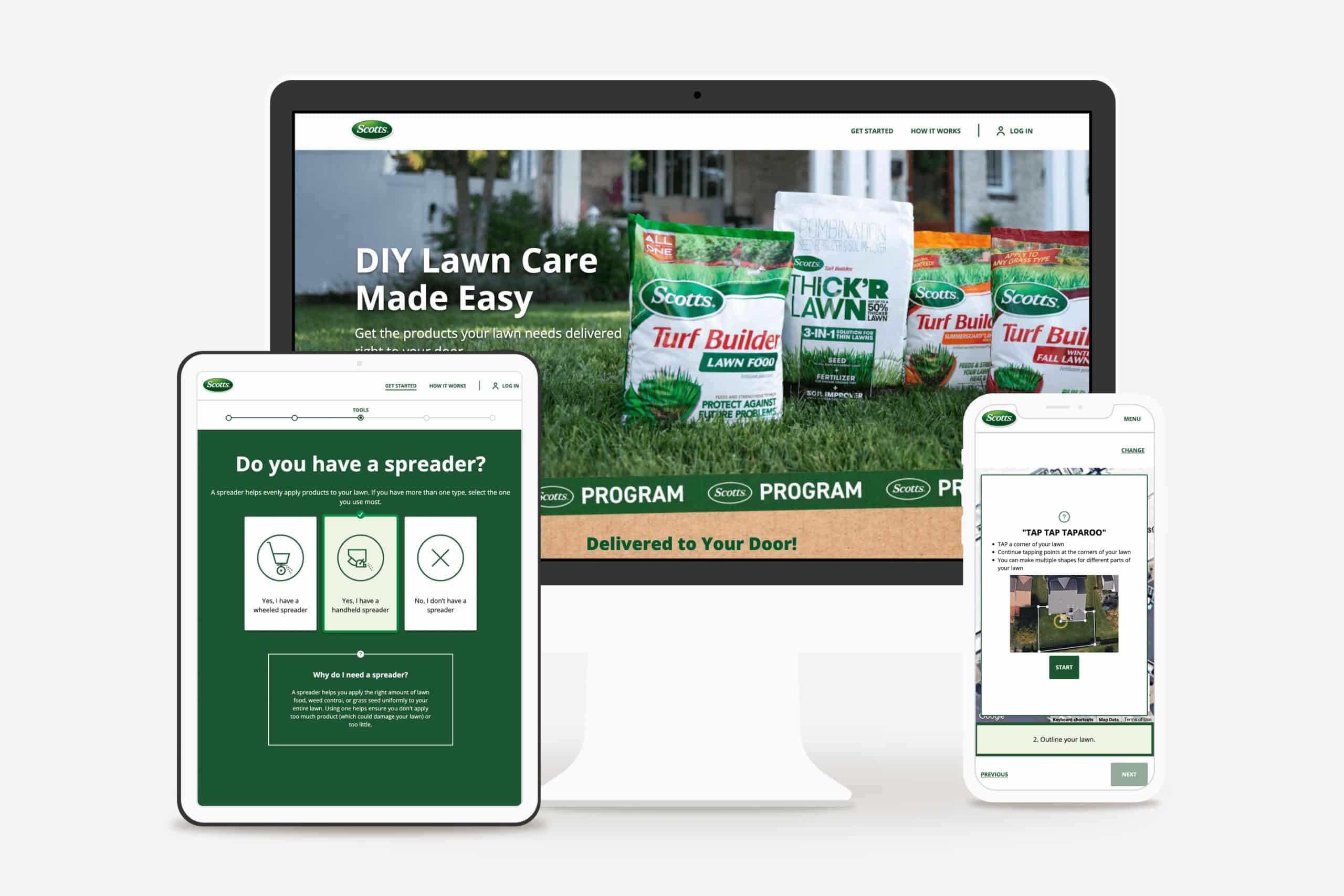
    scotts interactive product recommendation quiz

    If you want to take your quiz to the next level, be inspired by the Scotts Lawn Care Quiz. They made their quiz beautiful, simple, and intuitive for their customers—and accomplished multiple business goals.

    In the Tools step, they ask customers, Do you have a spreader?” Additionally, they take the opportunity to educate their customers about why they need a spreader, so they order one later from Scotts if they don’t have one. That’s increasing education and cart value in one step!

    Additionally, they ask for your lawn size in the last step. If you don’t know the square footage off the top of your head (who does?), you can enter your address and tap (or click) to select the boundaries of your yard on a virtual map. Their quiz app automatically calculates the approximate yard size you selected and recommends the appropriate amount of product to purchase.  

    6. Instant Quote Quiz

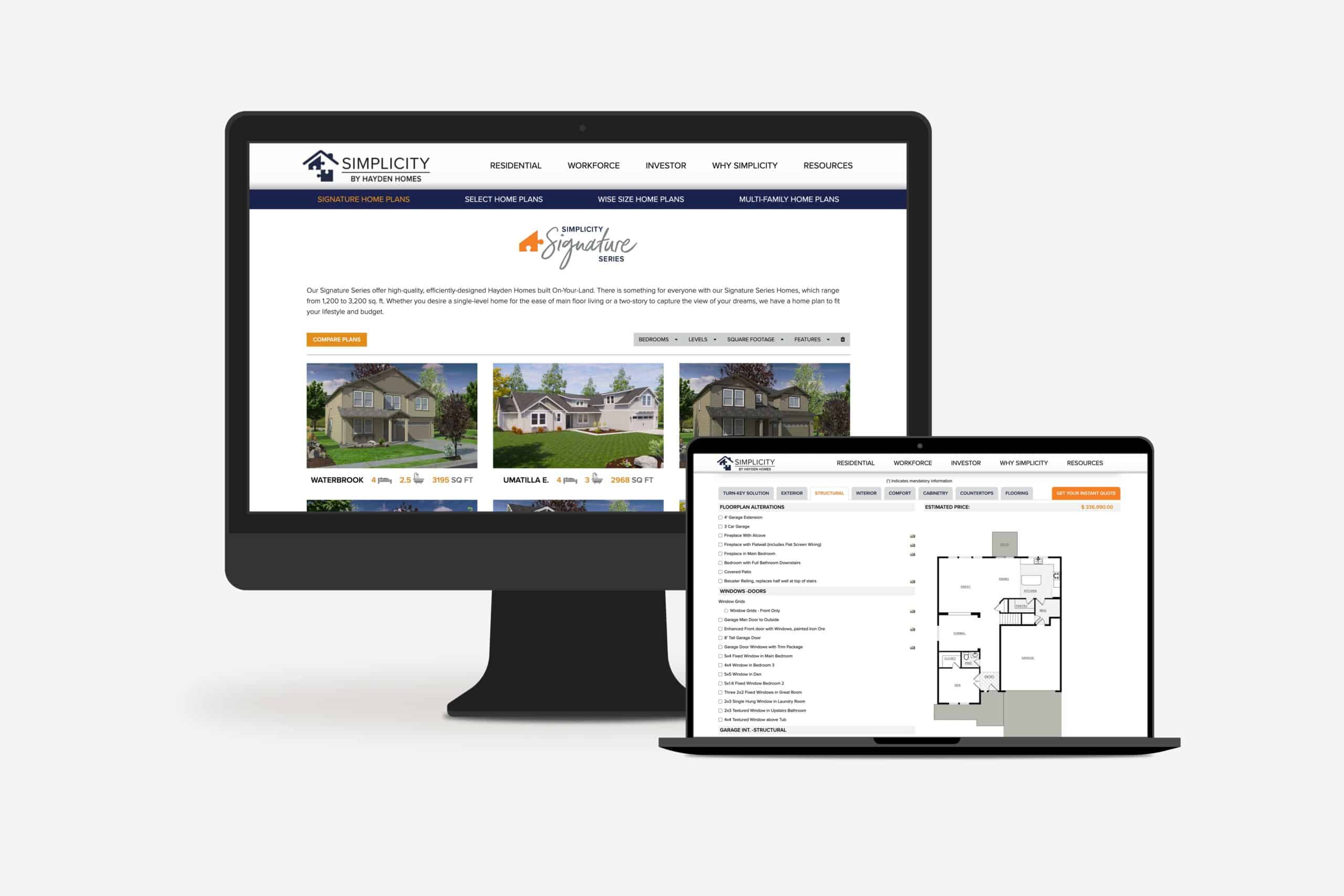
    simplicity instant quote

    All the services businesses who want to implement a quiz for their business have been waiting for this example: the Instant Quote quiz! The Simplicity Homes Instant Quote does a fantastic job.

    It is a comprehensive quiz with eight tabs and 10–30 checkbox selection options per tab. Many selections have images you can view by hovering over the camera icon. This is especially useful if you’re unsure what their “Fireplace with Alcove” looks like or what “Soffits” are.

    Each tab shows a live-updated blueprint of the home and a running total of the total cost based on your selections. Ultimately, customers can submit their instant quote and attend a running sales meeting. That’s a salesperson’s dream.

    Benefits of a Product Recommendation Quiz

    Quizzes can fix a lot of website problems. Whether your website is complex and challenging to navigate or has a low conversion rate, a product quiz could help. Here are a handful of benefits of using one for your website.

    A product recommendation quiz can simplify a complex offering

    Make it easier for customers to find what they’re looking for. By understanding a customer’s specific needs, you can recommend right products for them and increase conversions. 

    A product recommendation quiz can help customers find what they’re looking for

    A quiz can help customers narrow their options and find the perfect product for their needs if you have an extensive catalog of products. It does this by asking customers questions about their situation and recommending products based on their answers. 

    A product recommendation quiz can increase order value

    By recommending products that complement each other, you can encourage customers to purchase multiple items and increase your average order value. It does this by recommending products that work well together.

    A product recommendation quiz can generate leads

    People used to generate leads via their newsletters. Most people don’t want to sign up for a newsletter anymore. Today, PDFs and Webinars are great ways to generate leads for your business.

    The best way today is through a product recommendation quiz.

    A product recommendation quiz can automate part of your sales process

    Often, your sales process includes a series of questions to qualify your customers and identify which product or service would be the right fit for them. A product recommendation quiz does the same thing. By implementing an automated quiz, you automate the qualification process—and by the time your sales team gets involved, they know the customer is qualified and which product fits their needs.

    As you can imagine, automating your sales process using a quiz helps your customers and helps you! You can save insane amounts of time and money because you’re not hiring or employing someone to do that job.

    Common Questions About Product Recommendation Quizzes

    Does a product recommendation quiz work in any industry?

    A quiz can be very helpful if you offer products or services that require consideration before purchasing. For industries like home improvement, beauty, fashion, and more, a quiz can help customers find the perfect product for their needs. 

    Do I need to have a lot of products to benefit from a quiz?

    Not necessarily! A quiz can help users narrow their options by offering customizable products or services. For example, a quiz could help customers choose the right style, material, and color for their space if you sell custom furniture.

    How do I know what questions to ask?

    A good start is surveying your target audience or talking to customer service. They likely have a good pulse on what customers are looking for and why they’re contacting you in the first place.

    How often should I update my quiz?

    You should aim to update your quiz at least once per quarter or whenever you add new products or change your existing offerings. This will ensure that your

    What are some common quiz types?

    The options are almost endless. Depending on your industry and offerings, you can use many quizzes to recommend products. 

    We discussed a handful of use cases, benefits, and examples above. However, here are a few more examples for various business types: 

    • Product finder quiz: Helps users find the perfect product for their needs 
    • Style quiz: Recommends products based on an individual’s style preferences 
    • Beauty quiz: Recommends beauty products based on skin type, hair type, etc. 
    • Fitness quiz: Helps users find workout gear or supplements that fit their goals 
    • Home décor quiz: Assists users in finding furniture and home décor that fits their taste and budget

    Can I use a product recommendation quiz on my Shopify store?

    Yes! The RevenueHunt Product Recommendation Quiz for Shopify app makes adding a quiz to your store easy.

    While that Shopify app will help you implement your quiz, take the first few steps and solidify your strategy before you start. It will make it much easier to build. If you want help from someone who has created many successful product quizzes, check out the Structure Website Design Packages.

    How much does a product recommendation quiz cost?

    The cost of a quiz will vary depending on your industry, the complexity of your products, and the features you want to include. Not to mention if you’re doing it yourself or hiring help. Generally speaking, a simple DIY quiz can start at around $500, while a custom quiz could cost $5,000 or more.

    Want Help Making a Product Recommendation Quiz?

    At Structure, we help our clients reach their marketing goals by designing and building profitable features for their websites, like product quizzes. If you’d like help with yours, explore our Website Design Packages or schedule a Consult Call with one of our experts.