Tag: Business Strategy

  • Your Body is Your First Business: 3 Founder Health Habits to Scale Past $1M

    Are you a founder who is grinding harder but getting nowhere? Your health habits might be why. Let’s dive into the founder health habits you need to have to scale past $1M in revenue.

    In this founder-focused session, I share the brutal truth about why 75% of businesses fail within 15 years – and it’s not what you think.

    After being stuck at $300K revenue while 50 pounds overweight and numbing with alcohol, I discovered that every business problem is actually a personal problem in disguise.

    Here’s the transformation framework that took me from struggling founder to $1M+ advisory business.

    Focus Hour: Founder Health Habits

    Watch LinkedIn Live: https://www.linkedin.com/events/founderhourlive-stopspinning-st7363694171301310467/theater/

    Welcome to Focus Hour. Today’s topic is founder health habits. My promise to you is that I’m going to help you trade scattered effort for a focused plan this week.

    If we haven’t met, my name is Simon. I am the founder and CEO of Structure and the Aligned Program, which is a program out of our company that’s focused on helping founders get unstuck and stop spinning so they can start growing again and get that clarity and traction that we’re all looking for to know that we are headed in the right direction, aligned and connected with our vision so that our goals can happen.

    For the Frustrated Founders

    I made this for the frustrated founders. If this is you, you know what I’m talking about. You’re staring at the ceiling at 3 am, stuck in a loop, straining your family to carry your team, wanting growth, but it feels random and distant.

    You probably feel like if I quit, everything falls apart. If I keep going, I’ll fall apart.

    Let’s get real

    Your freedom vehicle that you created feels like a prison. Every decision, crisis, and dollar is on you to make, to move, to create. If you’re not creating the dollar, nobody else is.

    You might think if I push harder it’ll finally click. This is a trap, but this is so real.

    Grinding – if I just try a little harder, if I just keep going, it’ll finally click. I was answering support emails and processing payroll at midnight. You might have been there too, or you might be there right now.

    I want you to know I’m here because I’ve been there too. I’m not just sharing this from a podium with book smarts. This is lived experience, real deal. I was 50 pounds overweight, numbing with alcohol, building a successful company while failing myself and my family, feeling alone, stuck and spun out.

    Most of my evenings after work, which went late – 6, 6:30 – and started early, ended with Netflix, whiskey, and guilt.

    Why am I doing this?

    Why am I showing up on LinkedIn, putting myself out there, sharing my story, being vulnerable? It’s because I lived every moment of this pain. This was my story. I was there, and I want to help you as a founder grow through these pains instead of running from them.

    What I learned is that the power was in growing through them. That’s really hard. It’s hard to figure out what that should look like, what things you should be doing or not doing, and who you need to become.

    The Transformation

    Here are two side-by-side pictures. On the left, we’ve got me in 2022 with my wife Rebecca. She looks very happy, and I look very unhappy, which is kind of how it was. This was in Coeur d’Alene, Idaho during a video shoot for a client.

    If I look at that guy, he was 50 pounds overweight. He was doing anything for anyone who would pay him a dollar. I was a functional alcoholic. I remember that night – I was probably still a little bit hungover from dinner and drinks the night before. That night I had I don’t know, 3 or 4 old fashions, and that was the norm.

    I was…

    • Dealing with constant sinus infections.
    • At a $300,000 flatline.
    • Struggling, stuck, spinning, not able to break through.

    Fast forward to 2024

    This picture with my son Peter. This is a different guy. He’s living in a place that he dreamed of living. He’s doing things with his family that he dreamt of doing. I lost those 50 pounds over those few years.

    I’m doing what I’m best at.

    I have a clear 10-year vision and one-year goals – not wandering anymore.

    I’m investing in myself instead of drinking all the time. I work out 3 or 4 times a week with a macro diet, and I have a million-dollar business and a family who’s following my lead.

    Today I’m locked in

    My marriage runs on midday syncs, not midnight arguments anymore, because I have time. I have space. I’ve created my life around prioritizing my marriage, prioritizing those conversations. My kids get a daddy day every week – one on one, not all of them every week, but one of them, and we rotate through. They don’t just get my evening leftovers.

    I’m running a million-dollar advisory company, consulting and coaching with ambitious, high-performing, successful founders and their teams without working 80-hour weeks myself. I’m able to give them my best so they can give their team their best.

    I don’t say this because I want you to think Simon’s amazing. Between Tuesday’s first session and today’s second session, my feedback from my team was, “Hey Simon, you’re really empathetic and relatable with a great story, but tell me more about what your life looks like now. Help us see what’s possible. Tell us – you have transformed, and we’ve all watched you transform, but not everyone on the call knows that. So tell us, show us.”

    At this point today, I’m not perfect, but I have become the kind of visionary leader who can grow a business – any business – and grow any area of my life with clarity and control. That’s where I want to help you get today because it’s possible.

    I don’t want you to think that I did this alone. Nobody does it alone. Nobody goes to millions of dollars a year, nobody creates a legacy by themselves. My mentors helped me turn my mess into a transformation. I haven’t sold a hundred-million-dollar company yet, but I did rebuild my health, reconnect with my family, and grow my business past a million without burning out.

    The Five Domains

    If I can break through, why not you? Founders almost always think that their growth problem is strategy or sales. Sales fixes all, and sometimes it does. Or operations – there’s systems or plans that aren’t working out. That fixes things too. But what I’ve learned is that underneath it all, every business problem is really a personal problem in disguise.

    Business is personal. One of the meanings of that is that you as a founder are such a key component to your business growth. If you are dying, your business isn’t going to be growing. If you’re growing, it’s going to be growing.

    There are 5 domains that every founder needs to align before they can fully accelerate:

    1. Vision

    Do you know where you’re going, or are you just hoping next month won’t be worse? Where there is no vision, people perish. If you want to be growing but you don’t have a vision that you have dreamed up, written down, articulated in any form, you’re working against growth.

    2. Health

    Do you have the rhythms that help you grow, or are you just running on fumes and burning out? Your body is the first business you lead. If you want to grow, you need to invest in yourself and your physical ability to grow. It’s the most obvious thing in the whole world, but most of us overlook it.

    3. Leadership

    Are you the leader your business needs, or are you actually just an overpaid firefighter? A lot of us are firefighters in our business – we’re just reacting to every flame that comes our way, trying to spray it out as fast as we can to keep the whole thing from burning down.

    4. Execution

    Are your actions on a daily basis, your team’s actions and your goals aligned with the vision that you set out? When vision and execution are going in different directions, that’s misalignment. The goal is, how can we execute the vision?

    5. Culture

    Is your team an extension of you, or are they an extension of someone else? If you’re showing up chaotic, stressed, grinding, unclear, your team is going to be chaotic, stressed, grinding and unclear. What you really want them to mirror is clear, thoughtful, intentional, exponential.

    Health Focus

    Let’s dive into founder health habits. Your body is the first business you lead. Here’s my question: Would you invest in a business run by a founder who’s constantly exhausted, overweight, anxious, numbing just to get through the day? Would you hire a coach or go to a doctor who’s constantly exhausted, anxious, numbing just to get through the day?

    Why would you ask your team, your investors, or your customers to invest in you while you run yourself into the ground? This hits hard for me. Those years where I was 50 pounds overweight and drinking – we were funneling $300,000 through the business with a dozen clients and a couple team members, and they were following that guy.

    Burnout isn’t a badge of honor. Grinding isn’t a rite of passage. If this is you, don’t take this the wrong way, but you’re actually a business risk wrapped in ego, fear, and scarcity.

    The Paul Bunyan Story

    I want to tell you about Paul Bunyan. In the story, Paul is a big, tall performer, hacking down trees with his axe, crushing everybody. He’s successful, he embodies this incredible doer. But this scrawny guy comes in with a saw – this newfangled technology. Paul’s like, “I’m going to beat this guy with the saw using my axe.”

    They do this competition cutting down trees in a forest. Paul’s thinking he’s got this wrapped – there’s no way this thing can keep up. But the saw outcompetes Paul and crushes him. He has an identity crisis – who am I? Why couldn’t I do this?

    Paul, in that moment when he’s trying to outwork a system, didn’t matter how hard, fast, or long he swung his axe. The blade was dulling, he was tiring out. He lost not because of a lack of effort – he gave it his all – but a lack of edge. He was working too hard and not smart enough.

    I’ve heard this from founders: “I’m doing the best I can. I’m working the hardest I can. You’re getting everything from me you can, and it’s still not good enough.” The truth is, it’s not that you’re not trying hard enough. You just don’t have what it takes to do what you want to do yet. This lack of edge ties into health.

    The Stakes

    The stats are real: 20% of businesses fail in 2 years, 50% in 5 years, 75% before 15 years. But it gets worse – 30% of founders get divorced (double the US average), and 72% struggle with mental health, clarity, depression, and suicide.

    I share these not to crush you, but because it’s important to know what’s at risk. It’s not just your business that can fail – your life can fail too. There’s more at stake. But it doesn’t have to be this way. When you sharpen your blade, you don’t just survive, you feel alive.

    Dan Martell Example

    Dan Martell – his wife said, “Dan’s the wealthiest man in the room, not because of his watch or his cars, but because of his health.” He has fancy things, but when she looks across the room and sees a lot of high-income earners, founders, entrepreneurs, achievers, there are very few that are healthy. Those are the people that have the true wealth.

    Peter Drucker said, “Leadership begins with self-management. You can’t lead others before you lead yourself.”

    Alignment Anchors

    I want to share something called alignment anchors. These are what I use in my life and teach. Just the other day, I took my family to San Diego for SeaWorld. We stayed in a hotel, and throughout the week I was really starting to burn out and struggle, spin, feel disconnected and stressed and anxious. When we came home, I lit up – totally back to normal. I realized it was because I wasn’t anchored in my daily routine. I didn’t have those anchors to hold me, keep me stable, keep me feeling full and energized.

    The Seven Anchors:

    1. Sleep – 7 to 8 hours of sleep = rested founder
    2. Lifting weights – 3 to 4 times a week. You’ll become more resilient because lifting is hard and painful, and it helps teach you to embrace pain and see pressure as a privilege = resilient founder
    3. Walk – 10 to 15,000 steps a day. This improves your mental health, makes you clear-minded, focused = clear-minded founder
    4. Eating – 80 to 90% whole foods diet = fueled founder
    5. Quitting/reducing vices – things like alcohol, weed, porn. These will bring you down, drain your energy. They feel good in the moment but hurt you later = disciplined founder
    6. Surround yourself with positive people = connected founder
    7. Work and rest – both for purpose and energy = inspired founder

    These anchors help you become a rested, resilient, clear-minded, fueled, disciplined, connected, and inspired founder. Who doesn’t want to follow someone who has these traits?

    90-Day Roadmap

    If you’re looking at this thinking it’s a lot, I understand. It took me years – 3 years where I lost 50 pounds and doubled my business. If you’re just starting, here are the 3 lead dominoes:

    1. Sleep

    Try to get 7 to 8 hours between 10 PM and 6 AM. This turns your body into a recovery machine, giving you the focus and stamina your business actually needs. Sleep is literally one of the most important things – it unlocks everything else. The trick is going to bed at the right time. Going to bed early enough will unlock your ability to get up early.

    2. Walk

    Getting 10 to 15,000 steps a day is the simplest performance hack before supplements or gadgets. You don’t have to get a gym membership. Movement clears your mind and builds capacity to lead. This can be as simple as your watch reminding you every hour to stand up and take a walk.

    3. Eating

    Target 80 to 90% whole foods. This is probably the hardest of the 3, but if you’re sleeping and energized, if you’re walking and moving, you’re going to start feeling better and wanting to eat better foods. Simple swaps like eggs instead of cereal in the morning, chicken salad instead of burgers at lunch, salmon with rice instead of frozen dinners. Fuel your body with clean energy.

    Founder Health Habits Audit

    Rate yourself on each area from 1-4 and add them up out of 20:

    • Sleep Quality & Consistency: How well are you sleeping 7-8 hours nightly?
    • Physical Fitness: How consistent are you with exercise/movement?
    • Nutrition: How clean and intentional is your eating?
    • Stress Management: How well do you handle pressure and recovery?
    • Energy Levels: How consistent is your daily energy throughout the day?

    What’s one habit that if you committed to for the next 60 days might change your life and your business?

    The Future is Yours

    This isn’t about guilt or pressure. This is about desire. The goal isn’t to make you feel bad about where you are – it’s to help you see what’s possible for you. Every visionary leader started exactly where you’re at right now.

    Are you swinging harder with a dull axe, or taking time to sharpen the blade? This isn’t about grinding harder or adding more to your plate. It’s about doing the right things and unlocking the focus to where you’re present, alive, and in control.

    Growth and progress often has more to do with subtraction than addition. In music, “the rest is as important as the note.” If you imagine a song with nothing but notes and zero pauses, all it would sound like is noise. You use silence as power.

    Being fully present, alive, and in control is being more of you, and this is what your family, your business, your team really needs.

    Closing Story

    My very first coach, James Warwick – I reached out to him blindly on LinkedIn when I was struggling as a founder. We met at coffee for a great hour. I remember getting up to refill my coffee, going to the bathroom, coming back and sitting down. He said, “You know, Simon, you know what your real problem is? You know why you’re struggling to get clients or get your business off the ground?”

    He said, “You’ve got this sticker on your head right here. You’re walking around this coffee shop going a million miles per hour. You’re lasered in, and the focus is admirable. But the truth is, you just look busy. ‘Don’t talk to me. I’m busy. I’ve got too much going on. I don’t have time for you.’”

    The truth is, I lost not because of a lack of effort, but because I didn’t have what it takes to do what I wanted to do yet. I said I wanted to grow the business, but what was really standing in the way was me and my inability to see what I wasn’t seeing, or my inability to be the person that I needed to be to have that impact on the business.

    Next Steps

    If you want to go deeper on this stuff with me:

    1. Free Alignment Audit – A PDF that walks through a scoring system on all 5 domains. Just DM me on LinkedIn or comment “audit”
    2. Aligned Intensive – A 60-day sprint to help you get unstuck and turn around. Direct work with me in cohort style. $3,000
    3. Aligned Program – The intensive plus additional deep dives and accountability. 12-month program for $15,000

    I’ll keep showing up every Tuesday and Thursday, 1 PM Mountain time. Thank you for watching, for joining, for letting me share this. It’s truly an honor to show up and share my story, to teach what I know, what I’ve learned, what I’ve lived in a way that hopefully helps you break through in your business and your life.

    Imagine…

    • Leading your business with focus and clarity.
    • Being fully alive, fully in control, moving closer to your vision every day.
    • Your team – because of who you are – is getting better, the strategy getting sharper, and the results getting bigger.

    When you’re rested, when you’re resilient, when you’re clear-minded, growth compounds. Growth happens. Growth is inevitable. This is the hardest thing you’ll ever do, but the goal is becoming someone who, no matter what room you enter, you will have an impact.

    Founder health habits key points

    What you’ll learn:

    • The 5 domains every founder must align before they can accelerate
    • Why your body is the first business you lead
    • The 3 “alignment anchors” that changed everything (90-day roadmap included)
    • How to stop being a “business risk wrapped in ego, fear and scarcity”
    • The Paul Bunyan principle: Why working harder isn’t the answer

    Key timestamps:

    • 0:00 – The frustrated founder’s dilemma
    • 8:00 – My transformation story (before/after)
    • 14:00 – The 5 domains of alignment
    • 23:00 – Founder health habits deep dive
    • 33:00 – The 3 alignment anchors
    • 41:00 – 90-day roadmap for beginners
    • 44:00 – Founder health habits audit tool
    • 49:00 – Q&A and next steps

    Key problems addressed:

    • 6:48 – How do you break out of the founder trap of feeling like quitting means everything falls apart but continuing means you’ll fall apart?
    • 8:07 – What does transformation from a struggling founder to successful leader actually look like?
    • 14:01 – What are the five domains every founder needs to align before they can accelerate their business?
    • 16:57 – Why do every business problem stem from personal problems in disguise?
    • 19:43 – What is the most important domain to focus on first as a founder?
    • 23:01 – Why should founders prioritize their health when trying to grow their business?
    • 24:36 – How do you avoid being a business risk to your team and investors?
    • 26:02 – What can founders learn from the Paul Bunyan story about working harder versus working smarter?
    • 29:00 – What are the real statistics about founder failure and mental health struggles?
    • 33:25 – What are the specific daily habits that create a successful founder mindset?
    • 37:52 – What is the 90-day roadmap for founders who feel overwhelmed by health changes?
    • 38:00 – How do you optimize sleep as a founder for maximum business performance?
    • 39:10 – Why is walking 10,000-15,000 steps daily critical for founder success?
    • 40:02 – How do you transition to eating 80-90% whole foods without overwhelming yourself?
    • 44:29-How do you assess your current founder health habits and identify areas for improvement?
    • 45:45 – What is the one habit that could transform your life and business in 60 days?
    • 49:17 – How do you recognize when your personal behavior is limiting your business growth?

    The hard stats

    • 75% of businesses fail before 15 years
    • 30% of founders get divorced (double the national average)
    • 72% struggle with mental health issues

    Top 3 founder health habits:

    1. Sleep: 7-8 hours between 10 PM – 6 AM
    2. Walk: 10,000-15,000 steps daily
    3. Eat: 80-90% whole foods

  • 10 Key Components of Digital Transformation Strategy

    10 Key Components of Digital Transformation Strategy

    Key components of digital transformation strategy is more than simply creating and building an impressive digital tech stack; instead, it encompasses every facet of how your business utilizes digital technology to grow and, ultimately, deliver value.

    In today’s competitive landscape, digital transformation is not just an option; it’s a necessity for mid-market companies looking to outpace their competition and achieve sustainable growth. This insightful article explores the 10 Components of Digital Transformation™  that can drive lasting growth, change, and success in your organization.

    In this article you’ll discover:

    Digital transformation is more than a buzzword tossed around by consultants. Rather, it is a multidimensional, multifunctional, and multifaceted process that is crucial for modern business success.

    And it’s not just for billion-dollar enterprises either… you can transform an organization at any scale. Some companies that need it most are blue-collar small and medium enterprises (SMEs) in manufacturing, finance, and transportation, which are behind the times. 

    But transforming your digital infrastructure from basic or non-existent to world-class requires hard work. It requires strategic thinking and sharp expertise that many leaders struggle to execute and, therefore, never experience the transformations required to reach their vision. 

    If you’re reading this article, you’re one of those unique, high-achieving leaders who loves growth, embraces change, and is ready to transform their organization.

    After helping dozens of SMEs through various stages of digital transformation, we’ve discovered 10 key components to measure, and we’d love to share them with you. We’ll explain each of those components, address common misconceptions, and explore practical examples that we know you’ll resonate with. 

    Let’s get started!

    Why Most Digital Transformation Strategies Fail

    Let’s just get it out there, around 80% of digital transformations fail.

    If you’ve done your own research, you might find a range of numbers based on surveys and data; however, the bottom line is that most leaders, teams, and organizations do not accomplish what they set out to achieve.

    If you haven’t done any research yet, read Why Transformation Efforts Fail from the Harvard Business Review or see some Common Pitfalls in Transformation from the global consulting firm McKinsey. There are dozens of articles with similar stories.

    3 reasons for digital failure

    From my research and our first-hand experience as a digital consulting firm for SMEs in blue-collar industries the big few reasons for digital failure are these:

    1. Lack of vision

    Lack of a comprehensive vision: Often, the vision doesn’t encompass the full potential of transformation, leading to incremental changes that fall short. Or, the vision isn’t agreed upon and worked toward. Usually, small incremental changes are considered through consensus that don’t actually move the needle.

    2. Resistance to change:

    While resistance sometimes stems from the owners or management, it almost always comes from the team. If the vision were more exciting for them, or helped them realize their future in the organization more quickly and clearly, maybe they’d get on board more easily. 

    3. Insufficient integration

    The Long-term impact of tech and teamwork integration are often overlooked. Unfortunately, teams can become so focused on the transformation process that they overlook the need for integrating people, systems, and processes over the long term.

    Digital transformation is 95% vision and 5% integration.

    If you’re surprised that vision is the first problem and integration is the last, you’re not alone! Most think that transformation is 95% related to integration and 5% related to vision. I’ve found the exact opposite to be true.

    Digital transformation is 95% vision and 5% integration.

    If you want to succeed in digital transformation at any scale, the most important facets to focus on are vision, teamwork, and change management.

    How Commitment Equals Transformation

    Commitment is the cornerstone of growth and transformation.

    It requires bold decisions and strategic investments, but the returns in efficiency, customer satisfaction, and market positioning are invaluable. 

    Transformation requires embracing change—in other words, saying “no” to the things that hold you back so you can say “yes” to the things that help you progress. 

    Here’s why… digital transformation is not only about adding new infrastructure, tech, and team members to the puzzle. It’s also about making necessary endings to the people, infrastructure, and processes that no longer serve you moving forward—and committing to discovering new ways of operating that take you further than before.

    Say no to the good to embrace the great

    For many, this kind of pruning and growth is scary. But saying, “no” to the good to embrace the great is the tipping point that every company has to decide to do when the timing is right.

    The thing that holds most companies and their leaders back from transformation is their willingness to make a clean and clear commitment to it. What I mean is that they wait and wait until they feel like they have the capability and confidence to pull off a growth initiative successfully.

    The problem is, you rarely feel capable and confident enough to get started. So, in turn, you delay action into perpetuity.

    The 4 C’s Formula

    Dan Sullivan, the founder of Strategic Coach, developed a concept he calls The 4 C’s Formula. In essence, he says everyone goes through four important steps to achieve big goals (like digital business transformation): 

    1. Commitment 
    2. Courage
    3. Capability
    4. Confidence

    He explains in his book, “Any significant change in life requires first making a commitment to a bigger goal than you’ve achieved before. When you’re making a commitment to change, at first you don’t have the capability to do it. But view capabilities get created by making a higher-level commitment and having greater courage when you don’t yet know how you’re going to pull it off.”

    Commitments equals change. Change equals transformation. No matter what, a digital business transformation requires you to commit to a bold vision, make significant changes, and invest heavily into the future.

    Notice how confidence is the result, or the outcome, of the process. The trick is making commitments toward your goals, and gaining the courage, capability, and eventually confidence along the way.

    But what kind of commitments should you make? How do you make smart commitments, ones that mitigate unnecessary risk and have a likelihood of success?

    The answer is in your strategy. When you understand where you currently land on each of the 10 Components of Digital Transformation, and where you want to be, then you make commitments to focus on and strengthen each, the roadmap to digital transformation will be clear. 

    The 10 Key Components of Digital Transformation:

    1. Customer Service
    2. Data & Insights
    3. Strategy & Leadership
    4. Technology
    5. Operations
    6. Culture & People
    7. Organization
    8. Marketing & Advertising
    9. Cyber Security
    10. Brand Management

    10 Key Components of Digital Transformation 

    It’s crucial to make strategic commitments to each of the 10 components of digital transformation.

    In this section, we’ll briefly break down each of the components of digital transformation, what they mean, and in the following section show you how you can assess each component in its current and future state as it regards your digital maturity.

    1. Customer Service

    Customer Service in digital transformation involves leveraging technology to enhance customer interactions with your company.

    It’s a common belief that digital CX tools like chatbots and support centers impersonalize customer interactions, removing the human element from them. But that’s not always the case. The reality is that, when used thoughtfully, digital tools can enhance personalization and responsiveness, creating a more tailored and engaging customer experience at scale, for less cost and error.

    Customer Service Transformation Metrics & KPIs:

    • Net Promoter Score (NPS)
    • Customer Satisfaction Score (CSAT)
    • Customer Effort Score (CES)
    • Customer Retention Rate

    For example, a mid-market manufacturing firm in the northwest leveraged AI-powered chatbots to enhance customer interactions, resulting in a 30% increase in customer satisfaction. That’s a customer service digital transformation.

    Here are a handful of key indicators of success in the Customer Service component:

    • Our support team is quick to respond and always addresses questions and issues effectively.
    • Navigating our website is easy, customers can find what they need without any hassle, and they are able to accomplish their goals without live support from our team members.
    • We’ve set up a thorough system for gathering feedback from customers and we use that feedback to continuously improve our services.
    • We have customer support solutions to handle increased demand effectively as we scale without any hiccups.
    • We have personalized communication channels for each of our customer types that suit their preferences and needs, making their experience personal and meaningful.

    2. Data & Insights

    Data & Insights in digital transformation mean using data to drive informed decisions and innovation within the organization.

    This involves collecting, analyzing, and interpreting data from various sources to gain a comprehensive understanding of business operations, market trends, and customer behavior. Data-driven decision-making helps businesses identify opportunities, optimize processes, and improve overall performance.

    Many think that data analytics is only for large corporations with extensive resources. In reality, even small and mid-sized businesses can harness the power of data to gain valuable insights and make smarter decisions. But that’s not true. With the right tools and strategies, data can be a powerful asset for businesses of any size.

    Data/Insights Metrics & KPIs:

    • Return on Investment (ROI)
    • Cost Per Lead (CPL)
    • Customer Lifetime Value (CLV)
    • Conversion Rate

    Here are a handful of key indicators of success in the Data & Insights component:

    •  We gather, examine, and interpret data methodically to guide our decision-making.
    • The insights we gather from data drive innovation and continuous improvement across our organization.
    • We possess a deep understanding of our audience, thanks to thorough data analysis.
    • We visualize data to share clear insights with our team and clients, across all functions and organizational levels.
    • Our approach to managing data emphasizes security, privacy, and integrity, aligning with industry rules and regulations, as well as our unique company values.

    3. Strategy & Leadership

    Strategy & Leadership in digital transformation involve developing a clear roadmap and having leadership fully on board to drive digital initiatives.

    A successful digital transformation starts with a strong vision and strategic plan that aligns with the company’s goals. Leaders play a crucial role in championing digital initiatives, fostering a culture of innovation, and ensuring the team is aligned and motivated.

    Some believe that digital transformation is purely a technological change. However, successful transformation requires strategic vision and strong leadership to guide and support the process. It’s about aligning technology with business goals and driving cultural change to embrace new ways of working.

    Strategy/Leadership Metrics & KPIs:

    • Employee Engagement Score
    • Employee Net Promoter Score (eNPS)
    • Employee Satisfaction Index
    • Employee Turnover Rate

    Here are a handful of key indicators of success in the Strategy & Leadership component:

    • We have a clear roadmap for how we strategically and efficiently use digital tools and systems to help our company grow.
    • Our leadership team is fully on board with our digital strategy and are supportive of our ongoing digital projects.
    • We have invested in digital tools that help our offerings and organization expand.
    • We have the “right people in the right seats” to lead us through planning, implementing, and growing our digital presence.
    • We have a system to regularly review and adjust our digital plans and tech decisions to align with market demand and customers needs.

    4. Technology

    Technology in digital transformation refers to implementing the latest and most suitable technologies to support organizational growth.

    This includes adopting cloud computing, AI, IoT, and other digital tools that enhance operational efficiency, improve customer experiences, and drive innovation. Staying updated with technological advancements ensures the business remains competitive and agile.

    It’s a common misconception that more technology always equals better results.Sometimes it’s actually less. It’s crucial to choose the right technologies that align with your business goals and processes. Simply adding new tech without a strategic plan can lead to wasted resources and increased complexity without delivering the desired outcomes.

    Technology Metrics & KPIs:

    • Technology Adoption Rate
    • User Engagement Rate
    • Active Users
    • Churn Rate

    Here are a handful of key indicators of success in the Technology component:

    •  We regularly assess and keep our systems up to date with the latest and most suitable technologies to support our organization’s growth plans.
    • Our technology efficiently handles data processing, storage, and sharing. This encompasses tools like a comprehensive sales and email management system (CRM), secure payment processors, and automated reporting systems to keep everyone informed.
    • Technology streamlines tasks for our team, saving money for our company in the process.
    • Our tech solutions are easy to use and available to both clients and team members.
    • We effectively leverage digital technology to support our organization’s growth and expansion.

    5. Operations

    Operations in digital transformation involve streamlining processes through digital tools to improve efficiency and effectiveness.

    This includes automating repetitive tasks, enhancing supply chain management, and optimizing resource allocation. Digital operations enable businesses to respond quickly to changes, reduce costs, and improve overall productivity.

    Many think digital transformation is only about customer-facing changes. Enhancing internal operations is equally important to drive overall organizational efficiency. By focusing on back-end processes, businesses can achieve significant improvements in performance and scalability.

    Operations Metrics & KPIs:

    • Process Efficiency Score
    • Cycle Time
    • Throughput
    • Resource Utilization

    Here are a handful of key indicators of success in the Operations component:

    • Our customers can help themselves with self-service tools that not only save us money but also free up our team from repetitive tasks.
    • Our digital systems help our team work better and faster within our organization.
    • We’ve set up automated workflows that make our business nimble and more effective.
    • We employ digital tools to offer support to our team members, allowing our leadership to focus on more valuable responsibilities.
    • We effectively leverage digital technology to support our organization’s growth and expansion.

    6. Culture & People

    Culture & People in digital transformation are about fostering a digital-friendly culture and ensuring employees have the skills and mindset to embrace change.

    This includes providing training, encouraging innovation, and creating an environment where digital tools are seen as enablers of growth and success. A strong digital culture helps attract and retain top talent and drives continuous improvement.

    As mentioned previously, some believe digital transformation is purely a technological shift. It’s such a big misunderstanding that it’s worth repeating again because transformation is also a cultural change that requires buy-in and adaptation from all team members. Successful transformation involves addressing people’s attitudes and behaviors, ensuring they are aligned with the new digital vision.

    Culture/People Metrics & KPIs:

    • Employee Satisfaction Index
    • Job Satisfaction Score
    • Employee Net Promoter Score (eNPS)
    • Employee Turnover Rate

    Here are a handful of key indicators of success in the Culture & People component:

    • Our team is fully equipped with digital skills, embracing and driving change.
    • Our employees are energized and committed to reaching their personal and company goals, thanks to digital processes that prevent burnout and encourage a healthy balance between work and life.
    • Our digital training systems efficiently educate our employees, fostering stronger connections with our organization.
    • Digital solutions streamline our HR operations and draw in top talent.
    • We employ digital tools and assessments to ensure that each member of our team is in a role that suits them best.

    7. Organization

    Organization in digital transformation refers to structuring the company to leverage digital tools for growth and accountability.

    This includes redefining roles and responsibilities, implementing collaborative platforms, and creating agile teams that can quickly adapt to new challenges. An effective organizational structure supports innovation and ensures smooth execution of digital strategies.

    Misconception: Organizational structure is rigid and can’t adapt quickly. Digital tools can help create a more agile and responsive organization. By breaking down silos and fostering collaboration, businesses can become more flexible and better positioned to capitalize on new opportunities.

    Organization Metrics & KPIs:

    • Organizational Agility Score
    • Time to Market
    • Project Success Rate
    • Agile Maturity Index

    Here are a handful of key indicators of success in the Organization component:

    • Our team embraces collaborative digital platforms like email, Slack, Zoom, and Google Docs or Microsoft Teams to streamline information sharing.
    • Our organization is designed to facilitate business growth while using digital systems to ensure feedback and accountability, regardless of how big or fast we grow.
    • Roles and responsibilities are clearly defined across the organization, and easily accessible online for all team members.
    • Our organization is resilient and prepared for future challenges because of our long-term digital strategies.
    • We invest in enhancing our organizational methods using data and digital tools, consistently reviewing and refining outdated processes and procedures to foster innovation and progress.

    8. Marketing & Advertising

    Marketing & Advertising in digital transformation involve using digital tools and strategies to effectively reach and engage with your target audience.

    This includes leveraging social media, SEO, content marketing, and digital advertising to build brand awareness, generate leads, and drive conversions. Digital marketing provides measurable results and allows for real-time adjustments to campaigns.

    Misconception: Digital marketing is only about social media and online ads. It encompasses a wide range of tools and strategies, including content marketing, SEO, email marketing, and more. A comprehensive digital marketing strategy integrates multiple channels to reach customers at various touchpoints.

    Marketing/Advertising Metrics & KPIs:

    • Marketing ROI
    • Customer Acquisition Cost (CAC)
    • Customer Lifetime Value (CLTV)
    • Marketing Qualified Leads (MQLs)

    Here are a handful of key indicators of success in the Marketing & Advertising component:

    • We’ve fully embraced digital ad technology and fine-tuned our ads for optimal performance.
    • We invest in content marketing, and it boosts our brand presence across relevant platforms, thanks to automated systems that ensure consistency.
    • We’re pioneers in our field, embracing new marketing tech to reach and convert potential clients more effectively.
    • Our marketing clearly conveys our brand and product value to our intended audiences, aligning channels with the right people.
    • Our lead generation systems attract valuable prospects and provide data-driven insights, helping our sales team identify top leads automatically.

    9. Cyber Security

    Cyber Security in digital transformation is about protecting your organization’s digital assets and data from cyber threats.

    This includes implementing robust security measures, conducting regular vulnerability assessments, and developing incident response plans. Ensuring the security of your digital infrastructure is crucial for maintaining customer trust and complying with regulatory requirements.

    Think cybersecurity is solely the IT department’s responsibility? Wrong. It’s a company-wide concern that requires awareness and practices from all employees. Building a strong security culture involves training staff on best practices and ensuring everyone understands their role in protecting the organization.

    Cybersecurity Metrics & KPIs:

    • Cybersecurity Incident Rate
    • Mean Time to Detect (MTTD)
    • Mean Time to Respond (MTTR)
    • Security Vulnerability Assessment Score

    Here are a handful of key indicators of success in the Cyber Security component:

    • We regularly review our systems to pinpoint any weaknesses and vulnerabilities.
    • We’ve developed a thorough plan to handle cybersecurity breaches if they occur, and our team members are clear on their roles and responsibilities in this plan.
    • Security is a top concern when selecting our technology to safeguard sensitive data.
    • Our website clearly presents our privacy policies and terms, is updated regularly, and is easy to locate.
    • Our customers trust us to protect their data and keep their email addresses and other sensitive information confidential.

    10. Brand Management

    Brand Management in digital transformation involves managing your brand’s identity and reputation across digital platforms.

    This includes maintaining consistent messaging, monitoring online presence, and engaging with customers to build brand loyalty. Effective brand management helps differentiate your business and create a strong, positive perception in the market.

    Brand management is not only about logos and visuals. It also involves maintaining a consistent brand voice, monitoring online reputation, and ensuring positive customer experiences. A strong brand is built through every interaction customers have with your business, both online and offline.

    Brand Management Metrics & KPIs:

    • Brand Recognition Score
    • Brand Awareness
    • Brand Recall Rate
    • Share of Voice (SoV)

    Here are a handful of key indicators of success in the Brand Management component:

    • We’ve established detailed written guidelines for communicating visually and verbally about our brand.
    • Our brand identity is unmistakable, unwavering, and resonates with every group we aim to reach.
    • We keep a close eye on our brand’s reputation across all online and offline channels.
    • Our branding sets us apart from competitors and showcases our leadership in the industry.
    • Our marketing campaigns reliably yield a positive ROI and boost awareness of our brand.

    How to Assess Your Digital Maturity

    Take the Digital Maturity Assessment™

    Wondering which digital technologies and strategies should your organization prioritize for growth?

    Our powerful Digital Maturity Assessment™ gives you a benchmark for each of the 10 Key Components of Digital Maturity so you can measure the success of your Digital Transformation over time. 

    Further, if you work with our team to help enable us to precisely map the disparity between your aspirations for digital excellence within your business and your current standing.

    Here’s how it works: You’ll choose your rating  that best describes your digital maturity—from “None” to “World Class”—across the 10 components of digital transformation. There are up to 50 questions total and the assessment takes 10-15 minutes.

    Understand the 4 Stages of Digital Transformation™

    After taking the assessment, your organization will land in one of the 4 Stages of Digital Transformation: Stabilizing, Optimizing, Growing, or Transformational.

    1. Stabilizing: 0–35%

    In this stage, you’re creating the building blocks of your digital presence, like your brand, website, and initial organic advertising.

    2. Optimizing: 36–69%

    Now, you’re optimizing your business for scalability with a heavy focus on digital systems, automations, and repeatable processes to help you grow. 

    3. Growing: 70–90%

    You’re actively growing your organization through avenues like ads, business-wide automations, and marketing funnels.

    4. Transformational: 91–100%

    You’re experiencing exponential growth, results, and impact on your team, clients, and industry.

    How to Use Key Components Of Digital Transformation To Spearhead Change

    In order to compete and win in the marketplace, unlock meaningful long-term value, and achieve lasting category leadership, you know you must drive digital transformation in your organization.

    That said, what’s next?!

    Take the first step towards your digital transformation journey today. Complete our Digital Maturity Assessment and schedule a personalized review call with our experts to map out a strategic roadmap tailored to your business needs. Then you’ll have the clarity you need to make strategic commitments in each of the 10 components to drive digital transformation.

    From there, we’ll take you through a four step process to help you plan and define your digital transformation.

    4 Phases of Digital Transformation

    1. Vision (Why)

    The Vision phase focuses on setting ambitious yet achievable goals, understanding current operational challenges, and crafting a high-level roadmap that aligns with your company’s long-term strategy.

    It involves setting goals, understanding current challenges, and creating a high-level roadmap with deadlines to guide the transformation process.

    • Goals & Results: Define the overarching goals and desired outcomes for your digital transformation. What specific results do you aim to achieve? This could include increased efficiency, enhanced customer experiences, or expanded market reach.
    • Situation & Key Challenge: Assess the current state of your organization and identify the primary challenges that need to be addressed. This involves understanding where you stand in terms of digital maturity and pinpointing the obstacles hindering your progress.
    • Key Deadlines: Set realistic timelines for your transformation. Establishing deadlines (even ballpark ones!) helps ensure accountability and keeps the project progressing.
    • High-Level Project Plans: Outline a broad plan for the digital transformation strategy. This plan should highlight the major steps and milestones required to achieve your goals.

    A common misconception is that the Vision phase is just about outlining a general idea. In reality, it requires a detailed assessment of your current situation, clearly defined objectives, and a structured plan to drive meaningful change.

    Utilize tools, assessments, frameworks, and experienced consultants to make this process effective. At Structure, we used a proven, pre-defined process for this phase in our Digital Transformation Strategy Workshop. This 2-day experience is the beginning of a journey that ultimately culminates in a Digital Transformation Strategy.

    2. Strategy (What)

    The Strategy phase focuses on defining the actionable steps needed to achieve your vision.

    It involves setting strategic objectives, anticipating challenges, and developing solutions, including evaluating the business cases for potential projects.

    • Strategic Objectives to Reach Our Vision: Develop specific, measurable objectives that align with your vision. These should be actionable and geared towards achieving the results you defined in the Vision phase.
    • Digital Transformation Challenges: Identify the potential obstacles that could arise during the implementation of your digital transformation strategy. Understanding these challenges early on helps in planning effective solutions.
    • Digital Transformation Solutions: Propose solutions to address the identified challenges. This could include new technologies, process changes, or organizational adjustments.
    • Potential Project Business Cases: Evaluate the business cases for potential projects that align with your strategic objectives. This involves assessing the benefits, costs, and potential ROI of each project.
    • Potential Project (Solutions) Business Cases: Develop detailed business cases for the proposed solutions, outlining how each one will contribute to achieving your strategic objectives.

    Some may think the Strategy phase is only about planning… not action. The point is connecting (integrating) the vision through potential project evaluations and solutions to ensure they align with your strategic objectives and provide tangible value.

    This phase culminates in a presentation of the vision, estimated ROI and results, gaps and opportunities, along with projects and a path to resolve clearly defined issues to get to the vision.

    3. Roadmap (How)

    The Roadmap phase details how you will implement and manage the digital transformation. Our team offers this work in our Digital Growth Systems.

    It includes prioritizing projects, creating a business roadmap, establishing governance, and using dashboards to track progress. It also involves choosing the right project implementation methodologies and fostering continuous improvement.

    • Project Prioritization: Determine the order in which projects should be undertaken based on their impact, feasibility, and alignment with strategic objectives. This helps in managing resources effectively and ensuring critical initiatives are addressed first.
    • Business Roadmap: Create a detailed roadmap outlining the sequence of projects and initiatives, including key milestones and deliverables. This provides a clear path for execution and helps track progress.
    • Governance: Establish a governance structure to oversee the digital transformation strategy efforts. This includes defining roles, responsibilities, and decision-making processes to ensure effective project management and accountability.
    • Dashboards: Implement dashboards to monitor progress and performance. These tools provide real-time insights into project status, helping to identify issues early and make data-driven decisions.
    • Project Implementation: Utilize various methodologies, such as agile, design thinking, and traditional approaches, to execute projects. Selecting the right methodology depends on the nature of the project and its requirements.
    • Continuous Improvement: Foster a culture of continuous improvement by regularly reviewing processes and outcomes. This helps in adapting to changes and refining strategies for better results.
    • Post Program/Projects Evaluation and Lessons Learned: Evaluate the outcomes of completed projects and the overall transformation program. Identify lessons learned to inform future initiatives and improve overall performance.

    A common misconception is that the Roadmap phase is just about setting a budget and timeline. In reality, it involves detailed planning, governance, and continuous monitoring to ensure successful execution and adaptation throughout the transformation journey.

    Reporting & Change Management

    Some of the most overlooked parts of the roadmap include Reporting and Change Management processes.

    Typically, the leaders interested in growth and transformation are not interested in the tedious work of reporting on success/failure and coaching team members to success (especially those who may be resistant to change). That said, coming up with a plan for HOW those processes are going to be handled, will ensure success.

    This phase culminates with a scope of work of all the projects that would be included in the transformation (including establishing processes, hiring, etc.), along with a breakdown of the budget and resources required to complete the work.

    Common Questions About Key Components Of Digital Transformation

    How can a business measure the ROI of a digital transformation strategy?

    To measure the ROI of a digital transformation strategy, businesses should focus on both quantitative and qualitative metrics. Here are some examples:

    Quantitative Metrics:

    • Revenue Growth: Compare revenue before and after implementing digital transformation initiatives.
    • Cost Savings: Measure reductions in operational costs due to automation and improved processes.
    • Efficiency Gains: Track time saved in processes, increased productivity, and faster time-to-market for products/services.
    • Customer Metrics: Monitor customer acquisition rates, retention rates, and lifetime value.

    Qualitative Metrics:

    • Customer Satisfaction: Use surveys and feedback to gauge improvements in customer experience.
    • Employee Engagement: Measure employee satisfaction and productivity improvements.
    • Innovation: Assess the number of new products or services developed and brought to market.

    Ensure that during the Roadmap phase, you create balanced scorecards, KPIs, and analytics platforms to help track and visualize these metrics effectively.

    What is the difference between digitalization and digital transformation?

    Digitalization is the process of converting analog information into digital formats.

    It often involves automating existing processes without fundamentally changing them. For example, moving from paper-based to digital invoicing.

    Digital Transformation is a comprehensive strategy that fundamentally changes how a business operates and delivers value to customers. It goes beyond just digitizing existing processes to rethinking and redesigning business models, company culture, and customer experiences using digital technologies.

    What are the 5 domains of digital transformation?

    If you had to reconfigure our 10 Components down to 5 Domains, for simplicity, the the five domains of digital transformation are:

    1. Customers: Leveraging digital tools to better understand and engage with customers, providing personalized experiences.
    2. Competition: Rethinking how to compete and collaborate in the digital landscape, often involving partnerships and ecosystems.
    3. Data: Utilizing data as a strategic asset, focusing on data analytics, insights, and data-driven decision-making.
    4. Innovation: Encouraging a culture of continuous innovation, where digital technologies drive new products, services, and business models.
    5. Value: Redefining the value proposition and how the company delivers value to customers, leveraging digital capabilities.

    How can you get started on digital transformation or improve your strategy?

    1. Assess Current State: Conduct a thorough assessment of your current digital capabilities and identify gaps. Use the Digital Maturity Assessment to get started.
    2. Define Vision and Goals: Clearly articulate the vision and strategic objectives for digital transformation.
    3. Prioritize Initiatives: Focus on high-impact areas that align with your business goals. Start with pilot projects to test and refine your approach.
    4. Engage Stakeholders: Ensure alignment across leadership and involve key stakeholders from across the organization.
    5. Build Capabilities: Invest in the necessary technologies, processes, and people skills.
    6. Monitor and Adjust: Use KPIs and regular reviews to track progress and make necessary adjustments.

    Why adopting a digital transformation strategy has become a crucial aspect for enterprises?

    Adopting a digital transformation strategy is crucial for enterprises of all sizes for a few key reasons:

    • Competitiveness: It enables businesses to stay competitive in an increasingly digital marketplace.
    • Customer Expectations: It helps meet the evolving expectations of customers for seamless, personalized experiences.
    • Efficiency: Digital transformation can significantly improve operational efficiency and reduce costs.
    • Innovation: It fosters innovation by leveraging new technologies to create new business models and revenue streams.
    • Resilience: It enhances the ability to respond to disruptions, such as those caused by global events like the COVID-19 pandemic, by enabling more flexible and adaptable operations.
  • How to Score & Prioritize Digital Growth Projects: I.C.E. Chart &  Project Prioritization Matrix

    How to Score & Prioritize Digital Growth Projects: I.C.E. Chart & Project Prioritization Matrix

    Do you often find yourself struggling to prioritize projects for yourself or your team? This can be digital growth projects or otherwise. If so, you’re not alone.

    Many marketing, business, and IT leaders face this challenge regularly. However, effective tools can help streamline this process and ensure that you focus on projects with the highest impact and results.

    In this video and post, we’ll explore two such tools: the I.C.E. Chart and the Project Prioritization Matrix (PPM).

    The Ice Chart: A Collaborative Approach

    The I.C.E. Chart is a collaborative tool that fosters team engagement and decision-making. Here’s how it works:

    1. Create a Table: Begin by creating a table with columns for “Idea,” “Result,” “Impact,” “Confidence,” “Ease,” and “Total.”
    2. Generate Ideas: Brainstorm project ideas and list them under the “Idea” column.
    3. Define Results: Determine what each project should achieve for your organization or team and note it under the “Result” column.
    4. Rate Each Idea: Rate each idea based on three factors: Impact, Confidence, and Ease (I.C.E.). Assign a score from 1 to 3 for each factor.
    5. Calculate Total Score: Calculate the total score for each idea by adding the scores for Impact, Confidence, and Ease.
    6. Prioritize: Rank the ideas based on their total score, with higher scores indicating higher priority.

    Example Using the I.C.E. Chart

    Let’s consider two project ideas:

    Webinar Creation:

    • Idea: Create a webinar to generate 100 marketing qualified leads (MQLs) this quarter.
    • Impact: High (10)
    • Confidence: Low (4)
    • Ease: Low (4)
    • Total Score: 18

    Blog Posts:

    • Idea: Publish blog posts to increase website traffic by 1,000 visitors.
    • Impact: Moderate (7)
    • Confidence: High (10)
    • Ease: High (10)
    • Total Score: 27

    Based on the I.C.E. Chart analysis, Blog Posts emerge as a higher priority due to their higher total score.

    The Project Prioritization Matrix (PPM)

    While the I.C.E. Chart offers valuable insights, it may not always capture the full picture. That’s where the Project Prioritization Matrix (PPM) comes in:

    1. Create a Square Matrix: Draw a square with four quadrants labeled “High Impact, Easy to Implement,” “High Impact, Hard to Implement,” “Low Impact, Easy to Implement,” and “Low Impact, Hard to Implement.”
    2. Rank Projects: Place each project from the Ice Chart into one of the quadrants based on its impact and ease of implementation.
    3. Prioritize: Focus on projects in the “High Impact, Easy to Implement” quadrant as they offer the most significant value with minimal effort.

    Implementing the PPM For Digital Growth Projects

    Continuing with our example, Blog Posts would likely fall into the “High Impact, Easy to Implement” quadrant, making them a top priority. Meanwhile, projects with low impact or high implementation difficulty may require further evaluation or long-term planning.

    Digital Growth Projects Bottom-line

    Both the I.C.E. Chart and the Project Prioritization Matrix are powerful tools for project prioritization for your digital growth projects and building a Digital Growth System.

    By utilizing these tools, marketing, business, and IT leaders can ensure that their teams focus on projects with the highest impact and achieve meaningful results.

    Whether you’re collaborating with your team or working independently, these tools can provide clarity and direction in your decision-making process. So, next time you’re faced with a list of projects, give these tools a try and watch as your team moves closer to achieving its goals.

  • How To Launch A New Website Successfully: 5 Steps For Guaranteed Success

    How To Launch A New Website Successfully: 5 Steps For Guaranteed Success

    You’re here because you want to launch a new website successfully, without a hitch. Good news, you’ve come to the right place! We have the perfect website launch plan for you. 

    Launching a website is a big deal. I’m sure you know that already.

    You also understand that it’s your company’s most visible asset and is where most customers will connect with you.

    Your website is more than a brochure, a billboard, or a logo. It’s what we call the “flywheel” that digitally connects the company and moves it forward. 

    Unfortunately, the problem you’re likely facing is that websites are complex. And yours is no exception.

    If you’re building a new website, you must ensure you’ve covered your bases. If you’re redesigning a website, you probably have a few additional things you’re already concerned about, like traffic, SEO rankings, brand reputation, conversion rates, and more.

    You know that during your website project, many things could go wrong. It’s true, and research backs it up. 80% of website launches fail, and these failed launches cost an average of $55,000 plus an additional $115,000 over the next 12 months to fix.

    If you follow this website launch plan, that won’t happen to you.

    Get a FREE Customized Digital Growth Plan

    Take our 10-minute Digital Maturity Assessment and receive a FREE, personalized digital growth score that uncovers gaps and drives your business forward.

    Take the Free Assessment →

    Why you’ll love this website launch plan 

    Most website launch plan how-to’s, guides, and checklists are written for designers or developers.

    They’re not actionable enough, and they get too deep into the weeds regarding technical items that you, as the marketing manager or business leader, aren’t thinking about… nor want to think about.

    Marketing Manager Popping Champagne Cork After Website Launch

    This guide was written with leaders in mind so that you could plan and manage a successful website launch, ensuring that you don’t miss any vital pieces along the way.

    Keep reading to learn how to launch smoothly and accomplish your team’s goals. 

    It’s worth noting that this guide is non-technical, and everything is explained in plain English. So don’t worry if you are unfamiliar with domains, hosting, CMS, etc. I’ve included clear, strategic guidance for every step along the way.

    7 website launch best practices for marketing and business leaders

    Launching a website is a pivotal moment for your business. As a marketing or business leader, you understand its unique challenges.

    To help you navigate this crucial process, let’s delve into seven best practices tailored to your needs.

    By implementing these best practices, you’re well on your way to a successful website launch. Every step you take, from meticulous planning to post-launch management, plays a pivotal role in shaping your online presence and achieving your business objectives.

    1. Slow down and take time to make a plan

    Before you rush into the website launch, it’s essential to pause and create a comprehensive plan.

    As a leader, you understand the significance of setting clear objectives and strategies. A well-structured plan, like the one you’re about to create, sets the stage for a successful launch.

    2. Focus on how it works, not just how it looks

    If you haven’t already, you must recognize that aesthetics alone won’t guarantee the success of your website.

    Ensure that the website’s functionality is seamless. Prioritize the user experience (UX) by considering how visitors will interact with your site. User-centric design goes beyond vision into function, leading to higher satisfaction and conversion rates.

    3. Build a team of technical experts

    You can’t build your website alone.

    Building a website requires technical expertise, which is why, as a leader, assembling the right team is crucial. Consider hiring skilled developers, designers, and digital marketing specialists to ensure your website is robust, secure, and high-performing. 

    4. Invite your target audience to test your website

    Engaging your target audience in testing is a strategic move to get honest user feedback.

    Before the official launch, involve a select group from your audience to uncover hidden or overlooked issues, ensuring that your website meets their expectations.

    5. Keep an easy-to-access backup of your current site

    When your new website goes live, you’ll realize that your customers aren’t the only ones who have to learn a new layout.

    That’s why you’ll love having a readily accessible backup of your current website to reference.

    This precautionary step ensures you can find the information or regularly reference—and quickly revert to the previous version if unforeseen issues arise during the launch.

    6. Line up post-launch support

    In the same way, a marriage is much more than a wedding; it’s essential to plan beyond launch.

    Retain your team long enough, or bring in some extra support for the week or two after launch to monitor website performance and address unforeseen problems (God forbid there are any!).

    Have a dedicated support plan in place to handle these post-launch responsibilities effectively. Your proactive approach ensures a smoother transition and ongoing success.

    7. Outsource website management

    Recognizing your time is valuable, consider outsourcing website management after the launch.

    Delegate security updates, content updates, and performance optimization tasks to experts who can handle these technical aspects efficiently.

    This decision will save you 2-3 hours per week and allow you to focus on your core business objectives while experts manage the intricacies of website maintenance.

    Get a FREE Customized Digital Growth Plan

    Take our 10-minute Digital Maturity Assessment and receive a FREE, personalized digital growth score that uncovers gaps and drives your business forward.

    Take the Free Assessment →

    5 stages of a successful website launch plan

    As a marketing or business leader, you’re acutely aware that the success of a website launch hinges on addressing specific challenges. Let’s dive into the five stages of a successful website launch plan to assist you in this endeavor.

    Each stage builds on the previous stage to accomplish your plan.

    Marketing Leader Planning Website Launch with Team

    1. Define – Plan a website strategy

    The first step to creating a successful website launch plan is defining a website strategy that aligns with your unique business goals and objectives.

    Consider your target audience, market trends, and the competitive landscape. Doing so will create a roadmap tailored to your needs, setting the stage for a successful launch.

    At the core, your website strategy should include the following information:

    1. Basic company information
    2. Who is on your team
    3. The vision for your website
    4. A competitive analysis
    5. Brand documentation
    6. Your buyer’s journey
    7. A sitemap of your pages
    8. Content plans for each page
    9. Technology requirements
    10. Website build budget

    At Structure, all website projects start with a strategy. Our clients can bring an existing strategy to the table for us to implement or work together on a strategy in our Website Workshops.

    In the Website Workshops, we walk our clients through a detailed worksheet for each of the 10 pieces of information listed above so they hit the ground running. It’s incredible how much confidence a documented Website Plan can give your team.

    2. Design – Mockup your website for all devices

    Putting yourself in your audience’s shoes is crucial in the design stage.

    Craft mockups of your website that cater to all devices, ensuring a seamless user experience for your visitors. Consider the challenges and preferences of your target market and design with them in mind: this user-centric approach, which you’re adopting, results in a visually appealing and functional website.

    Depending on your budget, you’ll want to hire a freelance designer or a web design agency like Structure to help with this step. The goal is to lay out a design that follows your Website Strategy.

    3. Develop – Build your website pages and functionality

    When developing your website, you’ll build the site to match the designs completed in the previous step.

    Furthermore, this is where you ensure your website functions seamlessly to meet your goals, technology, and users’ needs documented in the Website Plan. You’ll have a website that works harmoniously with your business goals if you can accomplish these things.

    Like Step 2: Design, you’ll also want to hire a freelance designer or a web design agency here. Depending on your website plan, website development can get pretty complicated, no matter what industry you serve or your business type.

    4. Manage – Ensure your website runs smoothly

    The post-launch phase requires vigilant management.

    As a leader, you understand the importance of a smoothly running website. Devote resources to ongoing maintenance, security updates, and performance optimization.

    Establish processes that address the issues you’re concerned about, ensuring your website meets your high standards consistently.

    Specifically, you’ll want to have a system to cover your bases:

    • Daily site backups
    • Weekly testing of forms and conversion funnels
    • Monthly plugin and software updates
    • Performance reporting and monitoring
    • Quarterly review of website content for accuracy
    • Test device and browser compatibility
    • Review and optimize the UX
    • Annual performance optimization
    • Annual technical SEO optimization

    5. Grow – Drive traffic, leads, and sales

    Ultimately, the success of your website launch is measured by its ability to drive traffic, leads, and sales.

    But you can’t do that if your website doesn’t work. In this last stage, you’ll implement marketing campaigns that resonate with your target audience.

    Then, you’ll continuously refine your approach based on your unique challenges and opportunities. The growth phase is where your website fulfills its potential.

    Get a FREE Customized Digital Growth Plan

    Take our 10-minute Digital Maturity Assessment and receive a FREE, personalized digital growth score that uncovers gaps and drives your business forward.

    Take the Free Assessment →

    Follow this checklist when you launch your website

    When it comes to the actual launch of your website, pressure can build.

    The worst thing to do is get there and need help figuring out what to do with yourself. That’s why we put together this no-nonsense website launch checklist—so you know exactly what actions you need to take to direct and manage your team.

    Marketing Team Smiling with Website Launch Plan

    It’s not exhaustive; we did that intentionally so you could focus on the essentials. The checklist comprises two launch phases: pre-launch and post-launch. It starts when you’re ready to launch your new website and ends after you’ve verified the site works as intended.

    Pre-launch website checklist

    • Make sure the text is accurate and error-free
    • Replace all placeholder images with final images and designs
    • Check that all styling preferences have been implemented
    • Ensure that rights to images, fonts, and other content have been appropriately licensed or cited
    • Test the site on desktop, mobile, and tablet devices
    • Test the site on Chrome, Safari, and Firefox browsers
    • Test all forms, entries, checkout processes, and integrations thoroughly
    • Create an easy-to-access backup of your website
    • Ensure regular backups are scheduled
    • Pause marketing communications and digital ads

    Post-launch website checklist

    • Visit your URL
    • Ensure your website Privacy Settings allow search engine indexing
    • Search and Replace DEV or STG URLs with new PRD URLs
    • Run a Technical SEO site audit to quickly identify any significant issues preventing customers from accessing your site
    • Make sure the text is accurate and error-free
    • Check that all styling preferences have migrated correctly
    • Test the site on desktop, mobile, and tablet devices
    • Test the site on Chrome, Safari, and Firefox browsers
    • Test all forms, entries, checkout processes, and integrations thoroughly
    • Make sure all links work correctly
    • Resume marketing communications and digital ads

    Successful website launch examples from Structure

    The proof is in the pudding. This website launch plan has worked for hundreds of Structure web design clients and will work for you, too. While every website is different, the process is the same.

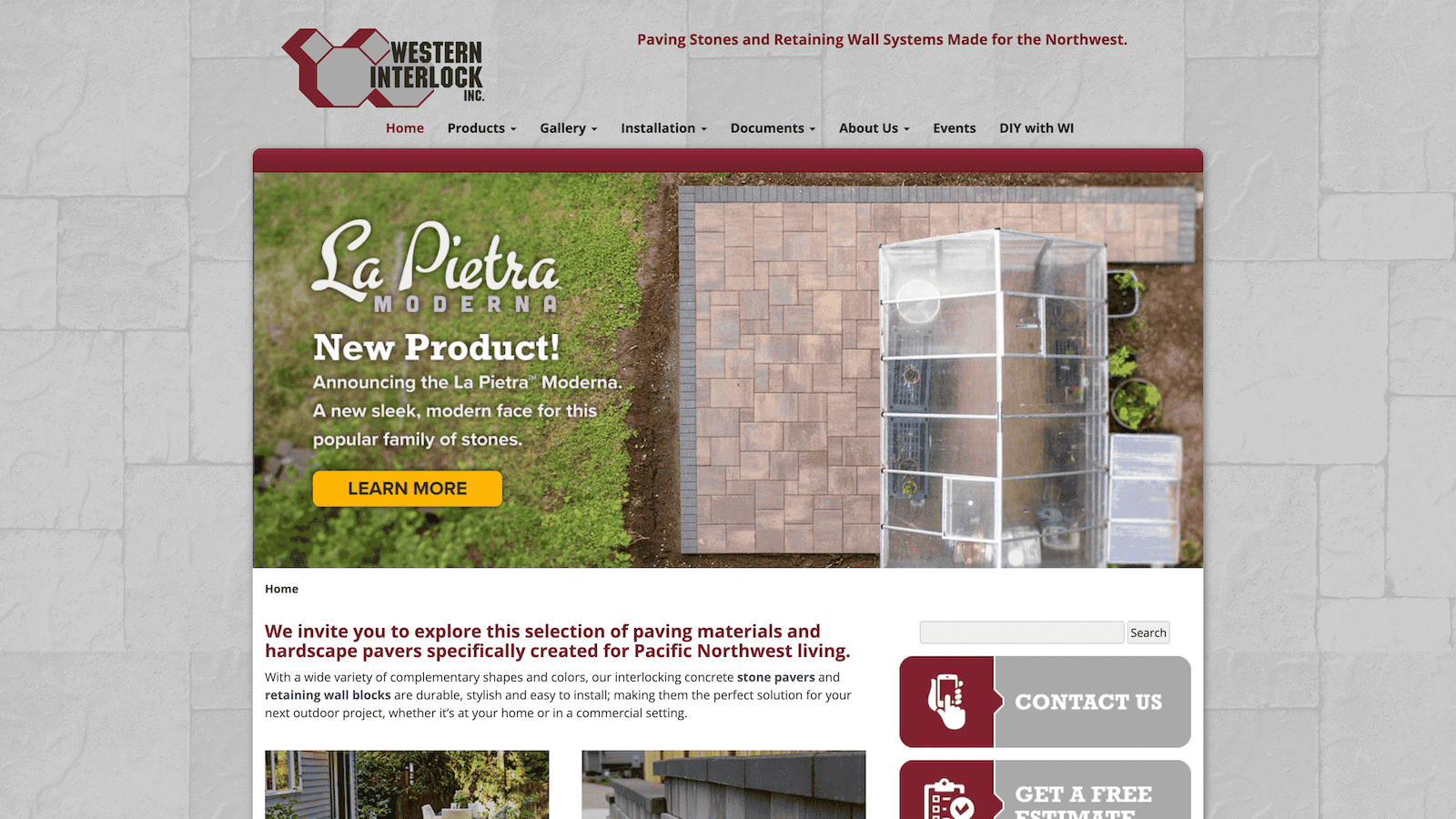
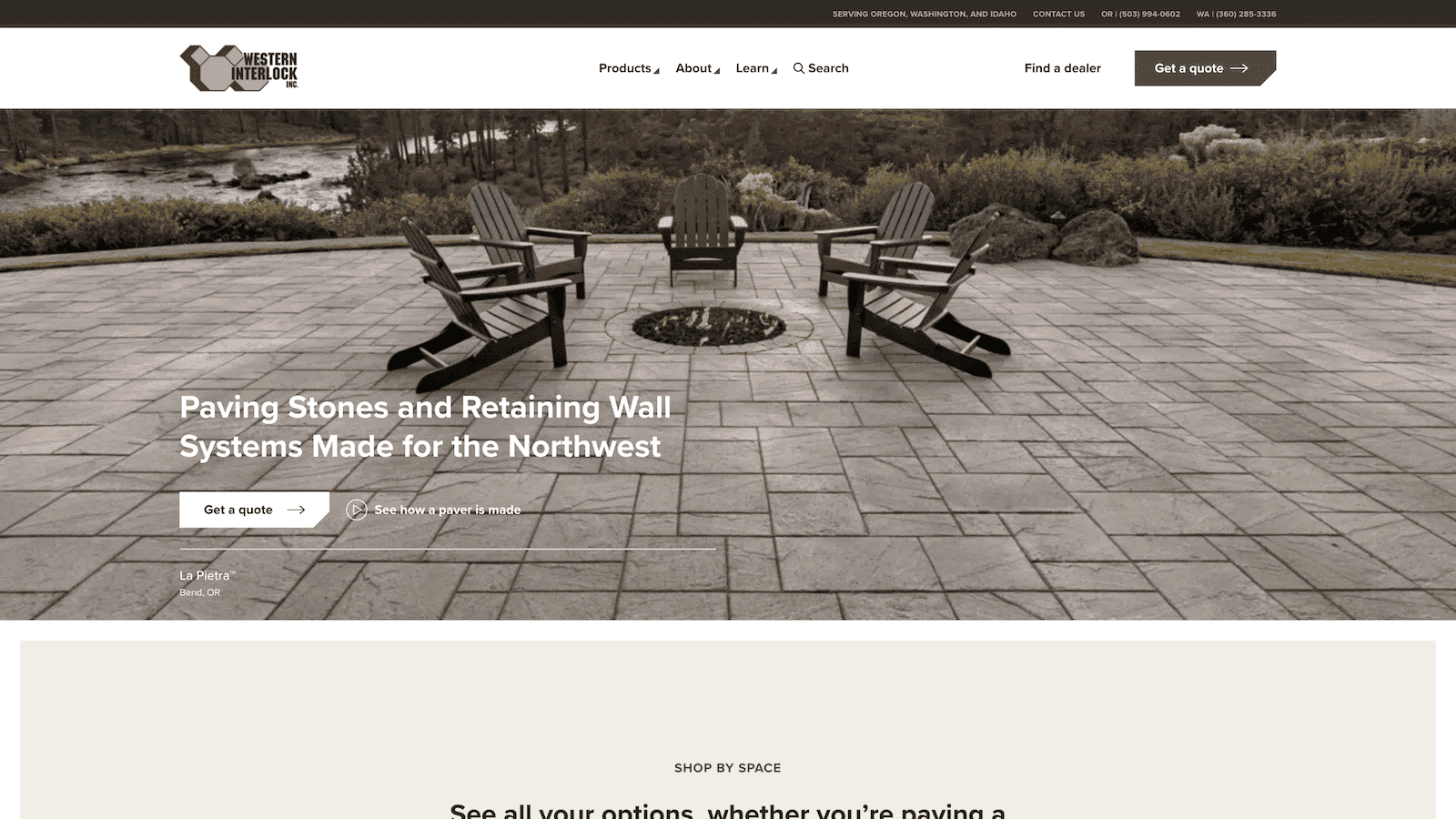
    1. Western Interlock

    The Western Interlock website needed a new look to align with its brand and accommodate high-traffic DIY blog content while ensuring easy navigation. 

    The solution involved a brand refresh and a streamlined information architecture for user-friendly navigation. 

    The outcome is a visually appealing and fast website optimized for mobile and engagement. Shortly after launch, estimate requests and traffic more than doubled, making it a successful transformation. Specifically, a 65% increase in users and a 2.9% decreased bounce rate.

    western interlock — Before
    western interlock manufacturing website
    western interlock — After

    They are the only vendor that I’ve ever met that gets down and dirty to make sure work gets done well and on time.

    NATHAN, DIRECTOR OF MARKETING

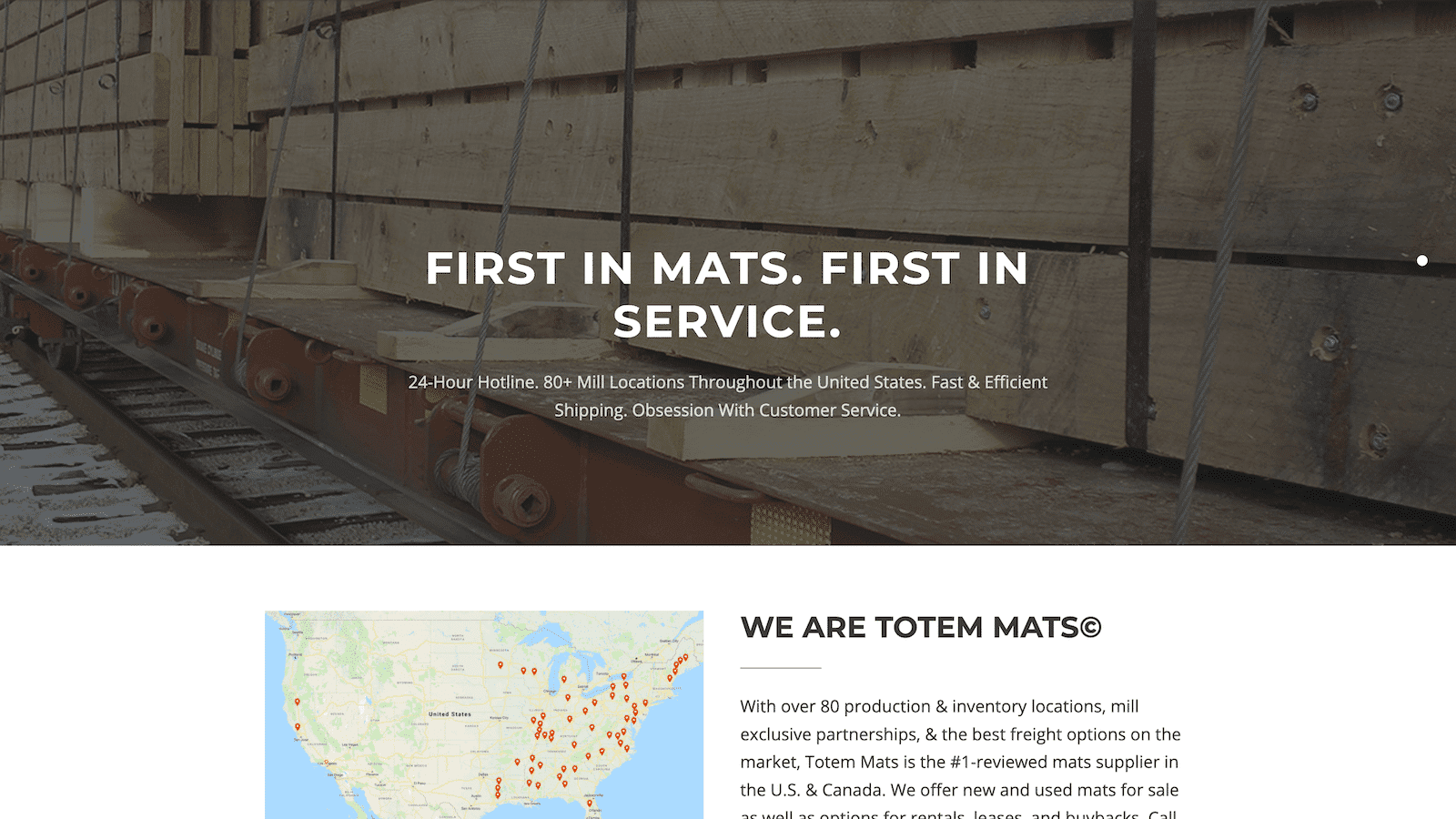
    2. Totem Mats

    Totem Mats faced the challenge of an outdated and underperforming website that needed redesigning and additional features without losing organic search traction. They also required lead integration with Salesforce. 

    The solution involved a complete website overhaul, including visual enhancements, product page restructuring, and performance optimization. 

    The result was a seamless website launch with no traffic losses, a 69% increase in SEO traffic, improved lead generation, streamlined business processes, and increased confidence in the website’s appearance and functionality.

    Totem Mats — before
    totem mats — after

    Their continued efforts on everything we threw and their abilities to overcome challenging problems were incredible.

    Trevor Sarazin, CEO

    3. Shasta Power

    Shasta Power faced the challenge of needing a professional website but encountering design firms that didn’t consider their unique business needs. 

    The solution involved a comprehensive website process, starting with understanding goals, then a brand refresh, and creating a custom, responsive WordPress website with integrated business systems. 

    The results were impressive, with a significant increase in awareness metrics, including a 600% rise in new followers and a 200% increase in site visitors. Despite a tight timeline, the brand’s quality was maintained, showcasing the project’s success.

    Shasta Power — before
    Shasta Power — after

    I get a sense of honesty and quality from them; they take their work seriously.

    MAX, co-FOUNDER

    Pro tools and resources for developing a website launch plan

    Developing a comprehensive website launch plan requires access to various tools and resources. Here are some valuable tools and resources we use regularly and will assist you in creating a successful website launch plan.

    1. Free website planning guide PDF

    If you haven’t yet, download our free Website Design Planner to streamline your web design planning process and ensure a clear roadmap for your project.

    Most website planners are just dressed-up spreadsheets that are boring and analytical. The Structure Website Planner is fun and helps you organize your goals and tasks to ensure you create your desired website.

    2. Virtual website workshop

    Register for your team’s private on-site (or virtual) website strategy workshop.

    In our fun and productive workshop with Structure, you’ll get coaching, feedback, and plans from website experts so you know you’re doing it right.

    3. Slickplan website planning tool

    If you’re semi-technical and detailed regarding digital strategy, Slickplan offers a low-cost digital website planning tool that covers much of the in-the-weeds planning.

    It’s a great tool to complement the Structure Website Planning Guide PDF if you’re doing it yourself.

    4. Structure web design, development, and management services

    If you’re not looking to do any work yourself but are just looking to hand the website project off to a team of experts, that’s okay!

    Structure can manage and complete the entire website launch planning and implementation process from start to finish.

    We’ve streamlined the sub-standard web design experience you get from most local agencies, so you’re in safe hands.

    5. WordPress & WP Engine

    If you’re looking for a fail-proof CMS + Host combo, go no further than WordPress and WP Engine.

    They’re industry-leading platforms that are the ones to beat. Being the most familiar platform + managed hosting, you will make your work easier regarding website launch plan implementation. 

    Common questions about how to launch a new website

    How do you announce a new website launch?

    When launching a new website, think of it like a food product label update in the grocery store.

    Customers care if it still meets their needs, not just the look. So, introduce your website as an improvement for them, not just a design change. And just like the food label, skip shouting it on external channels; instead, focus on welcoming users with a video or announcement bar on your site.

    What are the steps to launch a website?

    The steps to launching a website, from beginning to end, are:

    1. Define your goals
    2. Design your pages
    3. Develop your CMS
    4. Manage your website
    5. Grow your business

    For more detailed information, scroll back to the 5 Stages of a Successful Website Launch Plan section.

    How do I launch and promote my website?

    If you’re launching a new or redesigned website and need to promote it, here are the three next steps:

    1. Write blog articles about your product or service
    2. Run Paid Search ads to help people find you right away
    3. Create a free offer to generate leads and provide value to your customers

    What is the best day of the week to launch a website?

    Your buyer’s needs in this area are unpredictable. However, website launch timing matters for your business.

    For that reason, Tuesday is ideal.

    Mondays are for final preparations, and launching after Thursday risks a weekend workload. Tuesday offers a buffer with Wednesday and sets you up for a smooth week ahead.

    How long should it take to launch a website?

    3-6 months, on average. Most simple websites launch within three months, and websites with a standard level of complexity launch within six months.

    However, as you know, websites are complex. Therefore, there’s no definitive way to pinpoint a boilerplate website launch timeline. At Structure, we’ve launched websites in as little as 30 days and as long as two years. It all depends on the complexity, team, goals, and budget.