
This article is all about product recommendation quiz ideas. If you’re an ecommerce shop owner, marketing director, or sales manager looking to create a better buying experience for your customers on your website—and automate business processes simultaneously—you’re in the right place.
I ask for help almost every time I shop at a hardware store, and I’m sure I’m not alone! If you’ve ever shopped at one, whether your local hardware store, Home Depot, or Lowe’s, you’ll notice they staff their stores heavily because customers always have questions.
It is an extensive process of determining which supplies you need, selecting the right ones to solve your problem, and simultaneously feeling confident about it. By providing an available shopping assistant to their customers, hardware stores help them find the right product faster, which means they also buy more quickly.
Online shoppers need guidance in finding what they want, just like brick-and-mortar shops. That is why we’ll talk about using a product recommendation quiz to help customers buy on your website, how they work, what they cost, and if it’s right for you.
Structure’s mission is to deliver the most relational website design and web development experience available and improve our client’s business by helping them get better results from their website. One of the ways we do this is by providing free ideas to potential clients like you.
Contents
- Why You Need a Product Recommendation Quiz
- What Is a Product Recommendation Quiz?
- How to Make a Product Recommendation Quiz
- 6 Product Recommendation Quiz Ideas
- Benefits of a Product Recommendation Quiz
- Common Questions About Product Recommendation Quizzes
Get a FREE Customized Digital Growth Plan
Take our 10-minute Digital Maturity Assessment and receive a FREE, personalized digital growth score that uncovers gaps and drives your business forward.
Why You Need a Product Recommendation Quiz
Most websites have problems. They’re not engaging, helpful, or social. A product recommendation quiz can help you with all of those things. Here are a few reasons why.
If your website is overwhelming
Have you ever been to a website that bombarded you with tons of information immediately? There was so much there that you didn’t know what was necessary or what to look at next. It was just so overwhelming you had to leave.
This happens more often than we’d like to admit. Studies show that our attention span has decreased significantly over the years due to the overwhelming amount of information we’re constantly bombarded with.
To avoid this, many website owners are now incorporating product recommendation quizzes into their sites. A quiz allows you to segment your audience and only give them the information that’s relevant to them. Not to mention, it’s a fun way to engage your readers and keep them on your site longer.
If your website is challenging to navigate
If information is hard to find and customers can’t get where they need to go. Websites are many things: transactional, informational, and transformation, but more than anything, a website is an experience.
If that experience is bad, people will leave and not come back. 88% of online shoppers say they wouldn’t return to a website after having a poor user experience.
Part of providing a good user experience is ensuring your website is easy to navigate. A product recommendation quiz can help by giving users a specific path.
With a quiz, you can guide users through your website and lead them to the right products. By doing this, you’ll not only improve the user experience on your website, but you’ll also increase sales.
If your website is about your company, not your customer
Many companies think their customers are coming to their websites to learn who they are. Wrong! They’re looking for a solution, answer, or product for their problem. Your website should be focused on the customer and their needs, not on you and your company.
Your customers don’t care about how long you’ve been in business or how big your team is. They want to know what you can do for them and how to solve their problem.
A product recommendation quiz is a great way to do this because it’s focused on the customer and their needs. By asking questions about their situation, you can better understand what they’re looking for and recommend products to help them.
Including a quiz on your website is a great way to show your customers that you care about their needs and are there to help them find the right product.
If your website is too salesy
Your website should be about more than just making a sale. If that’s all you’re focused on, your customers will be able to tell, and they won’t stay long. 61% of online shoppers say they would leave a website if it were too salesy.
A product recommendation quiz can help because it allows you to build trust with your audience. By taking the time to understand their needs and recommend the right products, you’ll show your customers that you’re not just there to make a sale. You’re there to help them find the right product for their situation.
Including a quiz on your website is a great way to build trust with your audience and increase sales.
What Is a Product Recommendation Quiz?
A product recommendation quiz is an automated quiz that helps customers find the right products for their needs. It’s a great way to engage your audience, generate leads, and boost social media engagement.
Quizzes, in general, are a great way to engage your readers and help them find the right products for their needs. They’re also a great way to generate leads, as people are often more likely to share their quiz results than email addresses.
A product recommendation quiz also does the selling for you. It’s like having a personal shopper at your store, guiding customers from start to cart and helping them find the products that best match their needs. It also helps recover abandoned carts, capture leads, and grow your audience.
How Product Recommendation Quizzes Work
Product recommendation quizzes work by asking your readers a series of questions about their needs and preferences. Based on their answers, the quiz recommends an ideal product for them.
For example, you sell skincare products and want to create a product recommendation quiz for your website.
Your quiz might ask questions like:
- What type of skin do you have? (Oily, dry, combination, etc.)
- What are your main skin concerns? (Acne, wrinkles, uneven texture, etc.)
- What is your budget for skincare products?
Based on the answers to these questions, the quiz would recommend a specific product or set that would be perfect for the reader.
How Product Recommendation Quizzes Can Be Used
You can use a product recommendation quiz to benefit your business in many ways. Here are some of the most popular.
A product recommendation quiz can be used to generate leads
You can use a product recommendation quiz to generate leads for your business. You can encourage people to sign up for your newsletter or buy your products by offering valuable recommendations.
A product recommendation quiz can create valuable content
Your quiz questions can provide valuable content for your website or blog. This content can help educate your readers and position you as an expert.
A product recommendation quiz can improve SEO
By including relevant keywords in your quiz questions and answers, you can improve your site’s ranking in search engines and reach more potential customers.
A product recommendation quiz can educate your customers
Your quiz can help educate your audience about your products or services. You can turn valuable information into a powerful marketing tool by including valuable data in your quiz.
How to Make a Product Recommendation Quiz
If you’ve read this far, you’re probably looking to create a product recommendation quiz for your website. At Structure, we’ve made many quizzes for our clients. If you’d like to talk to us about yours, schedule a Free 30-minute Consult Call with our experts. We’d love to help! Here are the steps to take.
1. Define your goals & metrics
First, you need to define what success looks like. What are you trying to achieve with your quiz, and how do you know it’s successful?
Common goals include the use cases we discussed: lead generation, content development, education, and more.
In the website planning process that we take all of our design clients through, especially those who want a product quiz, we use a Goals Worksheet (free download) that helps define and document the goals you’re trying to achieve with your website and exactly how you’ll know if you’re meeting those goals. It’s a beneficial process!
2. Map your customer journey
Next, you’ll need to map your ideal customer journey. This can be done using our Customer Journey Worksheet (free download) or jotted down as bullet points in a document.
The reason it’s important to map it out is that you need to know where customers are coming from and where they’ll go after your quiz. In short, this map identifies your customer’s start and endpoints. Now, all you need to do is fill in the gaps.
3. Document your questions & answers
Filling in the gaps includes figuring out what questions to ask your customers and anticipating their top answers. This is where a lot of people get stuck.
If you’re unsure what questions to ask or what answers to expect, consider surveying your target audience or talking to customer service. They likely have a good pulse on what customers are looking for and why they’re contacting you in the first place.
Once you have a good handle on the questions and answers, document them in a Google Sheet or Excel document. You’ll need this when it comes time to create your quiz!
4. Map your customer’s answers to your products
The best way to map your customer’s answers to your products (unless you can keep it all in your head) is to create a flow chart with every variation. Depending on your questions, you can do this on a single page. If you have more questions, you might need multiple pages.
Your flow chart maps out all the possible scenarios for your quiz and what product(s) should be recommended for each answer. Doing so will clearly show the steps in the process so you can hand it to a web designer to create.
5. Design & build the quiz
While the planning and strategy took most of the time and work, it’s worth it because you’ll make the next steps a breeze. Once mapped, you’ll want to hand it to a website designer to lay the quiz with your brand, goals, and user experience in mind.
Our Startup Website Design Package could be used for a product recommendation quiz if you want to create a custom quiz. If you’re looking for a more DIY solution, here are a few to check out:
It’s noteworthy that Structure does not use software tools or quiz builders. We build custom product recommendation quizzes using GravityForms and integrate the results directly with your CRM, ERP, ESP, and other business systems.
6. Measure & optimize
Once your quiz is live, you’ll want to measure the results based on the goals and metrics you defined in Step 1: Define Your Goals & Metrics.
You might also consider A/B testing different questions or quiz designs to see what works best for your audience. And don’t forget; you can always go back and tweak your quiz as you learn more about your customers and their needs! Likely, your quiz will always need to be updated as you add, remove, or refine your offer.
6 Product Recommendation Quiz Ideas
Maybe you’re unsure which quiz type is right for you or your customers. Or perhaps you know what you want to sell with your quiz, but you’re just not sure the best way to do it. Here are six examples of different types of quizzes to consider.
1. Drop Down Product Recommendation Quiz
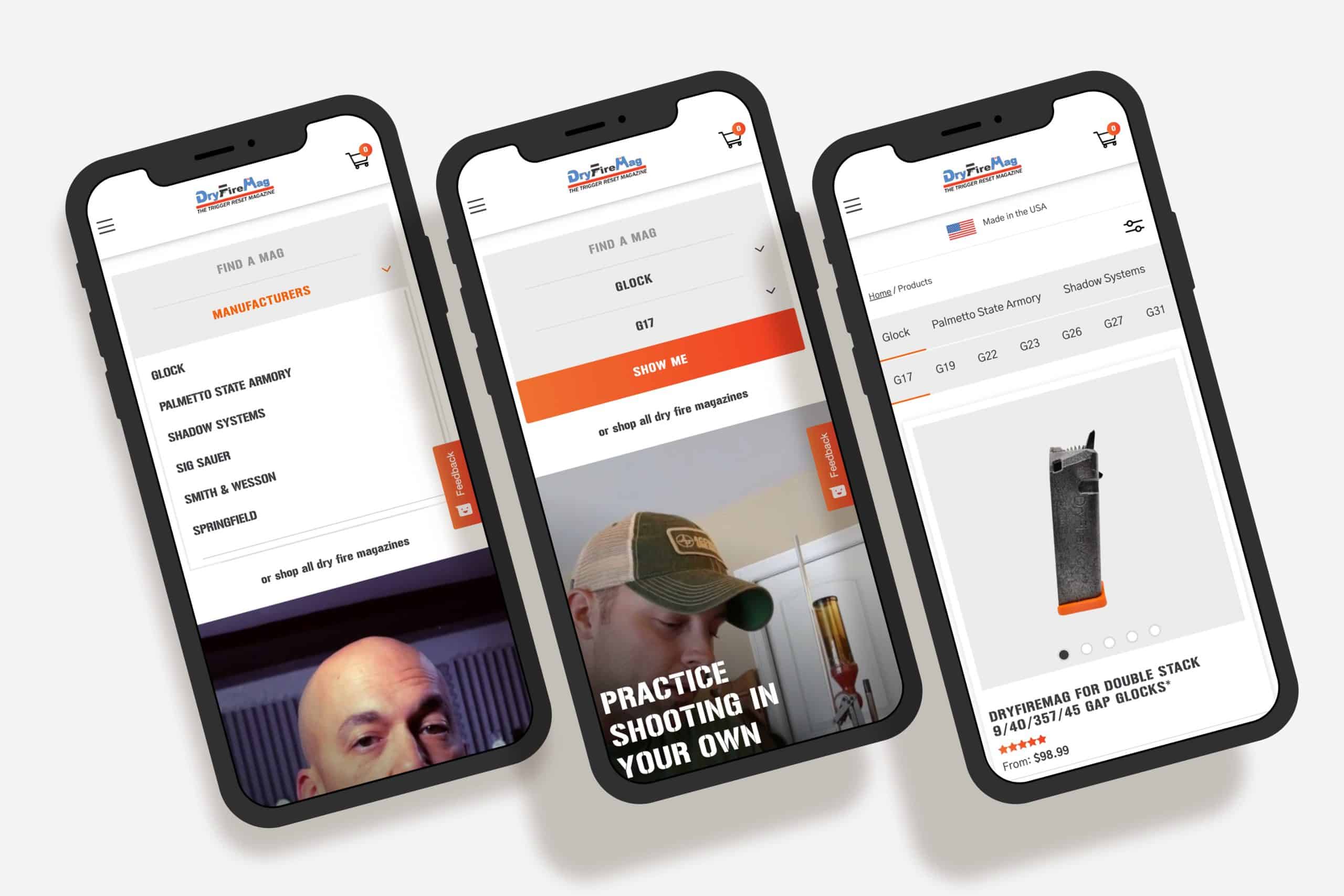
The first quiz type is the Drop Down quiz. Structure designed this quiz type for one of our clients, DryFireMag, and called it the Mag Finder.
How it works is that once you click the button, a menu drops, allowing you to select your options. DryFireMag sells dry fire magazines for shooting practice. Their quiz is quite simple: it asks two questions.
- What manufacturer are you looking to buy from?
- Which model of their product are you looking to buy?
Once you’ve made your selections, you click “show me,” and the website automatically redirects you to the shop page with any product options that match your answers.
Structure built the Mag Finder as a custom plugin using WordPress Custom Post Types.
2. Multiple Choice Product Recommendation Quiz
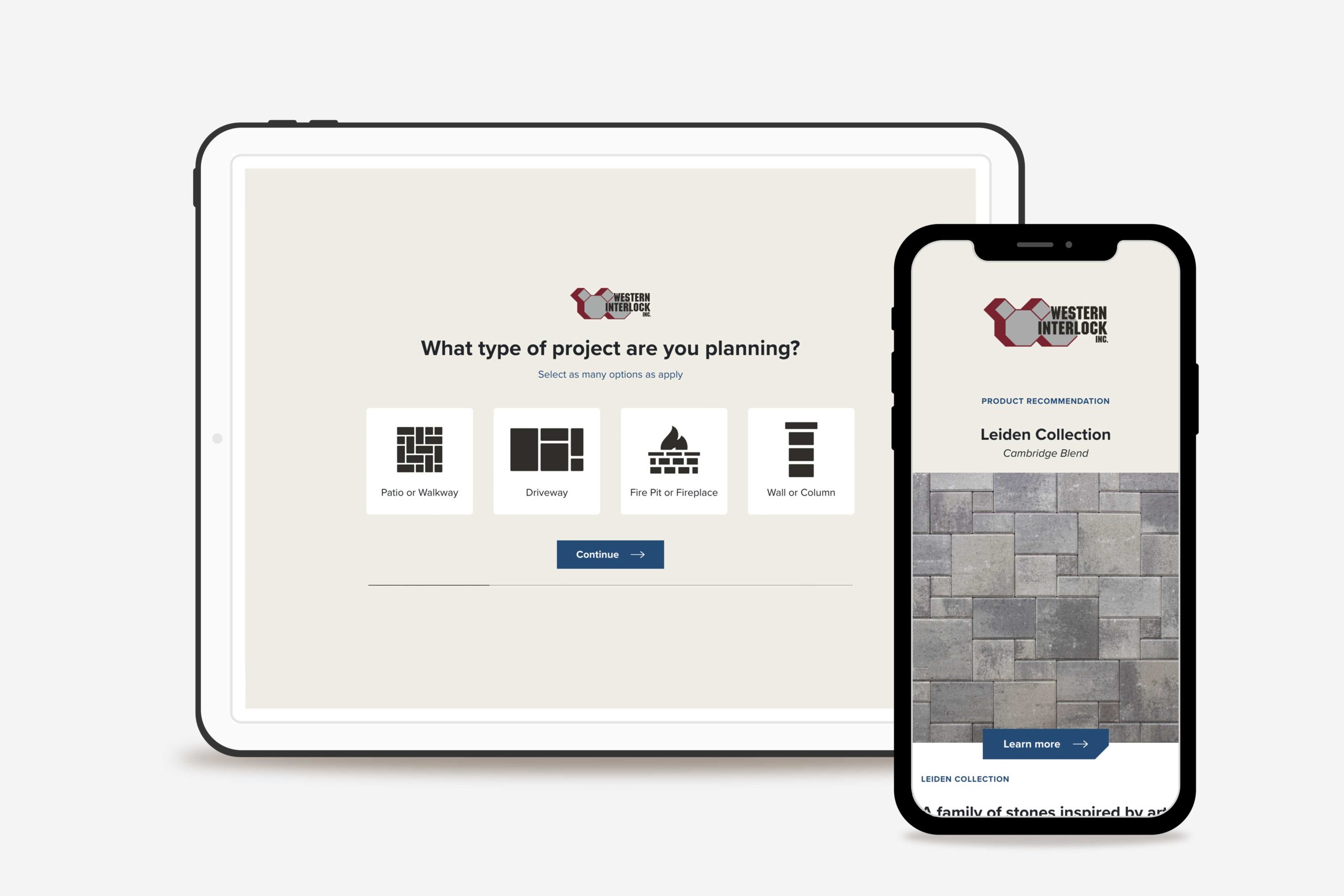
Structure designed and built a multiple-choice product quiz for Western Interlock; we called it the Paver Finder. This quiz does not capture customer information but is strictly a shopping assistant.
This quiz is one of the most straightforward user experience quizzes. The questionnaire walks you through a handful of questions (ideally 5–7), and you select the option that applies most to you. In the end, you’ll “submit” your selections, and the algorithm in the background reads your selections and provides you with an accurate product recommendation.
At that point, you could learn more about the product by clicking the Learn more button, scrolling down for additional information, or re-take the quiz if the result didn’t match your liking.
Structure built the Paver Finder product quiz algorithm using WordPress and Airtable.
3. Long-Form Product Recommendation Quiz
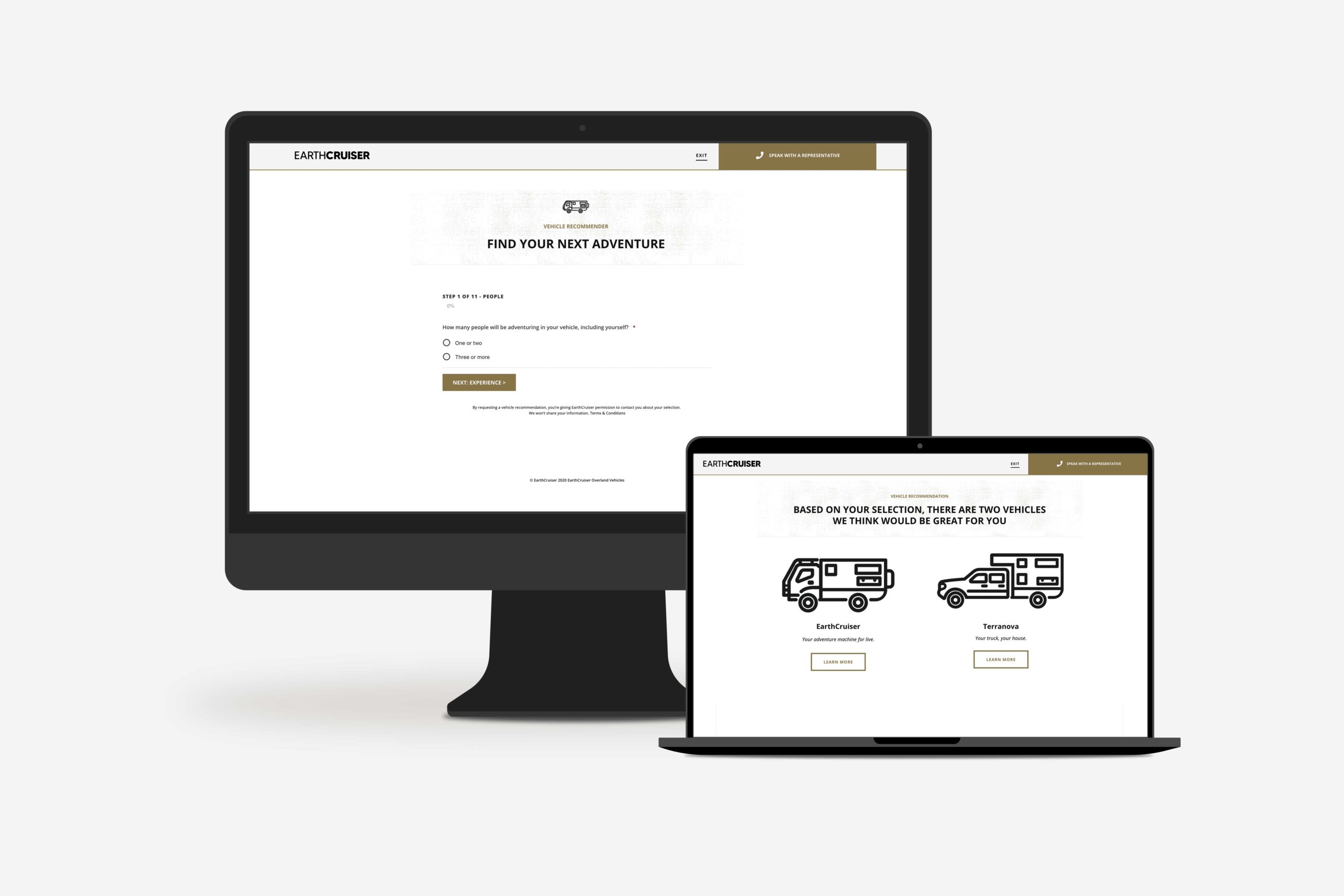
The EarthCruiser Vehicle Recommender is a long-form quiz with 11 multiple-choice questions intended to generate leads and equip the sales team with as much information about the customer as possible.
The questions range from “How many people will be adventuring in your vehicle?” and “How far do you intend to travel in your adventure vehicle?” to “How mechanical are you?” Ultimately, depending on a few conditional selections, the quiz presents a vehicle recommendation to the customer. They can then learn more about the vehicle or call a sales representative.
4. Up-Sell Product Recommendation Quiz
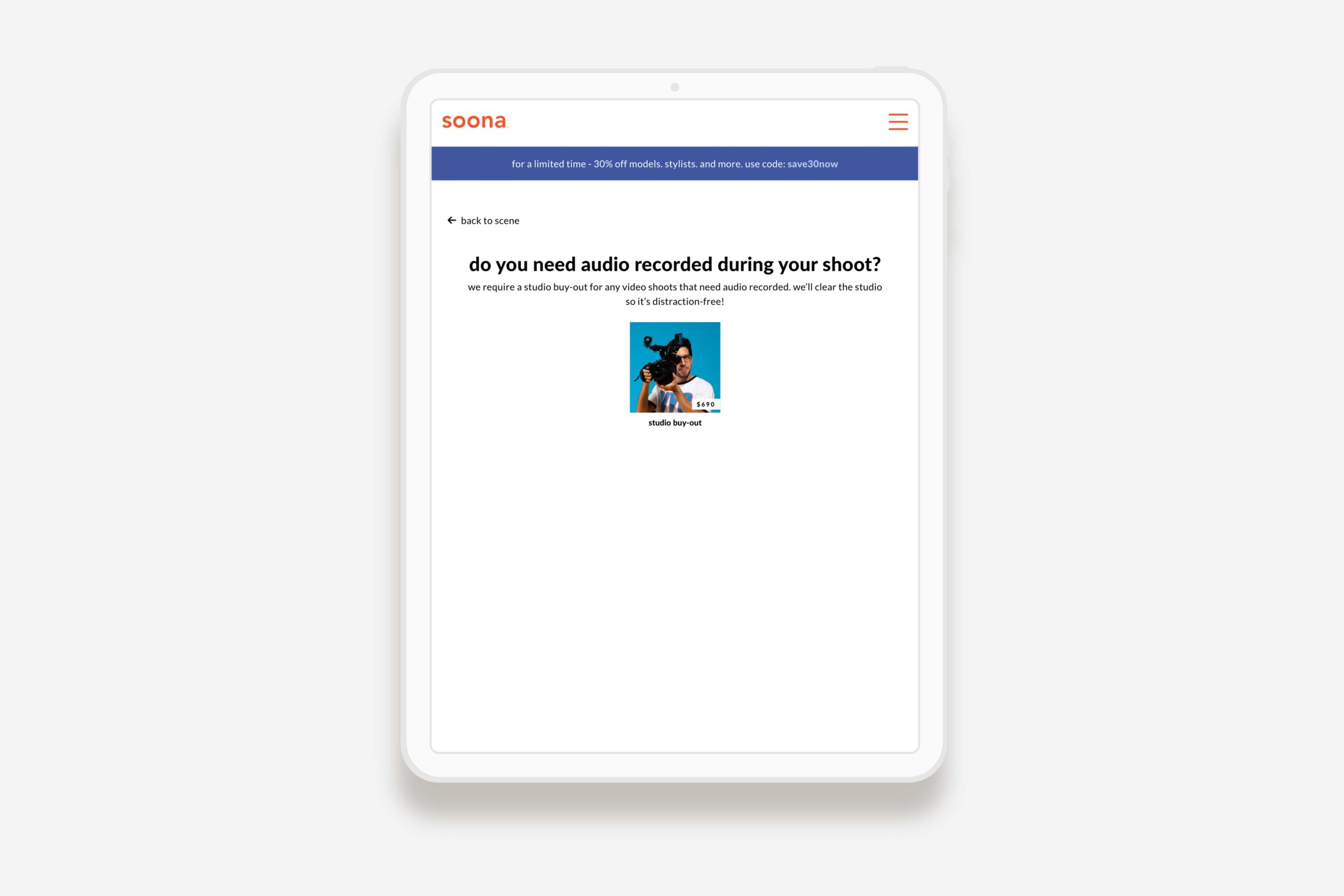
Soona, an online photo studio, uses its Build a Shoot quiz to present upsell opportunities that increase order value. In the example above, as soon as you select “video”, they present the opportunity to buy out the studio for an extra $690 so you can have audio.
Otherwise, the quiz is much like the Multiple Choice Product Quiz where users are given visual options to select.
5. Interactive Product Recommendation Quiz
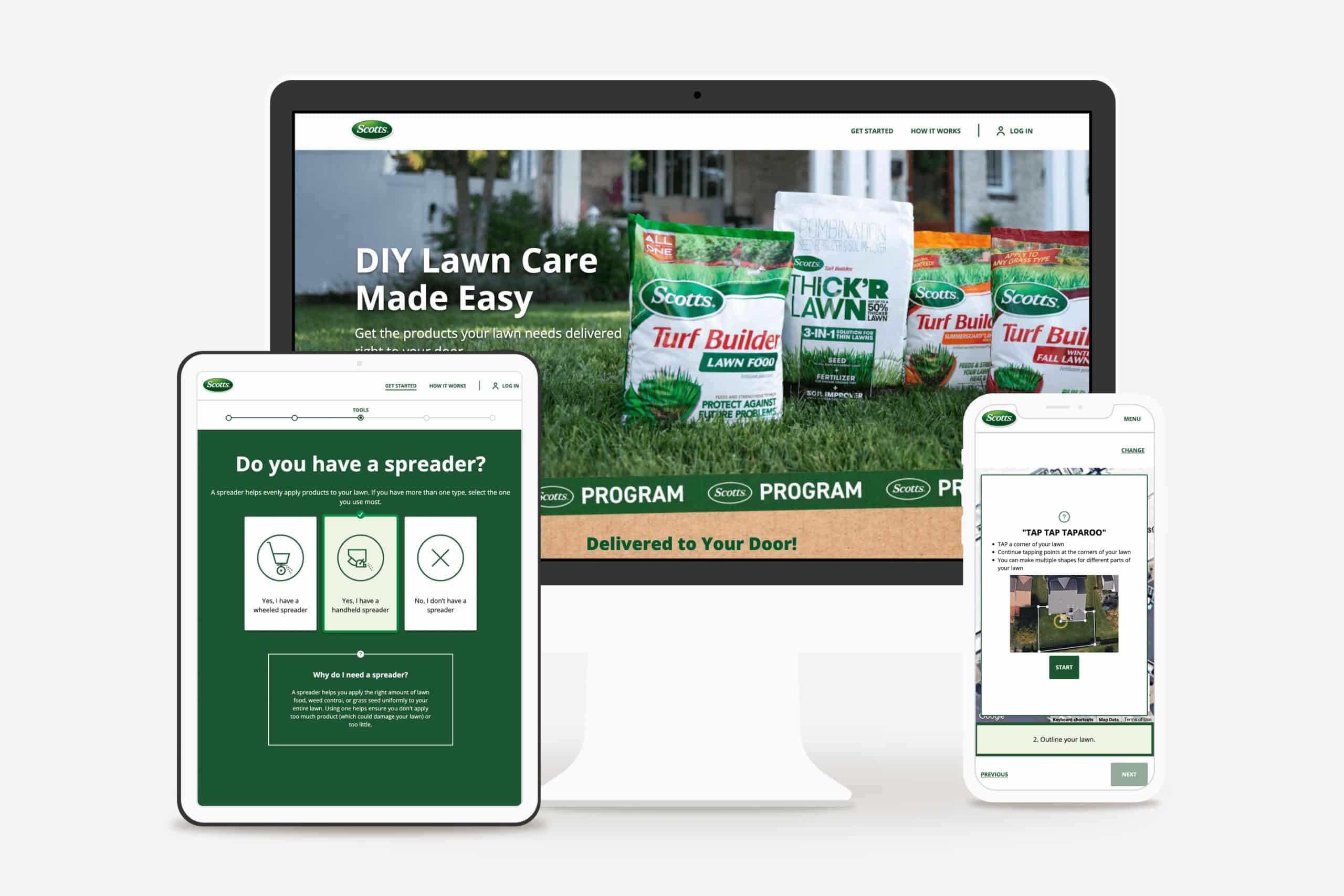
If you want to take your quiz to the next level, be inspired by the Scotts Lawn Care Quiz. They made their quiz beautiful, simple, and intuitive for their customers—and accomplished multiple business goals.
In the Tools step, they ask customers, Do you have a spreader?” Additionally, they take the opportunity to educate their customers about why they need a spreader, so they order one later from Scotts if they don’t have one. That’s increasing education and cart value in one step!
Additionally, they ask for your lawn size in the last step. If you don’t know the square footage off the top of your head (who does?), you can enter your address and tap (or click) to select the boundaries of your yard on a virtual map. Their quiz app automatically calculates the approximate yard size you selected and recommends the appropriate amount of product to purchase.
6. Instant Quote Quiz
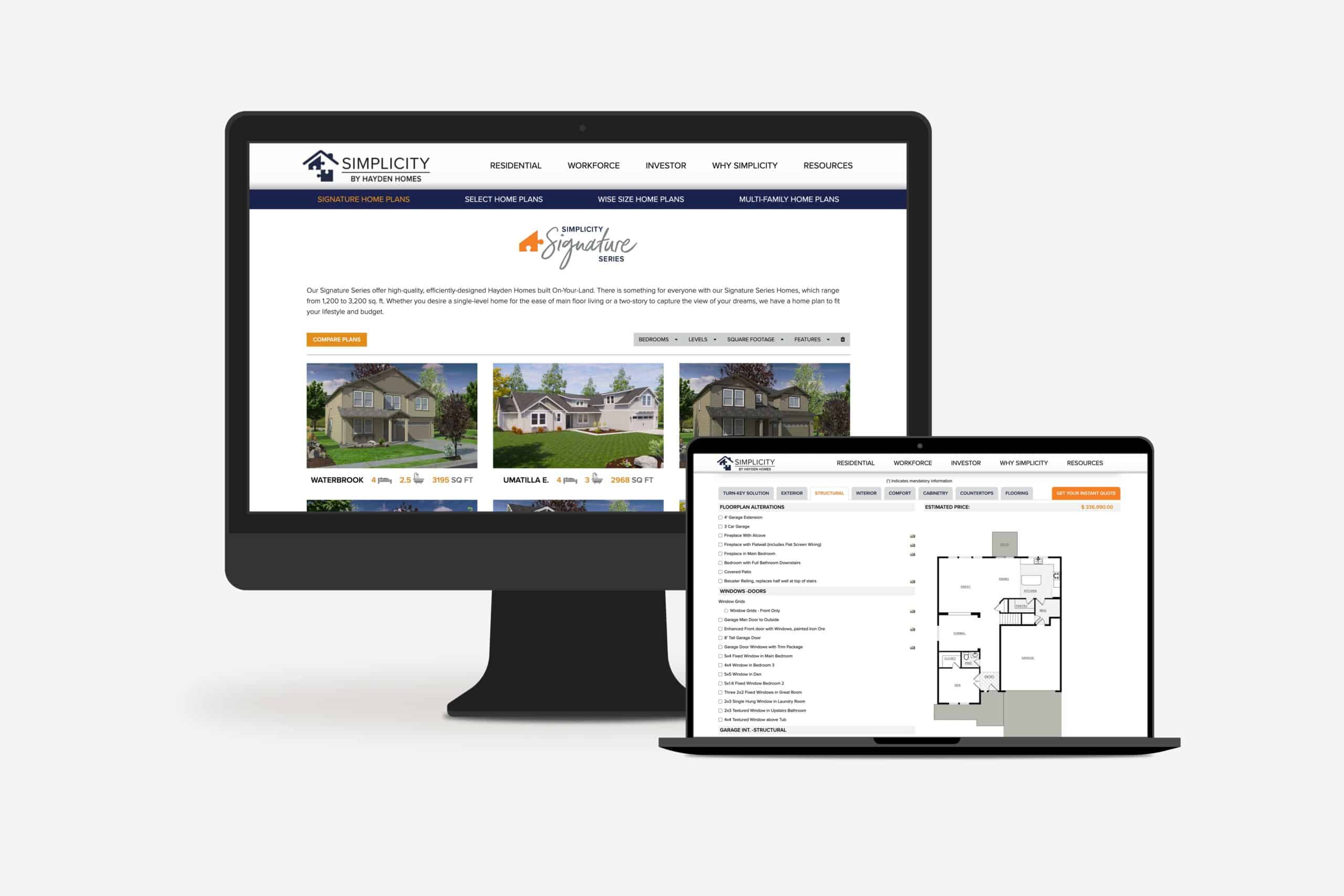
All the services businesses who want to implement a quiz for their business have been waiting for this example: the Instant Quote quiz! The Simplicity Homes Instant Quote does a fantastic job.
It is a comprehensive quiz with eight tabs and 10–30 checkbox selection options per tab. Many selections have images you can view by hovering over the camera icon. This is especially useful if you’re unsure what their “Fireplace with Alcove” looks like or what “Soffits” are.
Each tab shows a live-updated blueprint of the home and a running total of the total cost based on your selections. Ultimately, customers can submit their instant quote and attend a running sales meeting. That’s a salesperson’s dream.
Benefits of a Product Recommendation Quiz
Quizzes can fix a lot of website problems. Whether your website is complex and challenging to navigate or has a low conversion rate, a product quiz could help. Here are a handful of benefits of using one for your website.
A product recommendation quiz can simplify a complex offering
Make it easier for customers to find what they’re looking for. By understanding a customer’s specific needs, you can recommend right products for them and increase conversions.
A product recommendation quiz can help customers find what they’re looking for
A quiz can help customers narrow their options and find the perfect product for their needs if you have an extensive catalog of products. It does this by asking customers questions about their situation and recommending products based on their answers.
A product recommendation quiz can increase order value
By recommending products that complement each other, you can encourage customers to purchase multiple items and increase your average order value. It does this by recommending products that work well together.
A product recommendation quiz can generate leads
People used to generate leads via their newsletters. Most people don’t want to sign up for a newsletter anymore. Today, PDFs and Webinars are great ways to generate leads for your business.
The best way today is through a product recommendation quiz.
A product recommendation quiz can automate part of your sales process
Often, your sales process includes a series of questions to qualify your customers and identify which product or service would be the right fit for them. A product recommendation quiz does the same thing. By implementing an automated quiz, you automate the qualification process—and by the time your sales team gets involved, they know the customer is qualified and which product fits their needs.
As you can imagine, automating your sales process using a quiz helps your customers and helps you! You can save insane amounts of time and money because you’re not hiring or employing someone to do that job.
Common Questions About Product Recommendation Quizzes
Does a product recommendation quiz work in any industry?
A quiz can be very helpful if you offer products or services that require consideration before purchasing. For industries like home improvement, beauty, fashion, and more, a quiz can help customers find the perfect product for their needs.
Do I need to have a lot of products to benefit from a quiz?
Not necessarily! A quiz can help users narrow their options by offering customizable products or services. For example, a quiz could help customers choose the right style, material, and color for their space if you sell custom furniture.
How do I know what questions to ask?
A good start is surveying your target audience or talking to customer service. They likely have a good pulse on what customers are looking for and why they’re contacting you in the first place.
How often should I update my quiz?
You should aim to update your quiz at least once per quarter or whenever you add new products or change your existing offerings. This will ensure that your
What are some common quiz types?
The options are almost endless. Depending on your industry and offerings, you can use many quizzes to recommend products.
We discussed a handful of use cases, benefits, and examples above. However, here are a few more examples for various business types:
- Product finder quiz: Helps users find the perfect product for their needs
- Style quiz: Recommends products based on an individual’s style preferences
- Beauty quiz: Recommends beauty products based on skin type, hair type, etc.
- Fitness quiz: Helps users find workout gear or supplements that fit their goals
- Home décor quiz: Assists users in finding furniture and home décor that fits their taste and budget
Can I use a product recommendation quiz on my Shopify store?
Yes! The RevenueHunt Product Recommendation Quiz for Shopify app makes adding a quiz to your store easy.
While that Shopify app will help you implement your quiz, take the first few steps and solidify your strategy before you start. It will make it much easier to build. If you want help from someone who has created many successful product quizzes, check out the Structure Website Design Packages.
How much does a product recommendation quiz cost?
The cost of a quiz will vary depending on your industry, the complexity of your products, and the features you want to include. Not to mention if you’re doing it yourself or hiring help. Generally speaking, a simple DIY quiz can start at around $500, while a custom quiz could cost $5,000 or more.
Want Help Making a Product Recommendation Quiz?
At Structure, we help our clients reach their marketing goals by designing and building profitable features for their websites, like product quizzes. If you’d like help with yours, explore our Website Design Packages or schedule a Consult Call with one of our experts.


