Blog

  • What Does a Custom WordPress Website Cost in 2025?

    What Does a Custom WordPress Website Cost in 2025?

    You need a new website, and you’re considering the cost of a custom WordPress website. Let’s talk about that a bit more.

    If you own a business, you know the drill: you look over your website and sweat because it is less than great. Not only that, but you can tell without a doubt that it is hard for customers to use—it’s even hard for you to use! What can you possibly do about it?

    Hiring a web designer or web design agency is a significant step and typically one that makes you gulp at the expense of the investment. However, if your website is a significant factor in bringing in leads and sales, it is something you don’t want to mess up and should consider investing in.

    Pricing your custom WordPress website shouldn’t be a mystery

    Cost is the most significant fear factor for most of us in investing in a custom WordPress website. It can sometimes be unclear what factors play into the website cost and if it is worth the investment—or if you should do it yourself.

    Two of the biggest mistakes people make when building a website are paying too much or not nearly enough—either overpaying or underpaying.

    Over the years, we’ve seen many great companies get taken in by a less-than-professional agency that promises the world but doesn’t deliver. Or sometimes, a company doesn’t want to spend much money, so they hire a freelancer or obscure web developer who stops replying to emails halfway through the process. The company is out of the amount of its deposit, and the site never gets launched.

    So, how do you avoid the two traps of either overpaying or underpaying? How much is the right amount? What’s the right price?

    What factors affect the cost of a custom WordPress website?

    Three main factors will affect the cost of your custom WordPress website.

    1. What are your specific needs?

    Every business and individual is different and will look for different things on their company’s website. Are you looking for an extensive website with pages of products and lots of team bios? That will factor into how much the final cost will be: more web pages means more design time, which means more cost.

    2. What platform do you want to use?

    Some platforms are more second nature to Structure than others. We work primarily with WordPress and WooCommerce.

    Some platforms cost more than others, so consider the cost differences as you plan your website.

    If you use a hosted solution like Shopify or Squarespace, you won’t pay an initial cost, but you will have monthly fees between $30 and $300/month. That fee includes upgrades and security updates, which you would need to pay someone else to do on a self-hosted solution.

    WordPress is open-source, so it is free to download and install. However, it would be best if you hosted it, which costs between $5 and $500/month.

    Magento has open-source and enterprise versions with a license fee of around $15k/year. You would need to host this platform, as well.

    3. What expert help is available for you?

    Make sure you research the best website designers in your field. There is a difference between a freelancer, an in-house web designer, and a web agency.

    They will incur small to high costs, respectively. Be aware of what you are looking for and who will do the most professional job for your needs.

    Additional factors that affect custom WordPress website cost

    These questions are all things to remember as you plan a conversation with your designer and what questions they will ask. All of these factors will affect the final price of a custom WordPress website.

    Is your website new or a redesign?

    A website redesign is like a house remodel—you have an existing website that’s outdated or doesn’t function properly. A new website is like a new house build—you’ve identified some land and want to build a house.

    When building a new house, you must establish the infrastructure (water, sewer, power, etc.) The same thing to a website; you need web hosting, a website domain, and possibly even a CDN. These are upfront costs that only need to be done once.

    With a website redesign, you’ll use the existing infrastructure to remodel, revamp, or rebrand the templates. In this case, you’ll save on some infrastructure costs.

    How many page templates do you need?

    Templates are the building blocks of standard web pages; sometimes, the same template will be used as the basis for a few different web pages. For example, on an ecommerce website, a product display page (PDP) is a standard template to communicate everything about the product being sold. This template is one design but can be used for multiple products.

    Other standard page templates are Home, About, Contact, and Blog. For an ecommerce website, you have additional page templates such as Cart, Checkout, and Order Confirmation. That’s one of the main reasons ecommerce websites are more expensive.

    The number of page templates you will need will vary according to your website and could affect the cost if many templates are required.

    How many pages does your website have?

    The number of pages needed for your website will depend on what information needs to be available to your customers. Extensive information on your website may require additional pages and could increase the total cost.

    Note that more pages don’t necessarily mean more page templates. However, since each page has unique content, you’ll need to consider the creation and population of that content on your website. Think copywriting, images, icons, illustrations, etc.

    Does your website have a blog?

    Blogs are beneficial for getting information to your potential clients or customers. Not to mention the foundation for SEO (Search Engine Optimization)! However, they will slightly increase the amount you should budget for the website project as you’ll need at least two templates for a standard blog: Category Archive and Post templates.

    The Category Archive template is the main blog feed to filter and see the most recent posts. The Post template is the actual blog post itself. You see it when you click on a blog post in the main blog feed.

    Advanced blogs or media sites will have additional page templates, such as Tag and Taxonomy templates. However, these aren’t common for most businesses.

    Do you already have media content?

    If you already have a supply of stock photos, sourcing or creating new images may not be something you need to factor into the cost. However, if you need your web designer to come up with illustrations, photographs, or video content, it will increase the overall price tag of your site.

    Does your website need e-commerce and payment processing?

    Using Stripe or other payment processors in conjunction with your site will bump up the detail that goes into the design and ultimately cost a bit more.

    Additionally, as mentioned above in the templates selection, an ecommerce site has additional page templates that will increase the cost.

    Will your website require any specialized features?

    Including unique features such as a quoting system, maps, payment processing, user accounts, integration with a CRM, etc., will inevitably increase the budget you should set aside to ensure your entire site can do exactly what you want to do.

    Ballpark custom WordPress website costs

    Small business website

    An informational or small business website with 8-16 pages will probably run between $10,000 and $15,000.

    Medium-to-large business website

    A large corporate website with 25-75 pages will be between $15,000 and $35,000.

    Ecommerce website

    An e-commerce website featuring 10 to 1000 products will cost $20,000 to $55,000.

    Complex website or application

    A database-driven website or application with 20-2000 pages will run between $25,000 and $75,000.

    As you can see, the size and complexity of the site are the primary factors in the final cost.

    Main costs of a custom WordPress website

    So, what elements of the web design process are the main factors in the cost?

    A website is not just composed of pretty pages. It takes intention to ensure that each piece of the website is crafted most effectively to get the business results you’re looking for. It’s an investment, and your custom WordPress website investment should have a direct return.

    Strategy

    A website needs to be carefully thought through. You must plan and define the pages you need and map out how they will work together for a smooth transition into a sale—or at the very least, an excellent impression.

    Content

    Your website logo, copywriting, images, video, illustrations, and more need to communicate to your potential customers how you will transform their lives.

    Design

    Your website blueprint is one of the critical parts of the process. Each page’s layout must be carefully created and its usability detailed.

    Development

    The bones of your website will need to be built so that your custom website will function and work in the way you and your customers or clients expect. This is called website development.

    Additional custom WordPress website costs to consider

    Hosting

    Web hosting is simply the service that allows you to post a unique website online. Server space for your custom WordPress website will be an additional cost. Expect $150–500 per year. And remember: you get what you pay for when it comes to hosting. We recommend WP Engine for all our client sites, which runs about $300/yr for fast, reliable hosting.

    SEO

    Search engine optimization is optimizing the content of your website, so it’s easy for search engines and customers to find. Doing okay takes research, planning, and implementation—and thus typically incurs extra fees.

    Data or content migration

    If you’re moving from one host to another (e.g., HostGator to WP Engine), or one platform to another (e.g., Squarespace to WordPress), part of the process will need to include moving data or content from your old site to your new website—and ensuring you don’t lose anything in the process. Depending on your website’s size and technical setup, this can be simple or complex.

    Integrations

    Your new website will possibly also need to be connected with other data sources, such as your CRM (Customer Relationship Management System) like Salesforce or Hubspot, ERP (Enterprise Resource Planner), and ESP (Email Service Provider) like MailChimp or ActiveCampaign.

    Internal costs of a custom WordPress website

    Strategy and planning

    Your web designer will need to have several conversations to capture your vision for the website design and run ideas or details past you.

    Content creation

    There will most certainly be photo and video creation necessary in your website design and copywriting. Sometimes, companies have these assets ready to use or want their in-house team to capture them. Either way, your web designer will have to review the material and decide what and how to use it on your custom website.

    Review and feedback

    Your website designer wants you to be happy with the result! This will include video calls, screen sharing, phone calls, and emails back and forth. We believe that the best work comes out of the best relationships. Therefore, clear, thorough communication is essential to a successful project.

    Opportunity costs of a custom WordPress website

    How many leads or sales would you generate in a year if your website worked?

    A website can create a significant increase in sales. You should be willing to spend a portion of that amount, as long as it is reasonable, to have a website that works and drives sales.

    If your website is old, broken, or confusing, it costs you money every day that it stays up. But it doesn’t have to! Your website could be your company’s best sales tool. It could produce leads and increase income at all hours of the day and night. However, when your website is sloppy and hard to understand and navigate, potential customers will tune you out and take their money elsewhere.

    Should you DIY or hire a freelancer or web design agency?

    So, what is the best way to build a website? Should you try to tackle it yourself? Hire a freelancer who does independent work. Or should we go with a more professional design agency? Each of these is an option with differing advantages, disadvantages, and prices. In most cases, businesses will partner with either a freelance web designer or a web design agency to create a professional website.

    DIY website cost

    A DIY site is the cheapest option upfront—but in the long run, it might cost you more than even what you would pay to hire a freelancer ($500–$5000 for a custom site) or a web design agency ($3,000–$100,000 for a custom site.).

    Freelancer website cost

    A freelancer is generally an experienced web designer who is not entirely as low-cost upfront as a DIY site but is not wholly as professional as a web design agency. A freelancer is excellent if you want a more budget-friendly option but lack the experience to build it yourself. Freelancers operate independently of larger agencies and may have more flexibility than established web design agencies.

    Web design agency custom WordPress website cost

    A web design agency will also have the necessary experience to create a website with a third-party builder. An agency is different from a freelancer, however, in that agencies have an entire team working on your site’s various components.

    The main reason to go with a freelancer or agency is the experience necessary when using a third-party website builder (such as Wix or Squarespace). Even though these website builders are made to be easy to learn and could help you create an attractive website, they don’t ensure that the result is user-friendly along with being good-looking. A user-friendly site is critical—if none of your site visitors understand where to learn more or purchase, they will close it as fast as they can, and you will lose the sale and the potential of a good impression.

    How to pay for a custom WordPress website

    The upfront cost of hiring an experienced designer to build a custom website can look daunting—and understandably so. You could take out a loan, of course, but that can be a lot of headaches and is not always necessary.

    Payment arrangements

    Arrangements can be made for you to make the payment process more feasible. Two or three payments are the most common method for a custom design. Some agencies are also open to dividing the cost of the website out over several months and having you pay a flat monthly fee.

    Pay upfront

    A final option could be to pay the total amount upfront and ask for a discount. Many agencies are glad to knock a bit off the price if they know they can receive the entire payment simultaneously.

    What does a custom WordPress website cost from Structure?

    Here at Structure, we aren’t the do-it-cheap or the do-it-yourself option; we are the do-it-right-option. We work hard to ensure that your final design reflects your business’ style and values.

    Base fees

    The standard fee per page template here at Structure is $1,500.

    Additional fees

    On top of the base fees, you can also expect the following:

    • $750+ per page for Copywriting
    • $1,500+ for Foundational SEO
    • $250+ per integration with CRM, ERP, ESP
    • $1,500+ for data migration or re-platforming

    Payment options

    We offer two main options for ways you can pay. One option is at milestones—you pay part of the amount when the strategy is complete, another part when the first draft is done, and so forth.

    You also could opt for the monthly flat fee option: we spread the work out over a certain amount of months, and you pay the same price every month until the website is complete.

    It’s time for a custom WordPress website that works

    Your website could be making money for your business. Watch our free website training 5 Reasons Your Website Doesn’t Create Sales, and you’ll know how to increase sales, create fans for your business, and stop losing to the competition.


  • How to Unlock Consistent Digital Growth with The Acceleration Loop™

    How to Unlock Consistent Digital Growth with The Acceleration Loop™

    Most companies unknowingly amplify digital chaos instead of digital growth. They chase tactics instead of building a system. Digital success isn’t about doing more—it’s about compounding the right efforts inside a repeatable framework.

    If you’re caught in a loop of trying disconnected tactics, chasing trends, and hoping for results, you’re not alone. You’re in the right place!

    In this training, Simon Villeneuve shares a proven digital growth system that installs a flywheel of predictable, sustainable digital success—in a fraction of the time most companies take to figure it out.

    If you’re tired of spinning your wheels, burning through budgets, and seeing inconsistent results, this training will show you a proven framework to build a system that delivers ROI, not just activity.

    Watch the Training

    View the Deck

    What This Digital Growth Training Covers

    • The biggest reasons digital growth efforts fail (and how to fix them).
    • Why busy doesn’t equal building—and how to move from scattered tactics to a scalable system.
    • How the Acceleration Loop works as a three-year digital growth system that compounds results over time.
    • Why most marketing teams unknowingly amplify chaos—and how to shift into aligned, high-ROI growth.
    • A real-world client case study showcasing an 847% traffic growth and 10x lead increase.

    Key Points & Takeaways

    • Alignment Creates Acceleration – Without a clear, connected strategy, every marketing effort is just random activity instead of compounding progress.
    • Busy Doesn’t Mean Growth – Leaders often mistake more tactics for progress, but without strategy and systems, they’re just amplifying chaos.
    • Digital Growth is NOT Just Ads – Ads can amplify results, but only if they’re built on a clear system that already works. Otherwise, they just burn money.
    • Sustainable Growth is a Process, Not a One-Time Fix – The Acceleration Loop works in cycles—each rotation builds more efficiency, momentum, and results over time.
    • The 10x ROI Formula – If your digital efforts don’t deliver a measurable return, they’re just expensive experiments.

    Action Steps for Leaders

    • Reflect on Your Digital Growth Challenges – Are you stuck in fragmented efforts? Are you seeing ROI from your activities?
    • Assess Your Digital Strategy – Do you have clear 1-year goals, a 3-year mission, and a 10-year vision driving your actions?
    • Stop Running Ads Without a System – Don’t amplify chaos. First, align and activate a strategy-backed digital growth system.
    • Invest in Long-Term Growth, Not Just Quick Fixes – True digital transformation takes time, but the right strategy delivers compounding returns.
    • Take the Next Step – Consider a Digital Strategy Workshop to get alignment, clarity, and an actionable roadmap to drive sustainable results.

    Frequently Asked Questions

    Q: Can’t we just run ads and get leads?

    A: Yes, but only if you already have a proven system in place. Running ads without a clear strategy just amplifies chaos.

    Q: How long until we see results?

    A: It depends on how fast you take action. Most leaders turn a 3-month process into 3 years by waiting too long to align and execute.

    Q: We’ve tried marketing before and it didn’t work. How is this different?

    A: Most marketing efforts fail because they’re one-off tactics without a connected strategy. The Acceleration Loop is a repeatable system that compounds results over time.

    Q: Can we skip strategy and just start?

    A: You can, but you’ll likely repeat the same mistakes. Skipping alignment just amplifies the problem—not the solution.

    Q: What budget do we need for digital growth?

    A: For significant, scalable growth, businesses should expect to invest $250K–$500K per year. However, you can start small with a $15K Digital Strategy Workshop and scale from there.

    Expert Digital Growth Insights from Simon

    Most leaders unknowingly sabotage their own digital growth. They think more tactics equal better results. But without alignment, they’re just amplifying chaos.

    Think in decades, not days. Stop chasing the next shiny marketing trend and start building a system that scales. When you do that, digital growth stops being a guessing game—and starts delivering real, sustainable ROI.

    Digital success isn’t about doing more—it’s about compounding the right efforts inside a repeatable framework.

    Digital Growth Training Transcript

    Hey, thanks for joining me today!

    We’re going to talk about a powerful concept called the Acceleration Loop—a three-year digital growth system that you can run on repeat. Most companies take 10 years to figure this out, but today, I’m going to show you how to implement it faster.

    Here’s the issue:

    • Most marketing and operations leaders turn what should be a three-month process into a three-year struggle.
    • Instead of strategically aligning efforts, they chase tactics, experiment randomly, and waste time and money.
    • If you’ve ever felt stuck, frustrated, or unsure of what’s working, this training will help you break free from that cycle.

    Let’s talk about how to fix that—how to get from chaos to clarity, from stuck to scaling, and from random activity to predictable, repeatable growth.

    What You’ll Learn Today

    • The biggest reasons digital growth efforts fail.
    • How most companies amplify chaos instead of growth.
    • Why marketing is NOT about more tactics—it’s about alignment and systems.
    • The Acceleration Loop—a system that compounds growth over time.
    • A real-world case study of a company that 10x’d its leads.
    • Clear next steps you can take to build a sustainable digital growth system.

    Why Digital Growth Efforts Fail

    The biggest digital growth challenges companies face today:

    1. Scattered, disconnected marketing efforts

    • Too many tactics without strategy.
    • Marketing, sales, and operations aren’t aligned.
    • No clear way to measure what’s working.

    2. Agencies that overpromise and underdeliver

    • Many leaders waste money on agencies that focus on vanity metrics.
    • No clear ROI tracking, just reports full of numbers.

    3. Unclear data makes decision-making feel like a gamble

    • Most leaders don’t know their cost per lead, conversion rates, or ROI.
    • Without clear data, growth decisions are just educated guesses.

    4. Lots of activity, but no sustainable traction

    • Leaders mistake busyness for progress.
    • They react to trends instead of building a system.
    • Without a repeatable process, results are inconsistent.

    Key Insight

    70% of digital transformations fail (McKinsey Research). Why?

    • The vision isn’t big enough.
    • There’s no urgency to change.
    • The team isn’t aligned.

    Solution: Digital growth isn’t about doing more—it’s about better alignment, integration, and strategy.

    Introducing the Acceleration Loop

    The Acceleration Loop is a flywheel system that:

    • Aligns your strategy, execution, and optimization.
    • Eliminates random, one-off marketing experiments.
    • Turns your marketing into a growth engine that improves over time.

    How a Flywheel Works (vs. One-Off Tactics)

    Imagine pumping water from a well. Every time you pump, water flows out—but when you stop, the water stops.

    Now imagine a flywheel-powered well. Once the flywheel starts spinning, it keeps producing water with less effort.

    Most businesses rely on one-off tactics (the pump). The Acceleration Loop creates a flywheel effect, where every effort builds momentum and delivers bigger results over time.

    3 Key Benefits of the Flywheel Model

    • More Effective – Everything works together, not in silos.
    • More Efficient – Each cycle takes less effort but produces more.
    • Exponential Growth – Small wins stack into massive long-term results.

    The Four Components of the Digital Growth System

    1. Digital Strategy (Alignment Phase)

    • Conduct assessments and a strategy workshop to create clarity.
    • Define your 10-year vision, 3-year mission, and 1-year goals.

    2. Digital Presence (Activation Phase)

    • Build or refine your website, CRM, and digital infrastructure.
    • Create lead funnels to turn visitors into customers.

    3. Digital Content (Amplification Phase)

    • Execute on the right channels (SEO, social, paid ads, lead magnets).
    • Focus on content that attracts, nurtures, and converts leads.

    4. Digital Optimization (Acceleration Phase)

    • Track, analyze, and improve based on real data.
    • Optimize conversion rates, content performance, and ad spend.

    The Result?

    • A connected cycle of growth.
    • Every quarter builds on the last.
    • Every year becomes more profitable and predictable.

    Real-World Case Study: 847% Digital Growth

    Client: Western Interlock (Manufacturing Company)

    Results from implementing the Acceleration Loop:

    • 847% increase in new website visitors (from 243K → 2.3M)
    • 10x growth in qualified leads (from 1,195 to 11,136)
    • 258% growth in YouTube subscribers (1,900 → 6,900+)

    Key Takeaway:

    • They stopped throwing money at random marketing tactics.
    • They implemented a repeatable growth system.
    • Now, their digital presence is a revenue machine.

    Want to install this Digital Growth System in your business?

  • How to 10x Marketing ROI by Doing Less, Better (Not More) in 2025

    How to 10x Marketing ROI by Doing Less, Better (Not More) in 2025

    Are you growing but frustrated with digital marketing that feels fragmented, reactive, and unclear in ROI?

    Let’s change that today.

    Across industries like manufacturing, private equity, and B2B tech, we see the same challenges:

    • Scattered Efforts – Disjointed marketing weakens results.
    • Weak Digital Foundations – Poor alignment stalls growth.
    • Misaligned Strategies – Ad-hoc tactics waste resources.
    • Unclear ROI – Inconsistent lead generation and conversions.

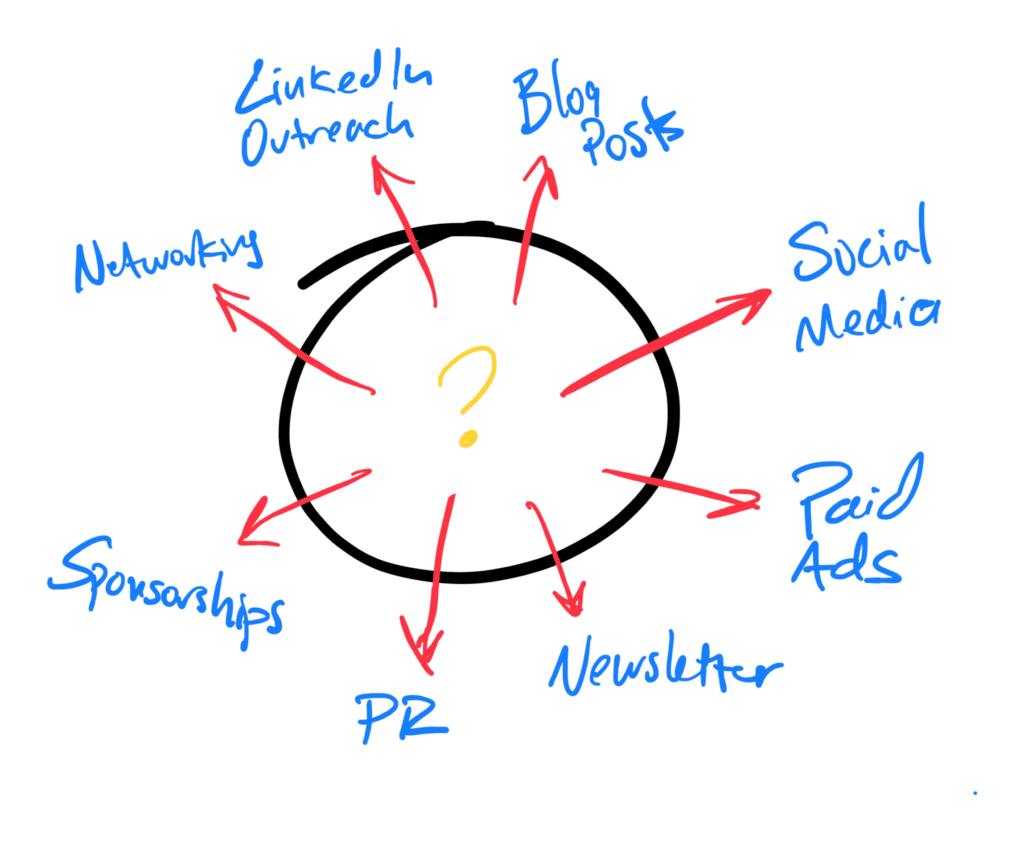
    Most companies respond by doing more—more channels, more spending, more content.

    But the answer isn’t more. It’s better.

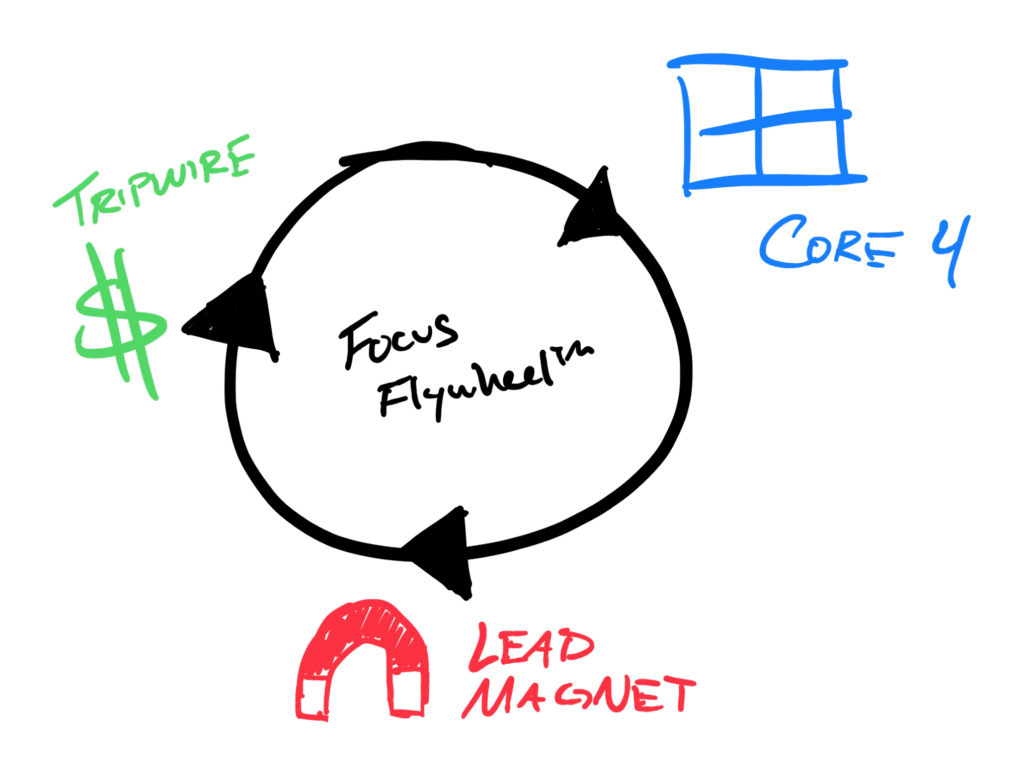
    The Focus Flywheel™: A Scalable System for Marketing ROI Growth

    We use a structured, repeatable process that integrates strategy and execution:

    1. Core 4

    A balanced mix of inbound & outbound strategies (Cold Outreach, Warm Outreach, Paid Content, Organic Content).

    2. Lead Magnet

    High-value resources (Quizzes, Guides, Webinars) that attract and educate prospects.

    3. Tripwire Offer

    A low-risk, high-value offer (Consultation, Product Sample) to build trust and accelerate conversions.

    The Marketing ROI Results?

    • One manufacturing client increased lead acquisition by 846% in three years.
    • A solar land developer achieved 10x ROI, doubling the industry benchmark.

    Want These Results for Your Business?

    If you’re ready to stop spinning your wheels and start scaling with a proven system, here’s how we help:

    • Step 1: Free Growth Strategy Session – Identify key challenges and opportunities.
    • Step 2: Growth Strategy Workshop – A 1.5-day intensive to map out your digital growth plan.
    • Step 3: Launch Your Digital Growth System™ – Implement the right strategies to drive real revenue.

    Let’s build a digital marketing strategy that actually works.

    Book Your Free Strategy Call Now: https://wearestructure.com/consult-call/

    — Simon Villeneuve

  • The Perfect Digital Growth System for Any Company

    The Perfect Digital Growth System for Any Company

    Ever wish that you had a magic wand that gave you a scalable, repeatable framework for a high-impact digital marketing system for growth? Congratulations, you just found it.

    In today’s digital landscape, marketing success isn’t about chasing isolated tactics—it’s about building a repeatable, scalable system that compounds results over time. It’s all about stacking small wins that work for you.

    At Structure, we’ve developed a Digital Growth System™ (DGS) that aligns marketing efforts with long-term business outcomes, ensuring that every initiative moves the business forward predictably and sustainably—immediately and over time.

    This article breaks down the core methodology behind our DGS approach, exploring how we leverage flywheel dynamics, conversion funnels, and data-driven optimizations to maximize impact for our clients.

    The Problem: Why Most Marketing Efforts Fail

    How do you get your marketing to work?

    The problem isn’t you. It’s your system. And, if you’re frustrated right now by your system, you’re not alone.

    Let me explain. After working with countless Founders, CMOs, and business leaders, I’ve noticed the same challenges appearing over and over.

    • Over-complication: The sheer volume of strategies, tools, and “best practices” is paralyzing. Everything is so overwhelming. Where do you even start?
    • Fragmentation: Your marketing efforts feel scattered. One team is running ads, another is working on SEO, and sales is off doing their own thing. Nothing is truly integrated.
    • Ad-hoc Attempts: The pressure to deliver immediate results forces you into quick-fix tactics instead of sustainable growth strategies.
    • Unclear ROI: You’re investing in marketing, but what’s actually working? Where should you double down, and what should you cut?

    Sound familiar? These problems don’t just slow you down—they keep you trapped. And they result in inefficiency, wasted budget, and stalled growth.

    You can’t do the same thing and expect different results. The truth is you don’t need MORE ideas, more channels, or more budget. You need FEWER ideas, channels, and budget.

    It’s not about your marketing getting easier—it’s about your marketing getting better. Here’s what to do about it.

    The Power of the Flywheel as a Digital Growth Engine

    Traditional marketing often operates like a pump—every lead generation effort requires new input, making it unpredictable and costly.

    Instead, we design marketing strategies as flywheels, where momentum builds over time, making each rotation more effective and cost-efficient.

    Key Flywheel Principles:

    • Effectiveness: Activities flow seamlessly, moving prospects through a natural journey.
    • Efficiency: Each iteration requires less effort and produces greater results.
    • Exponential Growth: Every cycle generates increasing value, compounding over time.

    By turning our client’s marketing into a flywheel, we ensure that their efforts don’t just generate short-term results but become a self-sustaining growth engine.

    3 Key Components of Any Digital Growth System

    To create a powerful digital growth flywheel, we leverage three foundational components: Lead Magnets, The Core Four, and The Impact Dashboard.

    1. Lead Magnets: Capture Attention & Build Trust

    We deploy high-value resources to attract and educate potential customers. These most commonly include:

    • Quizzes
    • PDF Guides
    • Webinars

    Think of lead magnets like magnets picking up paper clips—they are tools that pull the right audience in, offering them valuable content in exchange for engagement.

    2. The Core Four: Proven Acquisition Channels

    The problem with marketing channels is that there are so many of them—and everyone thinks that one of them is the bees-knees. Or worse, you assume that just because a channel strategy is working for someone else in your space, it’ll work for you. Beginner’s mistake!

    So, as a marketing leader, how do you decide which ones to pursue, and actually succeed? First you look beyond Meta and Google, and look at the bigger picture. 

    We use a balanced mix of inbound and outbound tactics as well as content strategy to drive traffic and engagement.

    1. Cold Outreach – Direct messaging and email outreach
    2. Warm Outreach – Leveraging existing networks and relationships
    3. Organic Content – Blog posts, social media, podcasts, and keynotes
    4. Paid Content – Targeted advertising across digital platforms

    By leveraging the Core Four, we de-risk the channel strategy and ensure that marketing efforts are diversified, allowing us to optimize for efficiency and impact.

    Warm Outreach: Turning MQLs into SQLs

    Warm outreach is typically handled by a company’s sales team. 

    The goal is to convert Marketing Qualified Leads (MQLs) into Sales Qualified Leads (SQLs) through consistent follow-ups and strategic engagement. This includes:

    • Personalized Follow-Ups: Engaging leads through email, calls, and social touchpoints.
    • Strategic Nurture Sequences: Providing additional resources, case studies, and personalized offers.
    • Multi-Touchpoint Strategy: Ensuring no lead slips through the cracks by maintaining ongoing communication until a prospect is ready to convert.

    By aligning sales with marketing efforts, warm outreach ensures higher conversion rates and stronger relationships with potential customers.

    Cold Outreach: Generating Early-Stage MQLs

    Cold outreach involves proactive efforts to reach new audiences and generate early-stage MQLs. 

    While sales teams often conduct their own cold outreach, we implement Cold Email Outreach and Cold LinkedIn Outreach as a part of our Digital Growth System. These tactics help clients reach untapped markets and generate interest from new prospects.

    However, it’s important to note that cold outreach rarely produces sales-ready leads immediately. Instead, the key is to:

    • Develop and nurture leads through email/SMS sequences and follow-up.
    • Build trust and credibility over time.
    • Occasionally score a quick win, but recognize that’s the exception, not the rule.

    Cold outreach is a long-term play—when done right, it can become a vital component of a company’s lead generation strategy.

    Organic Content: SEO, Blogging, and Social Media

    We execute a structured content approach to build authority and drive traffic:

    • 6-8 Key Content Pillars aligned with business objectives
    • 48 Blog Posts mapped out in advance for long-term growth
    • SEO-optimized structure that ranks high in Google searches
    • Social & podcasting integration to expand reach beyond search

    Paid Content Strategy: Testing & Scaling Efficiently

    We focus on six ad platforms, testing each with small budget allocations before scaling:

    • Google Ads: High-intent search and retargeting
    • LinkedIn: Lookalike audiences and industry-specific targeting
    • Meta (Facebook & Instagram): Primarily retargeting-focused
    • YouTube: Retargeting and educational content distribution
    • Reddit: Niche investment communities (experimental)

    Every campaign is tracked, measured, and optimized to drive the best return on investment (ROI), ensuring that each dollar spent moves the needle.

    3. The Impact Dashboard: Measuring Progress & Optimizing Results

    Last but not least, we all know too well what happens when you, huck and hope or throw spaghetti on the wall to see what sticks. It’s a game of unmet expectations, rapidly expanding budgets, and constant skepticism.

    What if you had undeniable proof that what you’re doing is working—or isn’t? What if you were suddenly able to make decisions based on fact rather than feeling? If it did anything for you like it did for us and our clients, it would save your business.

    A critical component of the Digital Growth System is the Impact Dashboard, designed to provide a comprehensive overview of key marketing and sales metrics. This dashboard allows anyone to:

    • Track Customer Acquisition Cost (CAC) and ensure efficiency
    • Monitor Conversion Rates at each stage of the funnel
    • Evaluate Lead Quality, identifying high-intent prospects
    • Measure Return on Investment (ROI) across channels
    • Identify areas of opportunity for optimization and scaling
    • And so much more

    This dashboard serves as both an internal performance tracker for our team and a client-facing accountability tool, ensuring full visibility into what’s working and what needs adjustment. For you, this digital growth dashboard could also serve as an internal tool for your department and a visibility expander for higher ups. 

    Elevate Your Digital Growth System & Strategy

    If you’re ready to move beyond fragmented marketing efforts and implement a proven, scalable Digital Growth Strategy, here are two ways to take action today:

    1. Subscribe to “Go Higher” – Our free newsletter where we dive deep into high-impact marketing, growth strategies, and leadership insights.
    2. Schedule a Free Strategy Session – Let’s discuss your current marketing efforts and see if we’re a fit to help.

    Your next level of growth starts here—Subscribe or Schedule a Call today!

    FAQs: Common Questions About Digital Growth System

    What if I feel like our leads are low quality?

    Your leads may be low quality. But, not necessarily—they may also be low-maturity rather than low-quality ones. 

    When marketing acquires leads through a Core Four system to a lead magnet, many prospects are still in the early research phase and need more touchpoints before they are ready to buy.

    Most customers don’t go from interacting with a lead magnet to making a purchase overnight. Instead, they move through a journey that often looks something like this:

    1. Discovery – Finds the brand via SEO, social, or ads
    2. Engagement – Browses the site, uses a tool, watches a video
    3. Lead Capture – Downloads a guide, subscribes to emails
    4. Lead Nurture – Receives follow-ups via email, SMS, or retargeting ads
    5. Product Research – Orders a sample, visits a showroom
    6. Consultation – Asks questions, requests a quote
    7. Follow-Up & Closing – Addresses objections and finalizes the sale

    If these leads aren’t converting, the focus should be on improving Step 4: Lead Nurture by adding more strategic follow-ups, engaging content, and offering clear next steps like tripwire offers or personalized consultations.

    Can we automate follow-ups like emails and SMS?

    Yes! Emails and SMS can be automated through various platforms. The biggest challenge is integrating these with your CMS to trigger messages at the right time. But it can be done!

    That said, I always recommend starting manually to learn what works before automating. Once the process is dialed in, automation can help scale efforts without sacrificing effectiveness.

    What’s the best follow-up cadence for nurturing leads?

    A good starting point:

    • 1-2 days – Thank them for interacting with your lead magnet
    • 1-2 weeks – Deliver tripwire offer or personalized consultation
    • 1-2 days – Send project quote, estimate, or ideas
    • 1-2 weeks – Follow-up (helpful check-in)
    • 1-2 weeks – Follow-up (gentle nudge)
    • 1-2 weeks – Final touch (‘Did you give up?’)

    This consultative, service-driven approach works well in today’s digital world to build trust and move MQLs to SQLs effectively.

    We don’t really do cold outreach anymore. Is this something we should be focusing on?

    Cold outreach is a potential strategy, but it’s a hard nut to crack. While some do it successfully, it takes a lot of planning, tweaking, and optimizing to work—not to mention inbox warming (if you know, you know). It’s certainly not a quick solution, but can be an asset if used strategically and as a part of a larger growth system.

    Would conferences and events fall under paid or organic content?

    It depends on how you engage. If you pay for booth space, that’s paid content. If you’re speaking at an event or a guest at a conference, that’s more organic. Most of what we’re planning is organic.

    How long does it typically take for a prospect to go from lead to customer in my Digital Growth System?

    It varies. Some move fast, within 2-3 weeks, while others take months. The key is to measure and optimize your nurturing process to find out what’s working for you.

    What is an acceptable Customer Acquisition Cost (CAC) for our Digital Growth System?

    We aim for a 5x return per customer. If we assume each customer brings $50,000 in value, that would put your target CAC at $10,000. However, if the average value drops, you may need to drive acquisition costs down accordingly. A 5–10% CAC range may be more realistic for your situation.

    What if we tried Facebook (Meta) ads in the past, and they didn’t work?

    We hear this all the time. It’s common to test Facebook (or any platform) without success. That may mean it’s not a great fit for you. However, ad platforms, audiences, and your company change. If you don’t have definitive facts backing up your feelings, it’s never a bad idea to test again with low spend to see if you get different results.

    There are a lot of platforms—Google, LinkedIn, Facebook, TikTok, Reddit, etc. If we go after them all, are we stretching too thin?

    There are certainly various perspectives on this answer. I’ve seen both work really well, so the ideal approach depends on your budget and tolerance for risk and experimentation.

    • Option 1: The Experimentation Approach: start broad to test, then we’ll prune ineffective platforms. 
    • Option 2: The 1-1-1 Approach: start with one platform, one audience, and one offer. Make it work, then expand.

    As I said, both options are viable and I’ve proven them both out in different ways. I’d say this decision is unique to you, your vision, and your values. We often make suggestions for our clients based on their unique situations.

  • How to Fix a Failed Marketing Strategy in 2025

    How to Fix a Failed Marketing Strategy in 2025

    You’re an ambitious business leader. You clearly care about your marketing strategy.

    That’s why you’re constantly thinking about growth—how to get more leads, more customers, more revenue.

    But no matter how much effort you put in, it never feels like it’s working well enough.

    You are running campaigns, testing channels, launching new initiatives—but the results?

    • Inconsistent
    • Unpredictable
    • Disappointing

    How do you get your marketing to work?

    The problem isn’t you. It’s your system.

    And, if you’re frustrated right now, you’re not alone.

    Let me explain . . .

    After working with countless Founders, CMOs, and business leaders, I’ve noticed the same challenges appearing over and over.

    🔴 Over-complication: The sheer volume of strategies, tools, and “best practices” is paralyzing. Everything is so overwhelming. Where do you even start, and what works for you?

    🔴 Fragmentation: Your marketing efforts feel scattered. One team is running ads, another is working on SEO, and sales is off doing their own thing. Nothing is truly integrated.

    🔴 Ad-hoc Attempts: The pressure to deliver immediate results forces you into quick-fix tactics instead of sustainable growth strategies.

    🔴 Unclear ROI: You’re investing in marketing, but what’s actually working? Where should you double down, and what should you cut?

    Sound familiar?

    These problems don’t just slow you down—they keep you trapped.

    • Inefficiency
    • Wasted budget
    • Stalled growth

    You can’t do the same thing and expect different results.

    It’s time to take an entirely different approach.

    Here’s the Truth… ​

    You don’t need MORE ideas. More channels. More budget.

    You need FEWER ideas, channels, and budget.

    It’s not about your marketing getting easier—it’s about your marketing getting better.

    Most leaders make things way too complex. And complexity kills companies.

    Instead, to get better, you should develop a Minimalist Marketing Mindset™.

    Start Here Today to Get 10x More Results​

    ✅ Choose One Primary Growth Channel – Instead of spreading efforts thin across 10 different platforms, master one before adding another.

    ✅ Double Down on What’s Already Working – Measure your current marketing efforts. What’s driving the most revenue? Invest more there.

    ✅ Eliminate Unnecessary Complexity – Review your tech stack, messaging, and campaigns. Cut what’s not moving the needle.

    You see, constraints aren’t a limitation. They’re a superpower.

    This starts with what’s known as the 1-1-1 Principle. The “ones” represent key components of a minimalist marketing campaign: 1 product, 1 market, 1 channel.

    The simplification process continues with the Amplification Loop™ to helps you quickly scale what works.

    These are two simplification frameworks that all marketing leaders should learn and use.

    In the next couple newsletters, I’ll teach you HOW to use them.

    So stay tuned!

    But here’s the mindset shift for today—go from More > Better.

    If you’re feeling stuck, it’s not because you’re not working hard enough.

    It’s because you’re trying to do too much.

    By adopting what I’m calling a Minimalist Marketing Mindset™, you can finally create a system that consistently generates leads, revenue, and momentum.

    And the best part?

    • It gets easier
    • It feels more focused
    • It becomes intentional

    It’s time to rethink growth. It’s time to “Go Higher.”

    Want Help Applying This to Your Business?

    If you’re tired of spinning your wheels and want help right away to build a sustainable, high-impact growth system in your business, let’s talk.

    🚀 Step 1: Book a Free Growth Marketing Strategy Session

    We’ll help you diagnose your biggest growth challenges and uncover your highest-leverage opportunities.

    🚀 Step 2: Attend Our Growth Marketing Strategy Workshop

    A 1.5-day intensive to map out a clear, customized digital growth plan for your business.

    🚀 Step 3: Launch Your Digital Growth System™

    With our team onboard, you’ll implement the right strategies in the right way and get the right results.

    👉 Book Your Free Strategy Call Here: https://wearestructure.com/consult-call/​

    —Simon Villeneuve

  • Proven Business Growth Strategy for Any Year & Any Market

    Proven Business Growth Strategy for Any Year & Any Market

    Feel like you’re constantly playing catch-up in your business growth strategy?

    Or maybe spinning in circles from market pressures you can’t control?

    If you’ve found yourself in this position, it’s okay.

    You’re not alone.

    I’ve been there too.

    In my early days with Structure, I was obsessed with what everyone ELSE was doing.

    • Compared myself to competitors
    • Constantly shifted business growth strategy to match trends
    • Priced myself lower and lower

    It all culminated in 2022 when I hit a pain line.

    In 2022, Structure was stuck in the quantity-over-quality game of web design.

    We cut prices, sped up production, and tried to keep up with a shifting market. It didn’t work.

    You know why?

    Because by dropping our prices, outsourcing work, and increasing speed…

    We inadvertently lost our value.

    The thing that made us special.

    I had a moment of clarity: the problem wasn’t “out there.”

    It was “in here.”

    Our vision had dried up, and we’d lost sight of what mattered.

    Our vision, our beliefs, and the unique value we could deliver was becoming a thing of the past.

    And we could feel it.

    Something had to change. Fast.

    We stopped reacting to trends and realigned with our values.

    It wasn’t easy, but it worked: we tripled our team, tripled our revenue, and delivered exponential results.

    Here’s what I learned:

    I had to shift my mindset from transactional to transformational.

    Transformational leaders disrupt the market by controlling what matters: their vision, values, and actions.

    Transactional leaders? They react and become casualties in someone else’s mission.

    You can’t sustainably grow a business like that.

    The choice is simple: keep reacting to trends, or start leading with clarity and confidence.

    If you’re ready to build a resilient business in the digital age, here’s how we can help:

    • Start with our free Digital Maturity Assessment™ to reveal blind spots and opportunities you can address right now to move your business forward.
    • Schedule a free virtual Digital Strategy Session where we’ll map out a tailored plan to transform your business vision into reality.

    It’s time to get on-mission and build a BOOMING business—no matter what the market throws at you.

    ​

    –Simon Villeneuve