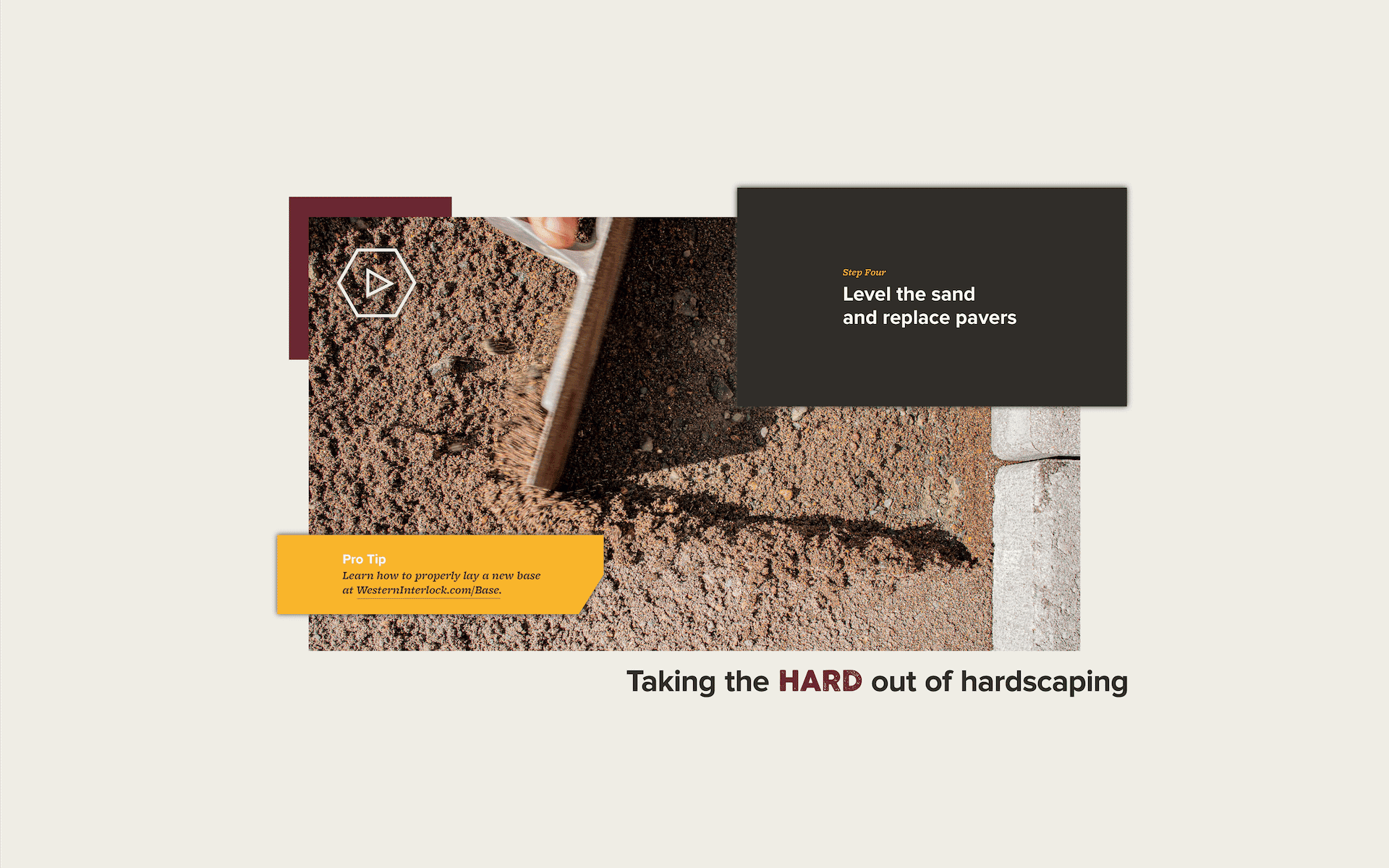
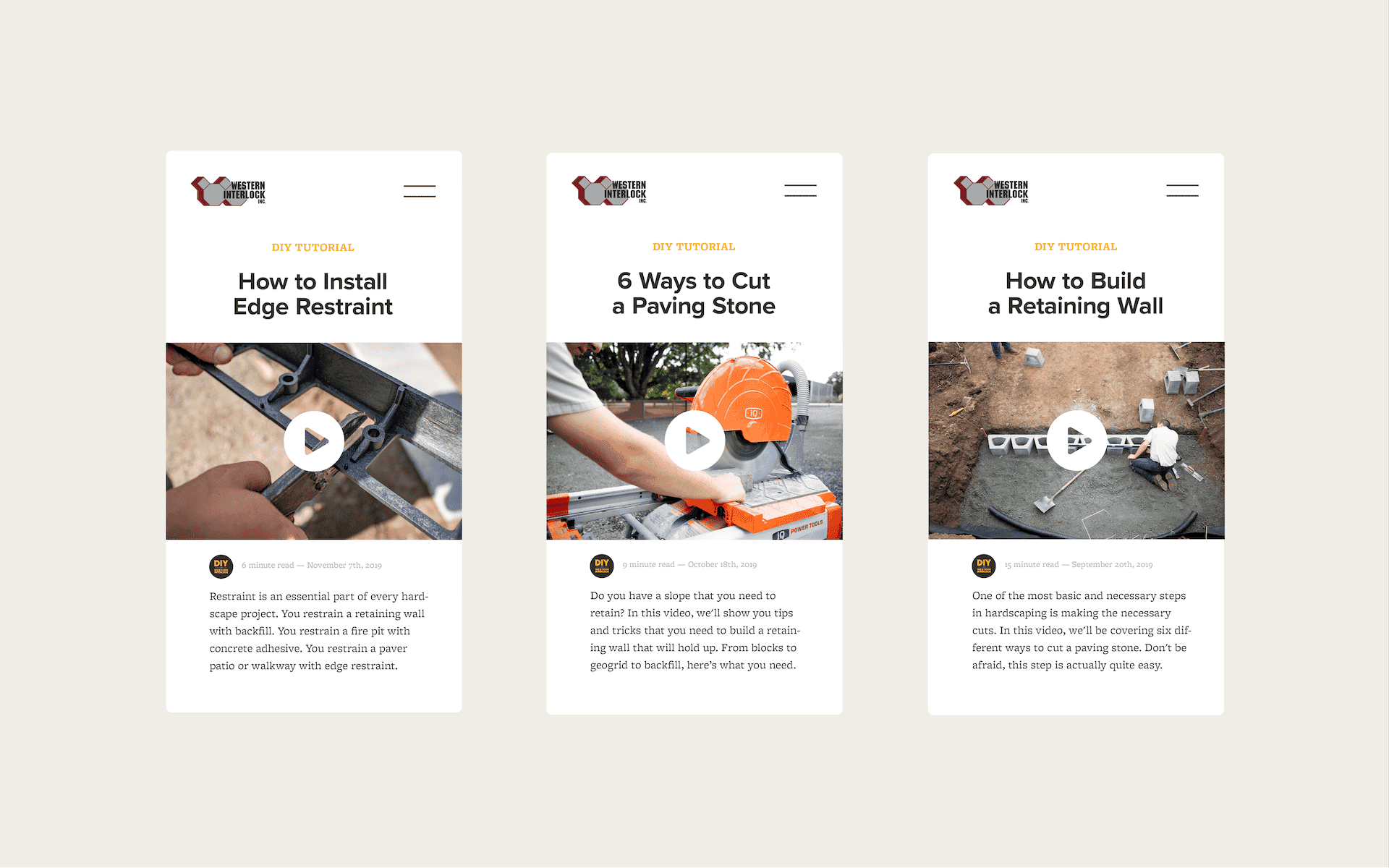
Western Interlock needed content development. They are a family-owned manufacturing company that makes high-end paving stones for the Northwest. We helped them reach, influence, and inspire a larger market by showing all generations how they can DIY with WI.
The Challenge
In early 2019, Western Interlock came to us with a problem: buying and installing paving stones feels daunting, if not completely impossible. In short, their goal was to take the hard out of hardscaping.
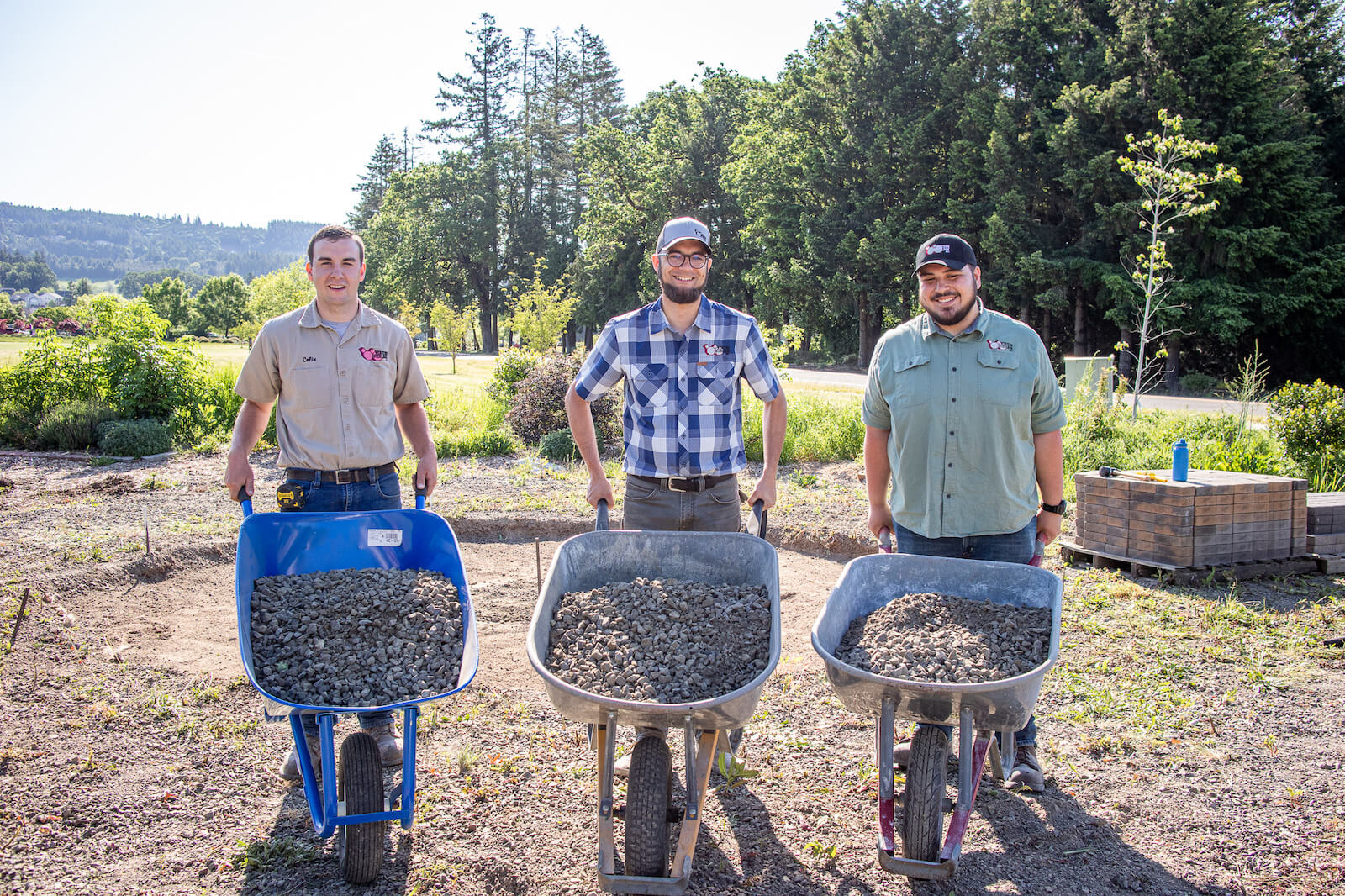
Western Interlock was already seeing traction with in-person do-it-yourself seminars at their manufacturing facility in Rickreall, ORE. So we suggested scaling that campaign into the digital space. The result of our planning was a content marketing campaign called DIY with WI that would inspire potential customers and help them feel empowered to tackle projects without hesitation.
Content Development & Company Development
There was another challenge hidden behind the curtain. Not only were we helping people hardscape, but we were also helping a 25-year-old family-owned brick-and-mortar manufacturing brand update it’s marketing from physical to digital.
In essence, while there was a significant physical brand reputation, there was little-to-no digital brand recognition. Part of our work was to transmit the Western Interlock story and culture to channels like Google, YouTube, Facebook.
Within a year of publishing the first DIY tutorial, Western Interlock saw a 351.97% organic increase in new users on their website, according to Google Analytics.
Most notably, sales calls increased by 50.74%.
“Sales Representatives keep telling me how this DIY with WI content cuts their talk time in half. Now we have well-documented answers to many customer’s most common questions about our products and how to use them. You’re making it much easier to make a sale and keep existing customers happy. Thank you!”
Colin Domoschofsky, Marketing, Western Interlock
By the end of 2019, we helped Western Interlock reach a new customer segment they may have never reached if they didn’t invest in such an approachable content development strategy. This only means one thing: sales are through the roof.
Continuing the Content Development Campaign
At Structure, we have a saying: Business Is Personal. This means we embrace uncommon levels of humility, selflessness, and transparency for the good of our clients. In short, we make everything about the client.
We understand that this approach is a bit unconventional. But that’s what makes it so unique.
“Structure has been amazing to work with. We are extremely satisfied with the work that they’ve done for us! I’d recommend them highly to anyone.”
Nathan Wright, Director of Marketing, Western Interlock
We’re proud of our work. However, we’re even more proud of the partnership we’ve built with Western Interlock. After three years, we’re still going strong.
People spend an estimated $1B in Central Oregon every year, with the majority of the money flowing through Bend.
America’s fastest-growing town boasts a booming local business scene that acts as the backbone to the prosperous economy. However, while there’s no problem getting what you want in Central Oregon, there is a problem with giving to those in need.
That’s exactly the problem that the founders of Supportist, Bend’s local coupon app, set out to solve.
They developed what they’d call a “win-win-win” model: Local supportists pay a small monthly fee to access discoverable deals by local businesses, meanwhile, local nonprofits get 20% off the top of each member’s fee. All this works to build a generous, giving local community.
The model relies heavily on local businesses to offer product and service discounts to members. And it’s the members who provide revenue by paying for a Supportist membership—even though 20% of the membership fee goes directly to a local nonprofit.
And while giving is great, nobody is complaining about awesome discounts to the local places they shop every day. Except, there was one problem: Bend already had well-established local leaders in the coupon-ing category.
Building a coupon app is one thing. Entering a crowded category with well-established market leaders is another.
Challenge
How could Supportist boldly enter a crowded category with established local market leaders—and take the lead?
The founders tried everything from coupon books to punchcards. They tried selling them door-to-door and through sports teams. But the idea wasn’t catching on.
The founders were determined to make a difference. There had to be a way.
Businesses were skeptical of investing in advertising in yet another local coupon book—and locals were already overwhelmed by the number of coupons they were already receiving in the mail. And without businesses or locals on-board, the model just didn’t work.
But the story doesn’t end there. Here’s how Structure helped Supportist find a big breakthrough.
Solution
When our founder first met Supportist over coffee at a local coffee shop, they’d already been through a couple of tough years of trial and error. To be frank, they were heading down a road of immanent startup death.
Supportist had a good idea . . . in fact, they had a great idea that solved a real problem for real people. But they felt stuck.
So, as we often do, we started seeking a deeper understanding of the challenge with branding research and in-person workshops. These revealed a few keen insights that helped Supportist think outside of the box.
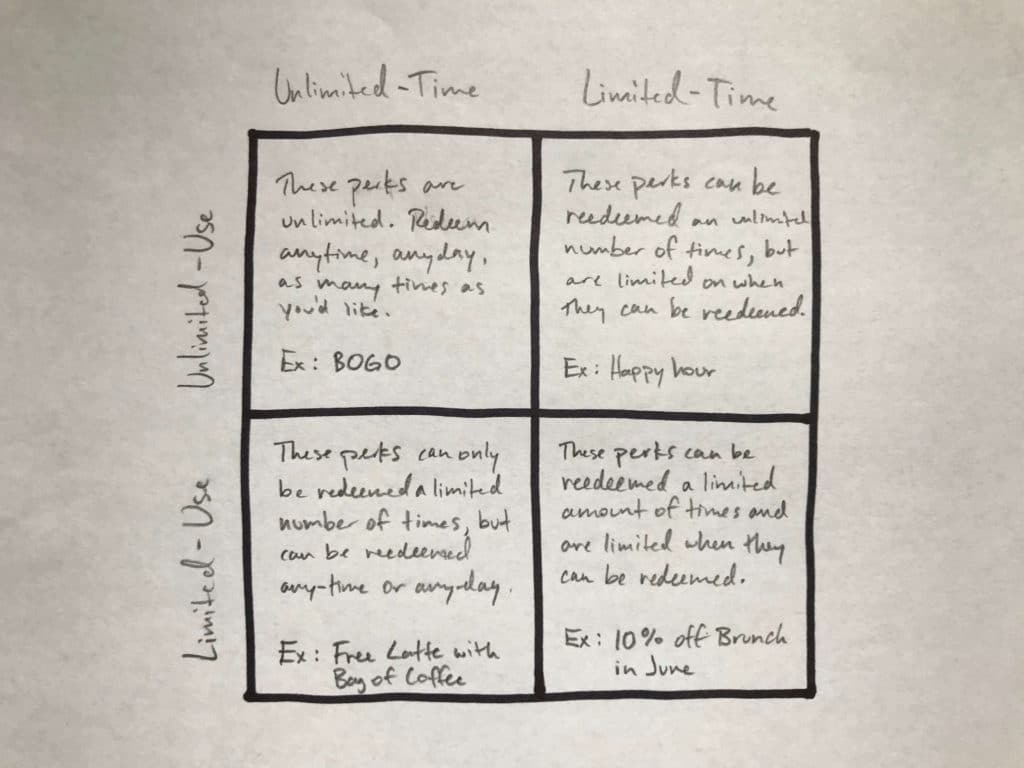
Supportist Discount Framework
We then used the data points to develop a Brand Framework that helped them find a breakthrough in their thinking and launch into a new season of product development and business growth.
“Simon and his team are exceptional marketing guides—and are worth their weight in gold. They’re pleasant and easy to work with. They’re organized and available. They’re process-driven. And, best of all, results-oriented.”
Steve Swan, Founder of Supportist
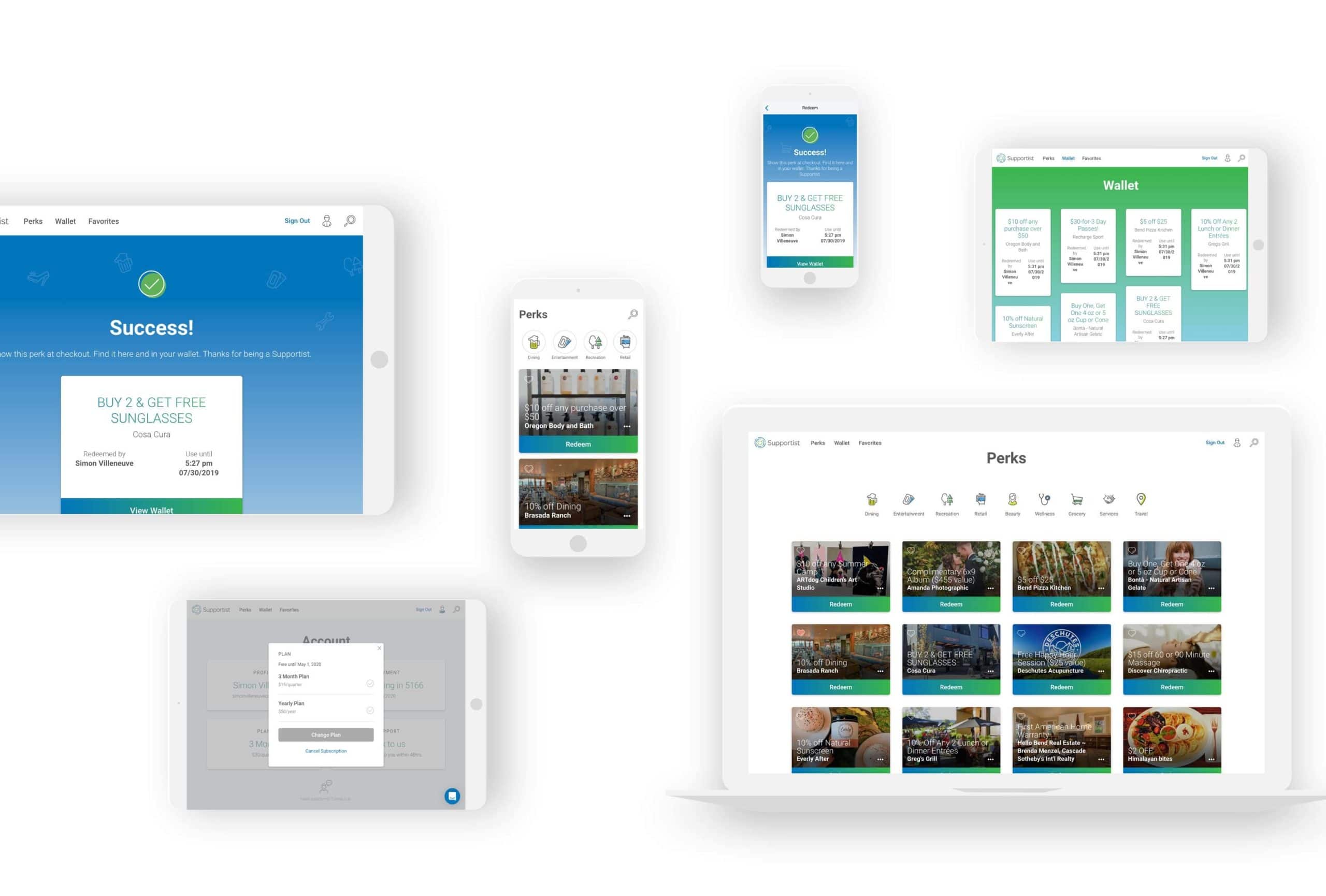
Once we had built a strong framework for the business to build on, we set out building the product: an iPhone app.
Supportist Screens on Desktop, Mobile, and Tablet
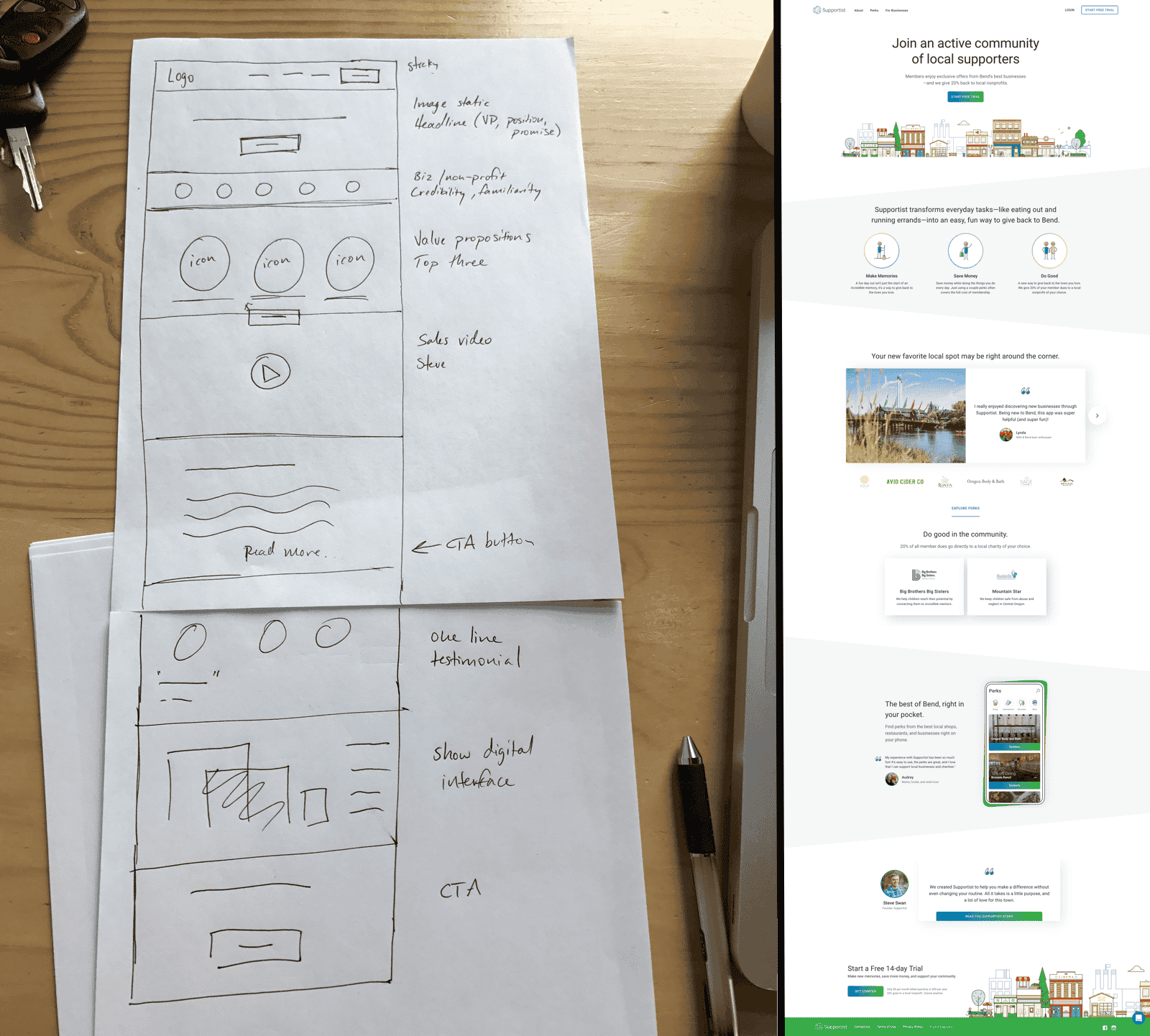
Then we delivered a responsive website that was beautiful and stood out from the competition. We developed the site on Webflow so the client could easily update content and make copy changes without digging into code.
Left: Homepage Wireframe | Right: Homepage Final Website
We dug in deeply to be a true partner that synthesized nuanced brand and complex technical information to create an app that represents the best of Bend.
In other words, we helped Supportist build their app from scratch through every step of the product development process—from strategy to shipment.
But we didn’t just consult from a distance. We dove into the trenches and designed every button and wrote every word. And thanks to a great development partnership between our team and a local developer, we ended up with a tremendous product that’s simple, easy to use, and works like a charm.
Uniting a local team
The last major challenge was that Supportist wanted to assemble a team that could product take their product forward into startup success.
As a true partner, we jumped in and helped build a multi-disciplinary team with a range of expertise to be deeply involved and thoughtfully vocal in all project stages. We all collaborated at every step, through weekly work sessions, active copy discussions, and work-in-progress sharing and conversations.
The entire Supportist team was enthusiastic and willing to be open and introspective, which allowed us to push boundaries and add unexpected interactive magic—while keeping the experience simple and clear.
Business is personal
Just as New York City never sleeps, work still continues on Supportist. We’re in close contact with the founding team and are continually involved in Supportist’s ongoing development.
To be honest, even the act of typing Structure and Supportist in this case study feels strange as our collaboration feels more like a personal friendship than it does a business relationship.
But we’re not complaining. This is exactly the kind of approach we aim to achieve in every project. Care over cash. Wellness over work. People over profit.
It turns out that the crazy idea that you have a book in you isn’t so crazy after all. A 2002 New York Times article stated that 81 percent of Americans feel they have a book in them. So we helped BookWorthy seize the opportunity to teach people how both write and how to self publish a book.
Context
Aaron & Jennifer Smith are self-publishing pros. Together, they have written and self-published 11 books, selling over 600,000 copies. They’d cracked the self-publishing code and wanted to create a way to teach others how to do it as well.
Becoming a published author was once Jennifer’s childhood dream. And now that dream had turned into a self-publishing empire. Along with it came a social media platform in the millions. Most people follow them for their marriage advice. But over the years, they’ve received hundreds of emails from aspiring authors who want to know how to do what they did.
Aaron & Jennifer came to us with an idea: teach other people how to do what they’ve done. So together we dreamed. We developed. And we launched BookWorthy, an online self-publishing course for aspiring authors.
BookWorthy.com Website
Challenge
Having their own publishing company and personal brand to manage, Aaron & Jennifer didn’t have the time to make their own dream a reality.
Furthermore, they were so close to the business idea itself that they had a hard time seeing the full picture from an outside perspective. They didn’t know what to name it, what the best product offering would be, how to talk about it, or how to bring it to market. But they wanted to see it happen.
Solution
We came in on day numero uno. In fact, Aaron invited himself over to dinner at my (Simon) house to hire me. And he did. So away we went, developing the idea and building something meaningful.
And we did. For real. I mean, just read the self-publishing stories on BookWorthy.com.
“If it weren’t for BookWorthy, I wouldn’t be a published author. But because of their helpful guidance, I was able to do in 30 days what I had been trying to do for 20 years.” —Tiffany
“I was stuck and unmotivated for years by the fear of the unknown. But when I found BookWorthy, I finally had a roadmap. Becoming a published author became a reality.” —Laura
“Writing and publishing a book seemed like a bizarre dream that would never come true. Looking back, what I wish I would have known that all I needed to do was start. Thanks to BookWorthy, I am now a published author.” —Megan
And those are only three of the success stories we heard after getting the project off the ground. There are many, many more.
Here’s what Aaron had to say about the work we did:
“Without Structure, we would’ve never launched our online course. He helped us build the company from the ground up—from branding and product development to finding our first few customers. My experience with Simon is something I couldn’t get anywhere else.”
Aaron Smith
By creating the brand proposition around the idea of “Your Story Is Worth Publishing,” we developed a story, product roadmap, and launch-plan built around the 81% of people who have a book inside of them.
Naming
Aaron’s original idea was to create an uber-technical course on the nuts and bolts of self-publishing. We started by calling it AdvancedSelf-publishing.com.
But it became clear that most everyday writers are creative—not technical.
So, we went with a different name that focused on inspiring belief in an everyday person to write a book. We wanted a name that didn’t show someone how to do it but make them believe that their book was worth publishing. So we called it BookWorthy.
Product Development
We had been throwing around the idea of developing an online course from the beginning.
A close friend of Aaron’s had moderate success with an online course. We did some research and saw that it was a great way to teach and communicate lots of information. So we used the online course framework as a place to start.
After six months of content development, script writing, set building, and filming production, we had a course. It was a comprehensive learning experience: 16 video lessons on an online dashboard where students could watch lessons, track progress, and communicate with other students. We also designed a physical workbook to ship to each member’s doorstep a few days after they joined the course.
Marketing Strategy
People can’t believe in something that doesn’t exist. So, for BookWorthy, we invested in a responsive website that wasn’t just informational but also transformational. It was something customers could believe in.
Since the product helps people write and publish a story, we focused on telling stories. At the top of the homepage, we start with a sales video that tells Aaron & Jennifer’s story. About halfway down we feature half-a-dozen testimonials from BookWorthy authors. We also created a Stories page to feature long-form stories from self-published students.
Why startups need brand strategy
Needless to say, this project didn’t take off like The Wicked Witch of the West. During the launch period, we acquired about 100 students within 72 hours. No bad if you ask me. But our super-duper storytelling powers only went so far.
It was difficult to get everyday writers to buy into a premium publishing course. The BookWorthy brand is beautiful. The product is effective. And thousands of everyday writers now believe that they can become published authors. But a startup is like a diesel truck. The engine will only work with enough fuel. And if it runs dry, it’s dead. In the same way, strong execution can only go so far without strategy.
We did some preliminary brand strategy work to understand BookWorthy’s competition. It helped us and better position them in the marketplace. We developed rough customer profiles. And we created character and personality traits so we could communicate consistently. We covered the basics of what Eric Ries calls a Minimum Viable Brand (MVB), but didn’t do enough market research to confirm whether our assumptions were fact or our hopes and dreams from Peter Pan’s Neverland.
Brand strategy is business strategy
A common mistake when building and a new company is ignoring strategy. The launch timeline was so aggressive that we settled for working harder to “get it out there” instead of working smarter and getting it right. But we learned a timeless lesson. When developing a product or service, there’s a difference between getting the right idea and getting the idea right.
When developing a product or service, there’s a difference between getting the right idea and getting the idea right.
That’s why copywriter Steve Bautista wrote: “When people talk to themselves, it’s called ‘insanity.’ When companies talk to themselves, it’s called marketing.” The trick is to make sure your company isn’t just talking to itself. Close the feedback loop on your company or product before you go to market.
Whether it’s pricing or packaging, the best way to spend your limited amount of time or money is on brand strategy. To better understand yourself and the people you’re selling to. Sure, it costs some money upfront but it’ll save you tons of money down the road.
We tell the truth
You may be wondering, “Why does he tell us what they did wrong?” “Isn’t he worried no one will hire him?”
I’m not worried. We tell the truth. Authenticity builds trust and develops deeper, more sustainable relationships. And, if you’re a potential client, we want you to know what to expect when you work with us.
We’re human and we screw up. We make mistakes. And we’re humble enough to tell you when we do. We’re trying to be different. The other consulting firms and branding agencies whose websites you’ll look at and whose stories you’ll read that only tell you what you want to hear. I share the things you don’t expect to because I want to create trust.
If you’re looking to launch a new product, validate growth opportunities, better understand your customers, or refine your business strategy, we can help. Contact us to start a conversation.